6 YEARS: FROM COVID TO IRAN
TIME FOR SOME PAINFUL TRUTHS 🚨
Six turbulent years from Covid to the Ladakh standoff to Ukraine war to Trump’s tariff offensive to the current Iran war have exposed a hard truth. India remains dangerously dependent on the world for things a serious power should control at home.
Energy first, since that’s on everyone’s mind right now. India imports about 85% of its crude oil and roughly 50% of its natural gas. We depend heavily on overseas supply chains for critical minerals like lithium, cobalt and nickel that will power the next generation of batteries and energy systems. Any disruption anywhere from the Strait of Hormuz to sanctions on major producers immediately ripples through LPG prices, electricity costs and inflation. The current LPG anxiety during the Iran war is just the latest reminder of how exposed we are.
Defence is worse. Despite decades of rhetoric about indigenisation, India still imports roughly 45 to 50% of its major weapons systems, making it one of the world’s largest arms importers, if not the largest. During the Ladakh standoff with China (which is still on) the country had to rush through emergency purchases of munitions, drones, artillery shells and winter gear because either we don’t make those items or domestic capacity could not surge quickly enough. A country facing two nuclear adversaries should never have to scramble for weapons in the middle of a military standoff.
Pharmaceuticals reveal another uncomfortable truth. India is known as the pharmacy of the world, yet around 70% of our active pharmaceutical ingredients come from outside, including China. During Covid this vulnerability became obvious as India scrambled for oxygen, PPE kits, ventilators and key medical inputs.
Technology dependence is the most alarming of all. More than 90% of advanced semiconductors are imported, most high end AI chips and servers are foreign made, and critical digital hardware depends almost entirely on global supply chains. In an era where AI will define both economic power and military capability, this is a profound strategic vulnerability.
Add fertiliser precursors, rare earths, electronics components, solar modules and specialised machine tools and the list becomes even longer. Each time the world experiences a shock (Ukraine, Iran, Azerbaijan, Covid) whether it is a pandemic, sanctions on Russia, a war in West Asia or rising great power tensions India is forced into code red emergency management mode.
The uncomfortable reality is that true strategic autonomy requires historically painful decisions. Building domestic capacity in energy, weapons, pharmaceuticals, semiconductors and AI will demand huge investment, long term industrial policy, and years of political risk. It may mean accepting higher costs and slower returns in the short term in order to build resilience for the long term.
But India’s election to election political cycle rewards short term thinking. No government wants to take decisions that may, beyond a point, take a decade to pay off. The decisions these crises compel from a country like India will mean a total dismantlement of our politics as we know it today. It will mean a generation of turning the country on its head.
Yet the alternative is worse. As things stand India remains structurally vulnerable. A country that has to scramble every time the world shakes cannot claim true strategic autonomy.
From COVID to Iran, the last six years have made that painfully clear.
The outbreak of war between the United States, Israel, and Iran carries grave consequences for international peace and security.
At this decisive moment, every measure is being taken to ensure the security of our national territory, our citizens, and our interests in the Middle East.
France also stands ready to deploy the necessary resources to protect its closest partners, should they request it.
The ongoing escalation is dangerous for all. It must stop. The Iranian regime must understand that it now has no other option but to engage in good faith in negotiations to end its nuclear and ballistic programs, as well as its regional destabilization activities. This is absolutely necessary for the security of all in the Middle East.
The Iranian people must also be able to freely build their future. The massacres committed by the Islamic regime disqualify it and demand that the voice be returned to the people. The sooner, the better.
Faithful to its principles and aware of its international responsibilities, France is calling for an urgent meeting of the United Nations Security Council. I am in close contact with our European partners and friends in the Middle East.
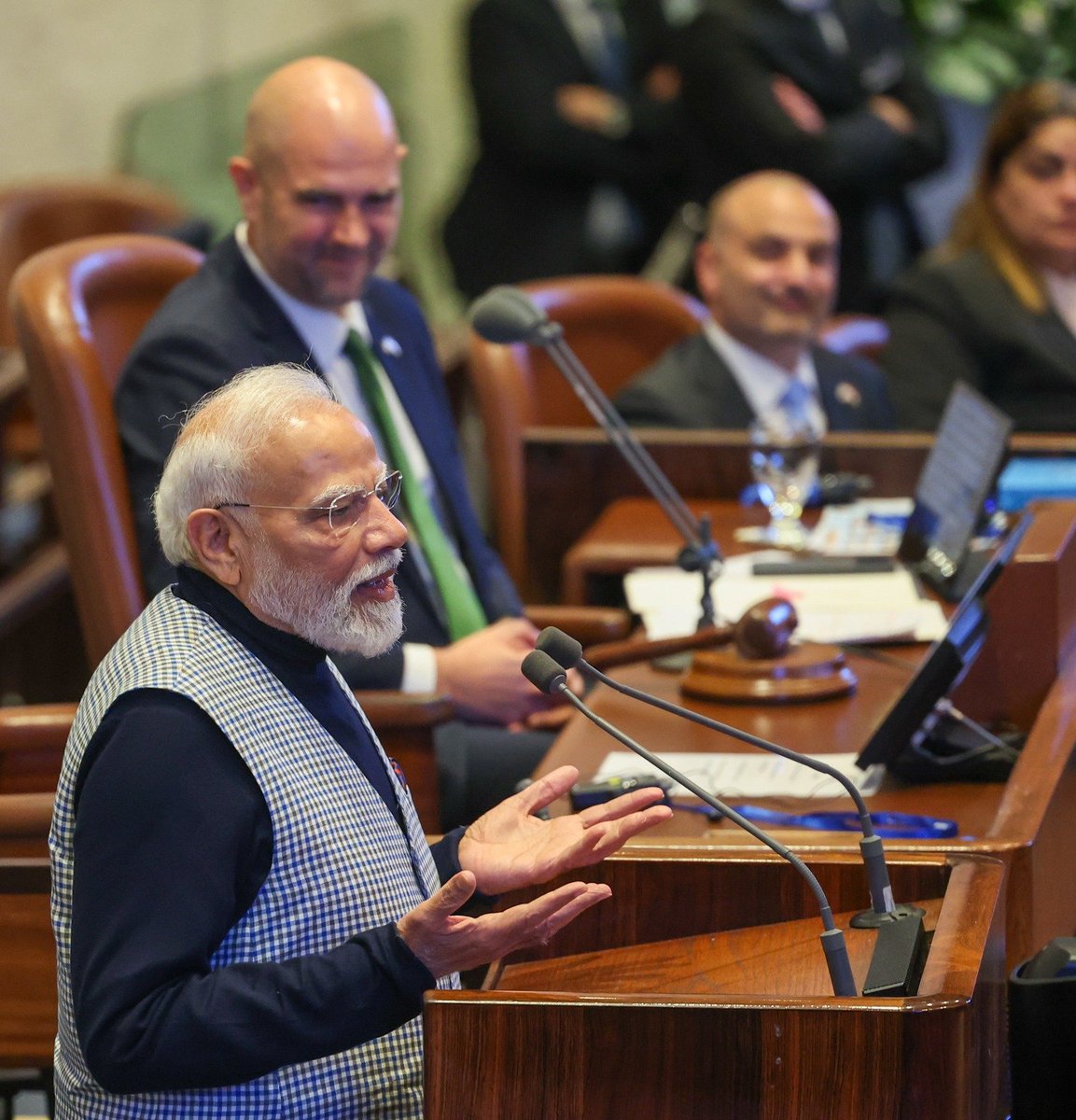
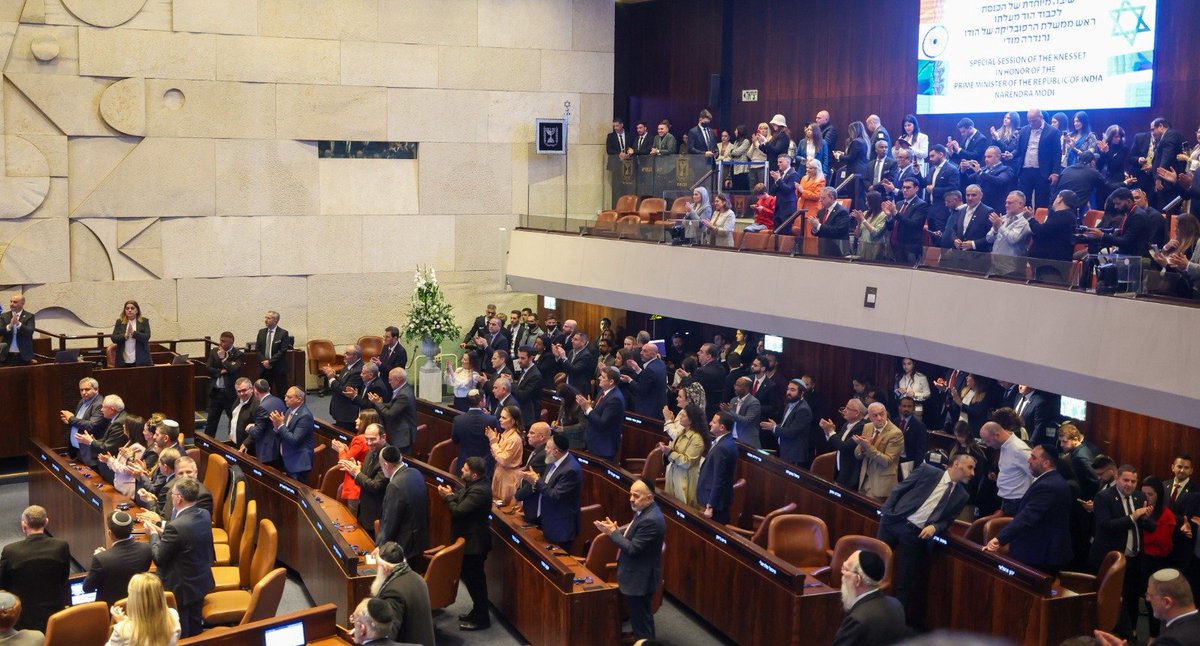
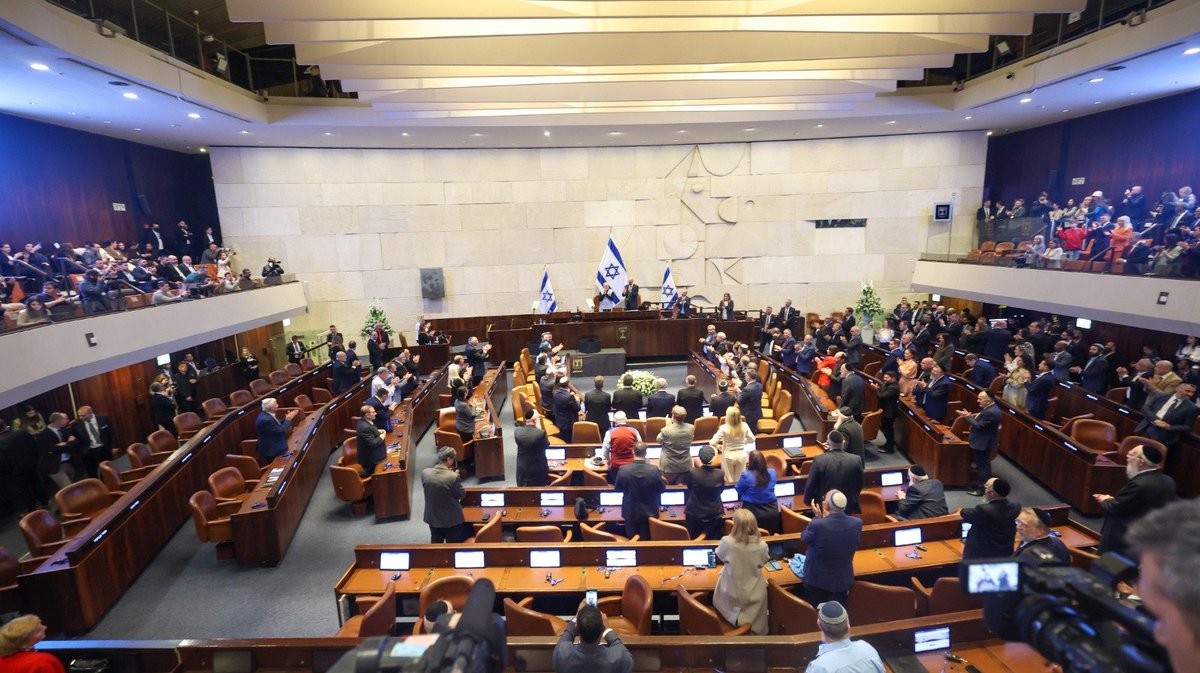
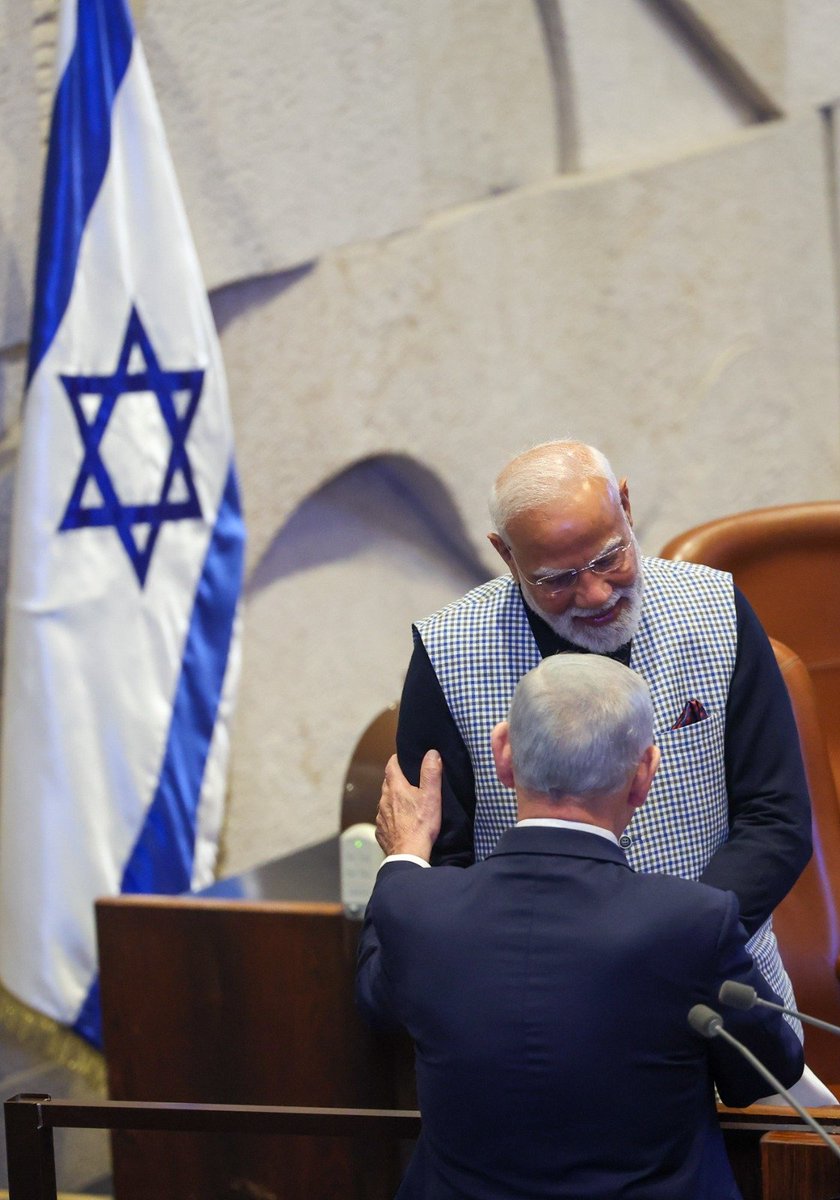
It's been an honour to address the Knesset. It was also a delight to interact with distinguished members of the Knesset. My address covered the deep-rooted friendship between our nations and the goodwill of the people of India towards the people of Israel.
@KnessetENG
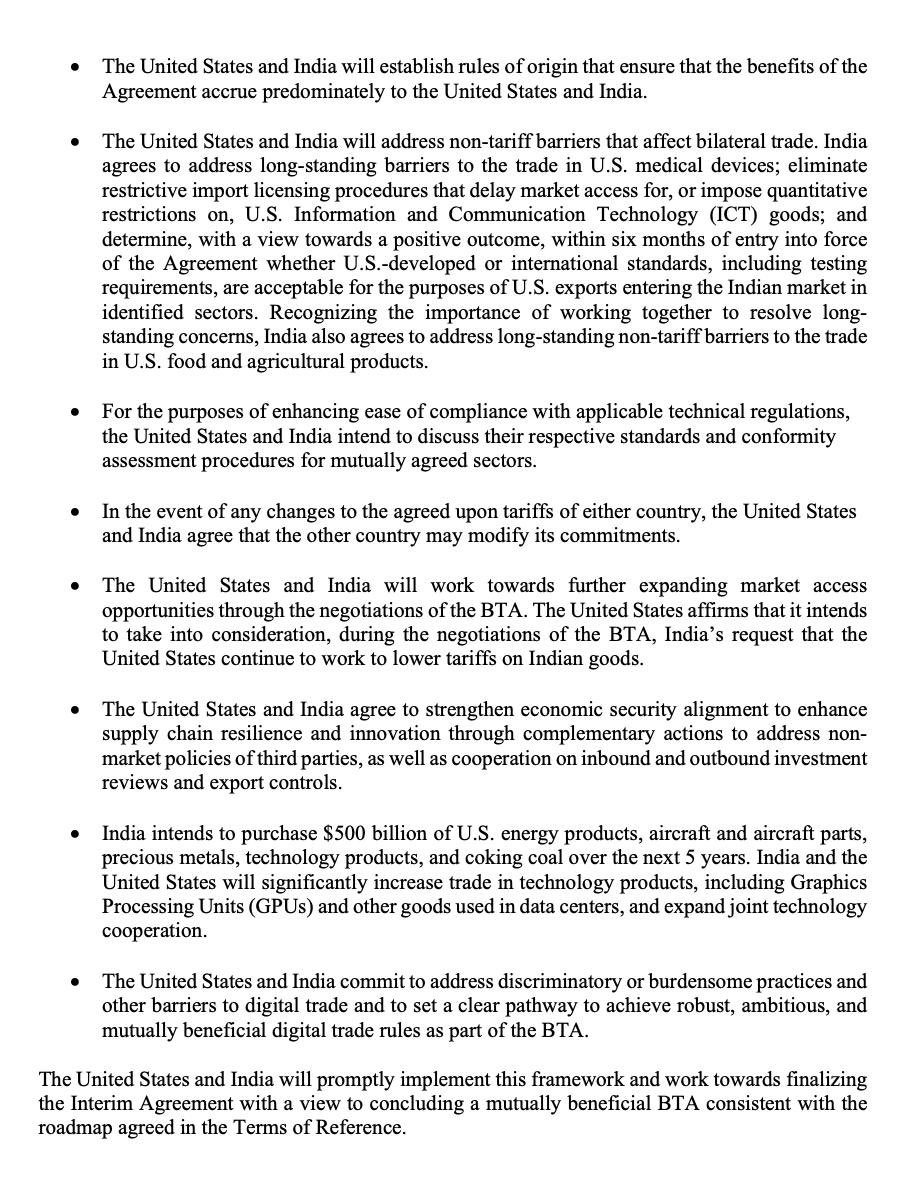
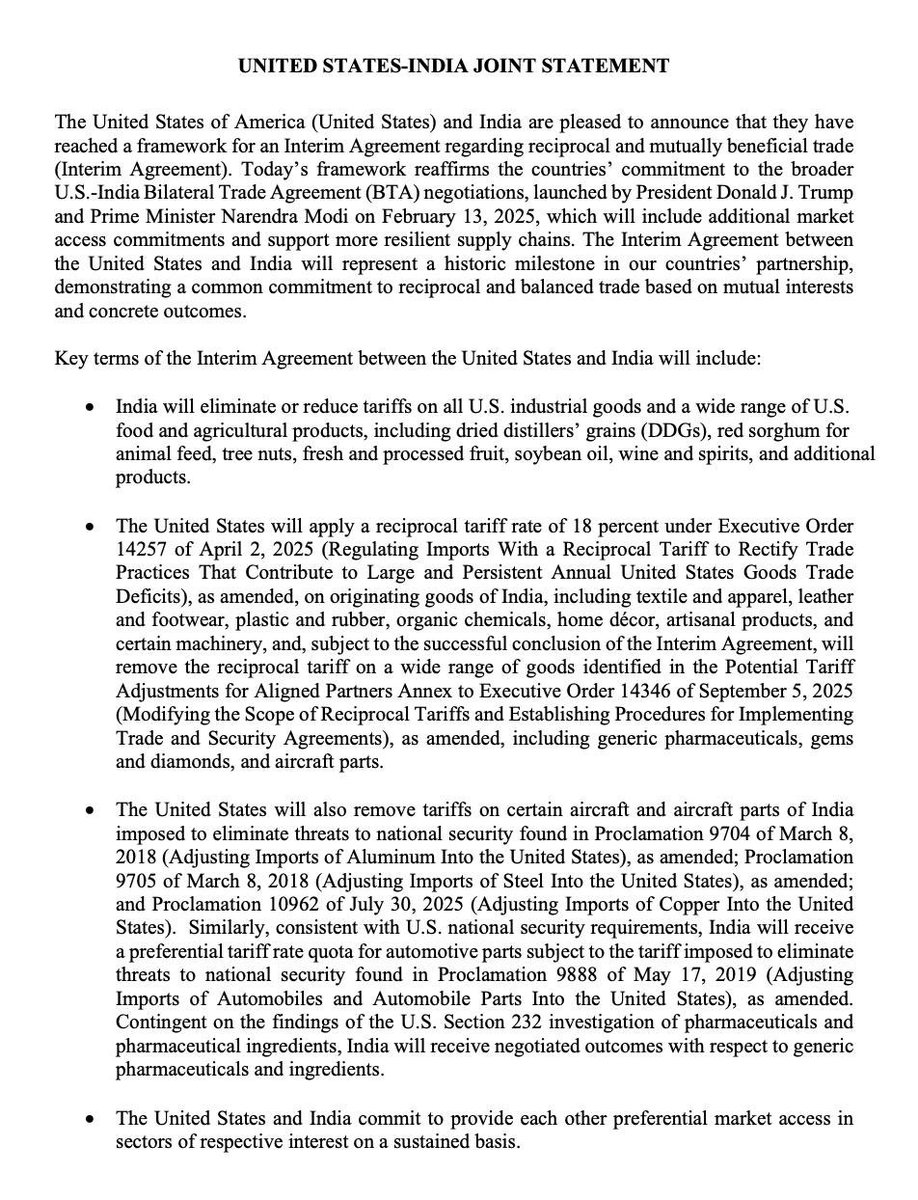
Under the decisive leadership of PM @NarendraModi ji, India has reached a framework for an Interim Agreement with the US. This will open a $30 trillion market for Indian exporters, especially MSMEs, farmers and fishermen. The increase in exports will create lakhs of new job opportunities for our women and youth.
As part of this framework, the US will slash reciprocal tariffs on Indian goods to 18%, providing a huge market opportunity in key sectors such as textiles & apparel, leather & footwear, plastic & rubber products, organic chemicals, home décor, artisanal products, and select machinery in the world’s largest economy.
Additionally, tariffs will go down to zero on a wide range of goods, including generic pharmaceuticals, gems & diamonds, and aircraft parts, thereby further enhancing India’s export competitiveness and Make in India.
India will also get exemptions under section 232 on aircraft parts, tariff rate quota on auto parts and negotiated outcomes on generic pharmaceuticals, leading to tangible export gains in these sectors.
At the same time, the Agreement reflects India’s commitment to safeguarding farmers’ interests and sustaining rural livelihoods by completely protecting sensitive agricultural and dairy products, including maize, wheat, rice, soya, poultry, milk, cheese, ethanol(fuel), tobacco, certain vegetables, meat, etc.
This agreement will help India and the US remain focused on working together to further deepen economic cooperation, reflecting shared commitment to sustainable growth for our people and businesses.
Towards realising Viksit Bharat !
📖 https://t.co/mSKCqztTtE
Great news for India and USA!
We have agreed on a framework for an Interim Trade Agreement between our two great nations. I thank President Trump for his personal commitment to robust ties between our countries.
This framework reflects the growing depth, trust and dynamism of our partnership. It strengthens ‘Make in India’ by opening new opportunities for India’s hardworking farmers, entrepreneurs, MSMEs, StartUp innovators, fishermen and more. It will generate large-scale employment for women and youngsters.
India and the United States share a commitment to promoting innovation and this framework will further deepen investment and technology partnerships between us.
This framework will also strengthen resilient and trusted supply chains and contribute to global growth. As India moves forward towards building a Viksit Bharat, we remain committed to building global partnerships that are future-oriented, empower our people and contribute to shared prosperity.
@POTUS@realDonaldTrump