Assist. Prof. @CagUniversitesi PhD in IR @AnkaraUni, @BristolUni '13, @SOAS '12, @istanbuledutr '10. Interested in populism, sociopolitics, political economy.
Küresel siyasete ve diplomasiye yön veren gelişmeleri uzmanlarından dinlemeye hazır mısınız? 🌍
Çağ Üniversitesi Sürekli Eğitim Uygulama ve Araştırma Merkezi (ÇAĞSEM) olarak düzenlediğimiz "Diplomasi ve Küresel Yönetişim Sertifika Programı" kayıtları başladı!
Açılış konuşmasını Rektörümüz Prof. Dr. Murat Koç'un yapacağı programda; değerli büyükelçilerimiz ve alanında uzman akademisyenlerimizle Çin ve Rus dış politikasından Ortadoğu'daki güncel gelişmelere, Türkiye-AB ilişkilerinden enerji jeopolitiğine kadar uluslararası ilişkilerin tüm dinamiklerini derinlemesine inceleyeceğiz.
🗓️ Tarih: 24 Nisan - 23 Mayıs 2026 ⏰ Saat: Cuma 19.00 - 21.00 | Cumartesi 11.00 - 13.00 💻 Platform: Zoom (Çevrimiçi)
Kayıt olmak için görseldeki QR kodu okutabilir veya detaylı bilgi için 📩 [email protected] adresinden bizimle iletişime geçebilirsiniz.
#ÇağÜniversitesi #ÇAĞSEM #Diplomasi #KüreselYönetişim #Uluslararasıİlişkiler #Jeopolitik #DışPolitika #SertifikaProgramı #Eğitim
Yale Üniversitesi Avrupa entelektüel tarihinin gelişimiyle ilgili bir giriş kursu yayınladı. Hegel, Marx, Freud, Heidegger, Frankfurt Okulu, Foucault ve Derrida gibi pek çok isim var. Ayrıca otomatik çevir seçeneği Türkçe'ye gayet güzel çeviriyor.
https://t.co/eqhvrJt1A7
Iran just offered to reopen the Strait of Hormuz. But only if you pay in yuan.
CNN confirms, citing a senior Iranian official, that Tehran is considering allowing a limited number of oil tankers through the Strait provided the cargo is traded in Chinese yuan. Not dollars. Not euros. Yuan. The waterway that carries 20% of global oil, that seven P&I clubs closed through insurance, that a wounded Supreme Leader ordered permanently shut, that the United States just bombed the military defences of Kharg Island to force open, is being offered back to the world on one condition: the currency changes.
This is the most consequential sentence of the war that nobody in the oil market has priced.
The petrodollar system was born in 1974 when Saudi Arabia agreed to price oil exclusively in dollars in exchange for American military protection. That agreement has governed global energy trade for fifty-two years. Every barrel of crude on Earth has been denominated in dollars. Every central bank holds dollar reserves because oil requires them. Every nation that imports energy must first acquire dollars to pay for it. The system is the foundation of American financial hegemony, and Iran just proposed replacing it with yuan for the world’s most critical chokepoint.
China is already the model. Eighty to ninety percent of Iranian crude exports to China settle in yuan or barter through CIPS, the Chinese cross-border payment system that processed 175 trillion yuan, approximately $24.5 trillion, in 2025, a 43% increase year on year. Since 28 February, 11.7 to 16.5 million barrels of Iranian crude have transited the Strait to China via shadow fleet under IRGC protection while every other nation’s shipping is locked out. China pays in yuan. China’s tankers move freely. Everyone else burns or reroutes.
The war was supposed to force the Strait open. Instead it is being reopened selectively, on Iran’s terms, in China’s currency. America bombed Kharg to demonstrate it controls the island. Iran responded by demonstrating it controls the condition of passage. The military targets are rubble but the negotiating position is intact: the Strait opens when the currency changes.
The implications cascade across every domain. If yuan-denominated tankers begin transiting Hormuz while dollar-denominated tankers remain locked out by insurance, mines, and IRGC targeting, the war produces a bifurcated oil market: yuan barrels for China and BRICS partners at Iranian-discounted prices, dollar barrels for the West at war-premium prices. Two prices for the same commodity. Two currencies for the same waterway. Two systems for the same barrel of oil. The fragmentation the dollar was designed to prevent is being accelerated by the war that was supposed to preserve it.
China imports 45% of its crude through the Hormuz region. It holds 90 to 130 days of strategic reserves. Its teapot refineries process Iranian crude at $9 to $12 below Brent. Its CIPS system bypasses every Western sanction. And now the country whose Supreme Leader cannot stand is offering Beijing the one thing no amount of American airpower can bomb: a currency alternative for energy transit.
The Strait is not reopening for ships. It is reopening for yuan. And the fifty-two-year-old system that priced every barrel in dollars just met the war that may end it.
https://t.co/eMrt5qYYst
#Brexit kararı nasıl verildi? #Trump gibi popülist siyasetçiler neden seçilir? Bu ve benzeri soruların cevabını aradığım kitabım @KitabeviSiyasal'dan çıktı.
https://t.co/dLioQDDSHX
📌New NMES Article by Sinem Uca @Snm399 examines the evolution of Turkish "grand strategy" under the rule of the AKP (Justice and Development Party) administration. Interesting read for everyone interested in Turkish politics and foreign policy:
https://t.co/s40gQQHoWU
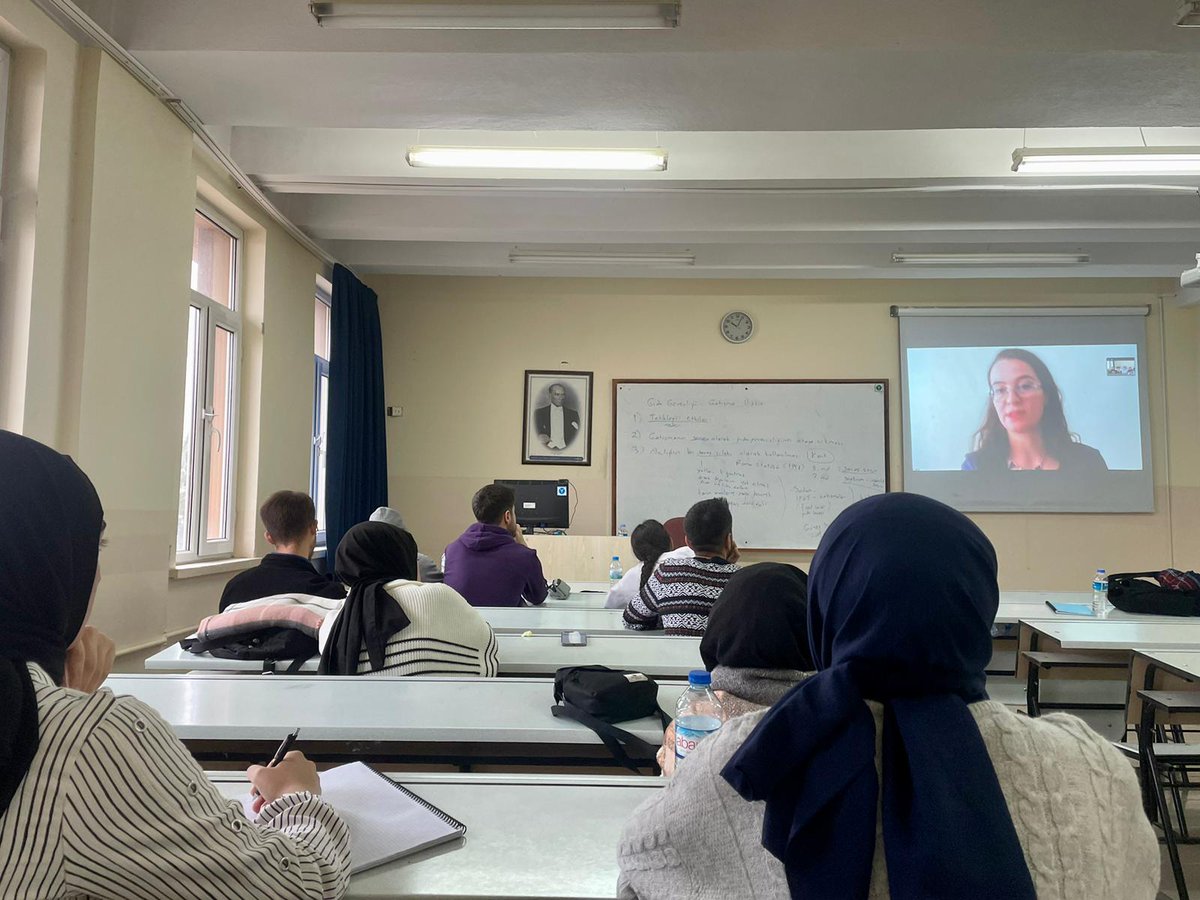
Ankara Yıldırım Beyazıt Üniversitesi’nden Dr. Öğretim Üyesi Melek Mutioğlu Özkesen, Dr. Sinem Uca’nın moderatörlüğünde Uluslararası Güvenlik Politikaları dersimize konuk oldu.
Chancellor Scholz announced a 100 billion EUR investment fund for the Bundeswehr and a permanent increase of German defense expenditures above 2%-GDP. Now, you might think: uhoh, the Germans, aren't those the bad guys from Die Hard, are they even allowed an army? Time for a 🧵/1
Just reading through the chapter on "Europe and the World" in the new German government coalition agreement. Hugely ambitious and potentially transformative for Europe. Here are a few highlights 1/n
Watching Blue Valentine (2010) movie by Derek Cianfrance on Valentine's Day is not the best idea. Incredible acting and heartbreaking story on love & marriage, though 💔