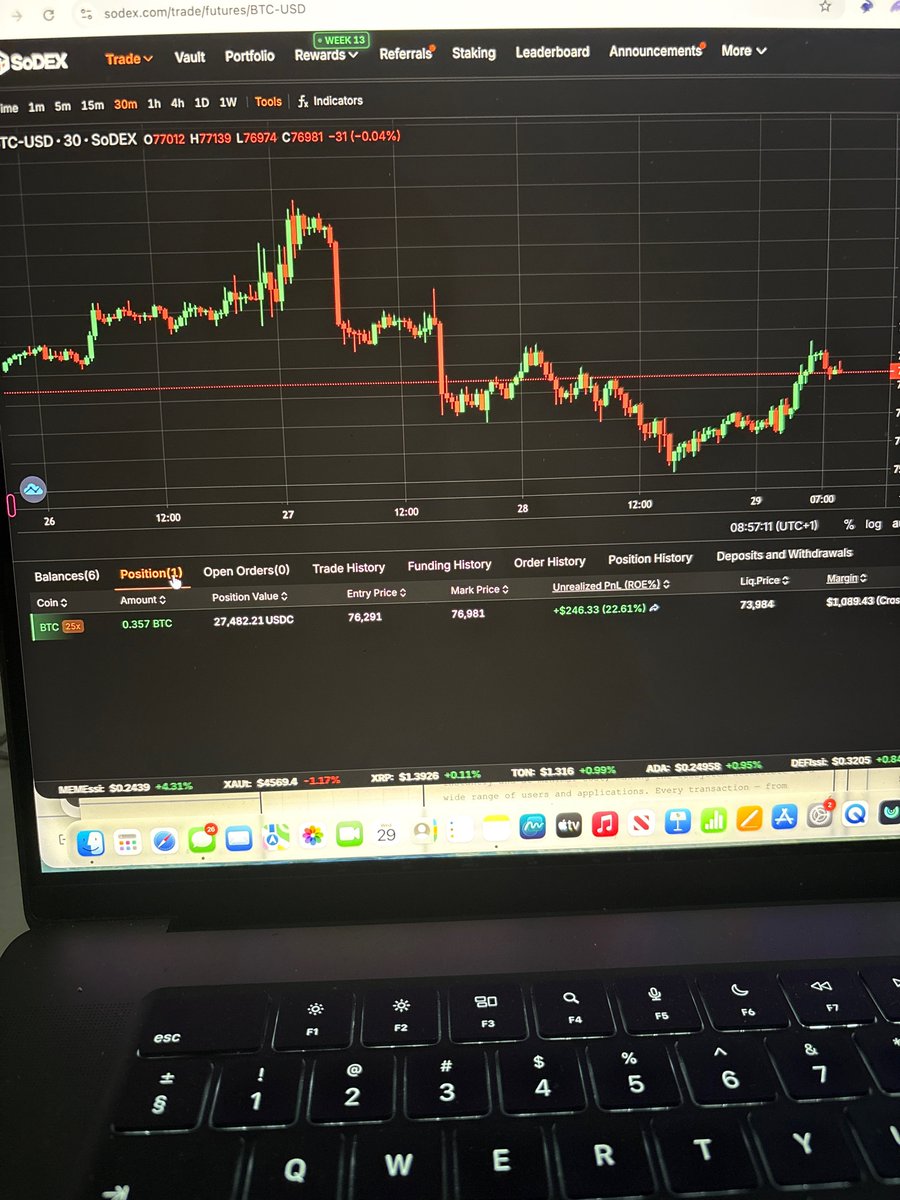
Not eligible for that Airdrop? No worries. Short it on CEX.💰
Short All tokens to Valhalla 🚀
Created a group to show you how. ✅🔥
Join: https://t.co/DvU6qrlQqt
Exponential increase in revenue with excessive borrowing: Yet more hardship for Nigerians!
In celebrating three years of his administration, President Bola Tinubu included, among his achievements, an increase in revenue from N16.8 trillion in 2022 to N35 trillion in 2025. An increase of over 100%.
Shockingly, while Nigerians expected a reduction in borrowing with the exponential increase in revenue, the opposite is the case. In just three years, President Bola Tinubu’s government seems to be obsessed with excessive and imprudent borrowing, with our total debt currently about N200 trillion—a deeply disturbing increase of over N100 trillion.
In addition to the exponential increases in both revenue and debt, it is also important to note that Nigeria has earned far more than the budget revenue targets due to global and regional geoeconomic and political tensions.
Alarmingly, even with the astronomical increase in both revenue and debt, almost all key socio-economic and governance indicators are worse than in 2023. Multi-dimensional poverty has increased from 87 million people in 2023 to over 140 million people in 2025. Rapidly increasing unemployment and a decline in GDP per capita from $1,597 in 2023 to $1,223 in 2025, and the list goes on.
Just more and more hardship for Nigerians! The question Nigerians and even the international community are asking is, “Where did all the money go?”
Nigerians deserve a detailed and transparent explanation of what happened to our economy and financial resources since 2023, and a stop to the imprudent, unaccountable, and opaque management of our common patrimony.
A new and productive Nigeria is POssible, and Nigeria will be OK! -PO
Excessive Borrowing Without Accountability: Further Affirmation of Imprudent Governance.
President Bola Tinubu's administration has engaged in remarkably imprudent borrowing, escalating Nigeria's total debt to approximately N200 trillion. This represents an increase of over N100 trillion within a mere three years, a stark contrast to the roughly N49 trillion accumulated during President Muhammadu Buhari's eight-year tenure, which would have projected to around N80 trillion. As millions of Nigerians grapple with the shock of this unsustainable debt accumulation, the situation is exacerbated by the government's reckless approach to borrowing and a profound absence of accountability and transparency in the utilisation of these funds.
For instance, data from the Federation's Budget Office reveals that the Bola Tinubu government borrowed N11.89 trillion in the first three quarters of 2025 (January to September), exceeding the planned borrowing target of N10.34 trillion by approximately N1.54 trillion. Under a responsible and accountable government, such an overshoot would necessitate rigorous scrutiny and explanation from relevant governmental bodies. Regrettably, this is not the reality under the current administration.
Compounding this issue, only N3.10 trillion of the borrowed funds was allocated to capital expenditure during the same January-September 2025 period. This constitutes a mere 17.66% of the N17.58 trillion earmarked for capital projects, leaving a deficit of roughly N14.48 trillion, or 82.34% of planned capital expenditure unfunded.
The most disturbing aspect of the financial management fiasco under Bola Tinubu is that there is no explanation or information regarding how the balance was utilised or deployed. The question that Nigerians are rightly asking and deserve an answer to is what happened to the balance? Was it deployed for recurrent expenditure/ consumption, for the entertainment of guests to Aso Rock or transferred to the Renewed Hope Agenda 2027 Election Campaign Fund? Nigerians deserve an answer on how our economy and resources are most unpatriotically managed.
A New and Productive Nigeria is POssible, and Nigeria will be OK!
-PO
Media Framing of Crime Along Ethnic Lines: Divisive.
As an Igbo man, I have endured stereotypes, judgment, and labelling solely based on my ethnic origins. This is not an isolated Igbo experience. Most Nigerians have, at some point, been reduced to their ethnicity rather than recognised for their true character.
I understand the pain of the ordinary Fulani man today, often unfairly judged by the actions of criminals he does not support, has never met, and who are not representative of his people.
Even in America, such unjust labelling fueled the civil rights movement and prompted Martin Luther King Jr. to declare that people should be judged by the content of their character, not the colour of their skin.
Every Nigerian ethnic group is known for its unique traditions, occupations, skills, and strengths. Crime, however, has no ethnicity. A thief is a thief. A terrorist is a terrorist. A kidnapper is a kidnapper. They are bad actors, not representatives of any people. They must be identified, arrested, and punished according to the law.
We must decisively abandon the dangerous practice of blaming entire ethnic groups for the actions of a few criminals. It is unjust, it breeds hatred, and it damages our national unity.
Let us proudly celebrate our diverse cultures, talents, and contributions, rather than falling prey to stereotypes and prejudices that politicians and divisive interests exploit for their gain.
A new Nigeria must emerge—one where no citizen is condemned because of tribe, religion, or birthplace. We can cherish our cultural roots while standing united by justice, mutual respect, and hope for a better future. We are capable of this.
A new Nigeria is within our reach. -PO
Debt Servicing, Borrowing, and Nigeria’s Fiscal Priorities
During his recent foreign tour, President Bola Ahmed Tinubu stated that Nigeria will spend about $11.6 billion on debt servicing, a figure that should concern anyone interested in the country’s economic future and long-term development.
There is nothing inherently wrong with borrowing when it is guided by prudence and directed toward productive investment. Countries such as Japan, the United Kingdom, the United States, the United Arab Emirates, Singapore, and Indonesia are all heavily indebted, yet their borrowings are largely channelled into education, healthcare, infrastructure, and innovation - sectors that generate long-term economic returns and sustain repayment capacity. As a result, despite high debt levels, their obligations remain more manageable because they are tied to measurable productivity.
Nigeria’s situation, however, is markedly different. A huge proportion of past borrowing has been directed toward consumption, with limited visible or sustainable developmental outcomes to justify the scale of indebtedness.
It is also important to note that a huge portion of the debt currently being serviced was accumulated under the Tinubu administration itself, while borrowing has continued at a significant pace. The administration’s recent external borrowing alone includes about $6 billion (from First Abu Dhabi Bank in the UAE—$5 billion, and UK Export Finance via Citibank London—$1 billion), a further $1.25 billion under consideration from the World Bank, and an additional $516 million arranged through Deutsche Bank, bringing the latest known external loan commitments to roughly $7.8 billion. In addition, domestic borrowing through monthly bond issuances continues to add to the overall debt stock.
Against this backdrop, Nigeria’s 2026 budget shows that health is ₦2.46 trillion, education is ₦2.56 trillion, and poverty alleviation is ₦865 billion, giving a combined total of about ₦5.885 trillion for these three critical sectors. By comparison, debt servicing at about $11.6 billion (approximately ₦17–₦18 trillion, depending on exchange rate assumptions) is almost three times higher than the total allocation to health, education, and social protection combined. This imbalance highlights a troubling fiscal reality in which debt obligations increasingly crowd out investment in human capital and poverty reduction. Moreover, even within the limited allocations to these sectors, funds may not be fully released, and a significant portion of what is eventually released could be misappropriated.
Ultimately, the central issue is not borrowing itself, but whether borrowed funds are being converted into measurable productivity, inclusive growth, and improved living standards. Without this, debt servicing shifts from being a temporary fiscal obligation to a long-term structural burden that constrains development and deepens economic vulnerability.
A New Nigeria is POssible. -PO
Unpopular opinion: @Kiwi_Nod
Most Web3 ecosystems are not built for the real world because crypto has a perception problem:
Most times, Speculation = utility
@pharos_network flips that:
0xBBbcb18892dED2663a26Df5D67FE08B72Df97B94
"The condition of our nation and the urgent need to rescue Nigeria, informed my decision to leave ADC for NDC."
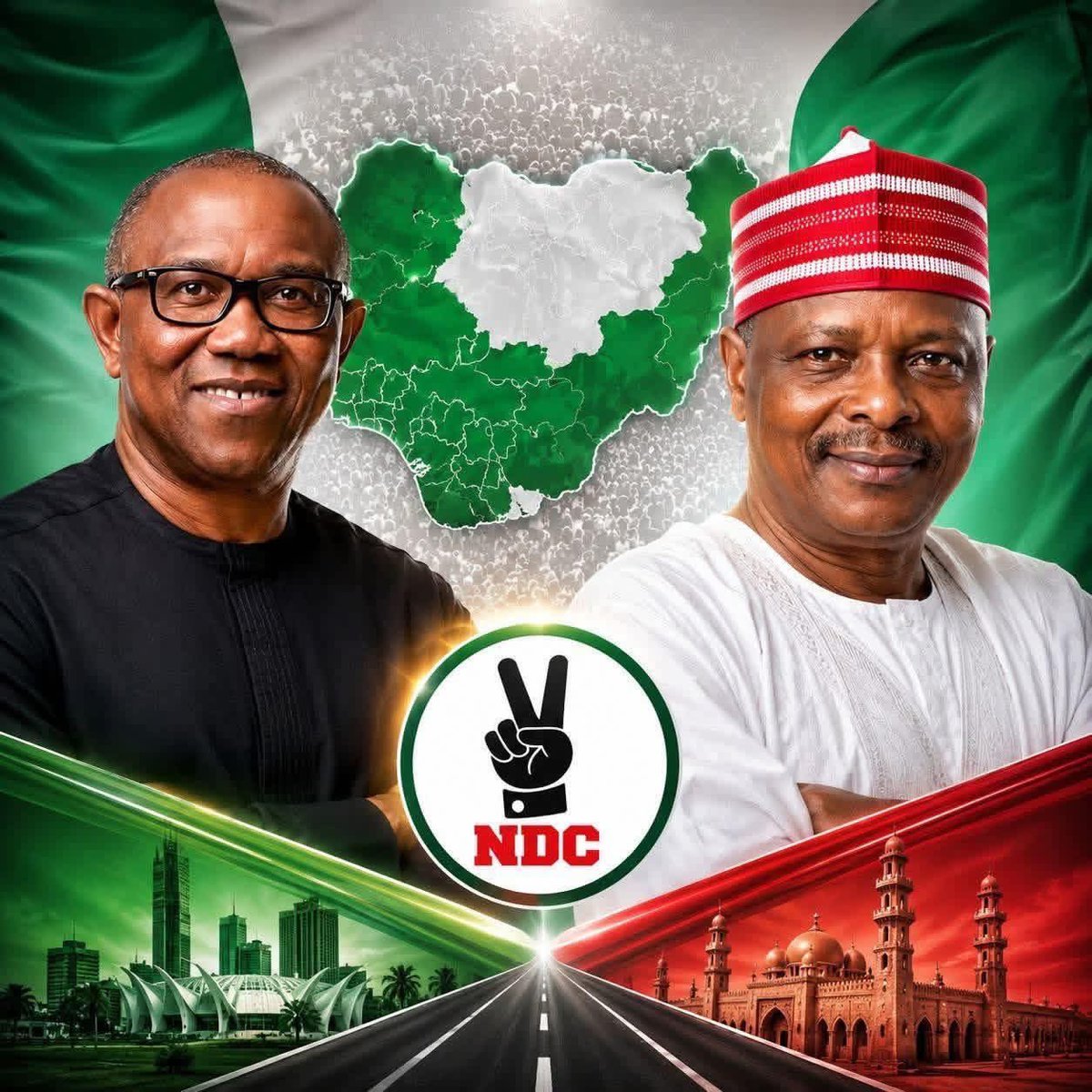
Yesterday, I formally joined the Nigerian Democratic Congress (NDC), alongside my dear brother, Engr. Dr Rabiu Musa Kwankwaso, with one clear purpose: to continue the struggle for a new Nigeria built on justice, competence, accountability, and compassion for the ordinary Nigerian.
As I stated yesterday, this decision was not made out of anger, personal ambition, or convenience. It came after deep reflection on the present condition of our nation and the urgent need to rescue Nigeria from the dangerous path it is currently heading.
Over the years, I have remained steadfast in my conviction that politics should never be about individuals, positions, or personal gain. It must be about the people, especially the millions of Nigerians who today can no longer afford necessities, whose businesses are collapsing, whose children are losing hope, and whose future is becoming increasingly uncertain.
I left the ADC for the same reason I left the Labour Party: the severe, orchestrated litigation and internal crises deliberately designed to ensure that I, alongside many other notable individuals, do not effectively participate in the electoral process. I sincerely appreciate and remain deeply grateful to the Leadership of ADC for the opportunity to work together in pursuit of a better Nigeria. I am particularly grateful to ADC Chairman Senator David Mark for his exceptional Leadership. I also deeply appreciate my Leader and elder brother YE, Atiku Abubakar, as well as other respected leaders within the party.
As we join the NDC, I sincerely appeal to the Nigerian Government against the encouragement of unresolved litigations and the infusion of crises within political parties. Democracy must never become a weapon against the people. A healthy democracy thrives on strong institutions, credible alternatives, and the freedom of citizens to make choices without intimidation, manipulation, or fear. Opposition parties must not be weakened or destroyed, because when democracy loses balance, the people ultimately suffer.
Nigeria today is passing through one of the most difficult periods in its history. Poverty is rising. Hunger is widespread. Insecurity continues to threaten lives and livelihoods. Businesses are shutting down daily. Our young people are becoming discouraged, and many citizens have lost faith in the system. At a time like this, leadership must be driven not by propaganda or division, but by competence, capacity, character, and compassion.
Our decision to join the NDC is therefore not an abandonment of values, but a continuation of the same mission we have always stood for: building a Nigeria where leadership is about service, where public resources are managed responsibly, where institutions function independently, and where every Nigerian, regardless of tribe, religion, region, or social status, can live with dignity, security, and hope.
I remain committed to working with all Nigerians of goodwill across political, ethnic, and religious lines. The task before us is bigger than any individual or political party. It is about the future of our children and the survival of our dear nation.
I thank Nigerians, especially our youths and women, for remaining peaceful, resilient, and hopeful despite the enormous challenges confronting the country. I urge you not to lose faith in Nigeria. Nations do not change because people surrender to hopelessness; they change because people continue to believe, continue to sacrifice, and continue to stand for what is right.
A new Nigeria is still POssible. -PO
Obi is not ready to give delegates money to elect him as the presidential candidate of a party.
And he knows that if he goes for such primaries, he won't win.
He wants to become president without inducing people financially.
That's a man that wants to lead.
Not oppress.
End.
Fellow Nigerians, good morning.
I woke up this morning after my church service with a deeply reflective heart, and despite every constraint, I felt compelled to share these thoughts with you.
Many people do not truly understand the silent pains some of us carry daily—the private struggles, emotional burdens, and quiet battles we face while trying to survive and serve sincerely in difficult circumstances.
We now live in an environment that has become increasingly toxic, where the very system that should protect and create opportunities for decent living often works against the people—a society where intimidation, insecurity, endless scrutiny, and discouragement have become normal.
More painful is when some of those you associate with, believing you would find understanding and solidarity among them, become part of the pressure you face. Some who publicly identify with you privately distance themselves or join in unfair criticism.
We live in a society where humility is mistaken for weakness, respect is seen as a lack of courage, and compassion is treated as foolishness—a system where treating people equally is questioned simply because you refuse to worship status, tribe, class, or power.
Personally, I have never looked down on anyone except to uplift them. I have never used privilege, position, or resources to oppress others, intimidate the weak, or make people feel small. To me, leadership has always been about service, sacrifice, and helping others rise.
Let me state clearly: my decision to leave the ADC is not because our highly respected Chairman, Senator David Mark, treated me badly, nor because my leader and elder brother, Alhaji Atiku Abubakar, or any other respected leaders did anything personally wrong to me. I will continue to respect them.
However, the same Nigerian state and its agents that created unnecessary crises and hostility within the Labour Party that forced me to leave now appear to be finding their way into the ADC, with endless court cases, internal battles, suspicion, and division, instead of focusing on deeper national problems and playing politics built more on control and exclusion than on service and nation-building.
Even within spaces where one labours sincerely, one is sometimes treated like an outsider in one’s own home. You and your team become easy targets for every failure, frustration, or misunderstanding, as though honest contribution has become a favour being tolerated rather than appreciated.
And when you choose to leave so that those you are leaving can have peace, and you step out into the cold, you are still maligned and your character is questioned. Despite all your efforts to continue working for a better Nigeria and engaging people with sincerity and goodwill, those who do not wish you well continue to attack your character and question your intentions.
There are moments I ask God in prayer: Why is doing the right thing often misconstrued as wrongdoing in our country? Why is integrity not valued? Why is the prudent management of resources, especially when invested in critical areas like education and healthcare, wrongly labelled as stinginess? Why are humility and obedience to the rule of law often taken to be weakness rather than discipline?
Let me assure all that I am not desperate to be President, Vice President, or Senate President. I am desperate to see a society that can console a mother whose child has been kidnapped or killed while going to school or work. I am desperate to see a Nigeria where people will not live in IDP camps but in their homes. I am desperate for a country where Nigerian citizens do not go to bed hungry, not knowing where their next meal will come from.
Yet, despite everything, I remain resolute. I firmly believe that Nigeria can still become a country with competent leadership based on justice, compassion, and equal opportunity for all.
A new Nigeria is POssible. -PO
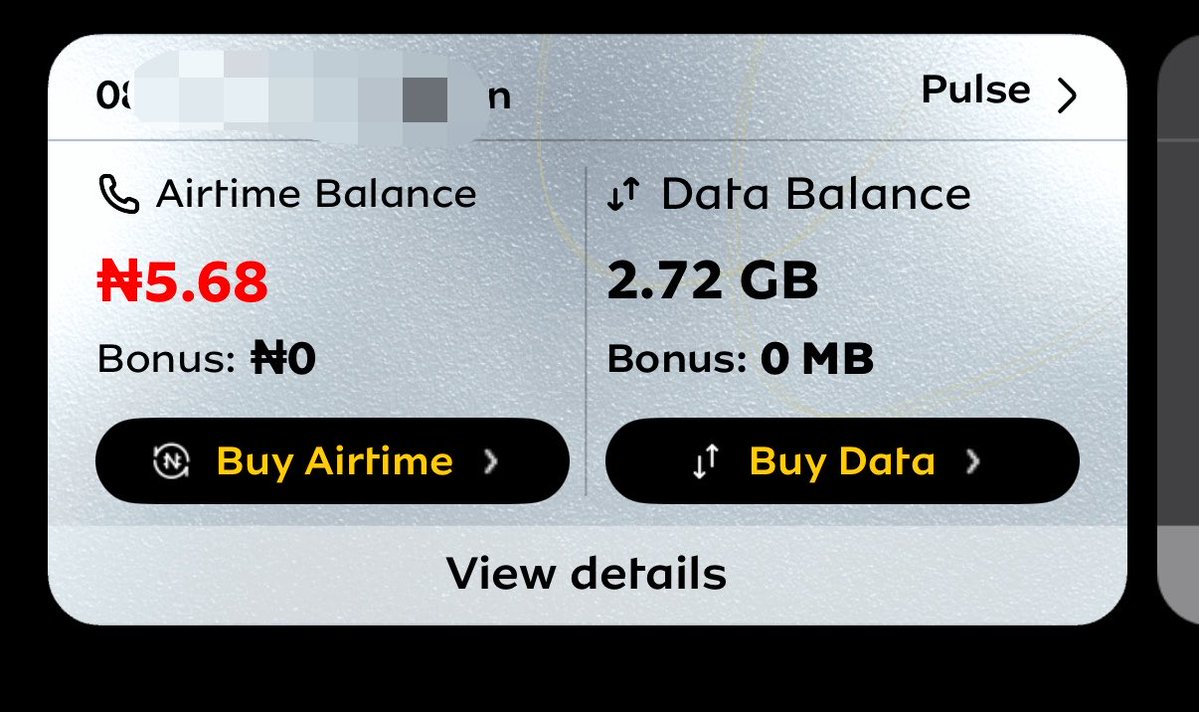
I just confirmed that @MTNNG steals data from their users‼️‼️💔
I’ve been having suspicions that MTN have been stealing data because of the rate at which my data finishes so fast even if I don’t download anything
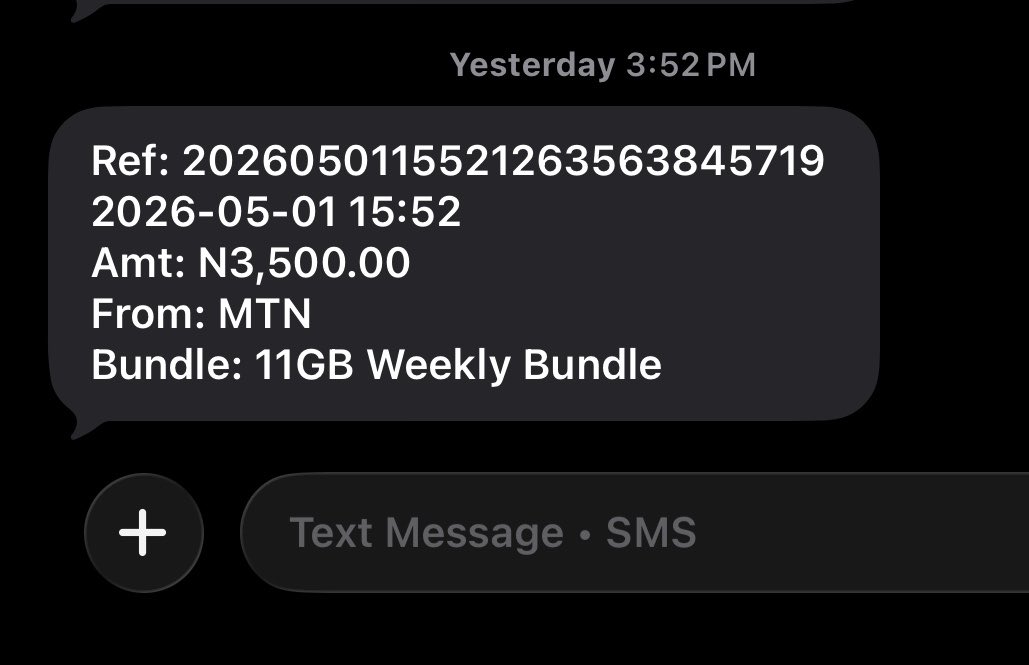
So yesterday by 3:52 PM I bought 11GB data for 3500 naira
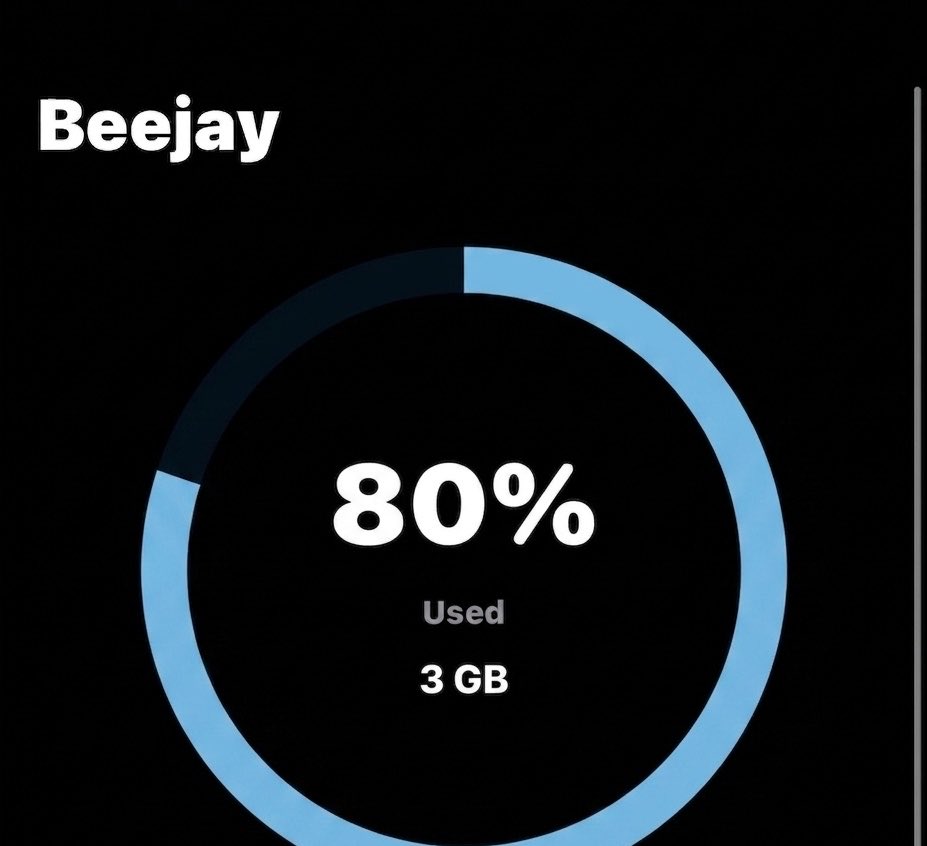
I put my phone on power saving mode so no app in the background will be able to use data
I didn’t download or upload any videos and I’ve been using my phone lightly.
I felt like all this wasn’t enough so i decided to download an app that tracks my data usage
This afternoon MTN sent me a message that I have just 4GB of data left
Checked the app and saw I used only 3GB from the 11GB I bought yesterday
Now my question to MTN is this
If I used 3GB from 11GB that means I should have 8GB left
Why do I have just 4GB left?
Where did my remaining 4GB go???
All evidence attached in the screenshots below👇👇👇
We need to call out MTN for these recent thefts as I’m sure I’m not the only one facing this problem
EFCC's Troubling Revelation on Our Students.
The worrisome statement by the Chairman of the Economic and Financial Crimes Commission (EFCC) that 6 out of every 10 Nigerian university students are involved in “419” is deeply troubling and must not be taken lightly.
Nigeria already has a very limited number of students in higher institutions, estimated at 2 to 2.5 million. If indeed about 60% of them, roughly 1.4 million young people, are involved in fraud, then we are not just facing a crime issue; we are confronting a serious moral and systemic failure.
The question we must ask ourselves is: what has brought us to this level? Who are the role models these students are looking up to?. What values are they learning from society?
We must understand that young people become what they consistently see. When a system appears to reward wrongdoing, when integrity is not upheld, and when those in leadership are associated with allegations of forgery and dishonesty without consequence, it sends a dangerous message.
It suggests that hard work does not matter, and that results, by any means, are acceptable. These points clearly point to a collapse of moral values.
As Socrates rightly said, “An unexamined life is not worth living.” Nigeria must now examine itself.
This is not about condemning our young people. It is about accepting that leadership sets the tone. If we do not demonstrate integrity at the top, we cannot expect it at the bottom.
We must urgently rebuild our value system, enforce accountability without bias, and create an environment where honesty, hard work, and discipline are rewarded. That is the only sustainable path to securing the future of our nation.
A new Nigeria is POssible! -PO
The @sodex_official team has set aside 150 million tokens to share to active traders who use sodex.
Top traders share 1M SoPoints weekly rewards. You can even double your portfolio while at it.
Join here: https://t.co/4uuuxZMJxM
Dunno how to trade? Join Tg.. link in bio
What can $20 do for you? Just 3 persons 👀
I just locked in $250 profit and $300,000 volume on sodex 🦅
My Goal for the next 4 weeks
- Create at least 1-2m$ volume weekly
- use staking feature
- use vault feature
- trade spot
- trade futures
- Get into Diamond rank
- get my share of the 150,000,000 $soso which is $66,000,000 in total reward for mainnet grinders 🦅
Signup and claim your points as you trade: https://t.co/ASzmSEqPPL
See you on the side that prints my gee, we re so back
A decaying Nation Crying for Leadership.
What we have witnessed across our country in just the past 48 hours is not only tragic, it is utterly unacceptable and a damning indictment of our collective failure of leadership.
From the reported killings in Katsina, Adamawa, Kaduna and Benue States, to the gruesome murder of an entire family in Plateau State, and the heartbreaking abduction of innocent children in Kogi State, one of the incidents involves children conveying their mother's dead body for burial. Nigeria is bleeding. We are fast becoming a nation where human life is treated as expendable, where citizens live in fear, and where the basic duty of government, to protect lives and property, is repeatedly neglected.
11 innocent Nigerians were killed in Katsina State. 7 more in Benue State. 23 in Adamawa State in just one day. An entire family was brutally murdered in Plateau State. 24 children were abducted from an orphanage in Kogi State, and 10 more children were taken in Kaduna State, all within 48 hours.
These are not mere statistics; they are our fellow Nigerians, fathers, mothers, sons, daughters, whose lives have been brutally cut short or violently disrupted.
This cannot continue. A nation cannot develop under the weight of such persistent insecurity and human tragedy. The normalisation of these horrors is itself a crisis. We must ask, with all sense of urgency and responsibility: where is the leadership? Where is the coordination, the competence, and the compassion required to confront this menace decisively?
My heart goes out to all the grieving families across these states. I pray for divine comfort for those who have lost loved ones and for the safe and immediate return of all abducted children.
A New Nigeria is not just a slogan; it has become an urgent necessity.
A New Nigeria is Possible. -PO