Do you ever wonder how the Gaza tunnels were built?
Using children.
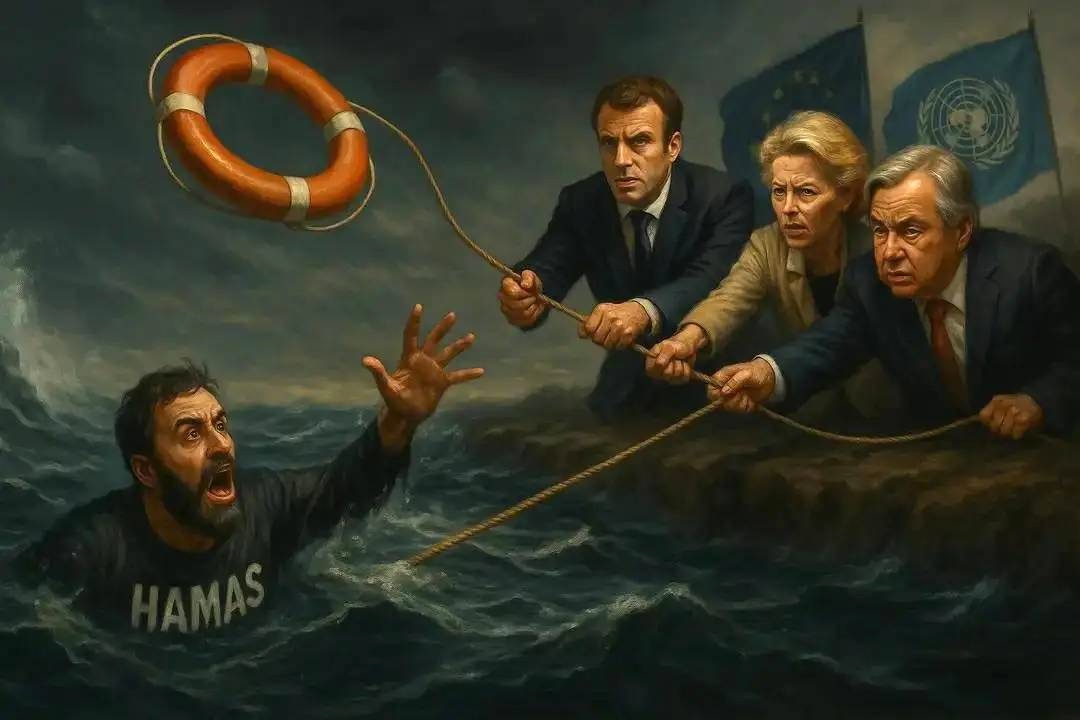
Since Hamas seized Gaza in 2007, the territory has been one of the most heavily subsidized patches of earth on the planet. Official development assistance to the West Bank and Gaza has routinely run at roughly $2 billion a year, and by conservative tallies, the Palestinians have received well over $40 billion in international aid since the mid-1990s.
Reconstruction summits piled pledge upon pledge — $7.7 billion in Europe after Hamas took power, $4.5 billion in Sharm el-Sheikh after the 2008–09 war, more than $5 billion after 2014. Qatar alone sent more than $1.1 billion between 2012 and 2018, at times $30 million a month in cash. UN agencies spent nearly $4.5 billion in Gaza from 2014 to 2020. The excuse was always the same — schools, hospitals, jobs, dignity.
The punchline arrived underground. What donors called development, Hamas treated as inventory. Cement, steel and dual-use materials that were supposed to put up school buildings became lining for the so-called ‘Gaza metro’, a military and smuggling labyrinth Hamas itself put the length at more than 500 kilometres in 2021, with later estimates ranging from 560 to 720 kilometres and some accounts stretching toward 800. Analysts and Israeli intelligence have put the construction bill in the hundreds of millions to more than a billion dollars over fifteen years, plus thousands of tons of concrete and metal siphoned from civilian shipments. The network had ventilation, electricity, blast doors, workshops and command rooms.
Above ground, Gaza stayed poor, aid-dependent and short of power. Below ground, the governing faction built a private subway for rockets, commanders and, later, hostages. The international community kept writing cheques and issuing statements about ‘the children of Gaza’, as if the accounting were someone else’s problem.
The least fashionable chapter is who did the digging. A 2008 documentary filmed children working night shifts in commercial tunnels to Egypt, eight hours in heat and bad air, paid a pittance, dropping out of school because a collapsed shaft paid better than a diploma. Reporting from the period recorded child labour in those passages and deaths from cave-ins, gas and flooding.
A widely repeated 2012 figure of ‘160 children killed’ was later corrected by the journal that printed it: the toll cited by Hamas officials was about 160 people in total by then, and a Gaza rights group counted nine children among 235 commercial-tunnel deaths by early 2013. That correction should have produced a serious investigation. It produced a shrug. Youth were still recruited into excavation after 2014, the work remained dangerous, the funerals were folded into the usual rhetoric of martyrdom.
The world that can recite casualty lists by the hour has shown a peculiar lack of curiosity about children sent under the earth to build the infrastructure of the next war. Some subjects, it turns out, are excellent for fundraising. Others are merely true.
Finkelstein is a well-known public intellectual and activist with a PhD from Princeton, significant media presence, and influence in certain activist and critical circles (especially on Israel/Palestine). He is not a mainstream, highly cited academic political scientist in the usual sense—he was denied tenure at DePaul, has limited conventional academic journal citations, and operates more as a polemicist and public commentator.
"Mohammed can barely keep his eyes open as he talks, his frail body numb with exhaustion. “The first time I arrived at the tunnel, I freaked out and I cried,” he recalls. “I did not want to work underground; the tunnel looked like a tomb. One of the workers gave me a small pill to relax.”
The pill was Tramadol, a mild opioid painkiller of poor quality imported through the tunnels from Egypt. It has become a popular drug in Gaza and can be very addictive. Many children working in tunnels say they take it regularly. “Sometimes my body is aching too much, but I still have to go to work, so I take a pill,” says another teenager." https://t.co/gHOry9za9c
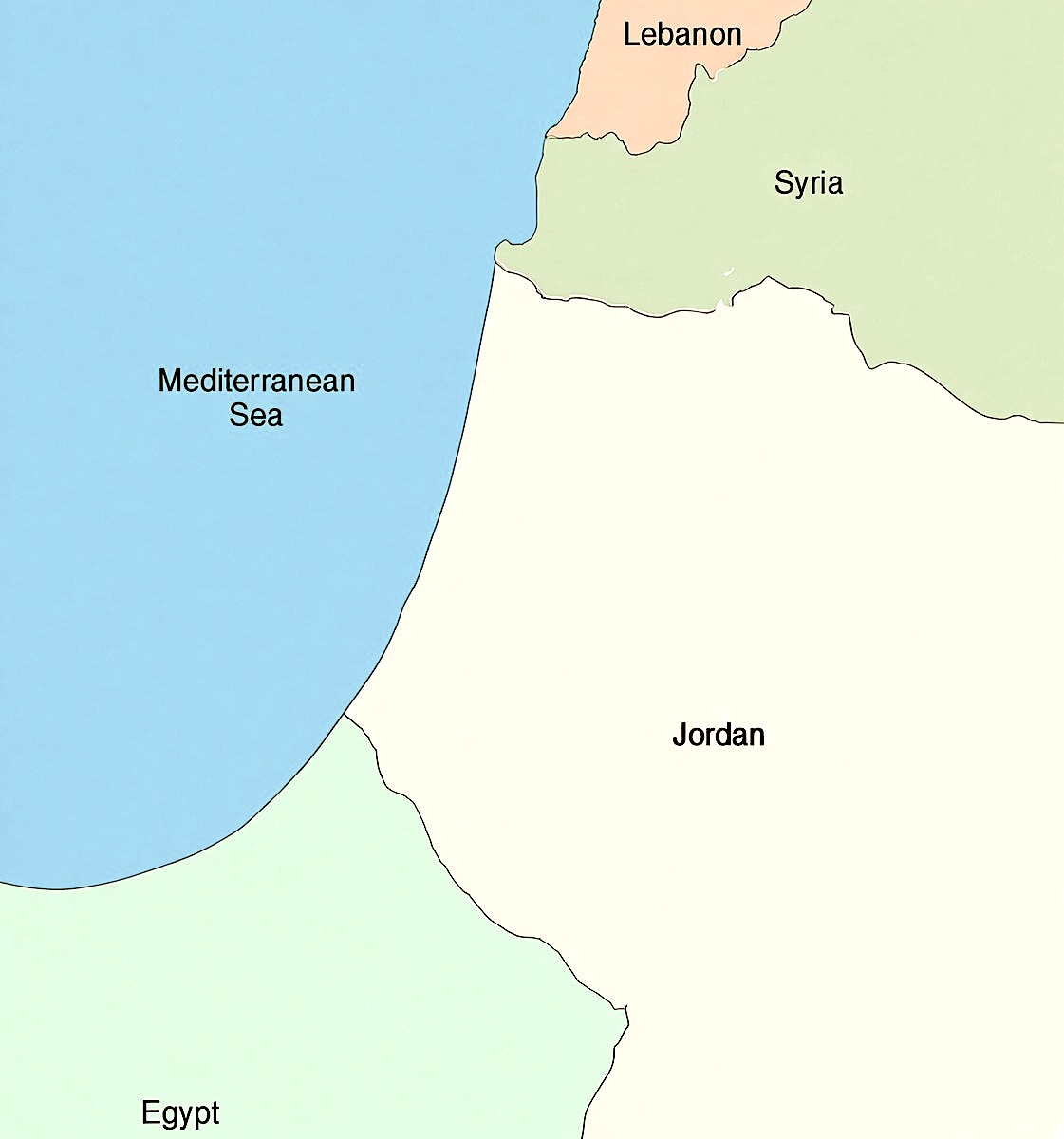
What if Israel had lost the war in 1948?
In a hypothetical division of the former British Mandate of Palestine, Jordan could easily have taken most of the coastal and interior territory (exactly as it did with the West Bank), Egypt the south, and Syria perhaps eastern Galilee. What is far more important, though, is that the most probable outcome would not have been an independent Palestinian state at all, but absorption by Jordan and Egypt.
The British Mandate for Palestine originally covered both sides of the Jordan River. In 1921–22 Britain simply carved off roughly 77–80 % of that territory (everything east of the river) and created the Arab state of Transjordan for Abdullah. That state is today’s Jordan. Jordan’s population is majority Palestinian-origin (commonly estimated at 50–70 %). So the Arab state that emerged from the Mandate already exists.
In 1967 Jordan was explicitly warned to stay out. It signed a defence pact with Egypt, attacked Israel, and lost the West Bank as a direct result. Had it remained neutral, Judea and Samaria would almost certainly still be under Jordanian control.
So Palestinians already have a state. It is called Jordan.
So why are they not fleeing there to escape the famous genocide and famine?
Oh wait… they tried that. They tried to assassinated the king, attempted to overthrow the government, and got thoroughly murked by Jordan’s military.
Another war they lost — this time against their own country.
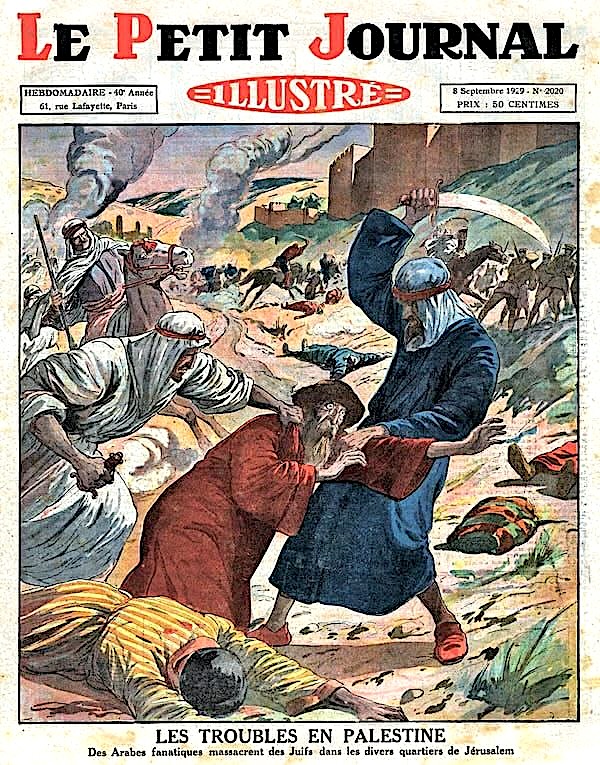
This front page of the French illustrated weekly Le Petit Journal (8 September 1929) depicts the 1929 Palestine riots, in which Arab mobs attacked Jewish communities across the British Mandate territory.
The caption—'The Troubles in Palestine: Fanatical Arabs massacre Jews in the various quarters of Jerusalem'—refers to coordinated violence that began with disputes over Jewish prayer rights at the Western Wall and rapidly spread. In Jerusalem, Hebron, Safed, and other places, Arab attackers killed 133 Jews (including women and children), wounded hundreds more, and destroyed homes and synagogues, the Hebron massacre alone claimed 67 Jewish lives. British forces were slow to intervene, and the episode formed part of a longer pattern of Arab violence against Jewish communities under the Mandate (following earlier outbreaks in 1920 and 1921).
Far from a story of Arabs welcoming Jewish immigrants, the period was defined by sustained Arab opposition to Jewish land purchase, immigration, and the Balfour Declaration’s promise of a Jewish national home. Jewish return and immigration (legal under Ottoman and then British rule) increased the Jewish share of the population, but Palestinian Arab leadership and much of the population rejected coexistence on those terms and repeatedly resorted to riots and later the 1936–39 revolt. The 'occupation' framing does not apply to 1929: the territory was administered by Britain as a League of Nations Mandate, Jews were a minority acquiring land through purchase rather than conquest, and the violence shown here was directed by Arabs against Jews, not the reverse. The modern 'occupation' debate concerns territories taken in the 1967 war, decades after these events.
The image is straightforward contemporary reportage of Arab-initiated massacres, not an illustration of Jewish aggression or colonial 'occupation' by Jews.