They succeeded in driving Glenn out of Europe. But knowing Glenn, I’m absolutely certain he will be an even more forceful voice outside of this lost continent!
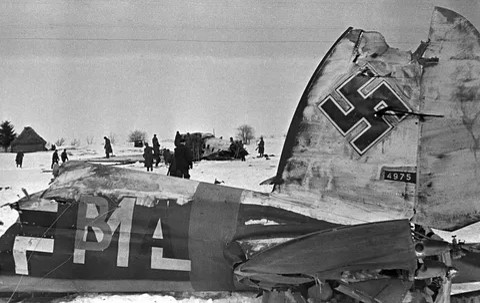
After the war, Finnish officials burned their papers so fast that the country's chief censor complained about the phone calls.
Kustaa Vilkuna, Finland's chief censor, admitted that "high officials" kept calling nonstop to demand the destruction of sensitive files. Mannerheim himself burned most of his personal archive in late 1945 and early 1946. Staff records and intelligence reports were destroyed or shipped abroad in Operation Stella Polaris, and then "lost" in Switzerland.
What survived is still hard to reach. Many collections stay closed unless relatives grant permission. Files on the Finnish SS volunteers are "missing," though they appear in archival catalogs. The records of the 1945–46 Helsinki war responsibility trials have never been published.
So when someone tells you to trust Mannerheim's memoirs, remember what they rest on: selective memory and burned paper. Had Leningrad fallen, it would have meant mass death and a city wiped off the map. That is exactly what Mannerheim and his German partners planned and worked toward.
It’s funny how many people don’t realize that Russia is Europe’s largest economy and fourth largest in the world by GDP (PPP).
And yes, it’s PPP.
If grooming a poodle costs $30 in Russia and $150 in America, nominal GDP records five times more spending for the same service.
Congratulations. Your poodle just contributed five times more to GDP by getting the same haircut.
#pupo#enzoghinazzi#пупо
È l'ora di finirla. Questo accanimento contro tutte le forme di arte, di cultura, di storia e di sport che arrivano dalla Russia, è diventato insopportabile e, alla fine, si ritorcerà contro di noi. Basta!!!!
Menachem Begin, who became Israel’s prime minister in 1977, called the West Bank and Gaza “liberated territories,” an integral part of the land of Israel. “What occupied territories?” he asked, dismissing the term itself. The Soviet narrator’s reply: liberated from whom? From the Palestinians who lived there.
Trabajé allí en el 85, el 86 y el 87, ¡y puedo confirmar que todo lo que escribió Nikos es cierto!
Compré un coche usado —un Lada de tres años de antigüedad, proveniente de la Embajada de Rusia— por 200 dinares (660 dólares), mientras ganaba entre 30 y 40 dinares (unos 100–130 dólares) al día.
¿A qué me dedicaba?
¡Reparaba televisores en un taller privado en Trípoli! "ASESINADO POR AQUELLOS POR QUIENES PASÓ HAMBRE
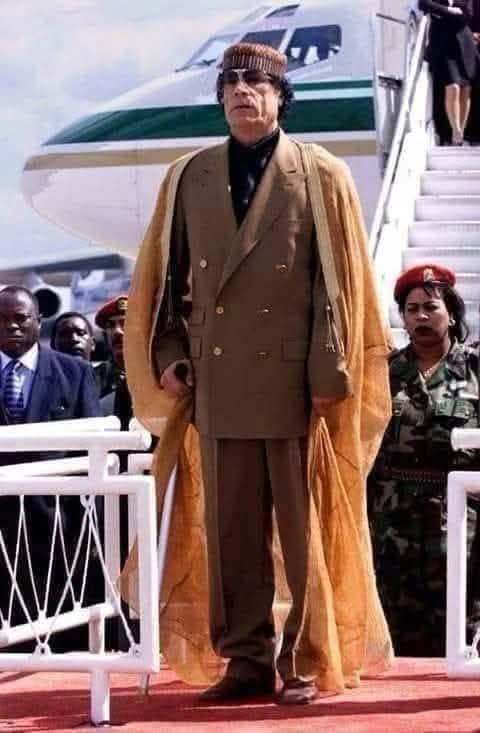
Por qué fue asesinado Gadafi:
1. En Libia no existían facturas de electricidad; la electricidad era gratuita para todos sus ciudadanos.
2. No había intereses en los préstamos; los bancos eran propiedad del Estado y, por ley, los préstamos a los ciudadanos estaban libres de intereses (0 %).
3. Gadafi prometió que sus propios padres no recibirían una vivienda hasta que todos los demás en Libia tuvieran una. El padre de Gadafi falleció en una tienda de campaña durante su mandato.
4. Todos los recién casados en Libia recibían 60 000 dinares del gobierno para comprar un apartamento y formar una familia.
5. La educación y la atención médica eran gratuitas en Libia. Antes de Gadafi, solo el 25 % de la población sabía leer y escribir; bajo su mandato, esa cifra alcanzó el 83 %.
6. Si los libios deseaban vivir en una granja, se les proporcionaba una casa, equipo, semillas y ganado, todo ello de forma gratuita.
7. Si un tratamiento médico no estaba disponible dentro de Libia, el gobierno financiaba el tratamiento en el extranjero, además de otorgar 2300 dólares para gastos de alojamiento y viaje.
8. Si un ciudadano libio compraba un automóvil, el gobierno subvencionaba el 50 % de su costo.
9. El precio de la gasolina era de 0,14 dólares por litro.
10. Libia no tenía deuda externa y sus reservas ascendían a 150 000 millones de dólares (actualmente congeladas a nivel mundial).
11. Si los libios no lograban encontrar empleo tras completar su formación, el Estado les pagaba el salario promedio correspondiente a su profesión —como si estuvieran empleados— mientras buscaban trabajo.
12. Una parte de los ingresos obtenidos por la venta de petróleo libio se destinaba directamente a las cuentas bancarias de todos los ciudadanos.
13. Una madre que daba a luz a un hijo recibía 5000 dólares.
14. 40 hogazas de pan costaban 0,15 dólares.
15. El 25 % de todos los libios poseía títulos universitarios." 16. Gadafi llevó a cabo el proyecto de irrigación más grande del mundo, conocido como el «Gran Río Artificial», para abastecer de agua a toda la nación desértica.
¿Acaso esto suena demasiado bueno para ser verdad? No; es simplemente que, en medio de la destrucción y la miseria en las que viven hoy, han perdido de vista cómo es una sociedad bajo el cuidado de alguien a quien realmente le importa SU GENTE.
Si a esto se le llama «DICTADURA», entonces me pregunto: ¿qué es, pues, la democracia?
Nikos Salikiriakis
Quien lo entiende, lo entiende...🤔
¡Gracias!🙏💖🌹
@orsiniufficiale Costretto a dimettersi. Professore, vorrei richiamare la sua attenzione sul caso del suo collega -che, tra l’altro, è di grande talento; su YouTube, in pratica ascolto solo Lei e lui - anche lui esperto di sicurezza internazionale.
Questi sono davvero tempi molto bui per l’Europa
Prof. Glenn Diesen says he resigned from his Norwegian university and is leaving the country in "exile" after six years of intimidation, canceled events, and an NGO posting a photo of his house online.
Prof. Glenn Diesen says he resigned from his Norwegian university and is leaving the country in "exile" after six years of intimidation, canceled events, and an NGO posting a photo of his house online.
🚨 The English man arrested for DESTROYING a statue of Jesus Christ in Lithuania has been named as Aaron Goodfellow
He is now facing THREE YEARS in JAIL
In American popular culture, women were often portrayed as housewives, dependent on men and confined to family responsibilities. Soviet ideology offered a different image: women as independent individuals, workers, scientists, engineers, mothers and equal participants in public life.
In the USSR, women were not viewed as the “weaker sex” in need of male guidance, but as independent individuals capable of learning, working, making decisions and achieving success. Soviet posters celebrated women workers, scientists, pilots and athletes. A woman could be a mother and care for her home, but her life was not limited to this role.