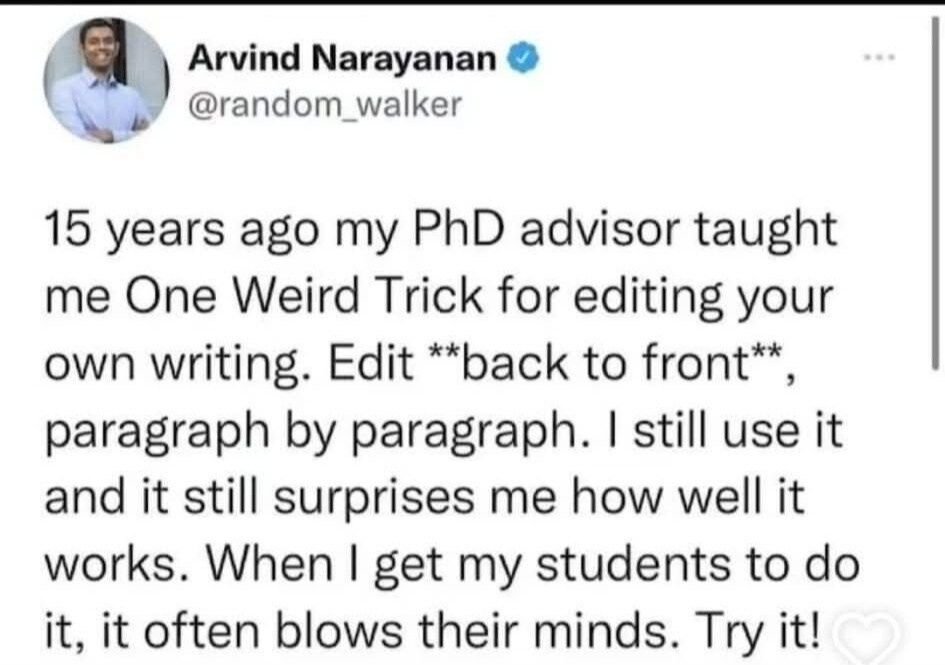
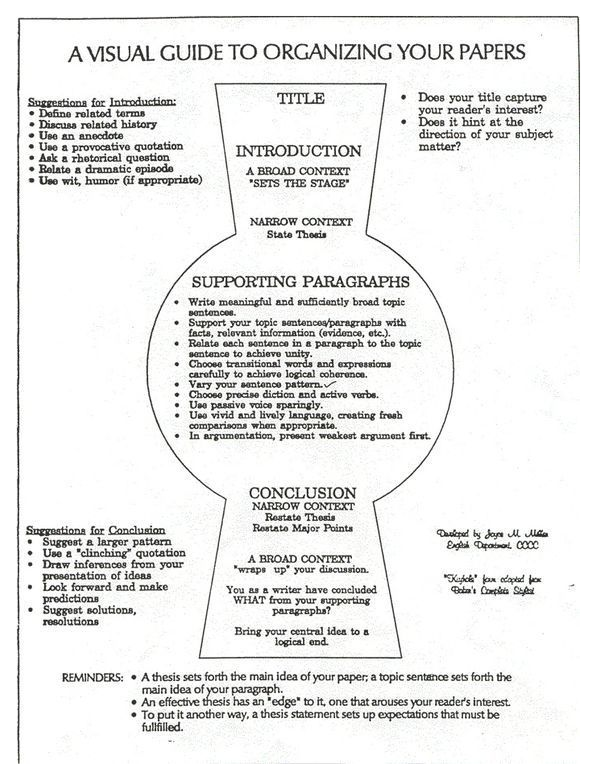
Read your conclusion first. Then your introduction.
If they don't match, one of them is wrong.
Here's how to do it ⤵️
Step 1: Write a rough conclusion based on your findings
Step 2: Read it back to yourself out loud
Step 3: Draft your intro to match what you actually discovered
Step 4: Check if they're telling the same story
This backwards approach will save you from:
→ Overpromising in your intro
→ Conclusions that drift from your original question
→ Weeks of rewriting entire sections
→ Reviewers calling out inconsistencies
💬 𝗪𝗵𝗮𝘁 𝘂𝗻𝗰𝗼𝗻𝘃𝗲𝗻𝘁𝗶𝗼𝗻𝗮𝗹 𝘄𝗿𝗶𝘁𝗶𝗻𝗴 𝗮𝗱𝘃𝗶𝗰𝗲 𝗵𝗮𝘀 𝘀𝘁𝘂𝗰𝗸 𝘄𝗶𝘁𝗵 𝘆𝗼𝘂?
------------------------
Useful find? Pass it on!
🔄 Retweet
👋 I’m @RaziaAliani
Click my name + follow + 🔔
I post about AI in research & analysis
(& 𝘤𝘰𝘯𝘥𝘶𝘤𝘵 𝘵𝘳𝘢𝘪𝘯𝘪𝘯𝘨𝘴 𝘰𝘯 𝘵𝘩𝘦𝘮)
Want FREE tips on using AI in research?
↳ Join 16K+ researchers:
🔗 link in bio
PhD Students - Do you want to learn how to do research?
If yes, check out this entirely free platform.
𝐄𝐥𝐬𝐞𝐯𝐢𝐞𝐫 𝐑𝐞𝐬𝐞𝐚𝐫𝐜𝐡𝐞𝐫 𝐀𝐜𝐚𝐝𝐞𝐦𝐲 offers free resources developed by global experts to support researchers at various stages of their careers.
Here are 10 of my favorite resources.
𝟏. 𝐖𝐡𝐚𝐭 𝐢𝐬 𝐩𝐥𝐚𝐠𝐢𝐚𝐫𝐢𝐬𝐦 𝐚𝐧𝐝 𝐡𝐨𝐰 𝐭𝐨 𝐚𝐯𝐨𝐢𝐝 𝐢𝐭? (13 min video)
You will learn
- Difference between original work and plagiarized work
- Importance of correction citations
- What to do if someone break the rules.
Link: https://t.co/1gOsAwiIGW
𝟐. 𝐇𝐨𝐰 𝐭𝐨 𝐬𝐭𝐫𝐮𝐜𝐭𝐮𝐫𝐞 𝐲𝐨𝐮𝐫 𝐚𝐫𝐭𝐢𝐜𝐥𝐞 𝐜𝐨𝐫𝐫𝐞𝐜𝐭𝐥𝐲? (40 min video)
You will learn
- Type of content each part should contain
- Maximize potential of each part
- Knowledge for writing an effective scientific article
Link: https://t.co/EZx3S5eEno
𝟑. 𝐇𝐨𝐰 𝐭𝐨 𝐩𝐫𝐞𝐩𝐚𝐫𝐞 𝐲𝐨𝐮𝐫 𝐦𝐚𝐧𝐮𝐬𝐜𝐫𝐢𝐩𝐭 (40 min video)
You will learn
- Publication cycle and process of pee review
- Choosing the right journal for your manuscript
- Assess your manuscript
Link: https://t.co/X9XS8KdHmC
𝟒. 𝐇𝐨𝐰 𝐭𝐨 𝐞𝐟𝐟𝐞𝐜𝐭𝐢𝐯𝐞𝐥𝐲 𝐦𝐚𝐧𝐚𝐠𝐞 𝐲𝐨𝐮𝐫 𝐫𝐞𝐟𝐞𝐫𝐞𝐧𝐜𝐞𝐬? (32 min video)
You will learn
- Automate your citations
- Make your bibliography accessible
- Mendeley as a reference manager
Link: https://t.co/Mt3jKhUQW2
𝟓. 𝐇𝐨𝐰 𝐭𝐨 𝐭𝐮𝐫𝐧 𝐲𝐨𝐮𝐫 𝐭𝐡𝐞𝐬𝐢𝐬 𝐢𝐧𝐭𝐨 𝐚𝐧 𝐚𝐫𝐭𝐢𝐜𝐥𝐞 (60 min video)
You will learn
- Tips for ensuring that your thesis is publishable
- Identify right journal for your work
- How to interpret submission guidelines
Link: https://t.co/yQlnhPnpFE
𝟔. 𝐇𝐨𝐰 𝐭𝐨 𝐝𝐞𝐬𝐢𝐠𝐧 𝐞𝐟𝐟𝐞𝐜𝐭𝐢𝐯𝐞 𝐟𝐢𝐠𝐮𝐫𝐞𝐬 𝐟𝐨𝐫 𝐚𝐫𝐭𝐢𝐜𝐥𝐞𝐬 (60 min video)
You will learn
- When to have a figure in your article
- Design effective and purpose-driven figures
Link: https://t.co/ppOFf6E1gM
𝟕. 𝐇𝐨𝐰 𝐭𝐨 𝐢𝐝𝐞𝐧𝐭𝐢𝐟𝐲 𝐬𝐮𝐢𝐭𝐚𝐛𝐥𝐞 𝐣𝐨𝐮𝐫𝐧𝐚𝐥𝐬 𝐟𝐨𝐫 𝐬𝐮𝐛𝐦𝐢𝐬𝐬𝐢𝐨𝐧 (15 min video)
You will learn
- creating a citation overview
- viewing journal metrics
- comparing sources
Link: https://t.co/dIYJubF9F2
𝟖. 𝐔𝐧𝐝𝐞𝐫𝐬𝐭𝐚𝐧𝐝𝐢𝐧𝐠 𝐦𝐚𝐧𝐮𝐬𝐜𝐫𝐢𝐩𝐭 𝐫𝐞𝐣𝐞𝐜𝐭𝐢𝐨𝐧𝐬 𝐚𝐧𝐝 𝐫𝐞𝐚𝐬𝐨𝐧𝐬 (7 min video)
You will learn
- Why your paper has been rejected
- Not to take rejection personally
- Value the given feedback
Link: https://t.co/4gOyXqTDcR
𝟗. 𝐈𝐦𝐩𝐫𝐨𝐯𝐢𝐧𝐠 𝐲𝐨𝐮𝐫 𝐜𝐡𝐚𝐧𝐜𝐞𝐬 𝐨𝐟 𝐚𝐜𝐜𝐞𝐩𝐭𝐚𝐧𝐜𝐞 𝐧𝐞𝐱𝐭 𝐭𝐢𝐦𝐞 (7 min video)
You will learn
- Tips and tricks for improving your chances
- Understand reviewer comments
Link: https://t.co/jvminmZ0g6
𝟏𝟎. 𝐇𝐨𝐰 𝐭𝐨 𝐫𝐞𝐯𝐢𝐞𝐰 𝐚 𝐦𝐚𝐧𝐮𝐬𝐜𝐫𝐢𝐩𝐭? (40 min video)
You will learn
- Preparing an effective review report
- Evaluate abstract of the manuscript
- Points to consider while reading each part
Link: https://t.co/2pZnQZEgqO
Anything you'd like to add?
#phd #research
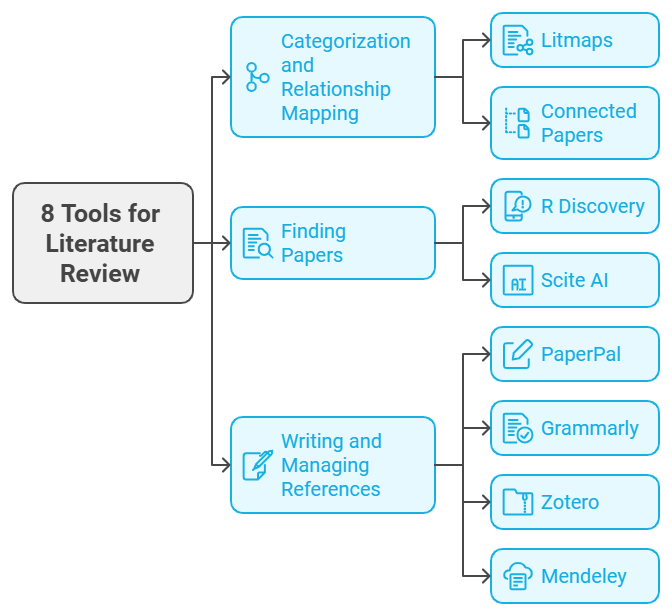
PhD Students - 8 tools to help you in your literature review.
Every PhD student needs to conduct a literature review.
A solid literature review takes at least 2-3 months. Using tools, you can reduce this time by 50%.
𝐂𝐚𝐭𝐞𝐠𝐨𝐫𝐢𝐳𝐚𝐭𝐢𝐨𝐧 𝐚𝐧𝐝 𝐫𝐞𝐥𝐚𝐭𝐢𝐨𝐧𝐬𝐡𝐢𝐩 𝐚𝐦𝐨𝐧𝐠 𝐩𝐚𝐩𝐞𝐫𝐬
1. @LitmapsApp
- Helps you find relevant papers from just a single paper
- Helps you to categorize the papers
- Works with your reference managers (Zotero, etc.)
- Visualize the relationship between papers.
- Share papers via reference manager.
- Get alerts about new papers to add to your literature review.
Link: https://t.co/djhByzyg7M
2. @ConnectedPapers
- Figure out the forward and backward links to a research paper.
- Quantitatively shows the relevance index of papers.
- Visualize the relations between the papers in your literature review.
Link: https://t.co/6EWn5B0Lc2
𝐅𝐢𝐧𝐝𝐢𝐧𝐠 𝐩𝐚𝐩𝐞𝐫𝐬 𝐟𝐨𝐫 𝐲𝐨𝐮𝐫 𝐥𝐢𝐭𝐞𝐫𝐚𝐭𝐮𝐫𝐞 𝐫𝐞𝐯𝐢𝐞𝐰
3. @R_Discovery
- Notifies you as soon as a relevant paper is published.
- Audio stream paper for you to listen to instead of reading.
- Translate papers automatically to your native language.
- Offers automatic integration with Zotero and Mendeley.
Link: https://t.co/1WiEBSyShJ
4. @Scite
- Shows you the most relevant papers to a seed paper.
- Determines for you whether other papers agree/disagree to a paper.
- Helps you understand the holistic work done by a lab/organization.
- Notifies you about latest papers published in your research area.
Link: https://t.co/anbwtUpw6w
𝐋𝐢𝐭𝐞𝐫𝐚𝐭𝐮𝐫𝐞 𝐑𝐞𝐯𝐢𝐞𝐰 𝐖𝐫𝐢𝐭𝐢𝐧𝐠
5. @teampaperpal
- Specifically designed for assisting in scientific writing
- Rephrase confusing sentences
- Offers real-time suggestions for smooth writing
- Simple and very easy to use
Link: https://t.co/QesC1s57yz
6. 𝐆𝐫𝐚𝐦𝐦𝐚𝐫𝐥𝐲
- Ensures your writing is polished
- Clean up tangled and hard-to-read sentences.
𝐑𝐞𝐟𝐞𝐫𝐞𝐧𝐜𝐞𝐬 𝐦𝐚𝐧𝐚𝐠𝐞𝐦𝐞𝐧𝐭 𝐟𝐨𝐫 𝐲𝐨𝐮𝐫 𝐥𝐢𝐭𝐞𝐫𝐚𝐭𝐮𝐫𝐞 𝐫𝐞𝐯𝐢𝐞𝐰
𝟕. @zotero
- Offers automatic citation capture from web pages, PDFS, and other sources.
- Organize and categorize references effortlessly
𝟖. @mendeley_com
- Integrates very easily with MS word
- Enables you to collaborate and share references with research teams.
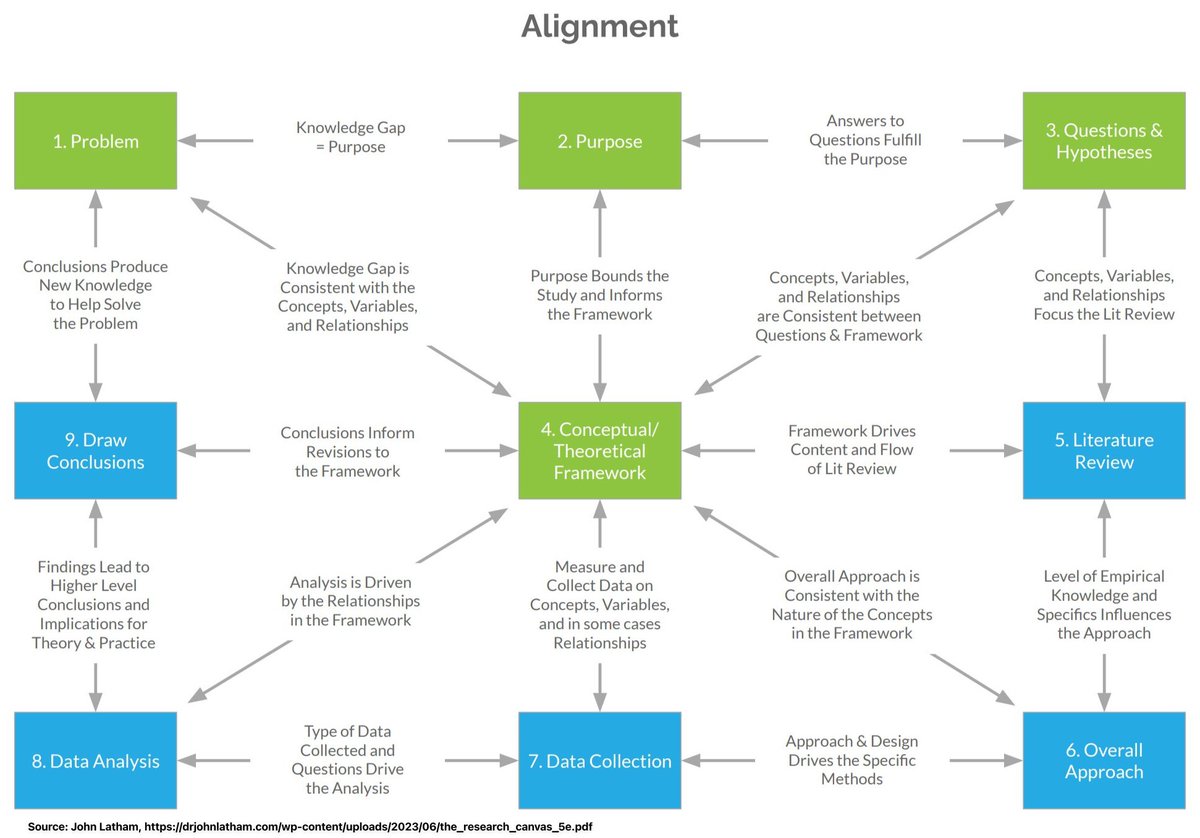
Your research is a house of cards if misaligned.
The secret?
A 9-step framework to build solid ground:
1. Problem
2. Purpose
3. Questions
4. Framework
5. Literature
6. Approach
7. Data
8. Analysis
9. Conclusions
Each step reinforces the others. Skip one. It falls apart.
7 Steps to write a PhD research proposal that stands out.
Here's how
I have reviewed over 100 PhD applications.
Here's a step-by-step guide to crafting a stellar PhD research proposal:
Simplify Your PhD Thesis & Dissertation Structure in 7 Clear Steps
Diving into a PhD thesis or dissertation can feel like navigating a labyrinth.
But what if we could break it down into manageable, clearly defined steps?
Here's how:
Struggling to find a unique angle for your research?
The key to groundbreaking research is in its gaps
7 types of research gaps every scholar should know