I’m trying to come up with an american equivalent to the Goianistão and I’m realizing that I can’t. Imagine a place with a concentration of wealth, power and misanthropy of the Bay Area; now imagine it had the literacy rates of West Virginia and the racial politics of Mississippi. And now imagine its newfound wealth results in a massive influx of a music genre I can only describe as “Taylor Swift for men”.
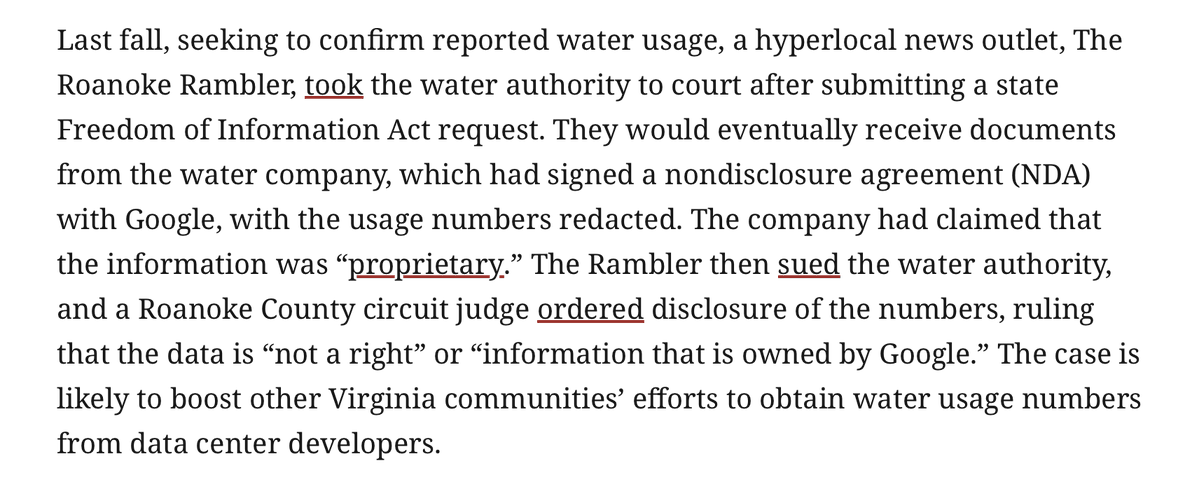
Big Tech NDAs are hiding the true impacts of data center projects, concealing key details from communities.
In Roanoke, one local paper seeking more information on a data center project and its water usage received documents with those numbers redacted.
The reason? The water company had signed an NDA with Google.
They call it a “وديعة”.
A deposit.
That is the word many Lebanese families are now using for the temporary burial of loved ones who cannot be taken home because of the war.
In English, the word sounds cold & administrative. A deposit is something placed somewhere temporarily until it can be reclaimed.
So much bureaucratic connotation in a word for something so intimate.
A deposit.
As though she were luggage.
Or a document.
Or an item being stored.
But in Arabic, وديعة carries another meaning too. It is something entrusted. Something left in safekeeping. Something precious that is being held until it can be returned.
And yet, when we are talking about a mother who has just died, it feels unbearable.
Because no daughter wants to say:
“We are placing my mother as a وديعة.”
It sounds as though death itself has become temporary storage.
As though war has reached so deeply into ordinary life that even burial has been put on hold.
These days, because of the war, many Lebanese families are having to place their loved ones as وديعة.
Not because they want to.
Because they have no choice.
Roads are inaccessible. Villages remain under threat. Entire areas are subject to bombardment & displacement orders. Families can no longer safely reach the towns & villages where generations before them were buried.
Last week, when my mother died, we became one of those families.
Taking Siran back to Nabatiyeh to lay her beside my father, where she always asked to be buried, was simply a mission impossible.
So instead, my brother & I followed the vehicle carrying her coffin to a temporary burial ground.
There was no familiar procession.
No gathering of relatives.
No prayers in the Hussainiya before departure.
No final journey home.
Only a quiet drive.
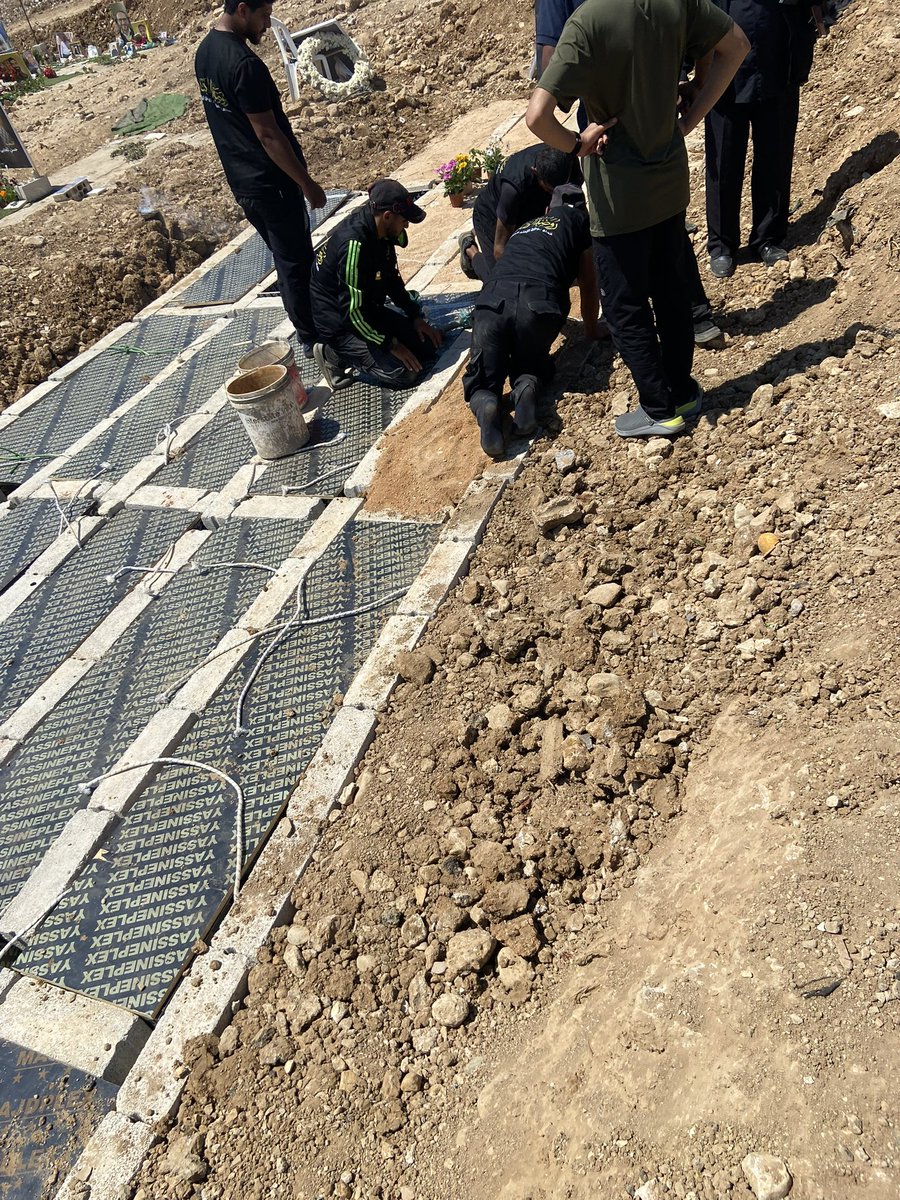
A Sheikh offered prayers over her body. Strangers gathered around us & prayed alongside us. Then a few men carried her towards a section of the cemetery reserved for what people now simply call the deposits.
A small concrete space had been prepared. Inside it sat a simple wooden coffin-sized box built to the exact dimensions of the concrete cavity, designed to facilitate transfer in the future.
Another prayer was said.
The soil was placed over her.
Around us, women wailed over other graves. A microphone carried prayers for someone else’s dead. Flags fluttered above nearby tombs. The whole scene felt surreal, suspended somewhere between mourning & administration.
Then one of the men looked at us & said:
“Write this down. Memorise this number.”
3/5.
The fifth coffin in the third row.
That is where my mother now lies.
A small stone bearing her name will eventually be placed there so that one day we can find her again & take her home.
Home.
What a simple word.
For centuries families buried their loved ones beside parents, spouses, ancestors & neighbours. It was a final act of belonging.
Today many of us are forced to say:
“Not yet.”
“For now, we leave them here.”
“We will come back for them later.”
War takes many things from people.
Homes.
Safety.
Certainty.
But I never imagined it would take this too.
That even in death, my mother could not be laid to rest beside the man she loved & always called ‘the best of men.’
For now, Siran remains a وديعة.
Entrusted.
Held.
Waiting.
And one day, God willing, when the roads are open, the bombs have stopped, & Nabatiyeh is once again reachable, we will take her to where she always wanted to be.
Beside my father.
Where she belongs.
i really hate this american act of shifting any and all responsibility for the genocide onto israel. the genocide would not be possible without active US assistance.
these attitudes are why americans are loud about palestine but quiet about the genocide perpetrated at home.
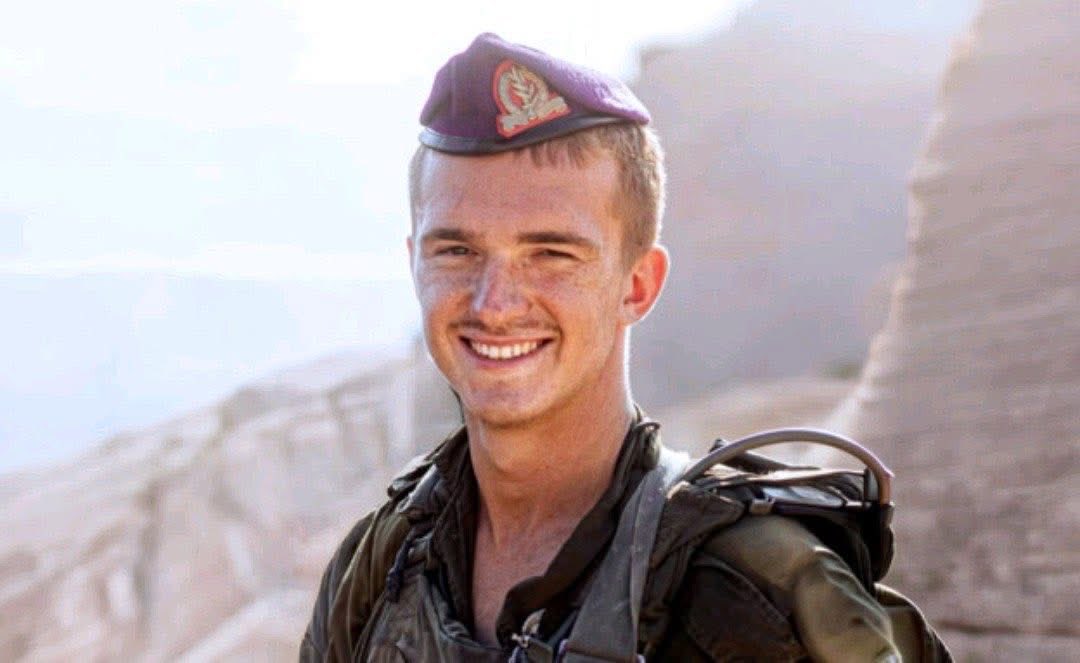
The latest IOF terrorist eliminated by Hezbollah in Lebanon was his mother’s only son. They fled Ukraine during the conflict in 2020 and settled in Ashkelon. His mother feared for his life in Ukraine but sent him to kill babies in Gaza and Lebanon. May his memory be erased
Kavernacle is entirely right here. Israel is America's dog and the dog's behaviour is a reflection of its owner. you can't hate the IDF and still think US troops deserve respect. They are the same and in many cases much much worse. Yank imperialism is an order of magnitude worse.
resistance against oppression
the human spirit is never defeated edit
Cuba
Tamil Eelam
Vietnam
Algeria
Iraq
Libya
Lebanon
Palestine
New Afrika
Yemen
DPRK
Ireland
Nepal
Turkey
and bolivia i believe