I see a lot of people asking what first hardware synth to get and a lot of others responding saying “don’t”. While it’s true that many people may have unrealistic expectations from hardware, there certainly are things that hardware can do better even as a first synth. And of course there’s a lot of things you can only get from software.
I broke down this topic, added some hardware synth recommendations and a downloadable reference card.
Hope some of you will find it useful.
https://t.co/rLbTy5V7LP
Last night your track sounded amazing. This morning it sounds like sh*t? Here's what changed. You’ll find a useful little tool in there that you can use to find out if it's listening fatigue or something actually needs fixing. https://t.co/OOpQ7ehhPM
Ever since I came across Roey Izhaki's chart of subjective terms mapped to frequency ranges, I always think it's such a useful way to get to better EQ-ing decisions. It's basically like a frequency vocabulary chart, so before you reach for an EQ, you know the vocabulary.
As Izhaki explains: “We use these terms in verbal communication, but we might also use them in our heads—first, we decide that we want to add spark and then we translate it to a specific frequency range.”
Download in print quality: https://t.co/lX271PBf2z
Why is our hearing most sensitive to a baby’s cry? Why does a mix sound different across the spectrum when turned down vs up? The most useful takeaways for your productions taken from the Fletcher-Munson experiment in the free Soft Signal episode: https://t.co/A5aENE3gqp
Why does your mix sound different when you turn it up or down? Why are our ears naturally most sensitive to something like a baby’s cry? And what does that actually mean when you’re mixing your own tracks?
Introducing Soft Signal. A free short series inside Soft Synced exploring the ideas behind how we hear music and how that shapes the decisions we make while producing.
Episode 1 is now live in the app.
https://t.co/58mkPkB6IQ
Two beats built from nothing. One laid back, one for the dancefloor. Follow the decisions that turn an idea into a finished track.
https://t.co/A1sOefXCAW
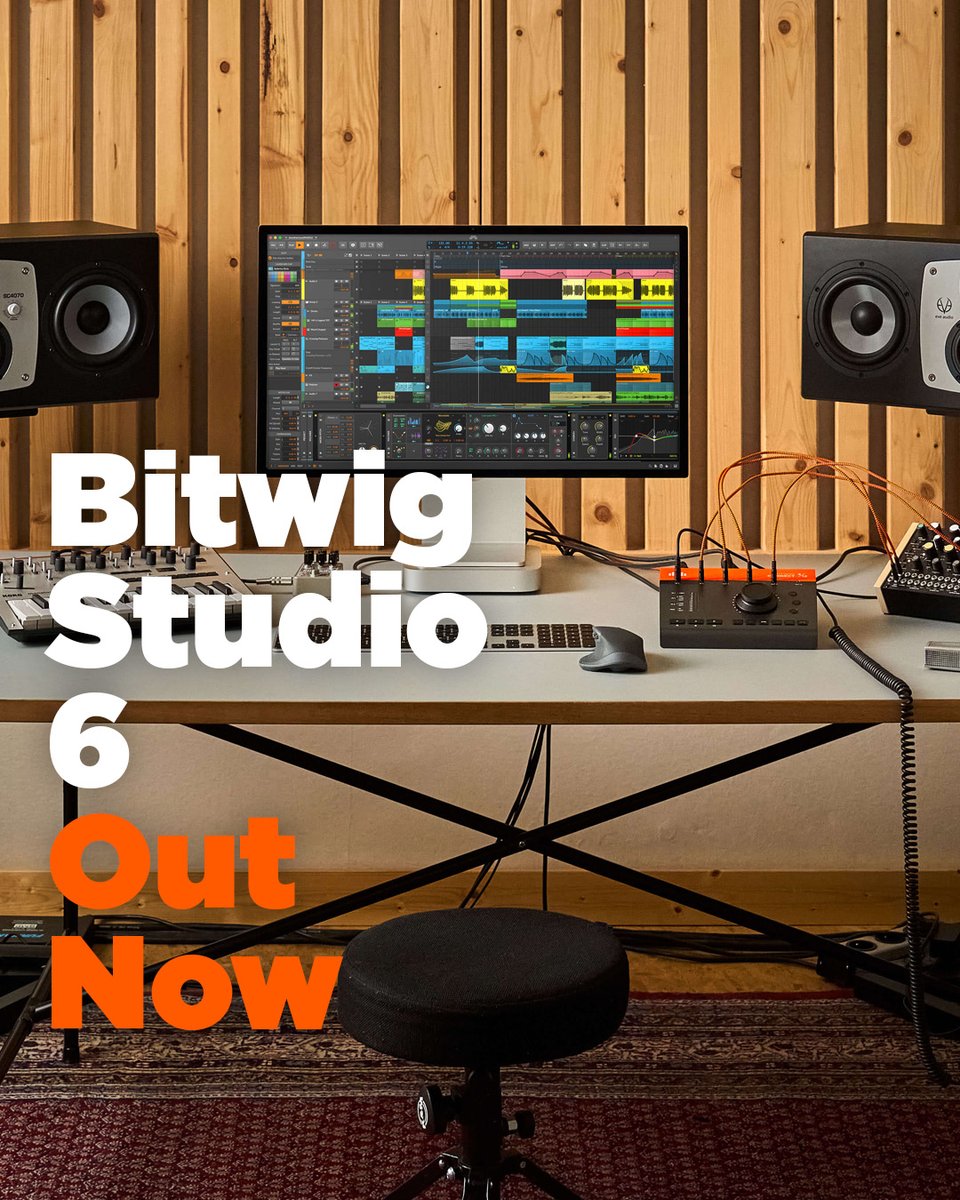
Bitwig Studio 6 is out now!
This major update improves and expands on many core DAW functions for Bitwig Studio, Producer, Essentials, and 8-Track. It’s free for everyone with an active Upgrade Plan as of August 27, 2025.
Learn more: https://t.co/8j4Nbd6TFN
Uploaded three charts that I think are super useful for understanding frequencies, EQing, and hearing better, along with some information here, hope you'll find it useful.
https://t.co/bGx7SJW2kZ
The debate about making a living from music always seems to miss a key issue: how both terms are defined.
1) Make music: Does that mean in your DAW 8am-5pm min. 5 days a week (and if so, would you actually want that?), or multi-revenue income stream like composing, producing, engineering, sound design, sample packs, teaching, etc.
2) Make a living: That meant something very different to me in my twenties ~ 20 years ago in Eastern Europe than it does today in my late forties in Hollywood, CA.