Delay architectural decisions until they’re truly needed. Architecture decisions made too early live in the wide end of the Cone of Uncertainty. Wait until you have real-world knowledge of the problem and system. #ContinuousArchitecture
"From false urgency to strategic leadership"
Move away from false urgency and instill a culture of strategic influence.
By @softwarecrafts
https://t.co/e0Gt94dM7F
🔥I'm thrilled to share my latest article on LeadDev, "Influencing Influencers: Powerful Strategies to Scale Your Impact at Work." In this article, I discuss the art of amplifying your influence within your organization, drawing inspiration from an analogy shared by my former mentor, Rick Maharaj.
This analogy has shaped how I approach leadership and collaboration. I hope this article resonates with you and provides actionable insights to enhance your impact, regardless of your role.
🔗 Check it out here: https://t.co/NB4tQettx1
Sharing my latest article on the LeadDev blog: "How to Better Budget Your Time Using the $10 Method." In this article, I delve into practical strategies for Staff+ engineers to balance technical work and leadership responsibilities more effectively. https://t.co/mE26T7CwuJ
I had the pleasure of participating in a recent LeadDev webinar where we delved into balancing technical work and leadership responsibilities for staff+ engineers. If you missed it, you can catch the replay here: https://t.co/OLGMnE6e5Z
The durability of a contract is more important than the durability of an implementation. Don’t take shortcuts - but if you have to then take shortcuts in implementation before taking shortcuts in contract design. Keep contracts simple, complexity can be added but not removed.
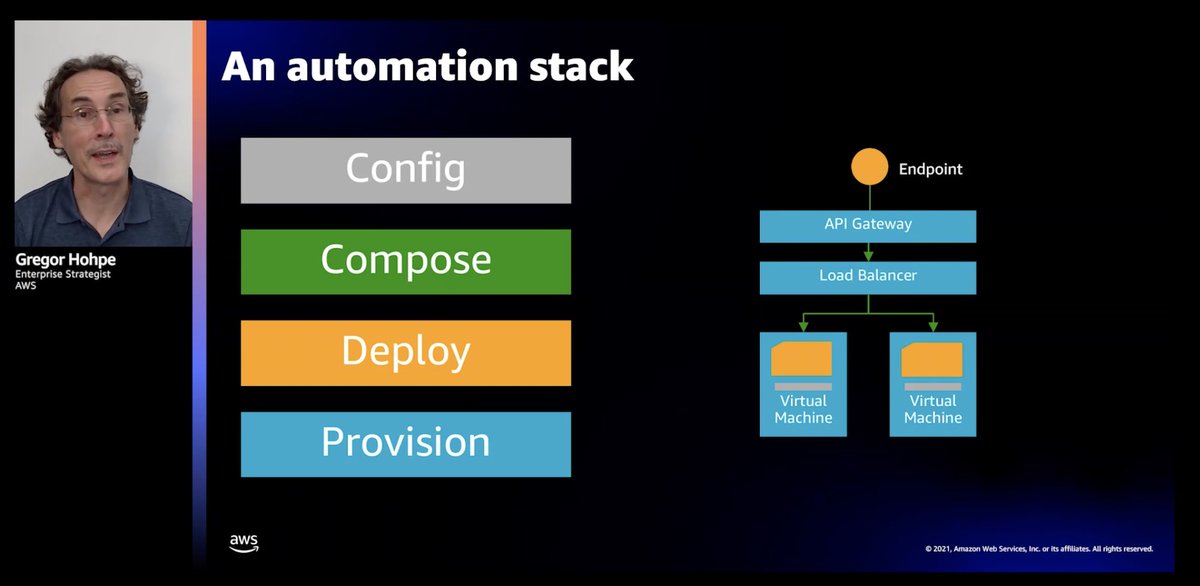
“Scientists may get their papers published by making things sound complex and difficult to understand, an architect’s job is the inverse: making complex topics easy to digest” @ghohpe
“Architects are sometimes accused of ‘not making anything.’ I believe that architects make two things that are of vital importance and in short supply: they make sense and they make decisions.” @DrDavidKnott
How to make data processing scalable, reliable and performant?
#Scalability by Partitioning
#Reliability by Replication and checkpointing
#Performant by In-memory processing
Important (but often forgotten) non-functional requirements for service clients: blocking vs non-blocking I/O, buffering & batching, #timeouts, #retries, exponential backoff & jitter, and #circuitbreaking.
Yes, in software engineering we need to be concerned about the scale and efficiency of the software we are building, but we also need to be concerned about building scale and efficiency of our own engineering organizations.
If your system is slow for a single user, then you have a performance problem. But if your system is fast for a single user but slow under heavy load, then you have a scalability problem.
In software development there is the classic space–time trade-off where we trade increased space usage with decreased time. But in distributed systems, there is also the complexity-politics trade-off where a team trades complex integration, alignment & reuse with more software.
“One cannot be successful as an architect without thinking of not only *what* to do, but *how* to get it done within an organization, which requires knowing *why* it should matter to someone who isn’t a technologist.” @ebenhewitt
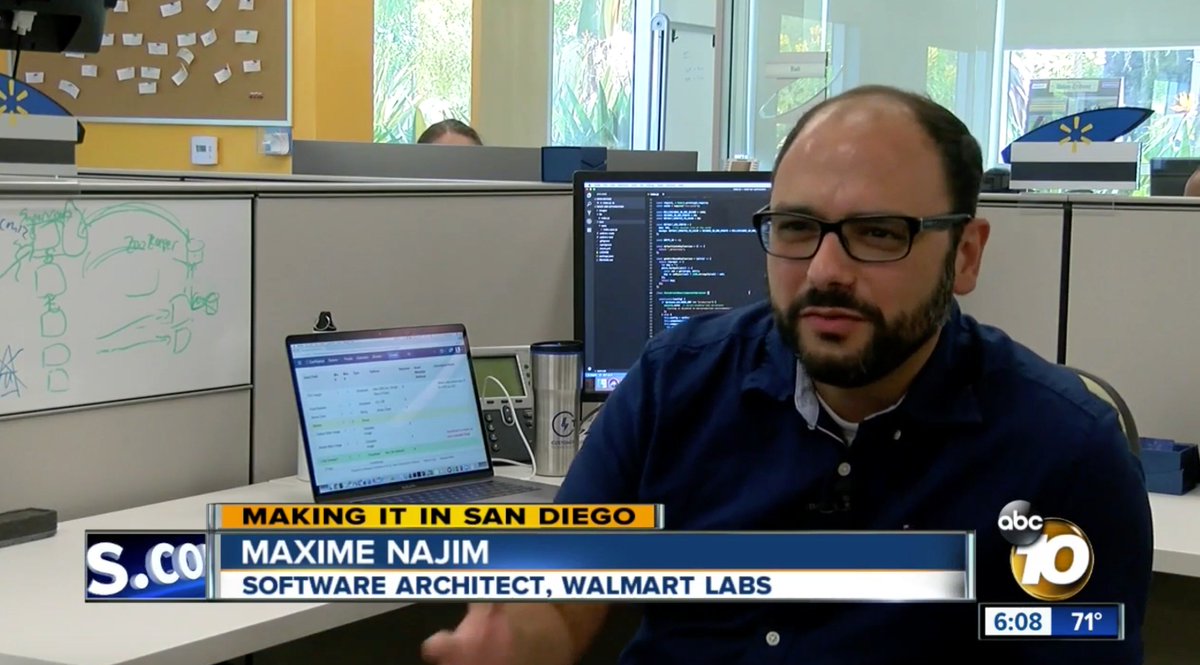
My ~60 seconds of fame on local @10News – ABC San Diego KGTV - discussing @WalmartLabs high tech job growth in @carlsbadcagov, @SanDiegoCounty with @10NewsHorn, link: https://t.co/XID13yCaao
Walmart is planning to add 120 Silicon Valley type software engineering jobs to its Carlsbad hub. Here's more info on the hiring plans and some ways to get in >
https://t.co/NtMf12mwoL