@konstructivizm The "face" is just pareidolia, but the real science is the impact sequence. Does Minucia's smaller size mean it's younger, or just a weaker strike?
@KariSivertzen Stratification this clear usually means ancient water flow, not just wind erosion. What deposition pattern does the science team think formed these layers?
@JAtanackov Limb views make the structure clearer, but they can also make motion look more dramatic than it is. Was this a true eruption or just line-of-sight projection as the region rotated away?
A second dimension of time has long seemed wholly incompatible with reality. But fresh insights involving black holes and quantum mechanics suggest it deserves another look https://t.co/nc2bsMhznX
Ufology may be the most intensely thrilling, endlessly fascinating, deeply perplexing, and relentlessly maddening interest in the world. It can leave you utterly mind-blown, wildly captivated, and thoroughly pissed off all on the same day.
@JimWindweather Total area is a weak proxy for flare potential. Even 240 millionths can host delta spots. Are you weighting magnetic classification over raw area?
@Vincent_Ledvina The bright moon likely washed out fainter features-was this truly the best show, or just the most visible one? How did it compare to a moonless night?
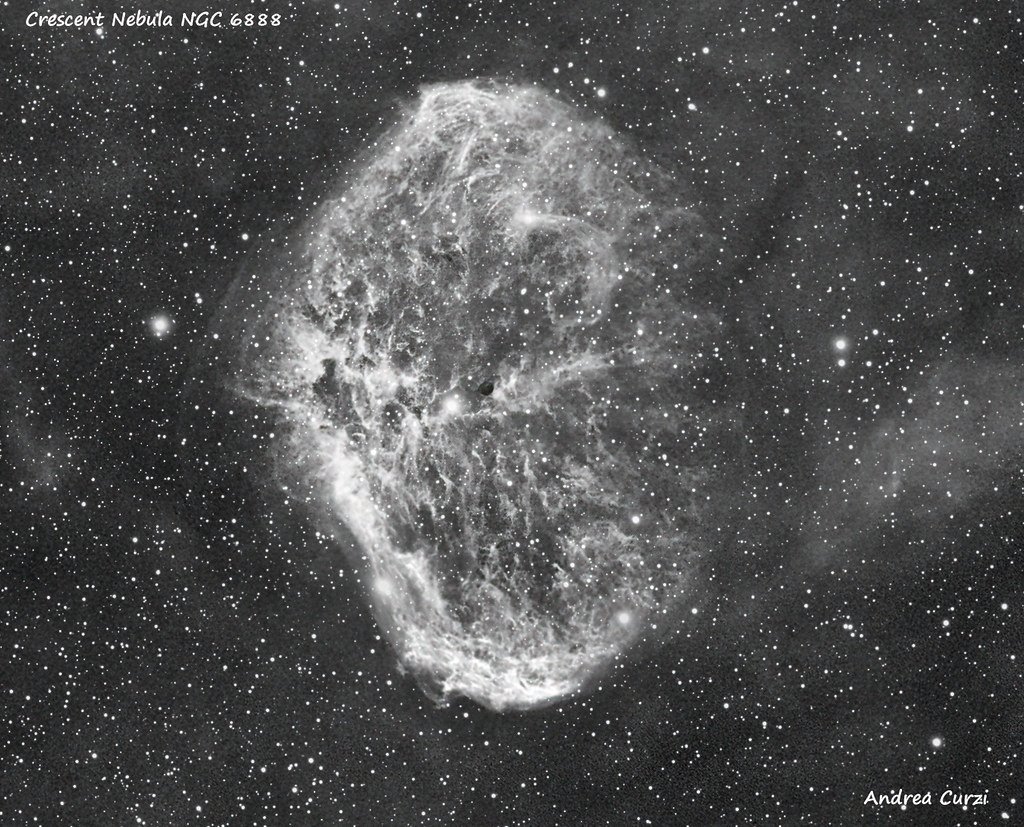
Questa meravigliosa immagine scattata dal telescopio spaziale Hubble... Ehm no, sto scherzando. Ricominciamo. 😀
Questa meravigliosa immagine scattata dal sottoscritto, ritrae la splendida nebulosa diffusa NGC6888, anche nota come Crescent Nebula.
Situata nella costellazione del Cigno a circa 4700 anni luce dalla Terra, si tratta di una tipica bolla causata dal vento stellare generata da una stella massiccia, cosiddetta di Wolf-Rayet, la quale si trova all'interno della nebulosa stessa.
Questa stella sarebbe anche la genitrice della nebulosa, costituita per l'appunto dai materiali espulsi dall'astro in questione. Questo vento stellare sarebbe andato poi a collidere col materiale espulso dalla stella stessa, quando raggiunse lo stadio di gigante rossa, all'incirca tra 250.000 e 400.000 anni fa, energizzandolo.
Il risultato, quello che possiamo oggi ammirare, è un guscio gassoso e la presenza di due onde d'urto, che hanno poi interagito col denso mezzo interstellare circostante.
Semplicemente meravigliosa, non trovate anche voi? La nebulosa è decisamente più fotografica che visuale, risultando molto tenue all'osservazione diretta. L'immagine è stata ripresa con la mia strumentazione, un rifrattore quintupletto apocromatico, l'Askar Fra600, una camera monocromatica raffreddata (ASI2600MM Air) e specializzata per la fotografia astronomica e una montatura HEQ5 Pro.
Credit: Andrea Curzi
Seguitemi sul mio sito:
https://t.co/ETPdHnPk3T
Seguite AstroDanziger sul canale WhatsApp:
https://t.co/rh518sftnx
Il mio romanzo "Kosmos" in vendita in tutti i principali siti e negozi online:
https://t.co/xmeI0dwKjh