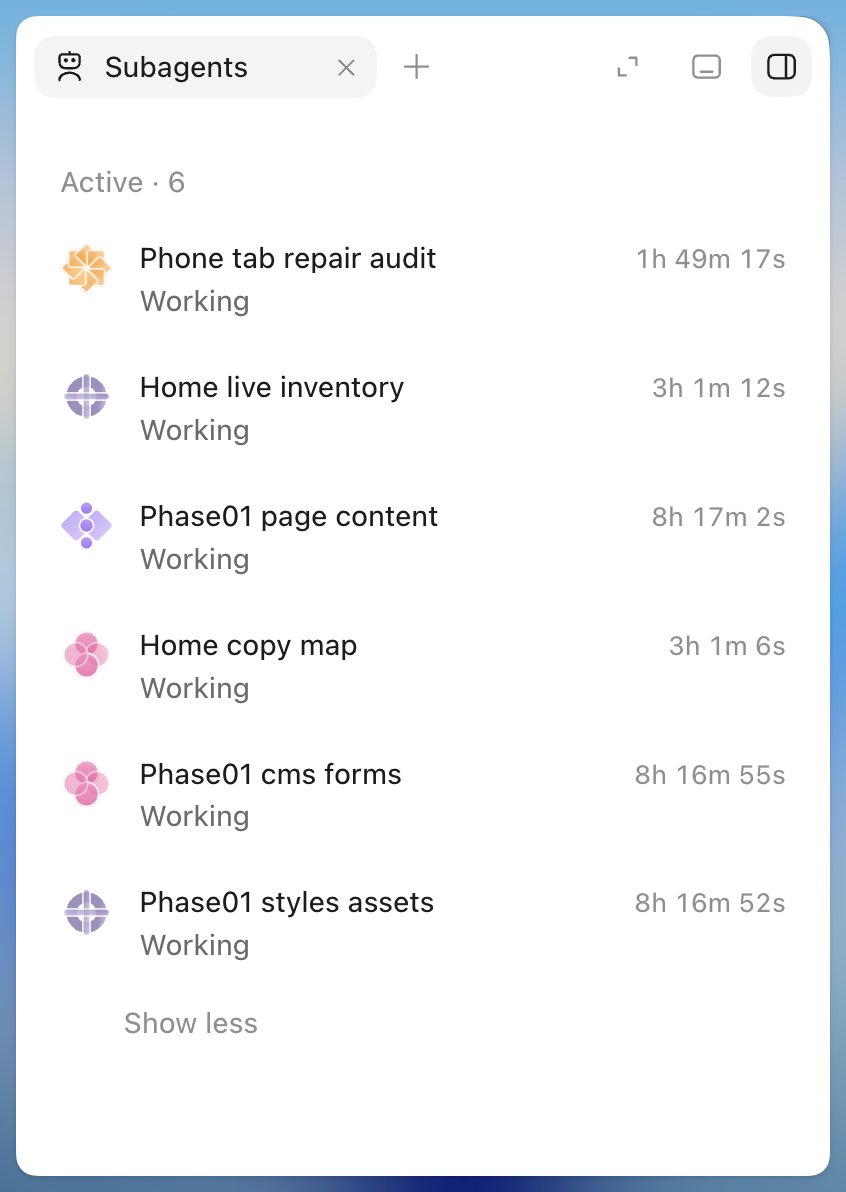
At what point should a prompt become a skill? When do you need a tool, an agent, a swarm, a workflow, or automation? Do you need all of them? Here's my take on these questions... https://t.co/SyOBeo6Qd3
It's been really fun leveraging @bot for GTM! Have spent a few weeks iterating on some of my workflows, so I wanted to share how I use Grok Bot at SpaceXAI. https://t.co/DDTwqa1UhI
Introducing Grok Bot, now in early beta.
Bots are AI teammates that do real work for you. They sign in to your tools, use them just like you do, and come back with finished work.
@anupamrjp Gemini's biggest strenght is Google's ecosystem.
It facilitates access to all of your Google workspace, from Google Ads to Gmail to Drive and more.
You can still achieve this with other providers but Gemini has the win here.
@Tech_girl Because access to AI is not the advantage.
The advantage comes from the context you give it, the specifications you define, the judgment you apply, and the systems you build around it.
Everyone can access the models. Not everyone knows how to direct them.
@solopribuilds You do not win with the AI tools. You win with the context, specifications, workflows, evaluations, and systems you build around them. Models are available to everyone. Your operating intelligence is not.
@sattyyouneed There are many, but with tradeoffs. What works for me is using a framework that is model agnostic, so I can switch AI providers at will, without losing any context, and without burning tokens.
1/ If you are building an AI-native company, implementing AI across an organization, or adding AI features to a product, do not make one model or provider inseparable from your operations.
1/ If you are building an AI-native company, implementing AI across an organization, or adding AI features to a product, do not make one model or provider inseparable from your operations.
8/ Do not depend on an AI provider to hold your company’s intelligence.
Own the context.
Own the specifications.
Own the orchestration.
Own the framework.
Own the workflow.