Ethereum gets stronger when its people ask hard questions.
Glamsterdam, the next upgrade, can increase Ethereum’s capacity by over 3x, but developers have raised important concerns about some of the proposed changes.
We’ve spent the past week working with the EF, auditors, core developers and community members to investigate them.
Here’s where we believe things stand, and how we can move forward together.
https://t.co/z4Q7MQi14g
About the Glamsterdam dilemma:
1) EIP-8037 and EIP-8038 have been around for more than a year, so gas repricing has been discussed for a year. Why are so many people posting about it today as if it were new? Are these people actually following Ethereum development?
2) Gas pricing is something that, since 2019, was designed to change. The roadmap already changed it in Berlin, and Stateless Ethereum has been part of the roadmap since forever. So if a builder hardcoded gas values into a smart contract and assumed they would hold for the long term, that is not an EF issue.
3) Another example: before PoS, people used block numbers to calculate time instead of block.timestamp. This was already known to be a bad idea, and block time will change, especially after Hegota. So should we stop Hegota too, because some contracts that use block numbers instead of timestamps could break? No fast finality because some people didn't follow best practices?
4) Now let's handle the real elephant in the room, the only issue that actually matters: the broken EIP-150 rule, i.e. the 1/64 of gas that stays reserved for the original caller to handle out-of-gas failures in external calls.
This is the only real discussion that matters here, the rest is larping. People say there are 20,000 contracts affected:
4a) First of all, if you relied on that gas to catch the revert of an external call, it's still a very weird use case. I have never actually seen anyone use it.
4b) It's far more secure to simply revert the transaction than to gamble on having enough of that 1/64 to run any real, useful logic, because the amount that remains depends on the gas the user supplied. By design, this can be broken easily anyway.
4c) People say 20,000 contracts, and I ask them: how much TVL is impacted? How many of these contracts are actually in use with value at risk, and how many are just short-term routers and bots that can be replaced easily?
5) If you build on Ethereum and you don't follow what has been on the roadmap for years, and you decide your contract can live forever by hardcoding gas numbers into calls and using block numbers instead of timestamps to manage time, that is not an Ethereum issue. Ethereum didn't decide this at the last moment. You had years.
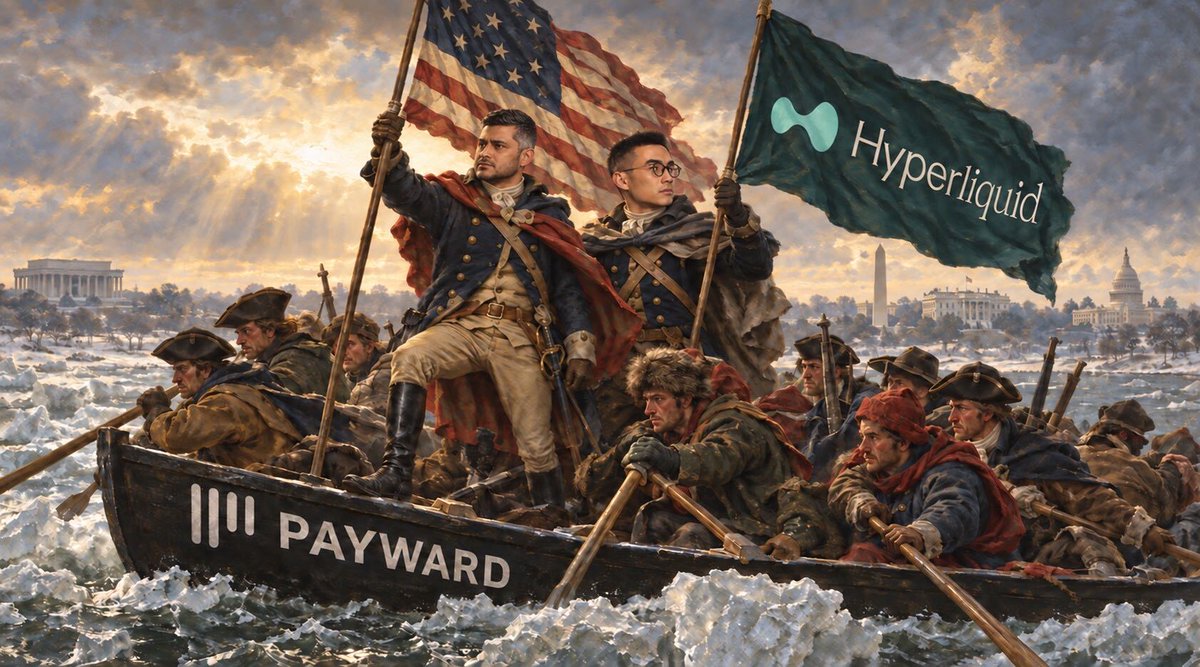
Payward, the parent company of Kraken, announced its intention to be the first CFTC-regulated deployer on HIP-3* markets. Payward will use Hyperliquid as the infrastructure layer to deploy perpetual futures markets for US clients. Subject to regulatory approval, Bitnomial, Payward’s CFTC-regulated DCM and DCO, would act as the HIP-3* deployer: creating, owning, and administering the markets and clearing and settling the contracts. If approved, NinjaTrader Clearing, Payward’s CFTC-registered FCM, would carry client accounts.
HIP-3 will support optional deployer configuration for permissioned markets in a future network upgrade. This set of additional deployer functionality is collectively called HIP-3*. At its core, HIP-3* activation involves an onchain allowlist managed by the deployer or its sub-deployers. The functionality is strictly additive to HIP-3; its use is optional and up to the deployer. Existing markets remain unchanged. The initial release is available on testnet, where specifications are preliminary and subject to change based on feedback.
Hyperliquid is a neutral infrastructure layer with the goal of supporting large parts of the financial system. HIP-3* gives deployers additional functionality to operate deployments consistent with the requirements applicable to them. As with HIP-3, HIP-3* deployers are independent operators who use Hyperliquid as the onchain infrastructure layer for their own markets, while retaining control and responsibility over their deployment.
the monero:native emails were us. they were wrong. here is what happened and what changed.
what happened
- clients who bought xmr with their own money and withdrew it got an email asking for employer, source of funds and what they planned to do with their coins
- no rule required it. someone saw a young client with a lot of money and called it a red flag. that is not a red flag. that is our customer and client
what changed
- those requests are withdrawn and the clients have been told nothing is required of them
- the "what will you do with your coins" question is gone and unacceptable. where your money came from is a fair question. what you do with it after it leaves is not
xmr stays listed. buy it here, take it home. that is the product..
we'll keep making it better. thx for the call out.
https://t.co/RZMlx0ULch
@Rep_Walkinshaw@elonmusk What a fucking retard. First make it difficult to do work with doge by calling him Nazi, suing every decision, fire bomb his businesses and tell people to boycott him then come back year later asking why he didn't save more with doge. Fucking clowns
Burning the historic town hall in Limoges to protest the high cost of living is peak self-sabotage.
Rebuilding it will be paid for by the same taxpayers already struggling with prices and strained services. Destruction does not lower costs. It raises them.
@mert It's his view, as someone who's on the deep end on those papers and cryptography I doubt he tried to be performative. I do prefer more thorough post from vitalik though.
🚨JUST IN: $2.3 TRILLION Wells Fargo is reportedly in talks with Kraken's parent over crypto trading liquidity.
Payward, Kraken's parent company, would act as a crypto liquidity provider to the bank.
Wells Fargo already offers spot Bitcoin ETFs to eligible wealth clients and has joined a group developing a dollar stablecoin.
Talks are ongoing and may not result in a deal, per CoinDesk.