@vitathr@Jayasimha108 Add to this strata several successive mythological and theological developments over the millennia and I think we can agree that this is far more multifaceted than your original assessment of a simple degeneration? By the way, I am not a Vaiṣṇava.
@vitathr@Jayasimha108 The Govardhana myth isn't an isolated development, it is rooted in a textual tradition that reflects changes in etiology and ritual orthopraxy already detectable in the Śatapatha Brāhmaṇas, where the elevation of Viṣṇu as central to the yajña can be found.
@Jayasimha108 I think it has more to do with how Hinduism is far more congregational in the diaspora than in India. These people passively absorb their traditions via surrounding culture and family rites, whereas we must intentionally embrace our identity to maintain it, even if culturally.
I can understand when Westerners make the misassumption that Vedic deities are absent from our contemporary ritual praxis, but it is baffling to see our own do the same. Do we not still use the following mantras in prayer?
@AslanPahariii I find it somewhat hilarious how that they still are considered as such in the UC school system's aggregated Ethnic Collection and Reporting data, where they are bunched up with other SWANA individuals in the White category.
scholars like Colarusso. In fact, to end this with a little spoiler, there are two figures from the Mahābhārata that deserve discussion in greater detail! Please look forward to this.
Feeling inspired! I’ve resumed my study of the Nartiada and am in the process of writing an article on Soshlan that will elaborate on several points I previously discussed on my old account. It will be part of an essay collection on the North Caucasian epos that I’m planning on
and consequently the presence of the Drachenkampf motif, the story of his katabasis, among other things! I will address certain parallels in his birth narrative past the usual citation of Achilles or Mithras, or even other Caucasian and Hittite comparanda compiled by
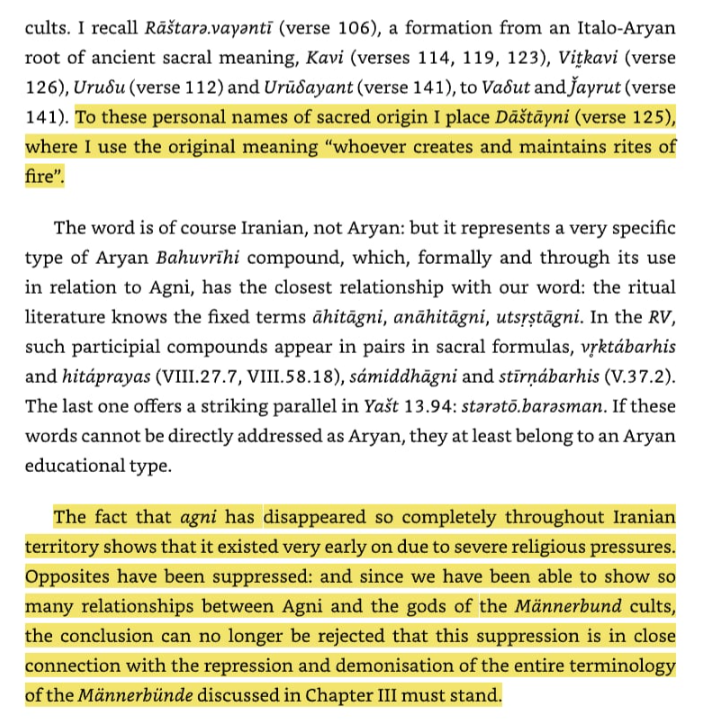
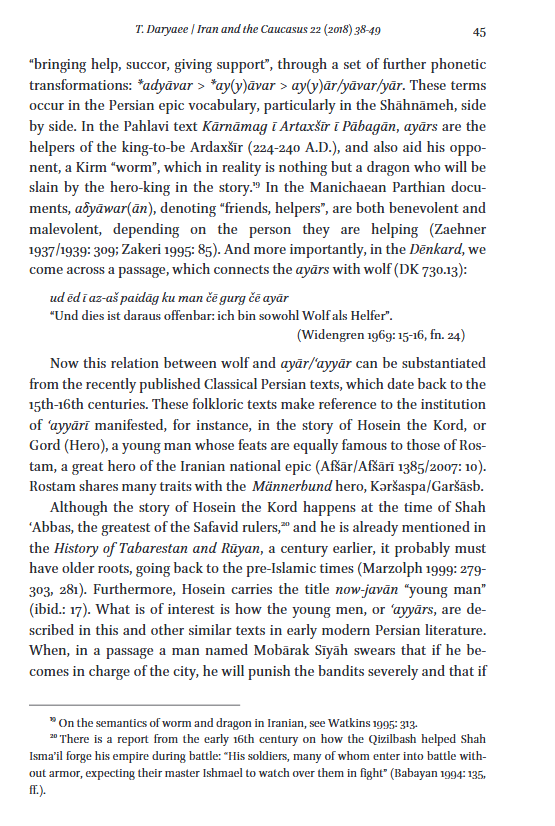
With many of the characteristics integral to the mythos of the Männerbund cult present: the warrior's rage, the wolf totemism, and even the appearance of that famed drachenkampf motif!
Now, interestingly enough, according to Daryaee (2018), attestation of the Männerbund tradition actually did survive well into Middle Iranian texts and beyond.
Didn't think I would ever return, but I've felt compelled to do a little comp-myth poasting now and again. Anyway, I recently finished reading Billinge's translation of Wikander's Der arische Männerbund (1938) and found it to be an insightful study of the Zoroastrian reforms.
@huntersrolinson It’s genuinely hilarious they believe that when the GOP has simply failed to deliver anything of worth to the general public. Nothing’s affordable, we’re engaged in a pointless war with Iran, and data centers are polluting our communities, among other things.
@NomadicBrahmin@Saatvata@AjayendraBallal I don’t particularly care about caste, it’s never been a relevant part of my life in the diaspora. That said, I do possess Brahmin ancestry and my father wears the yajñopavīta.