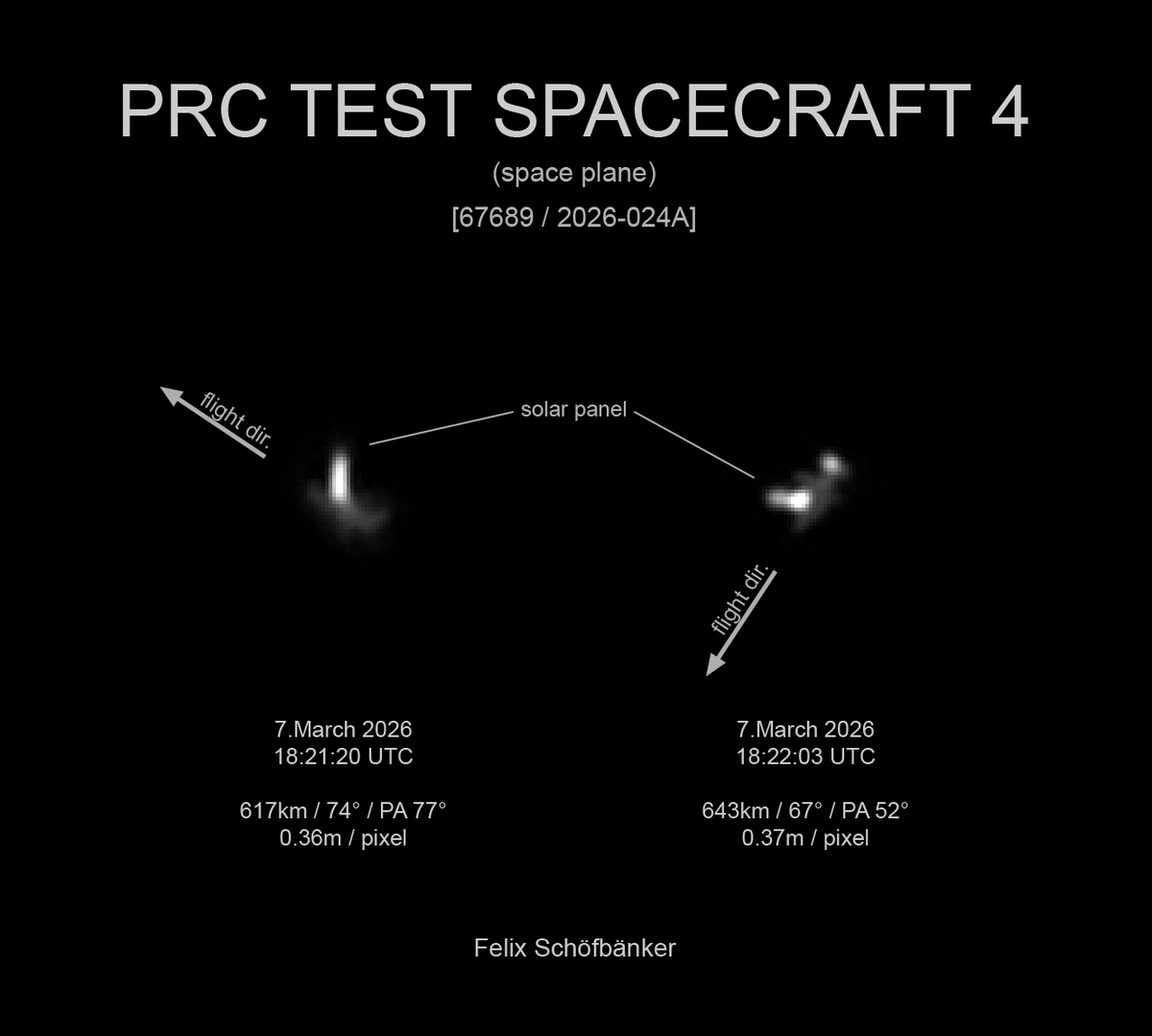
Resolved image of the Chinese space plane (PRC TEST SPACECRAFT 4) from this morning.
(2026-06-23 / 1:53 UTC)
What's clear is that it has a different attitude as in my previous observations, where it had aligned its longitudinal axis along its flight path.
Resolved image of the Chinese space plane (PRC TEST SPACECRAFT 4) from this morning.
(2026-06-23 / 1:53 UTC)
What's clear is that it has a different attitude as in my previous observations, where it had aligned its longitudinal axis along its flight path.
The released payload was also faintly visible in a simultaneous recording with a wide-field camera. (FOV 5.0° x 4.8°)
It was leading in front of the space plane with a few seconds separation.
Full post with uncompressed videos:
https://t.co/UffsTTVl97
HTV-X1 two days before reentry - 2026-05-23
Since undocking from the ISS on 2026-03-06 it's been flying on its own, doing a ~three month long technology demonstration mission.
It is scheduled to reenter over the south pacific on 26.May 2026 at 14:10 UTC
https://t.co/pe16fXbzp9
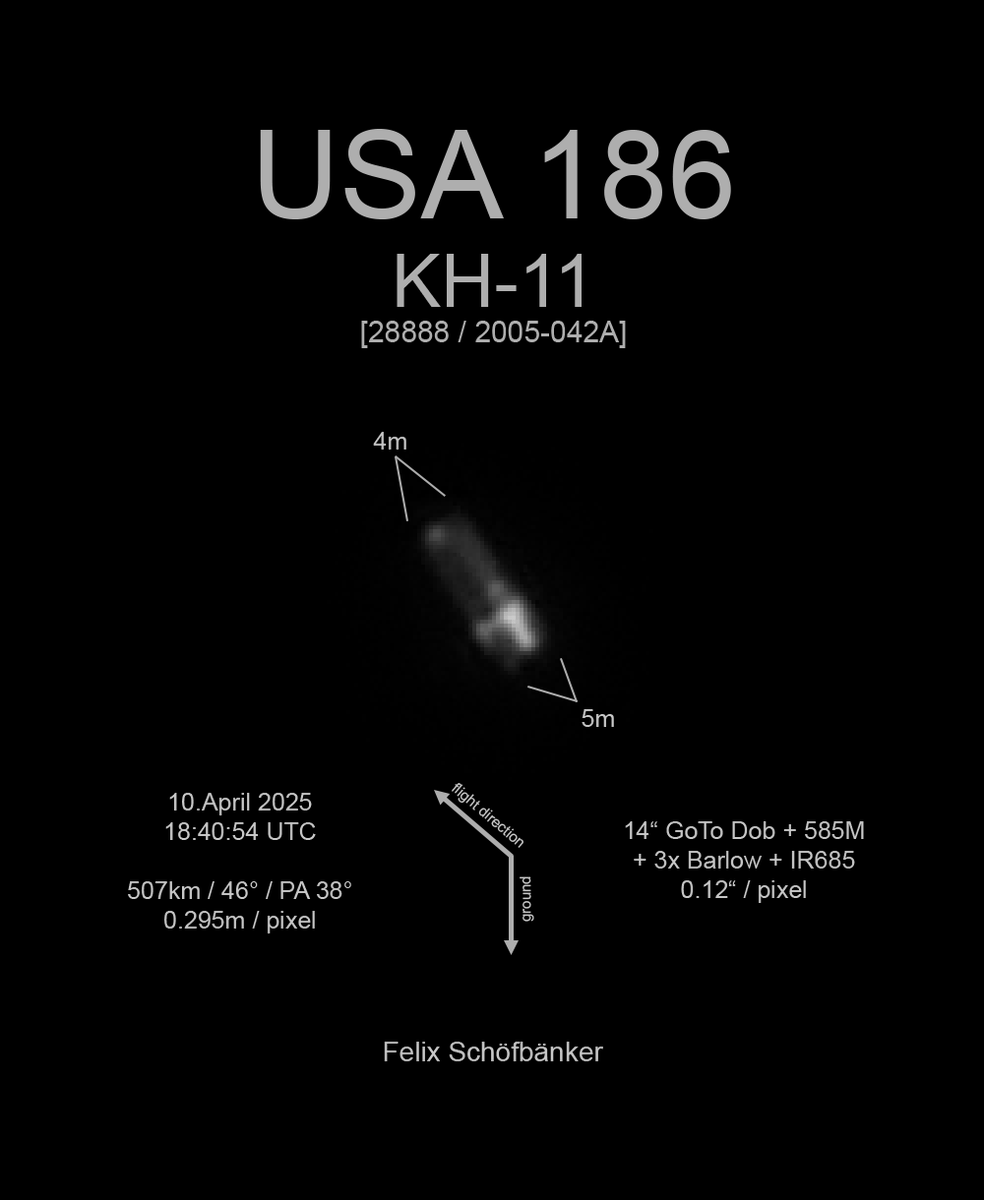
@spce_enthusiast@DutchSpace no official images of the KH-11s
but i managed to get some images
here are two of USA 186
i think the similarities to Hubble are clear
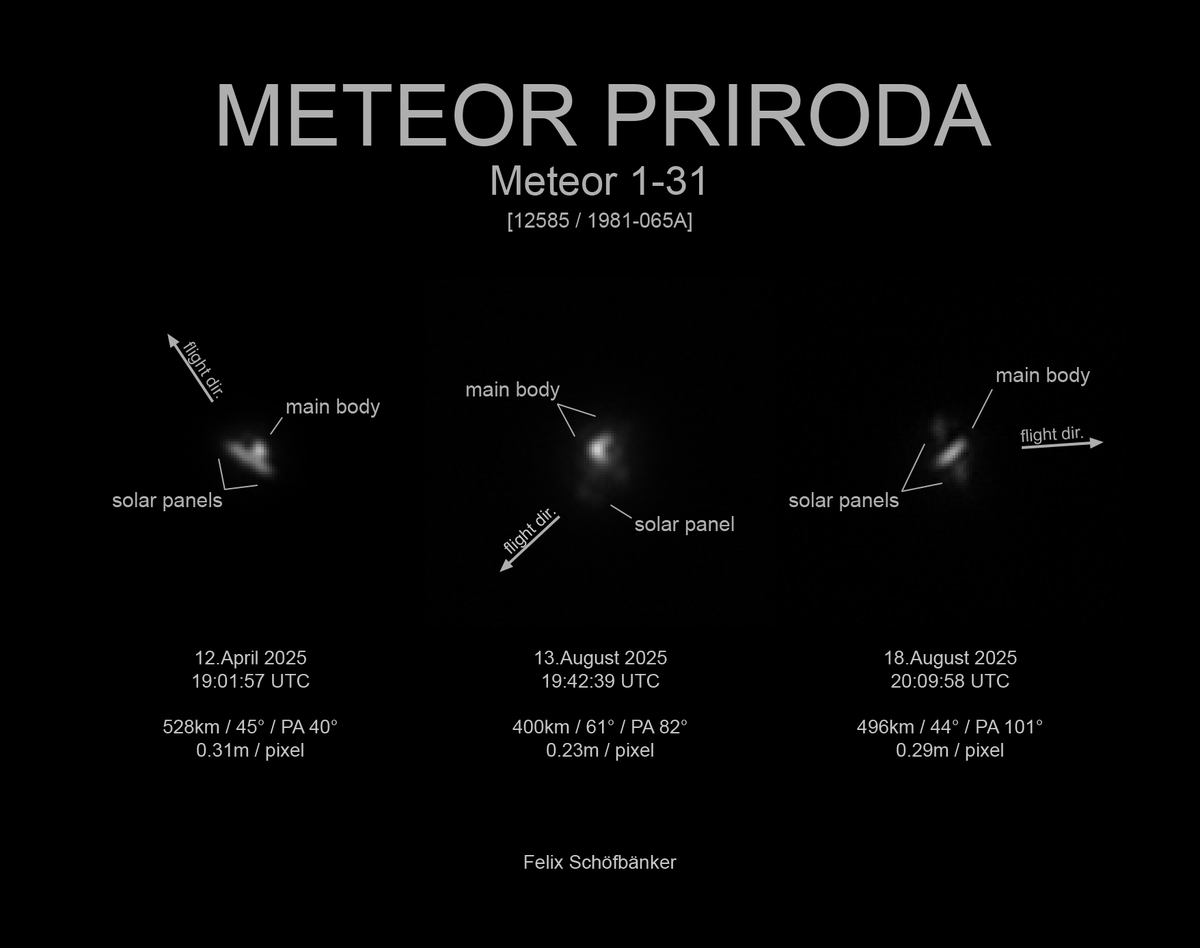
3 images of METEOR PRIRODA.
The satellite re-entered on 2025-11-20 at 09:18 UTC.
It seems that the overall structure of the satellite was still intact after being in orbit for 44yrs.
Although the attitude seems to have changed between the passes, so it was in a very slow tumble.
3 images of METEOR PRIRODA.
The satellite re-entered on 2025-11-20 at 09:18 UTC.
It seems that the overall structure of the satellite was still intact after being in orbit for 44yrs.
Although the attitude seems to have changed between the passes, so it was in a very slow tumble.
3 images of METEOR PRIRODA.
The satellite re-entered on 2025-11-20 at 09:18 UTC.
It seems that the overall structure of the satellite was still intact after being in orbit for 44yrs.
Although the attitude seems to have changed between the passes, so it was in a very slow tumble.
optical spy-satellite COSMOS 2506 (Persona)
Seems to have two solar panels with a wingspan of ~12m, each is around 3.5 x 4-5 m.
What I believe to be the aperture pointing down seems to be about 1.5 m in diameter, which is consistent with other reports.
https://t.co/j8CL6BtL2c
The wingspan of the solar panels is about 9m, and one side of the hexagonal SAR antenna seems to be about 4.5m long, which would make it have roughly 50m² surface area.
@TreeTerraria@FN68442671@jesestes@BGatesIsaPyscho The reason why Starlinks/Starshields are this bright after being launched is because the brightness mitigations aren't immediately activated.
After some time they will angle their solar panels in a way that reduces them to around magnitude 7, they have a wingspan of about 30 m.
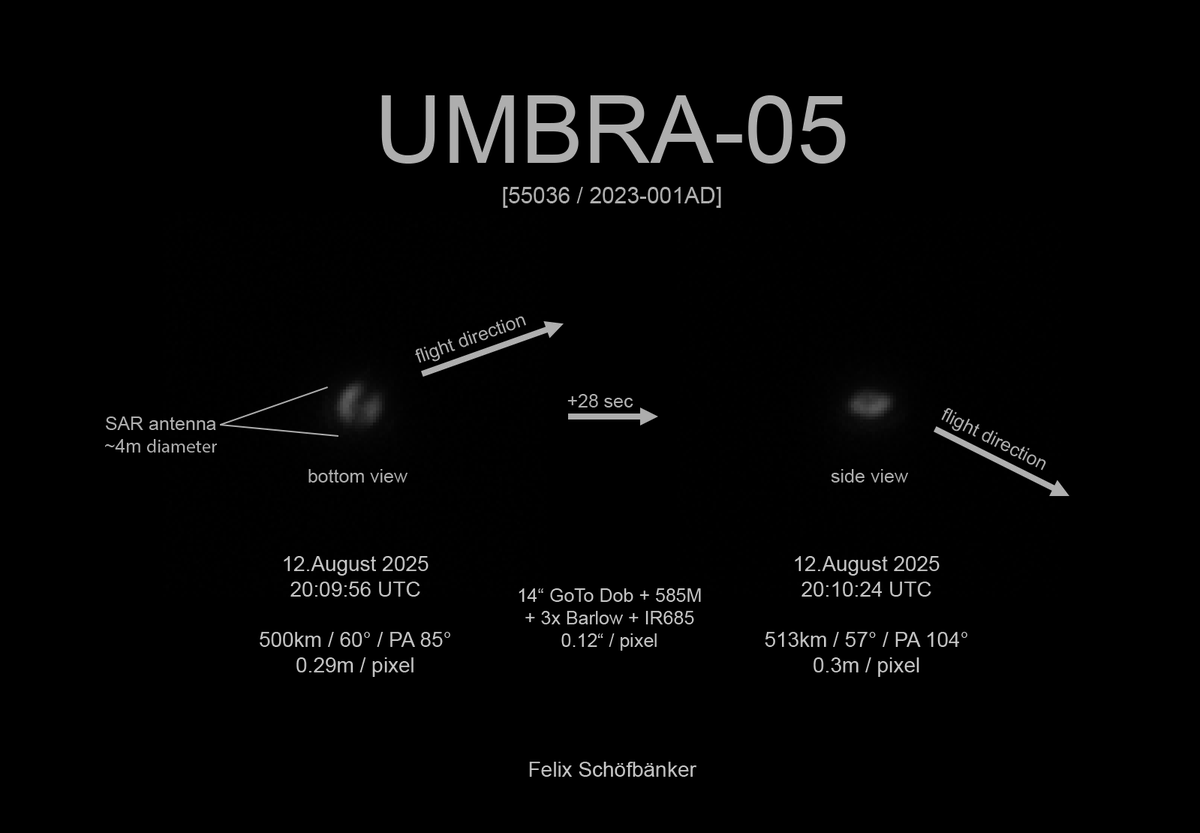
UMBRA-05 from Tuesday (12.August)
I measured a diameter of around 4m for the SAR antenna.
detailed post: https://t.co/yGRDqf988o
image of your satellite
@MasterActual@umbraspace