@Spiro_Ghost@JoeKlein42069 The annunaki are a space race who come from nibiru or some destroyed planet they need gold and water to cloud seed their occupied planets to be habitable and they spore planets with wildlife and plants and created humans as a hybrid between them and monkeys to farm and exist
@notmyfullname12@kevmelons@FiddyOW Yes ow2 gave zen better survivability because he was so easily dived by characters like tracer and genji, since also other heals have sleep, mercy fly, etc to escape danger. Its pretty good
@notmyfullname12@FiddyOW Blue on the healthbar are shield, not hp, which regenerate. Every hero who has that will regenerate that much health as long as some shields are there, i believe. Like half of zarya health is shields. The orange stuff is armor which mitigates %50 damage or something.
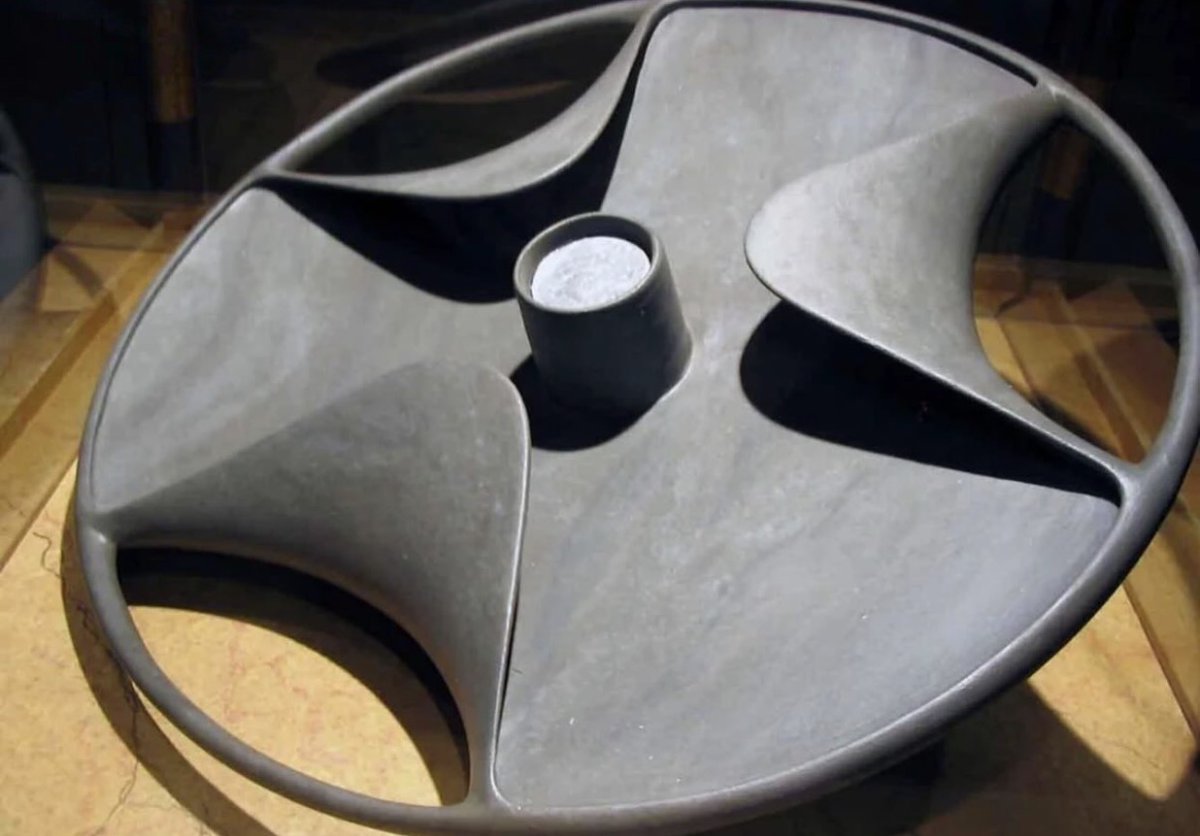
The “Sabu Disk” of ancient Egypt was discovered in 1936 inside a roughly 5,000-year-old tomb, and its purpose remains a mystery to archaeologists to this day.
The Sabu Disk is one of ancient Egypt’s most enigmatic artifacts. It was discovered in 1936 by British Egyptologist Walter Bryan Emery in the tomb of Prince Sabu at Saqqara, a burial site near the ancient city of Memphis. The tomb dates back to Egypt’s First Dynasty, around 3000 BCE, making the object roughly 5,000 years old.
What sets the disk apart is its unusual form: a circular outer rim, a raised central hub, and three curved lobes that give it an almost mechanical appearance to modern observers. This distinctive design has led to a wide range of interpretations, with comparisons to wheels, turbines, propellers, lamps, ritual vessels, and ceremonial stands.
However, the artifact was carved from delicate schist, a brittle stone that would not withstand heavy stress or rapid movement, making functional mechanical use unlikely. As a result, most Egyptologists interpret it as a symbolic or ceremonial object, possibly part of elite funerary equipment rather than a technological device.
Even so, its exact purpose remains uncertain. The craftsmanship of ancient Egyptian artisans was highly sophisticated, and the Sabu Disk continues to illustrate how some ancient objects resist easy categorization.
The original artifact is now housed in the Egyptian Museum in Cairo.