1/ every document in defradb is stored as a MerkleCRDT. that's a combination of two things: a Merkle DAG and a CRDT. understanding why you need both is the key to understanding shinzo's data model.
The deeper problem with centralised indexers isn't outages or rate limits; it's that you have no way to know when the data is wrong without an outage. A silent data integrity failure, an edge case in reorg handling, a missed event during a high-throughput block, a bug in how a specific opcode's state changes get tracked produces no error.
Your application keeps running. Users keep transacting. The index drifts further from chain state with every block. You won't discover it until something downstream breaks in a way that forces you to cross-reference the raw chain data, at which point you'll spend days figuring out when the divergence started and what it affected. The centralised indexer will have no audit trail that helps you. You'll be doing that forensics entirely on your own.
The reason this failure mode exists is architectural. A centralised indexer is observing the chain from the outside: polling, parsing, inferring. It is not the chain. It has no cryptographic stake in the correctness of what it returns. When it gets something wrong, nothing in the system penalises it.
Shinzo indexes from inside the validator, the node that re-executes every transaction independently, that votes on the canonical chain head, that has 32 ETH staked on getting that vote right. The correctness of the indexed data is backed by the same economic mechanism that backs the correctness of the block. That's not a feature. That's a fundamentally different trust model. One where the audit trail isn't something you have to go looking for, it's the chain itself.
Excited to be joining @shinzonetwork as Head of Business Development!
We decentralized the writes, time to decentralize the reads.
Every app in web3 still depends on centralized indexers to read the chain. Shinzo turns that read layer into a verifiable, validator-native network.
If you're a validator or a protocol and are interested, please reach out!
How to master any skill fast:
- stop studying
- outline a project
- start building it
- hit a roadblock
- figure out how to overcome it
- repeat 4 and 5 for the rest of your life
Most people don't get past 1, the rest spiral into complacency after 4.
Running a Shinzo indexer isn't a second job.
The indexer client is a Go process that connects to your existing node's RPC. One Docker command and your node is indexing.
Same hardware. Same uptime. Additional SHNZ rewards.
One-step setup → https://t.co/lcob9tms7Z
"Trust but verify" is the core promise of blockchain. But when data flows through centralized indexers, there's nothing to verify. You're trusting the provider's accuracy, uptime and goodwill - not the chain.
Real decentralization requires the data layer to match the execution layer. We're not there yet on any chain.
Communities only matter when they’re full of people who love your product.
Everything else? Just noise.
Crypto has spent years optimizing for “nice ser, bullish 🔥” airdrop hunters and almost none optimizing for real users.
Communities only matter when they’re full of people who love your product.
Everything else? Just noise.
Crypto has spent years optimizing for “nice ser, bullish 🔥” airdrop hunters and almost none optimizing for real users.
back from from @EthCC 2026! here's some of my takeaways
- Ethereum in-protocol staking as a product has been very well built, supported, and marketed all while instilling a real sense of purpose and community. What other parts of the ecosystem can learn and benefit from this kind of approach?
- There's lots of quality research, upgrades, and projects happening on Ethereum that embody the principles of censorship resistance, open source software, privacy, and security. Those should be supported and I think emphasizing those principles is good.
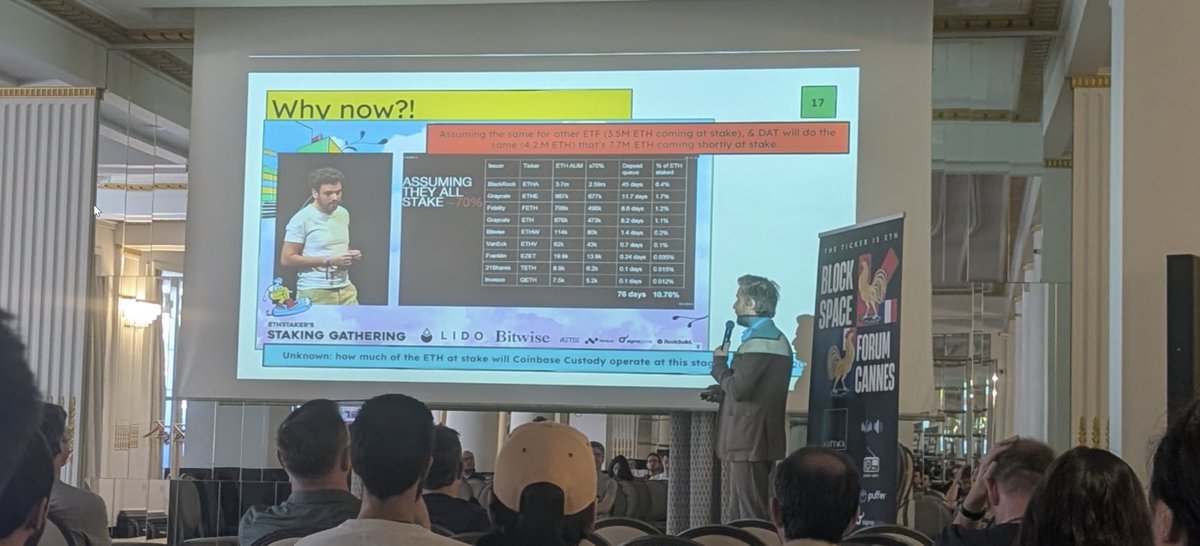
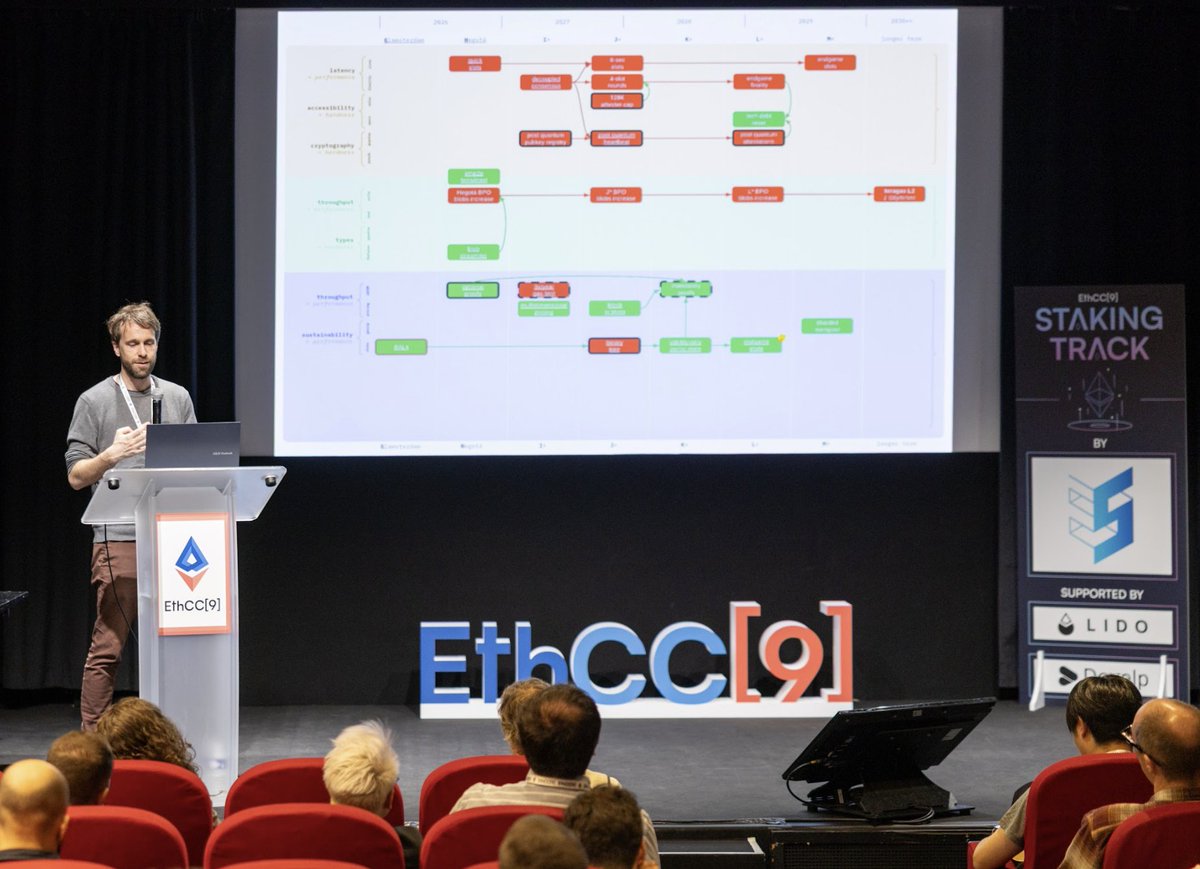
- EthCC is a really well run conference. @bettina_boon@jdetychey The "in-side event" format at the Palais was a strong hybrid format for the @ethStaker Staking Track stage, the AV teams were great, and it all worked. Highly recommend this for any organizers or conferences considering a side-event presence that would like to also be at the main venue.
- So many good talks at the Ethstaker Staking Track stage. Check out the whole program's recordings (see the tweets following this one). The Staking Strawmap from @drakefjustin packed the room and covered what stakers specifically can expect in a Lean Ethereum world (https://t.co/nNJtWbd8BU). Lots to digest there and from all the talks in the lineup.
- A healthy mix of side events to complement the main venue but not too overwhelming and Cannes is a great walkable town for this kind of setup. The @blockspaceforum was particularly good.
- People should make their voices heard when those mechanisms are offered and it was great to have several present. From the Issuance Forum to the still-live Ethstaker Staking Survey (extra tweet on this below) ... make your voice heard when given the opportunity.
- Cannes is indeed awesome. The sense of community and hospitality in the French Riviera renewed my sense for what "community" can mean in a building ecosystem and how it interacts with mutual respect in the world.
- These events build on and talk to each other in useful ways. Multiple times people mentioned the Staking Gathering and EthProofs in Buenos Aires and the evolving state of conversations and development since then. Which makes me excited for @EFDevcon later this year, excited to bring learnings and continue the work in Mumbai.
- Lastly, the @PlasticOdyssey was really cool, thank you for showing me and the other opening night winners around the vessel and the good work you're doing to improve and empower communities. Your storytelling ability as a nonprofit about a technical mission-driven community effort also hit home for me!