Let me get this straight. Trump sued his own IRS for $10 billion. His own Justice Department is now considering settling that case. And one of the terms on the table is that the IRS drops all audits of Trump, his family, and his businesses PERMANENTLY.
He’s using the full weight of the federal government to protect himself and his family from accountability and potentially pay himself BILLIONS of your tax dollars.
https://t.co/TyfIGUFxqh
🦔A researcher invented a fake eye condition called bixonimania, uploaded two obviously fraudulent papers about it to an academic server, and watched major AI systems present it as real medicine within weeks.
The fake papers thanked Starfleet Academy, cited funding from the Professor Sideshow Bob Foundation and the University of Fellowship of the Ring, and stated mid-paper that the entire thing was made up. Google's Gemini told users it was caused by blue light. Perplexity cited its prevalence at one in 90,000 people.
ChatGPT advised users whether their symptoms matched. The fake research was then cited in a peer-reviewed journal that only retracted it after Nature contacted the publisher.
My Take
The researcher made the papers as obviously fake as possible on purpose. The AI systems didn't catch it. Neither did the human researchers who cited it in real journals, which means people are feeding AI-generated references into their work without reading what they're actually citing.
I've covered the FDA using AI for drug review, the NYC hospital CEO ready to replace radiologists, and ChatGPT Health launching this year. All of that is happening in the same environment where a condition funded by a Simpsons character and endorsed by the crew of the Enterprise was being presented as emerging medical consensus. The people making these deployment decisions seem to believe the pipeline from research to AI to patient is more supervised than it actually is. This experiment suggests it isn't supervised much at all.
Hedgie🤗
https://t.co/8Kg8FOrgHW
Anthropic asked the Vatican for help because their AI was moving too fast for them to control.
A 60 year old Catholic priest who used to be a tech executive is now writing the rules for how Claude thinks.
Here is how a man of God ended up inside one of the most powerful AI companies on earth.
His name is Father Brendan McGuire. He runs a small parish in Los Altos, California. Some of Silicon Valley's top AI researchers sit in his pews on Sundays.
But before he was a priest, he was one of them.
Studied cryptosystems at Trinity College Dublin in the 1980s. Moved to America. Became the executive director of PCMCIA, the organization that basically standardized how memory cards work in every computer. Had degrees in engineering and software. Could have been a millionaire in the Valley ten times over.
He walked away from all of it to serve God.
But then Anthropic called.
Chris Olah, one of Anthropic's co-founders, reached out to him directly. McGuire said they were basically asking the Vatican for help because the industry was moving so fast down this road that they needed someone to pump the brakes.
His words: "They basically were asking for direct help from the Vatican to convene and help the industry, because the industry was going so fast down this road."
So this priest, along with a Vatican Bishop named Paul Tighe and a tech ethics director from Santa Clara University, sat down and helped rewrite the Claude Constitution. That is the set of rules that tells Claude what it can and cannot do. What it should care about. How it should think.
A priest helped write the conscience of an AI.
And it gets wilder.
Anthropic actually sued the US government because the Pentagon wanted to use their AI for autonomous warfare and domestic surveillance. Anthropic said no. Got effectively blacklisted for it.
Catholic scholars then filed a federal court brief defending Anthropic, saying their ethical limits represent "minimal standards of ethical conduct for technical progress."
McGuire almost filed his own brief. He said "they are having a moral conversation. They may not call it moral, but I call it moral."
Meanwhile this 60 year old priest is now writing a novel using Claude about a monk and his AI companion. The working title is "The Soul of AI: A Priest, an Algorithm, and the Search for Wisdom."
He also said something that stuck with me.
"I think we have to help these machines be tilted towards good, otherwise they are just going to reflect back the good and evil of the world. That is a horrifying thing, right?"
The biggest AI companies in the world are building machines that think. And the person they called to make sure those machines have a conscience was not another engineer.
It was a priest.
Anthropic buried the real announcement in a demo.
A small business owner typing "go to my web store and make delivery free for orders over $25 this holiday weekend" and the model just... does it. Finds the store, reads the pricing logic, updates it, confirms. No code. No developer. No instructions beyond what you'd text a coworker.
That's the entire SMB automation market getting disrupted in a 10-second clip.
The math makes it alarming. Sonnet runs at roughly $3 per million tokens. A full agentic task, navigate to a site, read the page state, make decisions, execute changes, burns maybe 50K-100K tokens. That's under $0.30 per autonomous business operation. The question for every small business owner stops being "can I afford AI" and starts being "why am I still doing this manually."
The 1M token context window in beta is the second unlock. Long-context was the wall keeping Sonnet out of serious agentic deployments. You need the model to hold an entire store's product catalog, pricing history, and current task in working memory simultaneously. That wall just moved.
Everyone will screenshot the benchmark improvements. The real trade sits one layer below: autonomous business operations just got cheap enough for a sole proprietor running a Shopify store.
33 million small businesses in the US alone. All of them have tasks exactly like this one.
Almost every group that agrees on the big things ends up fighting about less important things and becoming enemies even though they should be bound by the big things. This phenomenon is called the narcissism of small differences. Take the Protestants and Catholics. Though both are followers of Christ, some of them have been fighting for hundreds of years, even though many of them are unable to articulate the differences that divide them, and most of those who can articulate the differences realize that they are insignificant relative to the big important things that should bind them together. I once saw a close family have an irrevocable blow-out at a Thanksgiving dinner over who would cut the turkey. Don't let this narcissism of small differences happen to you. Understand that nobody and nothing is perfect and that you are lucky to have by-andlarge excellent relationships. See the big picture. #principleoftheday
This is mind blowing.
This AI can make single image sing, talk, and rap from any audio file expressively! 🤯
Introducing EMO: Emote Portrait Alive by Alibaba.
10 wild examples: 🧵👇
1. AI Lady from Sora singing Dua Lipa
“If you have an idea you're excited about and you don't bring it to life, it's not uncommon for the idea to find its voice through another maker.
This isn't because the other artist stole your idea, but because the idea's time has come.
In this great unfolding, ideas and thoughts, themes and songs and other works of art exist in the aether and ripen on schedule, ready to find expression in the physical world.” —Rick Rubin
Instant dubbing + lip sync with @HeyGen_Official
80% of the worlds population does not speak English.
Having the ability to not only voice clone and dub your content into more languages but also do lip sync is a game changer!
Below I (AI) speak 8 languages...
🧵 A thread
Text-to-Videos are getting insanely powerful.
Few years and we will watch Hollywood movies generated by AI.
Here are 12 incredible use cases of #Gen-2 changing the industry very rapidly 🤯 👇
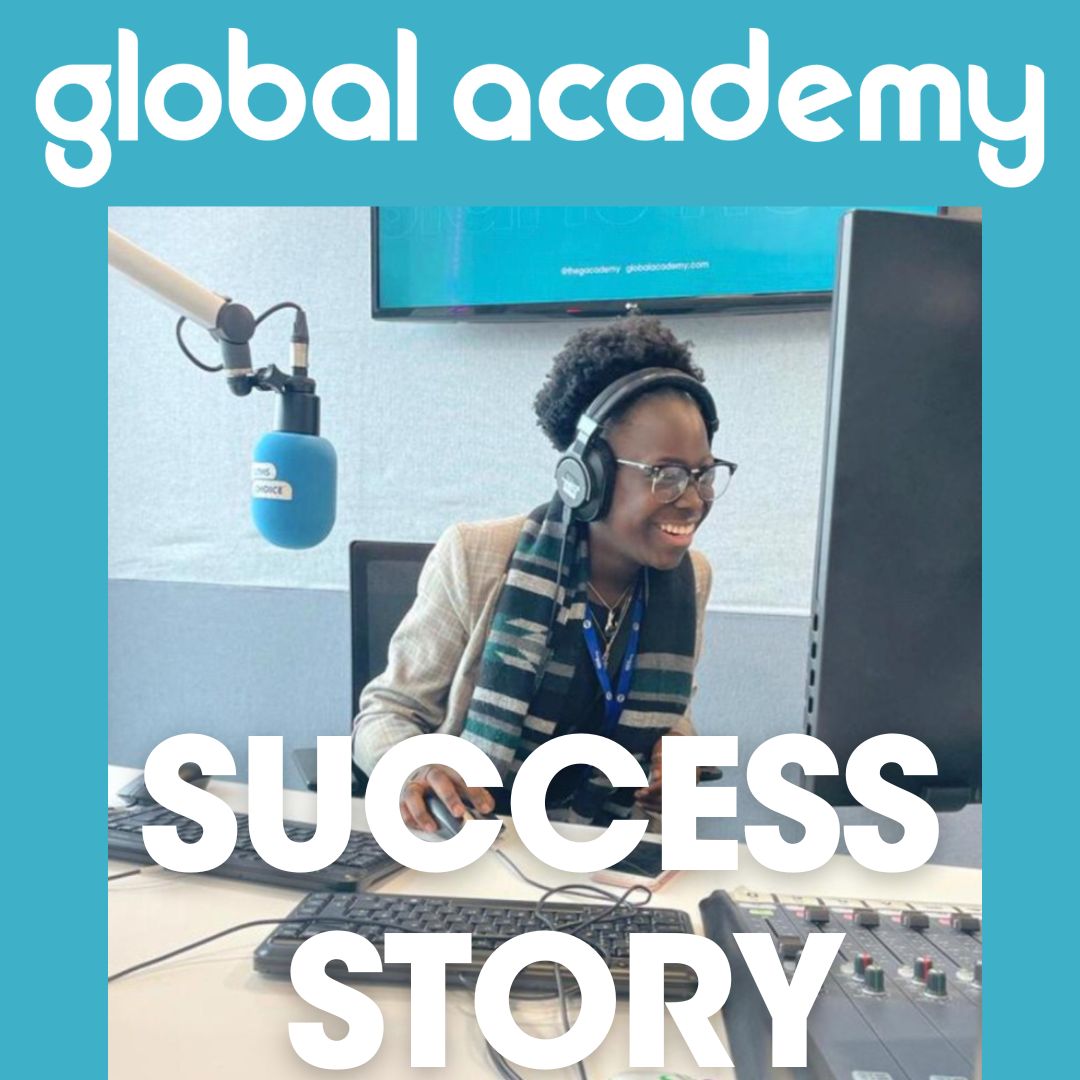
🎉 Thursday Success Story 🎉
Timi is a talented and active Content Creator, YouTuber, and Radio Presenter. She has been named runner-up for the first ever Black Creatives Award! 🏆 with her piece 'The Difference Between Us!👏
#GlobalAcademy#SuccessStory#BlackCreativesAward
The military police in Peru have killed over 50 protestors.
This is my report on how Peru’s neo-colonialist government and big oil are conspiring to displace and destroy indigenous tribes and poor farmers in Peru. Please read and share.
https://t.co/WP3TOdBmGp