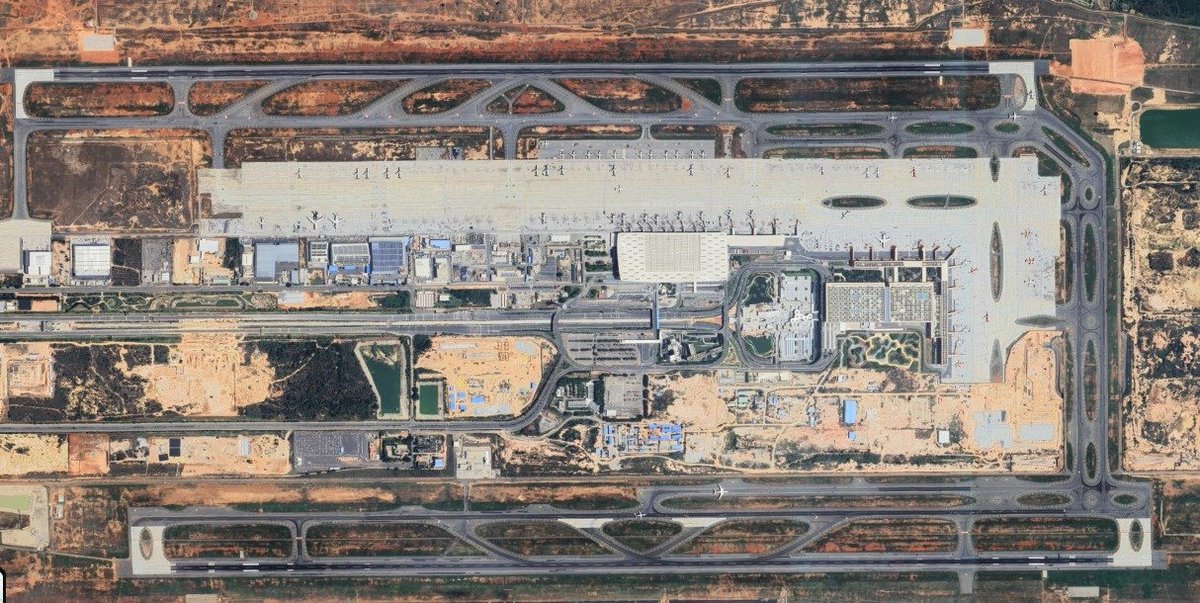
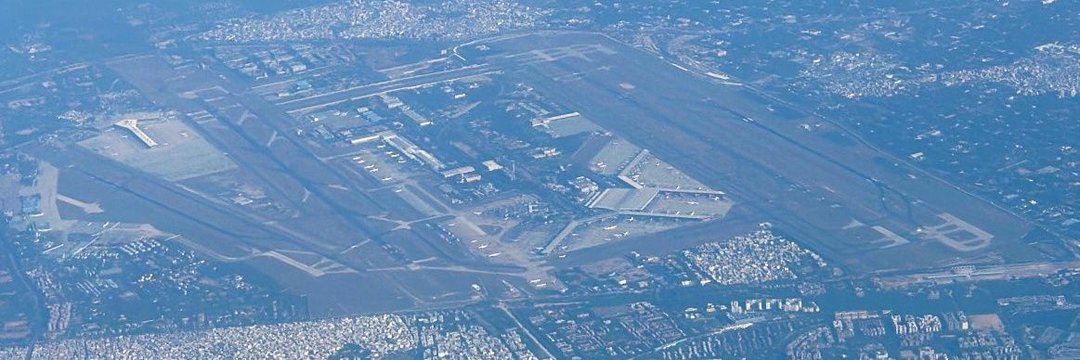
🚨Largest Airports of India by Area and Chennai Badly needs Airport either at Parandur or Sriperambhathur.
Without the Infrastructure in the Chennai capital, youths will be struggling with jobs and reduced tourism.
Companies may set up factories and offices in other states if there is not a major good mega size airport in Chennai like Hyderabad or Delhi.
Please think creatively to bring the airport and at the same time, provide like vertical farming in neighbouring town.
1. Navi Mumbai (upcoming) - 7500 acres
2.Hyderabad Airport- 5,500 acres
3.Delhi Airport- 5,106 acres
4.Bengaluru Airport- 4,000 acres
5.Noida Airport- 3,296 acres
6.N.Mumbai Airport- 2,866 acres
7.Kolkata Airport- 2,460 acres
8.Goa Manohar- 2,132 acres
9.Mumbai Airport- 1,850 acres
Images Courtesy: Wing X Aviation
@CMOTamilnadu@TVKVijayHQ@MichaelRay1304@VettriKural@nri4thalapathy@R_Kumar_TVK@rhevanth95@Ananta_Jit_aji@imrajmohan@LoyolaMani@JhonArokiasamy@CTR_Nirmalkumar@arunraajkg@Keerthana4VNR
The lion-tailed macaque is one of India’s rarest and most charismatic primates. It is instantly recognised by its silver-white mane, glossy black body, and lion-like tail tuft, making it a flagship species of the Western Ghats rainforests. As it is endemic to the Western Ghats of South India, its survival is our direct responsibility. Also known as LTM, this species is currently listed as Endangered on the IUCN Red List due to habitat loss, Under India’s Wildlife Protection Act, 1972, it receives the highest legal protection as a Schedule I species. It is also listed under CITES Appendix I, which restricts international trade. Lion-tailed macaques live mainly in the evergreen and semi-evergreen forests of Kerala, Tamil Nadu, and Karnataka. Important strongholds include Silent Valley, Anamalai, Megamalai, and Kalakkad-Mundanthurai landscapes. They are highly arboreal, spending much of their lives in the upper canopy. Unlike many macaques, they are shy forest specialists that depend on intact rainforest cover. Their diet includes fruits, seeds, flowers, insects, and small vertebrates. They are excellent seed dispersers and help regenerate forests naturally. Protecting them also safeguards thousands of other species of the Western Ghats. In Valparai, Tamil Nadu, their story is both inspiring and alarming. Once restricted to fragmented forest patches, some groups now move through roads, tea estates, settlements, and other human-dominated spaces. Researchers describe this as a behavioural adaptation to habitat loss and changing landscapes. Saving the lion-tailed macaque means saving rainforests, biodiversity, and ecological balance for future generations. Its future depends on the choices we make today. Beautiful Video by @pnsenthilkumar #LionTailedMacaque #WildlifeConservation