In Palpa Province, in Peru’s Ica Region, La Orca de Piedras Gordas is one of the most striking geoglyphs in the Andean coastal desert.
Possibly dating to around 200 BC, this monumental figure measures roughly 200 feet in length and belongs to the broader Paracas and Nasca tradition of desert geoglyphs, predating many of the more famous Nazca Lines.
The orca occupies a hillside in the Piedras Gordas sector and appears to face westward, toward the Pacific Ocean. On closer inspection, the figure becomes much more complex: a fish-like motif appears near its mouth, while several trophy-head motifs are placed inside the body, a recurring image in Paracas and Nasca religious art.
Its construction also seems to combine two techniques: negative relief, made by removing darker surface stones, and positive relief, made by arranging stones to form raised lines. That mix has led some researchers to see the figure as part of a transitional moment between Paracas and early Nasca visual traditions.
The Ancient “Big-Headed” Figure That Still Baffles Archaeologists 😳🪨
Hidden among the rugged red rocks of the Murujuga region in Western Australia lies one of humanity’s oldest and most mysterious outdoor art galleries. Known as the Burrup Peninsula, or Murujuga, this sacred landscape contains more than a million ancient petroglyphs carved into stone by Aboriginal Australians over thousands of years. Some researchers believe parts of this rock art may date back over 30,000 years — making it among the oldest surviving artistic traditions on Earth.
One figure in particular continues to capture attention and spark debate: a strange human-like carving with an unusually large head and detailed markings across its body. The image was carefully engraved into the dark volcanic rocks of the Dampier Archipelago using stone tools, long before metal even existed in the region. To create these petroglyphs, ancient artists chipped away the rock’s dark outer surface, revealing the lighter stone beneath. Despite countless centuries of harsh desert winds, intense heat, and coastal storms, many of these carvings still survive today.
But who was this mysterious figure meant to represent?
Some believe it may depict an ancestral spirit tied to Dreamtime stories — the ancient spiritual beliefs of Indigenous Australian cultures. Others think the oversized head could symbolize wisdom, power, ceremonial status, or even a connection to the spirit world. The detailed body patterns may represent ritual markings, sacred clothing, or tribal identity. Because much of the meaning behind the carvings has been passed down through oral traditions, many interpretations remain deeply sacred and not fully understood by outsiders.
That mystery is what makes Murujuga so fascinating. Every carving feels like a silent message left behind by people who lived in a world vastly different from ours — a world filled with ancient rituals, survival, astronomy, and spiritual connection to the land. Standing before these stone figures today is like staring directly into the mind of a civilization reaching across thousands of years to whisper something we still cannot fully decode.
What do you think this strange “big-headed” figure represents — an ancestor, a spiritual being, or something we have completely misunderstood? 👁️🔥
Buckle up folks this is a big one. I’m going to show you ancient artifacts from Easter Island that I guarantee you’ve never seen before, some of which which bear STRIKING resemblance to animal sculptures found at Gobekli Tepe.
The backstory: When Thor Heyerdahl was excavating on Easter Island in 1955-1956 he was shown old family caves, passed down through generations, which contained countless original and ancient statues and sculptures. He was apparently gifted over a thousand of these statues by the Rapa Nui which he then brought back to Norway. They’ve been in the possession of the Kon Tiki museum in Oslo ever since, but none of them have ever been show to the public until 2014 for some reason I cannot fathom.
I spent the day viewing the collection, and some of the sculptures were shockingly similar to Gobekli Tepe!! All the images below are originals from Easter Island. Tomorrow I’ll post a follow up thread comparing to Gobekli Tepe.
🧵
And of course if you like my work and want to support me consider purchasing a copy of my book on Amazon: https://t.co/H3tEMNDLFp
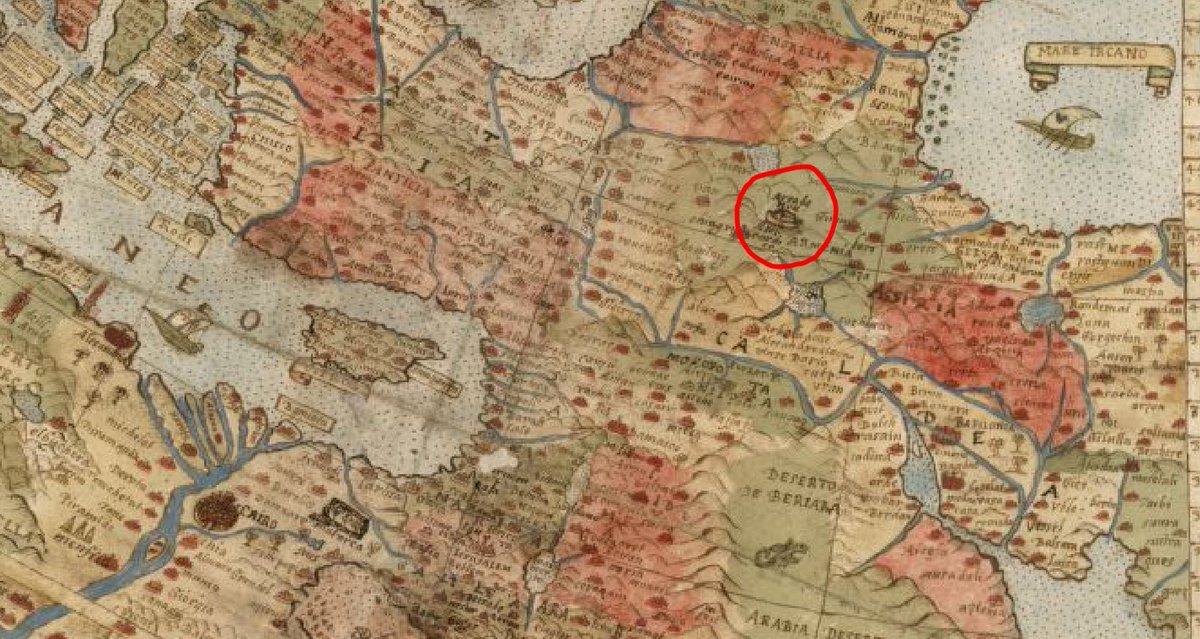
@BrightInsight6 On the 1587 map by Urbano Monte, largest known early map of the world, Noah’s Ark is interestingly placed in the region between modern-day Turkey and Armenia.
Many hear of ‘Noah’s Ark’ and laugh it off
However, I think it goes far beyond “coincidence” that not only is this located on Mt. Ararat in Turkey, (exactly where Genesis 8:4 says it’s located)…
But it’s also virtually the same exact measurement of what the Bible described!
Incredible preservation! This is Stela N, showing the 15th ruler of Copan, Smoke Shell. He is most famous for completing the iconic Hieroglyphic Stairway at the site.
The photo was captured by Alfred Maudslay in 1885, and it is officially cataloged as Object 224508 in the Brooklyn Museum. 🏛️
My mind was literally blown away after I discovered this connection two years ago! This is for all my new followers, to keep you in the loop...
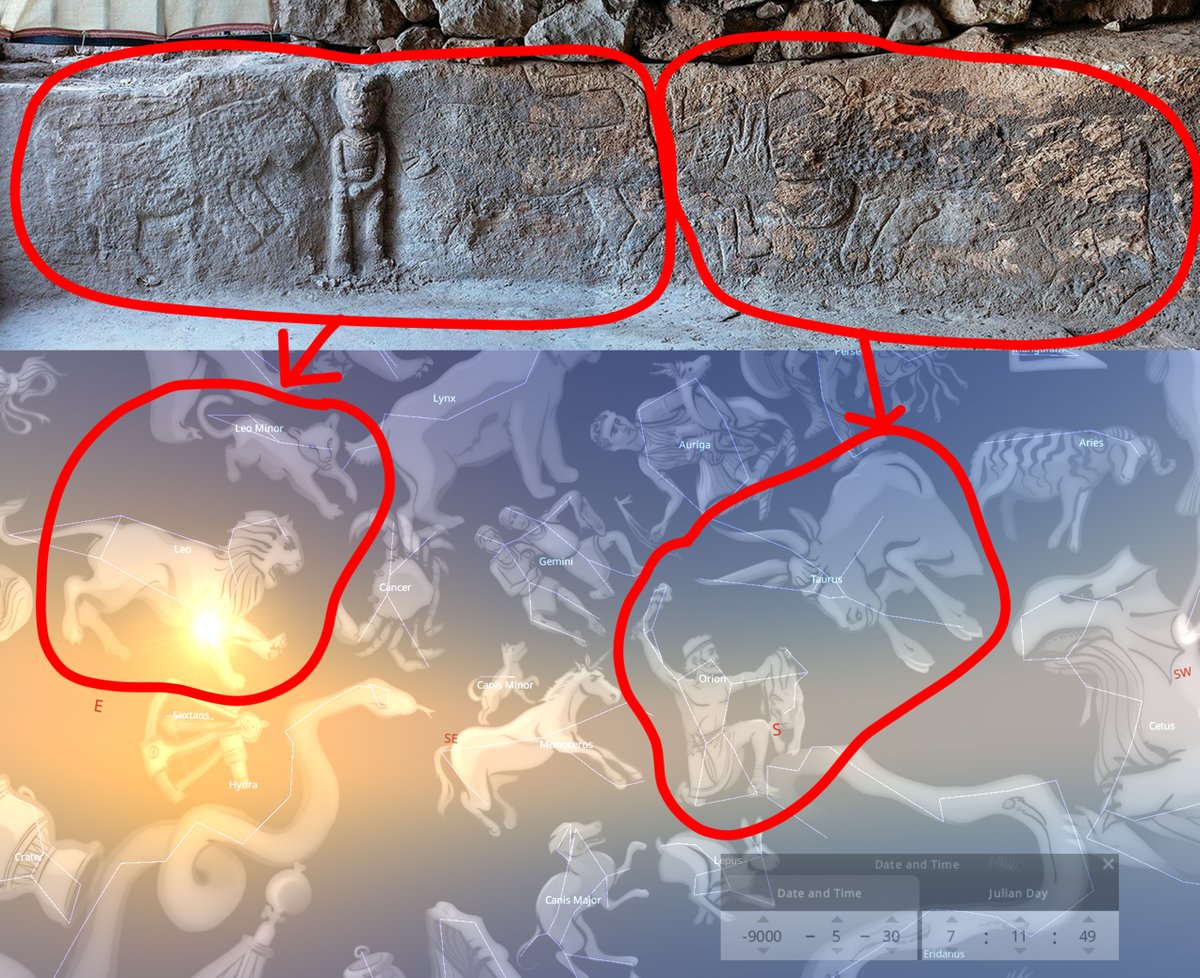
This is proof that the knowledge about the Great Year and the 12 constellations is ancient. These 11,000–12,000-year-old reliefs uncovered in Sayburç, Turkey, near Göbekli Tepe and Karahan Tepe, reveal a lot about our future!
Not only are the constellations and the 12 Zodiac signs passed esoterically from one age to another, but what the mainstream scientific consensus has been telling you—that they are Babylonian—is a lie. They are ancient, antediluvian, and connected to all religions!
Let's start! Prepare to enter into the rabbit hole thread!(1/14)🧵
1/3
PETROGLIFOS DE PITAYA
Los Petroglifos de Pitaya se ubican en el distrito de Huancas, en la provincia de Chachapoyas, dentro de la región Amazonas.
Este conjunto de arte rupestre se encuentra a unos 1,700 m s. n. m., grabado sobre superficies rocosas en un peñón, y constituye una importante evidencia de ocupaciones humanas antiguas en la zona.
Se han identificado alrededor de treinta figuras, cuya antigüedad es estimada en varios miles de años, posiblemente entre el periodo preagrícola y etapas posteriores, aunque su datación exacta es difícil de precisar.
Los motivos representados incluyen figuras humanas, animales —como venados y serpientes— y diseños abstractos, los cuales reflejan aspectos de la vida cotidiana, el entorno natural y las creencias de los antiguos pobladores.
Las imágenes fueron elaboradas mediante técnicas de abrasión y raspado, desgastando la superficie de la roca hasta generar figuras en bajo o ligero relieve.
Este tipo de manifestación forma parte del arte rupestre de la región, cuya tradición se prolongó durante largos periodos, lo que complica establecer una cronología precisa, pero confirma su valor como testimonio cultural de gran antigüedad.
Tesoros de Wiracocha










![EDICIONESREGION's tweet photo. Cántaro escultórico
Mochica, representando a un personaje tocando una tinya [tambor].
Arqueología Peruana https://t.co/PICcaRwLnB](https://pbs.twimg.com/media/HFRasCubIAABfUl.jpg)





