Leading manufacturer of high-voltage test equipment & power system automation solutions. ⚡ Dedicated to electrical safety and precision measurement since 2000.
Trading competition ≠ guaranteed profit.
TiMi Contest runs Nov 12–Dec 10. Eligible traders need 5 qualifying trades to rank by Score. Risk management still matters.
https://t.co/s60wXMd0rz
I tested SimpleFX AI TradeMate on BTC/USD using demo mode. Here’s what I learned.
I started by looking at the BTC/USD chart, then asked TradeMate to prepare a long-position setup with a 4% take-profit target and a 1% stop-loss.
It generated a proposed setup, and I followed up by asking it to reduce the position size to 0.1 BTC.
What caught my attention was the ability to explore a trade idea, adjust its parameters and review the proposed order before deciding whether to confirm it.
But generating a setup and reading the market are two different things.
A proposed long position doesn’t automatically make the market bullish. I’d still want to study the 4H structure, mark the nearest support and resistance, and see how price reacts around those levels.
A sustained breakout above resistance, followed by a convincing retest, would strengthen the bullish case for me. A rejection at resistance or a breakdown below support would challenge it.
That’s where I think the human side of trading still matters. AI can help structure a trade idea, but the reasoning behind that idea deserves scrutiny too.
Using demo mode gave me a way to explore the workflow without risking real funds. The next question is whether the setup holds up against actual market structure, not simply whether the AI can generate an order.
I’m exploring these tools through SimpleFX, and I’ll be interested to see how other traders approach the same process.
Would you use an AI-generated setup as a starting point, or would you always analyse the chart first?
X: @SimpleFXcom
To get started: https://t.co/e5xdB22hMP
Educational content only. Not financial advice or a recommendation to open a position.
🐙 AI IS GETTING SMARTER. BUT WHAT HAPPENS WHEN INTELLIGENCE STARTS WORKING TOGETHER?
Imagine giving an AI a job, having another agent challenge its work, and only accepting the result when it passes review.
Not just generating answers. Building, testing, and delivering.
(That’s the idea behind OCTOPUS NODES. 👇)
(THE PROBLEM)
AI can generate code, analyze information, and automate tasks. But generating an answer isn’t the same as delivering something that actually works.
Code can contain bugs. Research can miss important details. AI-generated solutions can sound convincing while being fundamentally wrong.
The challenge isn’t just intelligence.
It’s reliability.
(ENTER OCTOPUS NODES 🐙)
OCTOPUS NODES presents a vision built around eight AI nodes, each with a different role, working as one network.
The concept draws on multi-agent AI: distributing work across specialized agents instead of forcing one agent to handle every step.
The real opportunity? Turning individual AI capabilities into coordinated workflows that can tackle more complex tasks.
(HOW COULD THIS WORK?)
Imagine requesting a software application.
One agent helps build it. Another examines the output, searches for weaknesses, and challenges the proposed solution.
The results are reviewed before delivery.
This build-and-challenge approach illustrates an important principle in AI engineering: don’t just generate; verify.
The key is making collaboration produce better results than a single agent working alone.
(WHY THE ECOSYSTEM MATTERS)
For multi-agent AI to become useful, it needs more than models.
It needs task coordination, communication between agents, evaluation mechanisms, and a workflow that takes a request from start to finish.
When these components work together, AI can move beyond isolated conversations toward completing practical tasks.
That’s the bigger idea worth watching with OCTOPUS NODES.
(WHERE DOES $OCTO FIT IN? 🪙)
An AI ecosystem needs a way to connect its technology with user participation.
$OCTO is the token associated with the OCTOPUS NODES project, making its actual utility an important part of the story.
The questions worth exploring are how the token will be used within the ecosystem, whether it will facilitate access to AI services, and how demand for those services might translate into sustained token usage.
These distinctions matter: a token’s real utility comes from what the ecosystem actually requires it to do, not simply from its association with AI.
I’d verify the project’s official tokenomics and utility documentation before claiming specific functions.
(THE BIGGER PICTURE)
The next phase of AI may not be about building one model that does everything.
It could be about coordinating specialized agents that research, build, evaluate, and improve each other’s work.
But the real test is execution.
Can the network deliver useful results? Can it detect mistakes? Can it do so efficiently? And can its token model support genuine ecosystem activity?
These are the questions that separate an interesting concept from a useful product.
(MY TAKE 🐙)
Eight nodes sound interesting.
But eight nodes that can coordinate effectively, challenge weak outputs, and deliver useful results would be much more interesting.
That’s what I’d want to see from OCTOPUS NODES as the project develops.
Because the future of AI isn’t just about generating more answers.
It’s about building systems that can turn intelligence into execution.
🐙 OCTOPUS NODES — NODES. ONE INTELLIGENCE.
Explore: https://t.co/pLoEDu57Sg
Follow: @OctopusNodes8
#OCTO #AI #Crypto
been thinking about how fragmented trading in crypto still feels.
You find an asset you want to trade on one platform, another opportunity somewhere else, then you’re moving assets across chains, switching interfaces and connecting different apps just to get things done.
At some point, you start wondering why can’t this all just feel like one trading experience?
That’s what caught my attention about @OrbitPerps.
Instead of building around just one type of asset or one chain, Orbit is trying to bring crypto, stocks and commodities into a self-custodial trading experience, while Orb Bridge handles the cross-chain side.
It’s still early, so I’m not going to pretend we already know how big this gets.
But I like the direction.
Less fragmentation. More markets. One place to trade.
I’ll be watching this one closely. 🟠
@OrbitPerps
To get started: https://t.co/EHg8CGeJVW
Ngl, these few days back have been pretty rough, phone got spoilt, wasn't able to finish a deal for someone before the phone got spoilt, now i started using laptop which i have abandoned for a while.🥱😩😩
now i am currently working on a project which i have to defend next week.🙂
@moniepointng i hope i tried as an intern, i just started my tech journey as a front end engineer and to be honest shoutout to your DEVs and your DESIGNERS.
i tried recreating the landing page and it took me a while to be able to work on the personal page alone.😩😩
not a while like that oo just couple of hours tho. 🙂
@moniepoint@moniepointng if perhaps you like my work, i'd love to work as an intern in the Tech area
nothing was vibecoded 😩🥱
i hope i tried.
i know one day I'll revert back to this post and be like wow, WAGMI, will post other pages have worked on later.
I've just joined Early Access for @ComputersRh.
I'll be playing 24 hours before the public launch.
My ref link= https://t.co/k5Ey0MM8Y2
https://t.co/EvSrOS1Pcu
What happens when real-world machines meet onchain finance?
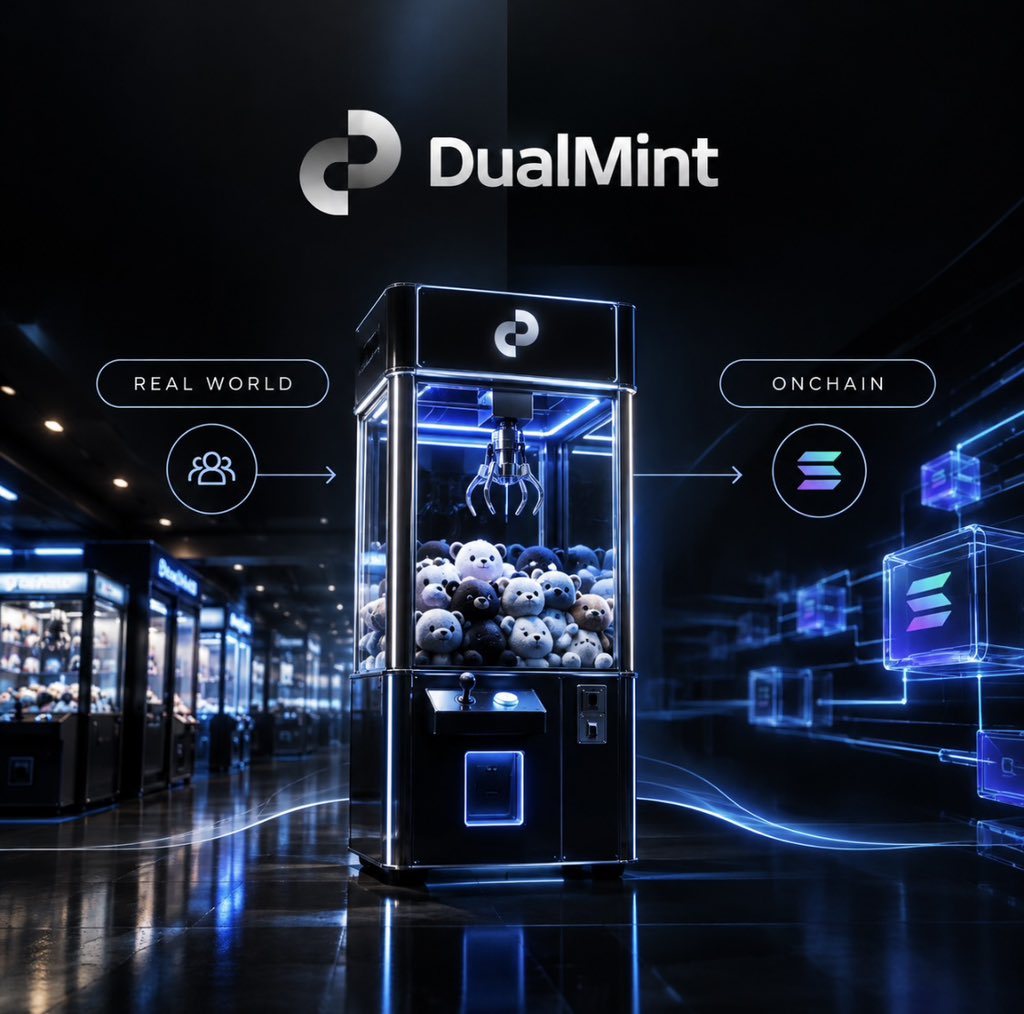
That’s the idea behind PLAY by @DualMintRWA.
PLAY is DualMint’s machine vault built around 200 operating claw machines, generating revenue from real-world usage rather than token emissions or speculative loops.
The concept is simple:
Real people use the machines → the machines generate revenue → that real-world machine revenue moves onchain through Solana.
That’s what makes the model interesting to me.
PLAY is targeting a 12–15% annual yield, backed by revenue generated by the operating machines.
Importantly, that’s a target, not a guarantee.
The model is built around real-world machine activity, with monthly distributions.
And this is where the RWA angle gets interesting.
We often think about real-world assets as real estate, treasuries or credit.
But productive physical machines can also generate economic activity.
PLAY is taking that machine-generated revenue and connecting it with onchain infrastructure.
Steel earns it.
Solana moves it.
The current PLAY campaign has a $230K deposit target, with pre-deposits opening September 22.
I’m following the journey because the bigger question is interesting:
What happens when real-world machine revenue becomes part of onchain finance?
If you want to follow the campaign, join Uptime and follow @DualMintRWA and https://t.co/7bfwB4vOIx for updates.
Not a single thing on this website was vibe coded.
This is one of the landing pages I’ve been working on as I continue learning frontend development.
I’m still a beginner, so I’m not going to sit here and act like I know everything about coding.
When I started, I barely understood how HTML and CSS worked. Even simple things like spacing, positioning, layouts and making everything responsive could have me stuck for hours.
Now I’m slowly getting to the point where I can look at a design, break it down, write the code myself and actually understand what I’m doing.
Is this perfect? No.
Is there still a lot I need to improve? Definitely.
But I’m learning with every section I build, every bug I fix and every mistake I make.
And honestly, seeing something like this come together from code I actually wrote feels really good. (Even tho I haven’t finished it, I’ll still get there)
Still a beginner. Still learning. Still building.
I know I’ll look back at this later and see how much I’ve improved. 🧑🏾💻
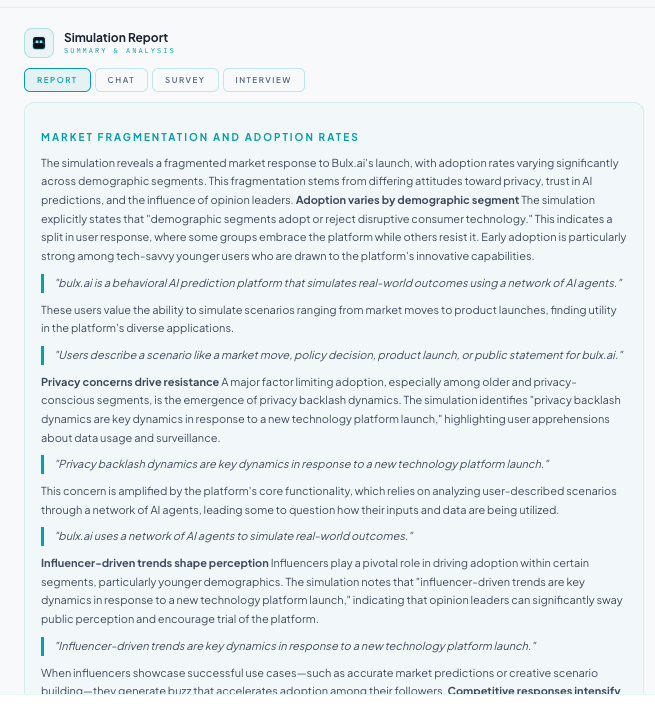
We ran our company and web app through a simulation of over 500 individual identities using Claude, Kimi, and GPT agents.
The purpose of this simulation was to test the liability, desire, and implementation of our own company to emulate it a real environment with consumers, discussion, social media posts and more.
If you'd like to see the full report and full metrics, as well as run the simulation on your own service or app, take a look here:
https://t.co/nikUkHjeti
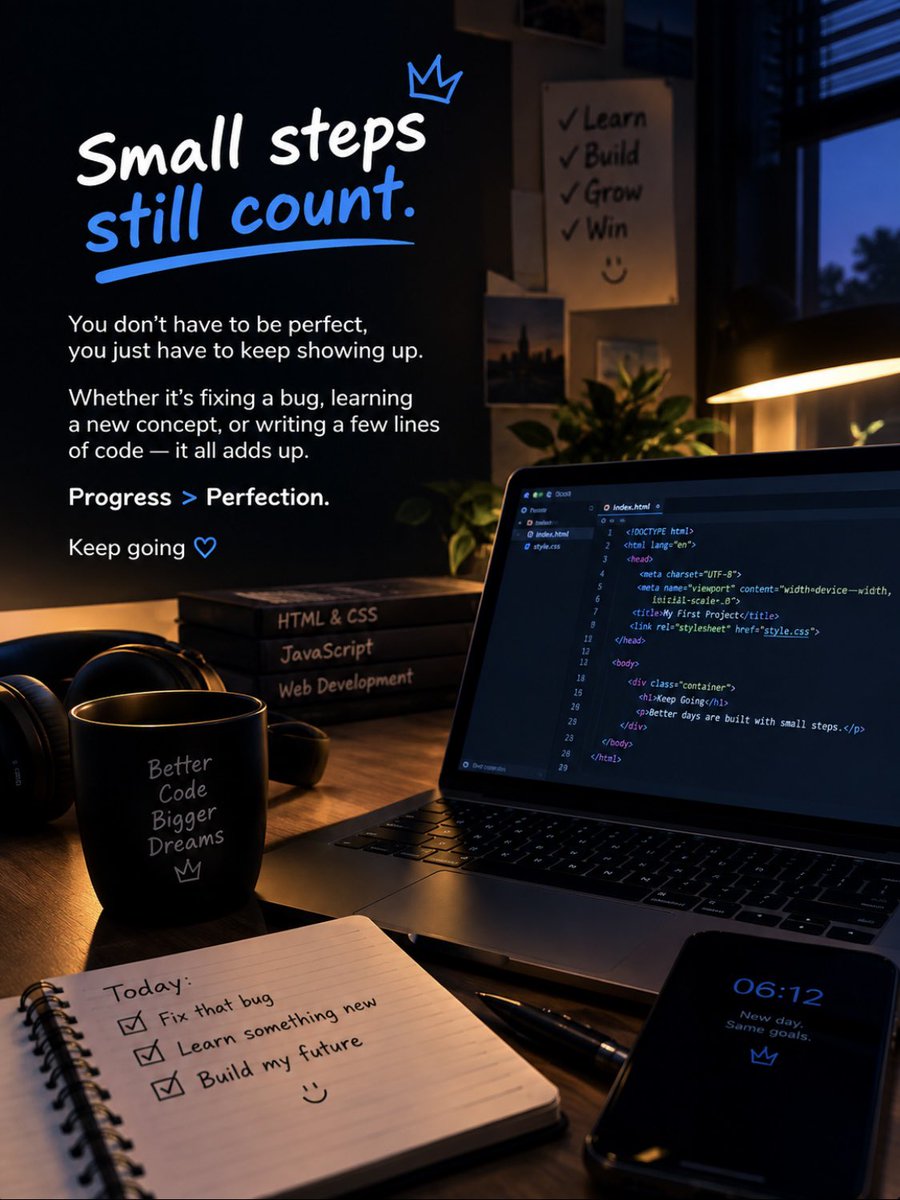
Some days you’ll look at how far you still have to go and feel like you’re not doing enough.
Then you look back and realize you’re already doing things the old version of you could only imagine.
I’m still learning. Still struggling with code. Still figuring things out.
But I’m moving.
And honestly, that’s enough for today.
Keep going. Your future self is watching. 🧑🏿💻❤️🩹
Gm X family.
Took a $5 position on Wahoo Predict and got it wrong.
The annoying part? My call looked right for most of the market, then flipped before the 5-minute window closed.
Loss recorded. Definitely learned something from that one.
Get started: https://t.co/H3jdbCkwnp
I’ve been testing @bulxai before the official launch, and one thing stood out to me:
BULX isn’t just another AI tool where you ask a question and wait for an answer.
The idea is to create a scenario, introduce different conditions, and see how the situation could play out.
So I decided to actually go through the platform myself.
Here’s what I found 🧵👇
First, I started with the Scenario Simulations.
There are different simulation environments including:
• Global Simulation
• Consumer Perception
• Causal Relations
• Economic Stress
• Social Dynamics
• Policy Impact
Each one gives you a different way to approach a problem.
For example, you could use these kinds of simulations to think through a business decision, study how people might react to a policy, explore economic situations, or even create scenarios for school projects.
That’s where I think the “regular simulation” side of BULX could become really useful.
Instead of just researching what happened before, you can experiment with different “what if?” situations.
I then moved into Market Prediction and the Stock Sim.
I tested the stock flow with $TSLA and set up a 1-day forecast.
What caught my attention was the amount of variables you can introduce before running the simulation.
You can adjust the market conditions and factors such as macro events, sector correlation and sentiment shocks.
The simulation showed a 44 BUX cost before launching, then started initializing the market and warming up the order book and model agents.
That made the idea behind BULX clearer to me.
It’s not simply:
“AI, tell me whether TSLA will go up.”
It’s more like:
“What happens if these conditions change?”
That could be useful for someone trying to explore different possibilities before making a decision.
There’s also a trade setup where you can work with different position types, including:
Stock
Call Option
Put Option
ETF
Crypto
Commodity
Then I got to Custom Agents, which was probably the part I found most interesting.
You can create your own agent and define things like its identity, looks, traits, archetype, sector and background.
You can essentially build a character with its own context and use that agent inside your simulations.
Think about creating different agents representing different types of people, businesses, students, investors or professionals and then seeing how their perspectives could affect a scenario.
That opens up some interesting possibilities for education, research, business analysis and experimentation.
I also checked the Community section.
The idea here is that your work doesn’t have to stay inside your own dashboard.
You can share what you create, see what other people are experimenting with and learn from different approaches.
I also checked the BUX section.
During my testing session, my account showed 470 BUX, and I could see different BUX packages available.
So there’s clearly a usage system built around running these experiences.
My honest take?
BULX is still early.
Some parts of the mobile experience could definitely be smoother, and I’d like to see clearer guidance around certain simulation flows and BUX usage as the platform develops.
But I actually like the direction.
The combination of behavioral simulations, prediction markets, stock simulations and custom AI agents gives BULX more to experiment with than a standard AI chatbot.
And because the team is still debugging the platform before launch, this is probably one of the more interesting stages to test it.
I didn’t just read the features.
I went through the platform myself.
Here’s the screen recording of my testing session so you can see the experience firsthand 👇
@bulxai@oddmock 👀
I checked the Weekly Prediction Championship leaderboard on @Wahoopredict today and ngl, the competition is looking serious 😂
I like that you can actually track where you stand instead of just making calls and forgetting about them.
Make your calls, climb the leaderboard, and see where you finish by the end of the week.
I’m definitely checking back before it ends 👀
Join here: https://t.co/PPio6iMDTo
I found this design and decided to recreate it from scratch.
No copying code.
No pretending I know everything, even though I’m still very much a beginner 😂
I’ll probably struggle with the CSS, break something along the way, and learn a lot from it.
Let’s see how it turns out 🤲🏽
Took a 5-minute BTC UP/DOWN market on @wahoopredict.
BTC was looking bullish, so I went UP.
It moved my way almost immediately 😭
These 5-minute markets are way more intense than they look.
Get your predictions in and join the contest here: https://t.co/H3jdbCkwnp