We are making the updated DeepSeek V4-Flash 0731 free in Cline.
This is the first flash model we've found performs at SOTA levels, and are excited for you to feel the new frontier.
1. npm i -g cline
2. Open /settings > Cline provider
3. Select deepseek-v4-flash
As an AI Engineer.
Please learn:
- LLM fundamentals: tokens, context windows, embeddings, attention, temperature and sampling
- Prompt engineering, structured outputs, function calling and tool use
- RAG properly: chunking, embeddings, reranking, retrieval quality and evaluation
- Vector DBs, hybrid search, metadata filters and freshness of data
- Fine-tuning basics: LoRA, SFT, preference tuning and when not to fine-tune
- Agents, workflows, memory, retries, state machines and human approval steps
- Evals for LLM apps: hallucination checks, groundedness, latency, cost and task success rate
- Guardrails, prompt injection, data leakage and permission boundaries
- Model routing, prompt caching, token optimization and cost per successful task
- AI observability: traces for every LLM call, tool call, retrieval step and final answer
- Production APIs, rate limits, fallbacks, async jobs and handling model failures
- Building with users instead of making another generic chatbot wrapper
Most AI engineers can call an LLM API.
Very few can build an AI product that gives reliable answers, uses the right data, stays within budget, handles failures, and actually improves a real business workflow.
This is what production AI teams actually care about.
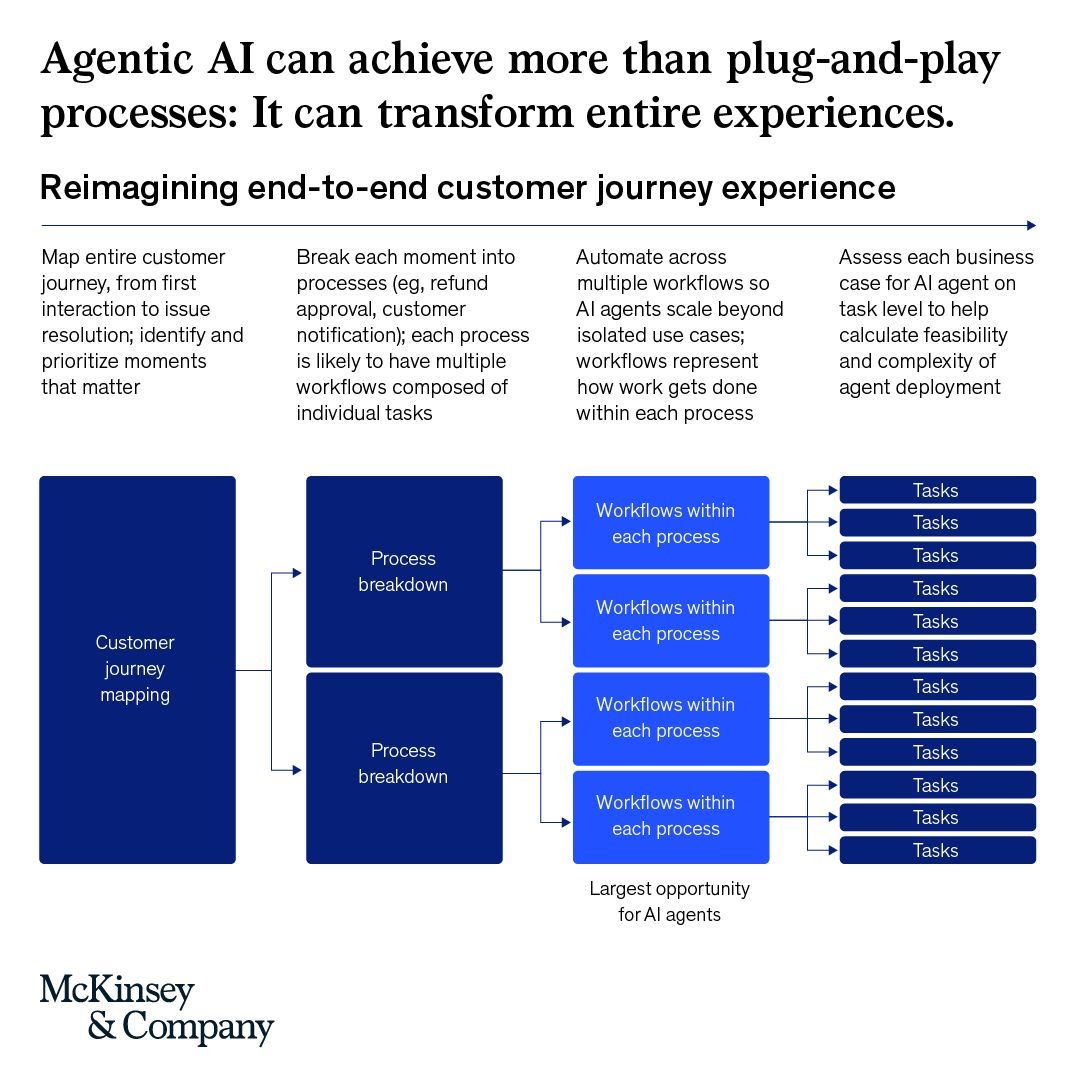
The next phase of AI transformation is happening at the workflow level.
Companies are using agentic AI to coordinate tasks, decisions, and customer interactions across entire journeys—while rethinking the operating models needed to support it at scale. https://t.co/UgFVX6YEIq
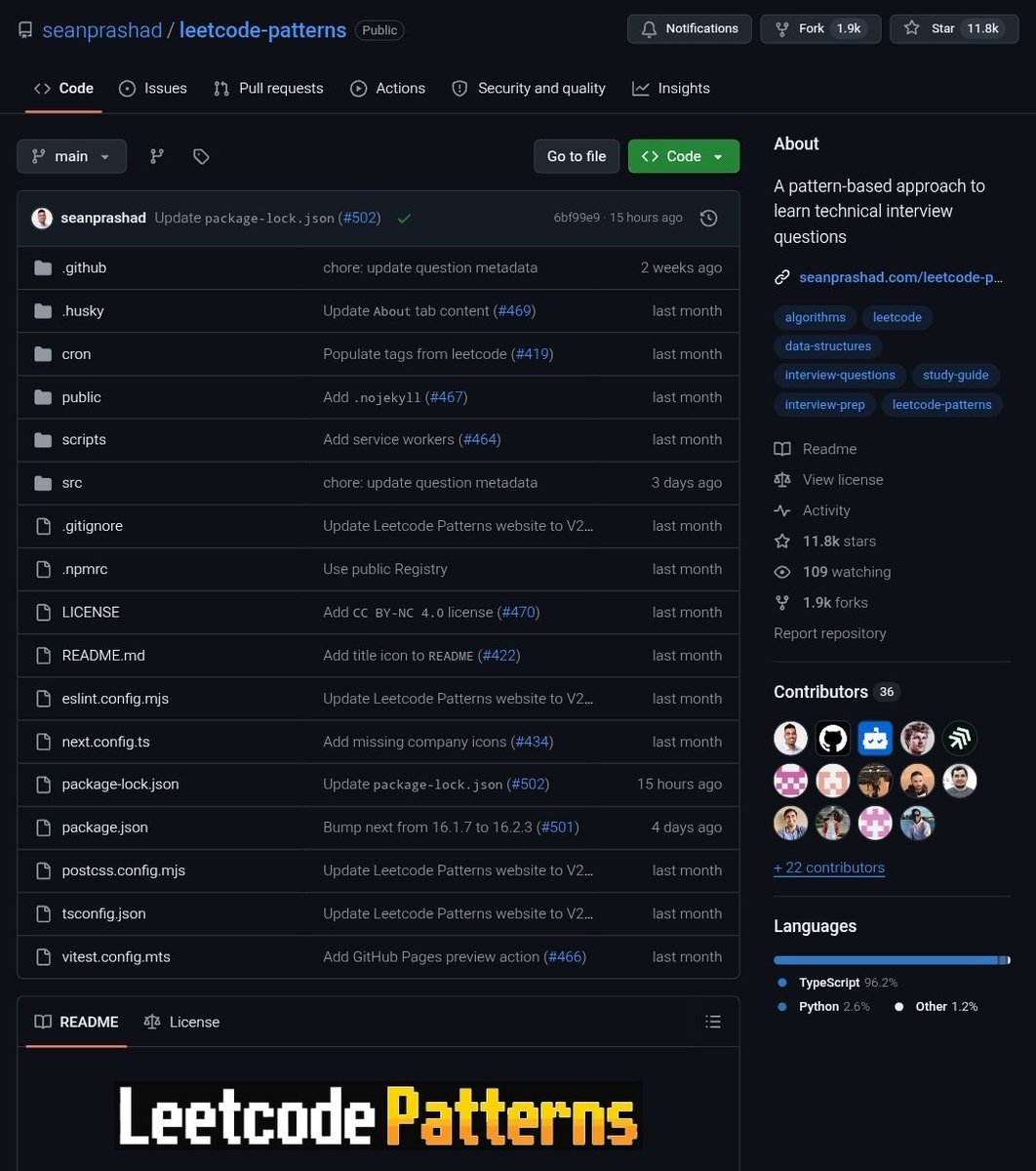
Someone dropped a goldmine on GitHub
A clean breakdown of LeetCode patterns all in one place
No more solving 600 random questions hoping something sticks
Just follow the patterns and get better with intent
Link: https://t.co/4nMqLquciW
Suatu saat kalian pasti perlu,
Save dulu,
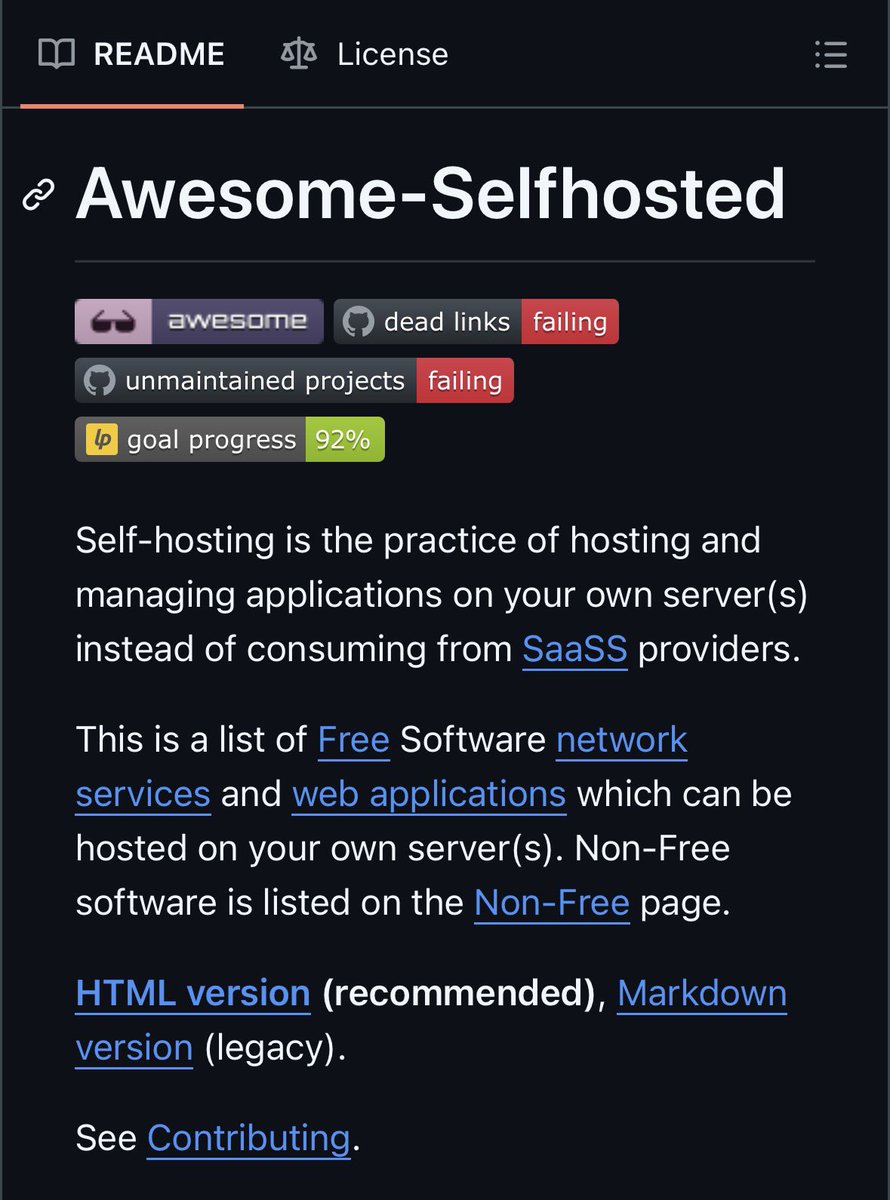
Ini dia 180.000 lebih aplikasi gratis yang mungkin kalian butuhkan.
🔗 🧠 Internet penuh software mahal. Tapi ada versi gratisnya.
🔗 https://t.co/TKxRwpc4ua
Ini adalah salah satu direktori open-source terbesar di GitHub yang berisi alternatif gratis untuk banyak software populer.
⭐ 180K+ GitHub stars
🔓 Alternatif open-source untuk banyak SaaS (Slack, Notion, Shopify, dll.)
🛠 Bisa di-fork, dimodifikasi, dan di-host sendiri
📊 Berisi tools untuk analitik, manajemen proyek, AI, database, dan lainnya
🚀 Cocok untuk developer, startup bootstrapping, atau siapa pun yang ingin mengurangi biaya software
Jika Anda suka tools gratis dan self-hosted, repositori ini adalah tempat yang wajib disimpan.
Bookmark sekarang. Nanti pasti kepakai.
Ini adalah salah satu direktori open-source terbesar di GitHub yang berisi alternatif gratis untuk banyak software populer.
⭐ 180K+ GitHub stars
🔓 Alternatif open-source untuk banyak SaaS (Slack, Notion, Shopify, dll.)
🛠 Bisa di-fork, dimodifikasi, dan di-host sendiri
📊 Berisi tools untuk analitik, manajemen proyek, AI, database, dan lainnya
🚀 Cocok untuk developer, startup bootstrapping, atau siapa pun yang ingin mengurangi biaya software
Jika Anda suka tools gratis dan self-hosted, repositori ini adalah tempat yang wajib disimpan.
Bookmark sekarang. Nanti pasti kepakai.
Ini sebenernya terlalu berharga buat dibagiin gratis… tapi bodo amat.
Tools ini bisa nge-clone otak YouTuber mana aja dalam 5 detik.
Gue cobain ke Theo Deric. Sekarang lo bisa nanya soal bisnis, dan jawabannya bakal keluar persis kayak cara berfikir dia.
Bisa buat siapa aja: Raditya Dika, Ferry Irwandi, Naval, atau creator di niche lo yang lo idolain.
Cek tutorial-nya di komen:
Atlassian interview (end to end). Real questions I got.
1. Recruiter screen (20 min)
“Why Atlassian?”
“What’s your notice period, location, comp?”
2. DS/Algo (60 min)
- “Given an array, find the shortest subarray with sum ≥ K.” (sliding window + prefix)
- “Design an LRU cache.” (HashMap + doubly linked list)
- Follow ups: time, space, edge cases, tests
3. Coding round 2 (60 min)
- “Merge intervals, return non overlapping result.”
- “Top K frequent elements.”
- Follow ups: complexity, alternative approaches, input constraints
4. System design (90 min)
“Design a Jira like issue tracking system.”
Covered:
- data model (Project, Issue, Comment, Status, Assignee)
- APIs (create/update/search)
- search (filters, pagination, indexes, Elastic)
- scale numbers (QPS, storage), hot partitions
- consistency (status transitions), idempotency
- async work (notifications, webhooks), retries, DLQ
- caching, rate limits, audit log
- observability (SLOs, traces)
5. Hiring manager (45 min)
“Biggest project you owned end to end?”
“Tell me about a prod incident you caused.”
“How do you handle disagreements in design reviews?”
“What would your ex manager say you need to improve?”
So if you’re prepping: don’t just grind LeetCode. Be sharp on tradeoffs, failure modes, and how you debug under pressure.
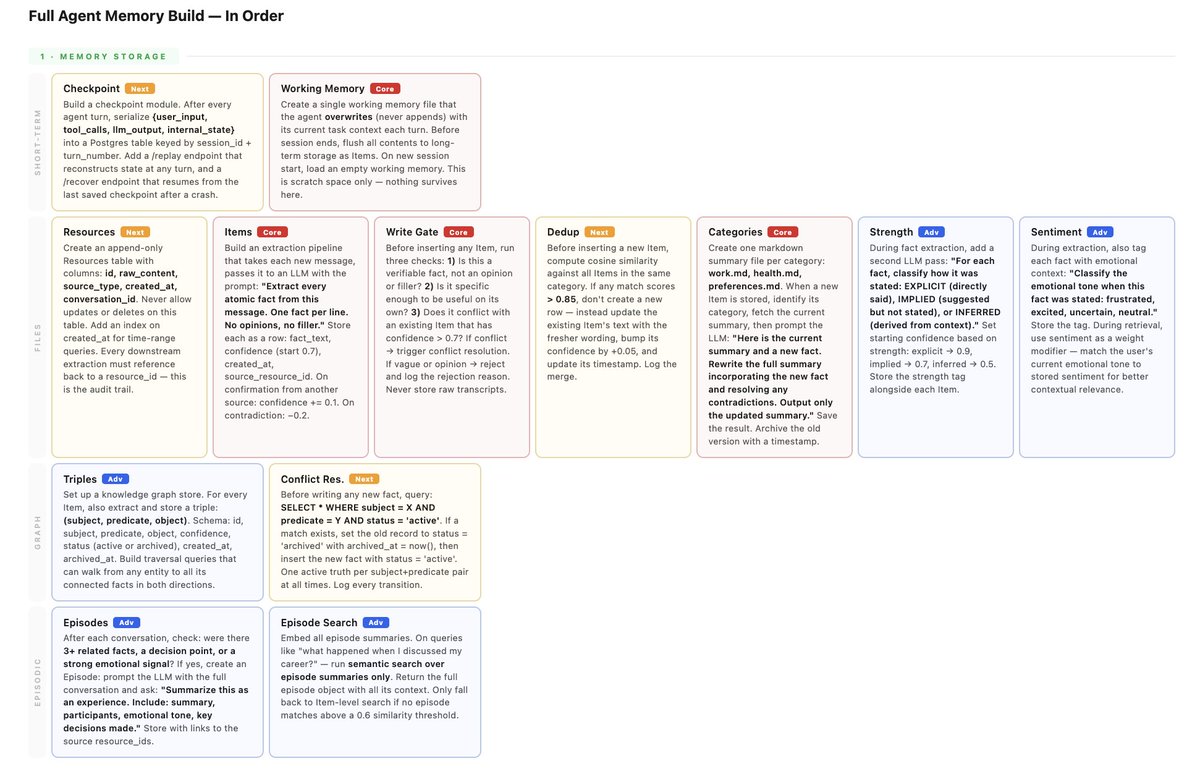
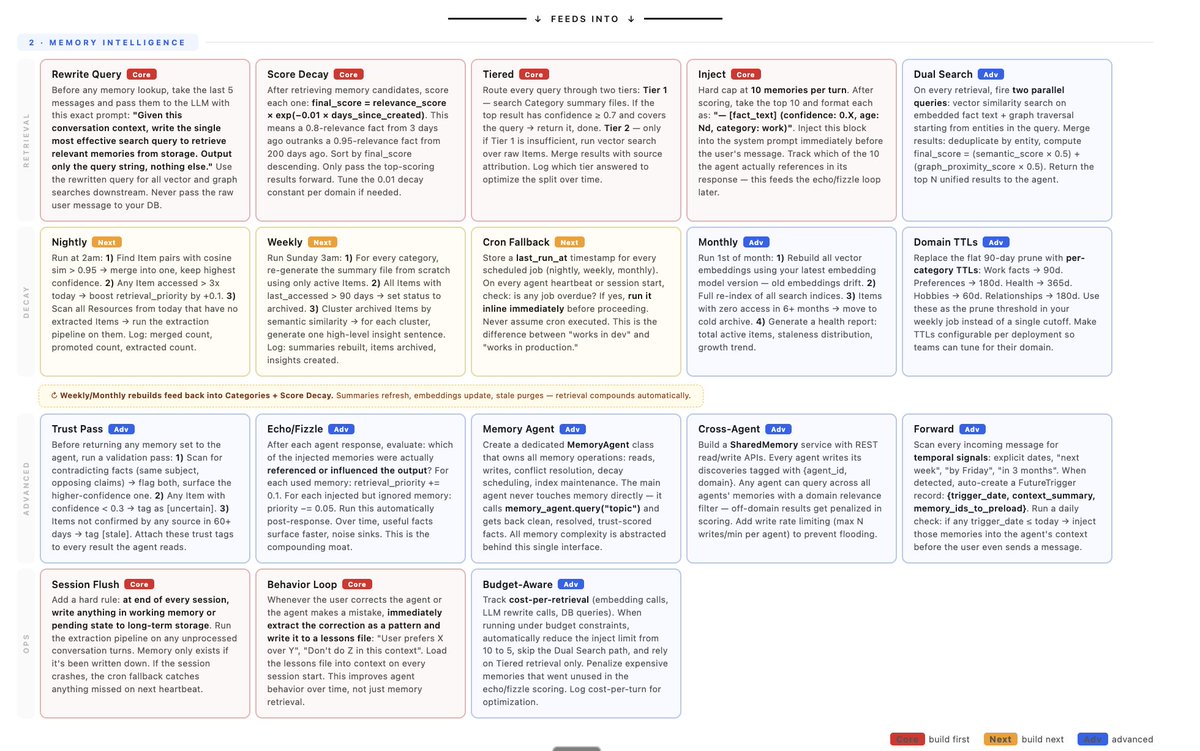
this is the entire memory stack if you actually want to take your agent memory to somewhere real. from actually remembering to having an intelligence layer.
31 pieces total, split into 3 phases:
core first, reliability second, then advanced last. you build from core to advanced slowly, and you test each phase before touching the next.
if you try to build all 31 at once, you will break everything and you won't understand anything.
phase 1 is 10 pieces. write pipeline, read pipeline, decay, session flush and behavior loop and this is the minimum for memory that actually works..
phase 2 is 7 pieces. crash recovery, audit trail, dedup, conflict resolution, automated maintenance jobs.. this is what makes memory durable..
phase 3 is 14 pieces. trust scoring, cross-agent sharing, knowledge graphs, episode tracking, intelligent retrieval, budget awareness.. this is the ceiling .. intelligence.
none of phase 3 matters until phase 1 and 2 are solid tho, build in order then test each phase before moving forward.
phase 1 unstable means phase 3 just amplifies the flaws and if phase 2 is missing means phase 3 is literally optimising pure garbage.
personally i'm not done yet. phase 1 and 2 are solid, phase 3 is still being built. but the longer you work with it the more you see, they're not separate... it's all one system.
breakdown and prompts below.
Anthropic engineers just leaked their internal AI workflow.
Turns out, 99% of people are using LLMs completely wrong.
Here are 5 techniques that separate amateurs from experts:





![EXM7777's tweet photo. turn this thread into instructions for your claude[.]md file
this might just change your life https://t.co/FkmClXtdPg](https://pbs.twimg.com/media/HAF0lbda8AAeurt.jpg)


