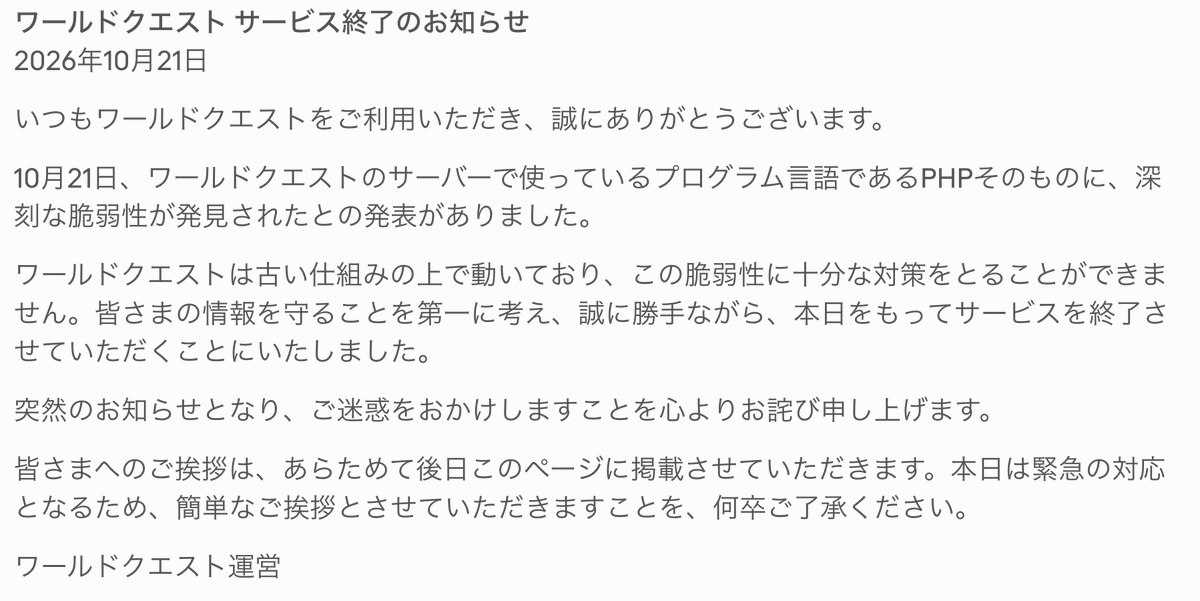
OpenAI models helped researchers—operating as part of our Patch the Planet initiative—discover critical security flaws in PHP, an open-source programming language used to run an estimated 70% of websites.
Over the past two months, we led a coalition of maintainers, researchers, and security providers to prepare fixes and protections ahead of disclosure. This duration was necessary because the fix was quite intricate and required a major change to the PHP engine. Every site using PHP can now safely upgrade their version to stay secure, in addition to applying mitigations from various security vendors.
Due to the severity of these flaws and PHP’s widespread use, we consider this bug to be one of the most impactful vulnerabilities in recent memory. It also marks a new phase, where AI can find security bugs with internet-scale impact.
This is an example of the Defender’s Window in action: to our knowledge, frontier AI was able to find this vulnerability ahead of attackers, giving defenders time to prepare.
https://t.co/TW3jrSbB3f
PHP Remote Code Execution (CVE-2026-109618 & CVE-2026-109619)
Information about two new remote code execution (RCE) vulnerabilities in PHP, tracked as CVE-2026-109618 and CVE-2026-109619 (CVSS v3.1 10 / 10), has leaked ahead of their coordinated disclosure, and security firm Watchtowr Labs confirmed that the flaws are real. Both vulnerabilities are due to be disclosed on Thursday, October 22, alongside patches. Until those advisories land, no fix is available, which leaves the flaws as zero-days in PHP installations everywhere.There is currently a scheduled release of an advisement and possible patch on Wednesday, October 21 2026 at 14:00 UTC.
Below is a video of a researcher, maybe the original researcher, showcasing the exploits.
#CTI #BlueTeam #ThreatIntel #CVE-2026-109618 #CVE-2026-109619