I still remember watching the 2017 version of this course while I was doing my military duty in Korea, which eventually led me to do RL research. Last semester, I had the chance to TA and give a small guest lecture for the same course. Hopefully it's as inspiring as it was to me!
I’ve built Dream Atari, where you can play five Atari games run by world models.
These models are based on the Dreamer 4 architecture with 7M parameters, running locally on your phone up to 30 fps using wasm.
Demo and all learnings in thread:
We’re organizing the first workshop on non-AR Language Models (eg discrete diffusion models)! Excited to be part of this and to collaborate with so many good researchers / and have amazing speaker line-up!!
Check it out here: https://t.co/YUIiC70Lpb
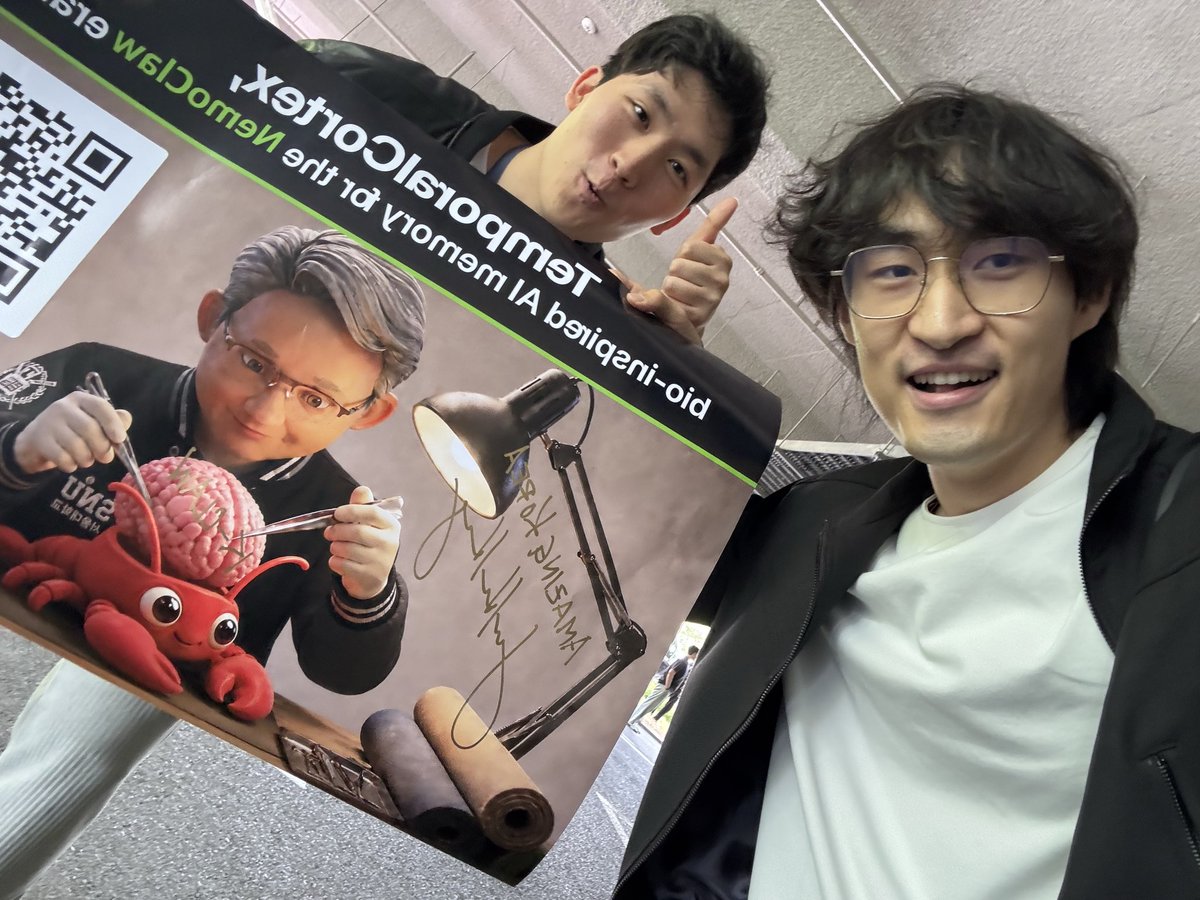
Temporal Cortex (TC) shouted out by Jensen Huang! @nvidia@NVIDIAAI
TC is the best bio-inspired memory for AI agents: one tht doesnt rot.
For hackers who want long-running AI agent memory, TC is a MUST.
Sign up here: https://t.co/Og9eBm8lH0
@2_9sigma@im_sihun@ksunw0209@nurijunsu
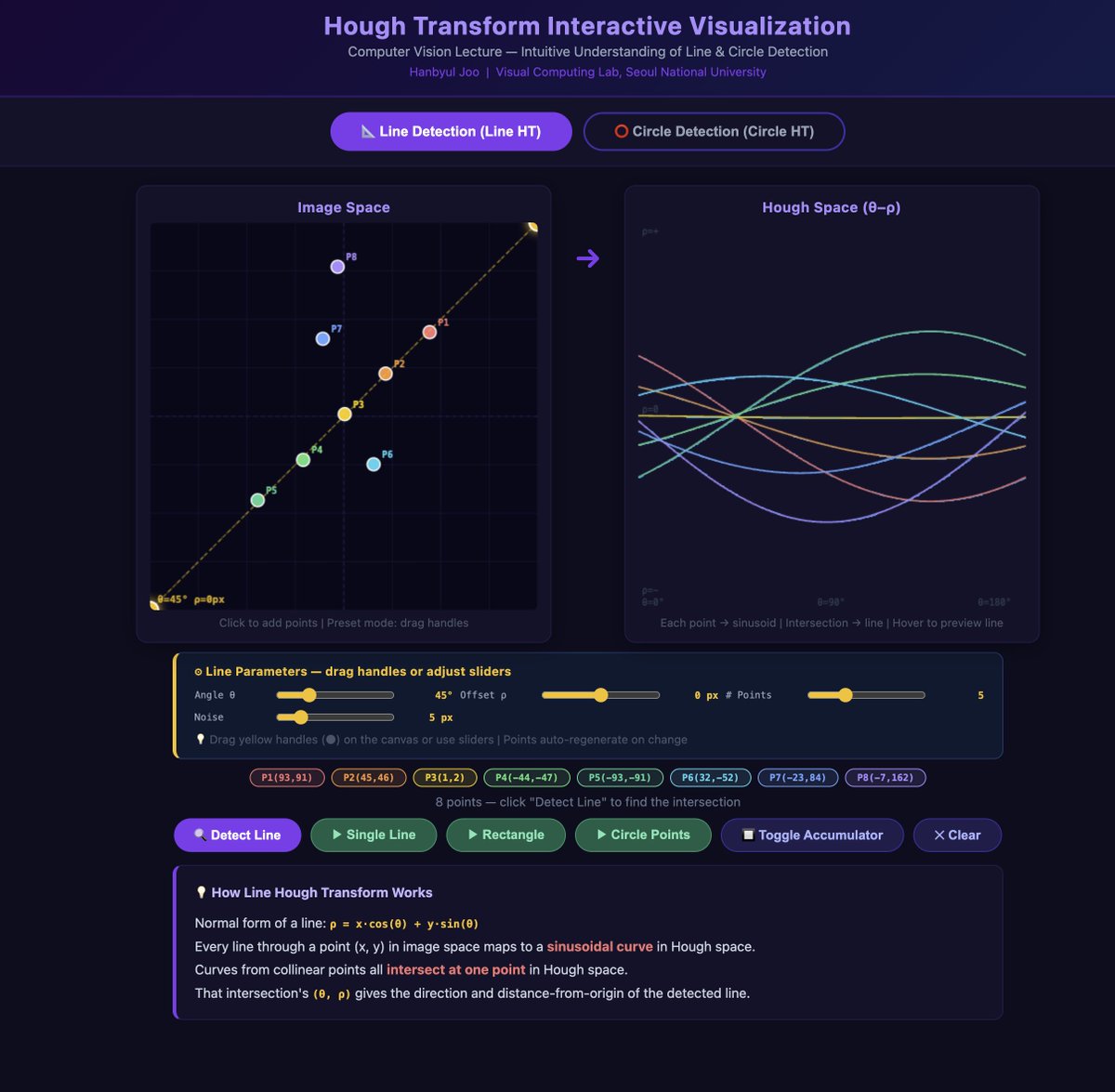
Interactive demos for the Hough Transform, built for today’s computer vision lecture. Once again, these were created entirely through vibe coding!
Toy example demo: https://t.co/IKCfUT9iw3
For image: https://t.co/qoq4fW0BCT
Tetris written in RTL
3rd Place in Ralphton 🏆
Last Sunday at Ralphton Seoul, Sihun and I created a fully working Tetris game running on a real FPGA board, using only AI agents! Generated the entire hardware system: Tetris logic, level system, audio engine, UART display output, all in synthesizable SystemVerilog.
Using ART, our in-development custom harness builder, we created the entire automation pipeline, which also runs through simulation and synthesis pipeline stages that let the agents actually close the loop against Vivado.
The harness matters more than the model. Even in hardware.
ART: https://t.co/3qEqrdwdwv
Repo: https://t.co/mrsupceFRk
Kudos to the best teammate ever @im_sihun
And thanks for the award! @GeoffreyHuntley
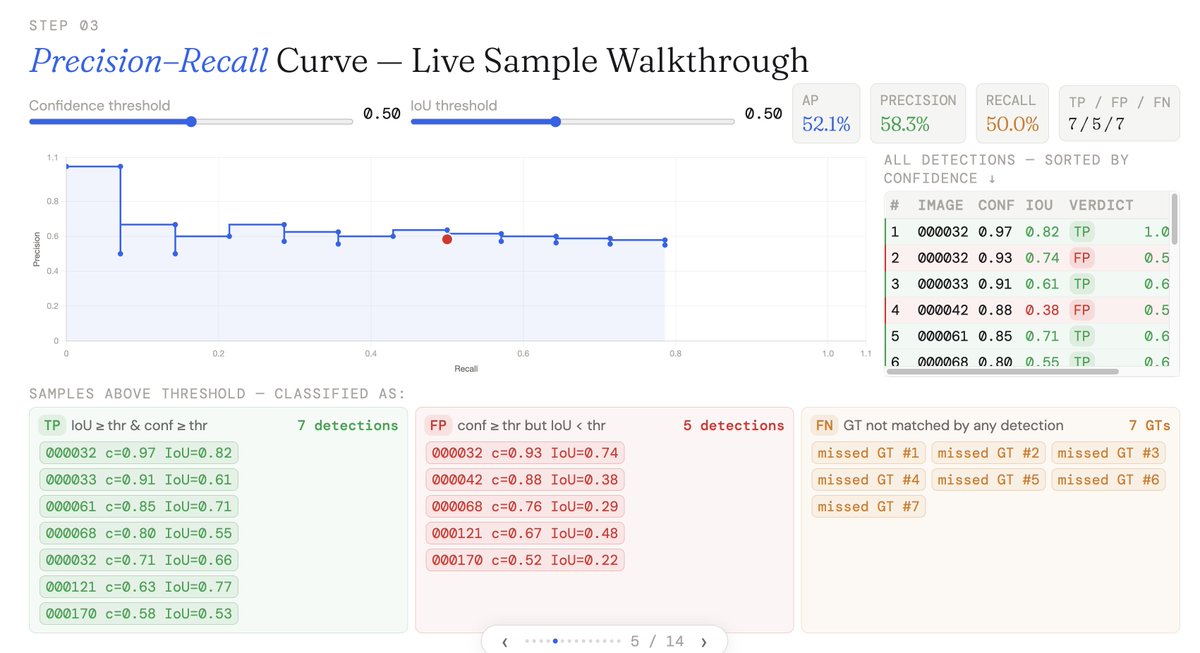
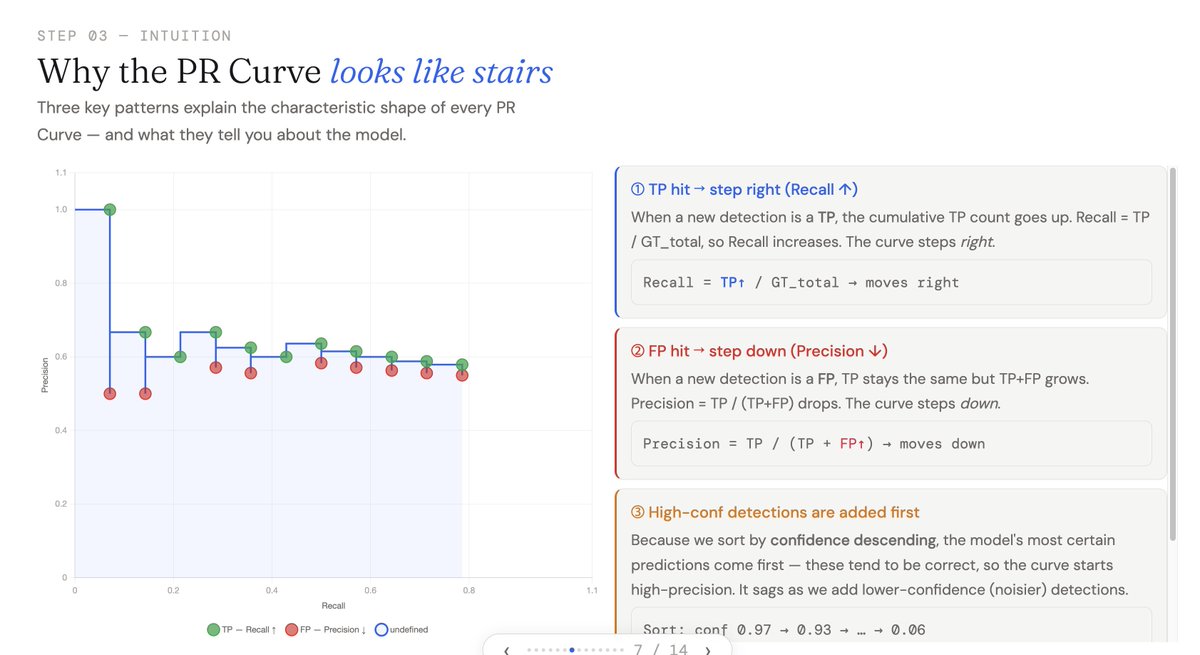
I’m currently teaching a Computer Vision course, and I’ve found that explaining object detection evaluation, especially mAP, is not always straightforward.
I tried using AI to build a small interactive tool that makes the mAP metric much more intuitive. It was a fun experience and also shows how useful AI can be for creating teaching materials!
Sharing it here in case it’s helpful:
https://t.co/Xl5FcA75bq
Autoresearch showed AI can run self-improvement loops. But how do you make your EXISTING research project self-improve?
Introducing ART: an open-source CLI that turns any codebase into a self-improving pipeline.
Just run: "art run /my/project"
🤖 Auto Mode: Goes full auto 24/7, where agents set up its own intuition into next experiment plan
🧑🔬 Manual Mode: Human can interfere via chat and instill their intuition for next trial
📊 Automated Experiment Tracking via Git
🔒 Isolated containers for each agent, for proper sandboxing during evaluation
🔄 Agentic loop customizable via "art compose /my/project"
Try it here: https://t.co/3qEqrdwdwv
Work done with @im_sihun
#opensource #autoresearch #openclaw
Left autoresearch (@karpathy) for robotics, on FetchPickPlace overnight -- and it seems to work for RL too!
What's interesting is the agent kept diagnosing the same failure across experiments: "arm retraction", "misdirected reaching", "no grasping." It tried noise scaling, batch size, critic loss, buffer size, exploration eps -- all discarded.
Then at experiment #28: USE_LAYER_NORM=TrueAgent's note: "layer norm stabilizes learning; no arm retraction" 0% → 40% success rate. The visual feedback loop (MuJoCo renders → Claude → qualitative diagnosis) gave the agent a consistent failure vocabulary across experiments -- it saw what was failing before connecting it to why.
Running ablations to see whether it really has positive effects.
Github (Public): https://t.co/H3oTd3PrUp
Three days ago I left autoresearch tuning nanochat for ~2 days on depth=12 model. It found ~20 changes that improved the validation loss. I tested these changes yesterday and all of them were additive and transferred to larger (depth=24) models. Stacking up all of these changes, today I measured that the leaderboard's "Time to GPT-2" drops from 2.02 hours to 1.80 hours (~11% improvement), this will be the new leaderboard entry. So yes, these are real improvements and they make an actual difference. I am mildly surprised that my very first naive attempt already worked this well on top of what I thought was already a fairly manually well-tuned project.
This is a first for me because I am very used to doing the iterative optimization of neural network training manually. You come up with ideas, you implement them, you check if they work (better validation loss), you come up with new ideas based on that, you read some papers for inspiration, etc etc. This is the bread and butter of what I do daily for 2 decades. Seeing the agent do this entire workflow end-to-end and all by itself as it worked through approx. 700 changes autonomously is wild. It really looked at the sequence of results of experiments and used that to plan the next ones. It's not novel, ground-breaking "research" (yet), but all the adjustments are "real", I didn't find them manually previously, and they stack up and actually improved nanochat. Among the bigger things e.g.:
- It noticed an oversight that my parameterless QKnorm didn't have a scaler multiplier attached, so my attention was too diffuse. The agent found multipliers to sharpen it, pointing to future work.
- It found that the Value Embeddings really like regularization and I wasn't applying any (oops).
- It found that my banded attention was too conservative (i forgot to tune it).
- It found that AdamW betas were all messed up.
- It tuned the weight decay schedule.
- It tuned the network initialization.
This is on top of all the tuning I've already done over a good amount of time. The exact commit is here, from this "round 1" of autoresearch. I am going to kick off "round 2", and in parallel I am looking at how multiple agents can collaborate to unlock parallelism.
https://t.co/WAz8aIztKT
All LLM frontier labs will do this. It's the final boss battle. It's a lot more complex at scale of course - you don't just have a single train. py file to tune. But doing it is "just engineering" and it's going to work. You spin up a swarm of agents, you have them collaborate to tune smaller models, you promote the most promising ideas to increasingly larger scales, and humans (optionally) contribute on the edges.
And more generally, *any* metric you care about that is reasonably efficient to evaluate (or that has more efficient proxy metrics such as training a smaller network) can be autoresearched by an agent swarm. It's worth thinking about whether your problem falls into this bucket too.
I think it’s important to note that this week, starting March 9th, is the first week in history where plausible AI PCB designs start flooding the internet
Why: We started agentic benchmarking for tscircuit around Feb 25th, and GPT 5.4 w/ improved spatial reasoning was released
Adapted @karpathy's autoresearch for robotics
I added simulation feedback: agent optimizes policy code against metrics AND Mujoco renderings.
Feedbacks seem qualitatively good: e.g. "inconsistent gripper orientation, no contact"
https://t.co/6KrspmRcDY