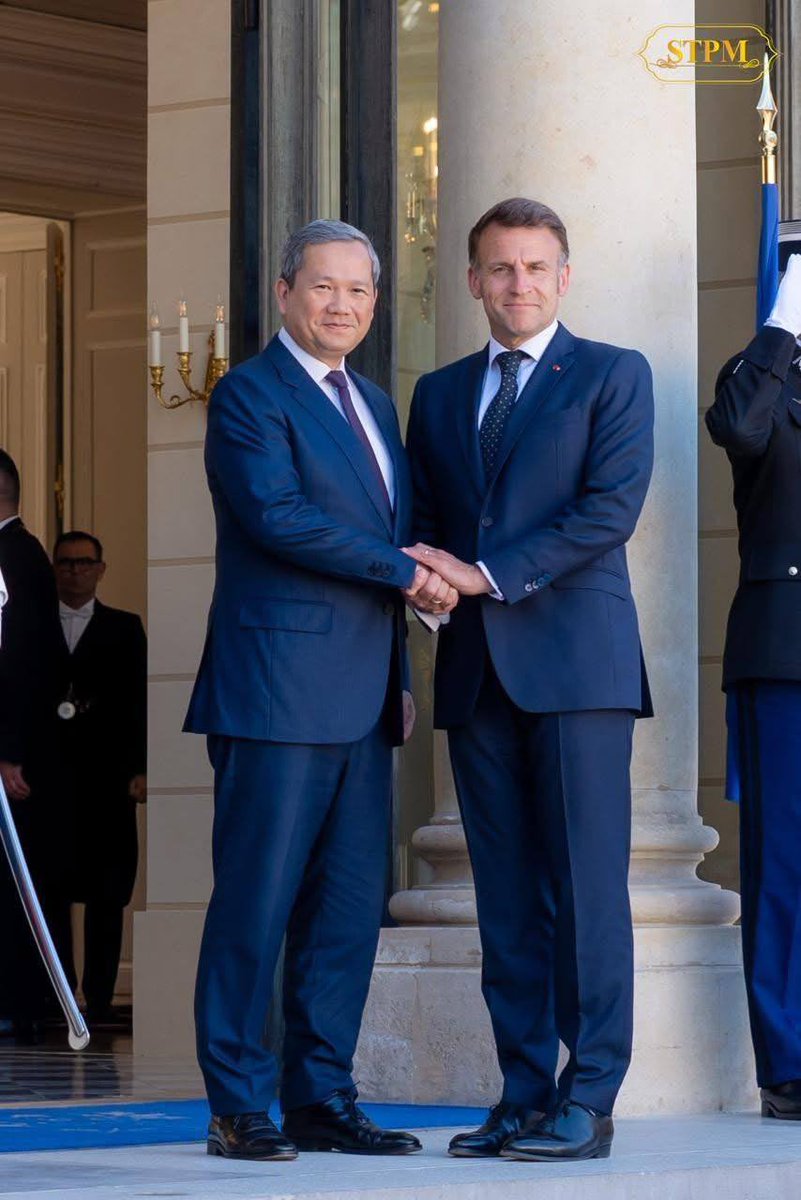
សូមអរគុណចំពោះឯកឧត្តមប្រធានាធិបតី Emmanuel Macron ចំពោះការស្វាគមន៍យ៉ាងកក់ក្តៅ និងកិច្ចពិភាក្សាការងារប្រកបដោយលទ្ធផលវិជ្ជមានដើម្បីពង្រឹងចំណងមិត្តភាពទ្វេរភាគីរវាងប្រទេសយើងទាំងពីរ ជាពិសេសការរៀបចំតម្លើងកម្រិតនៃទំនាក់ទំនងរវាងកម្ពុជានិងបារាំងដល់កម្រិត "ភាពជាដៃគូរយុទ្ធសាស្ត្រ - Strategic Partnership" នៅពេលឆាប់ៗខាងមុខ។
ខ្ញុំរង់ចាំស្វាគមន៍ទស្សនកិច្ចផ្លូវរដ្ឋរបស់ឯកឧត្តមប្រធានាធិបតីមកកាន់ព្រះរាជាណាចក្រកម្ពុជា និងការចូលរួមរបស់ឯកឧត្តមក្នុងកិច្ចប្រជុំកំពូល បណ្តាប្រទេសនិយាយភាសាបារាំងលើកទី២០ (20th Francophonie Summit) ដែលកម្ពុជាធ្វើជាម្ចាស់ផ្ទះនៅខែវិច្ឆិកា ឆ្នាំ២០២៦ខាងមុខនេះ។
Thank you President Emmanuel Macron for your warm hospipatilty and very productive discussions to strenghten bilateral relationship between our two countries, especially as we are working towards updraging our diplomatic relationship to Strategic Partnership in the near future.
I am looking forwards to welcoming President Macron's official state visit to Cambodia and his participation in the 20th Francophonie Summit, which Cambodia will host in November 2026.
#ហ៊ុនម៉ាណែត #Hunmanet #កម្ពុជា #cambodia #សន្តិភាពនៅកម្ពុជា #Peaceincambodia
Cambodia's prime minister claims Thailand is occupying part of its territory, despite a Trump brokered peace agreement ending fighting along their borders.
Watch OAN on Spectrum and YouTube TV today!
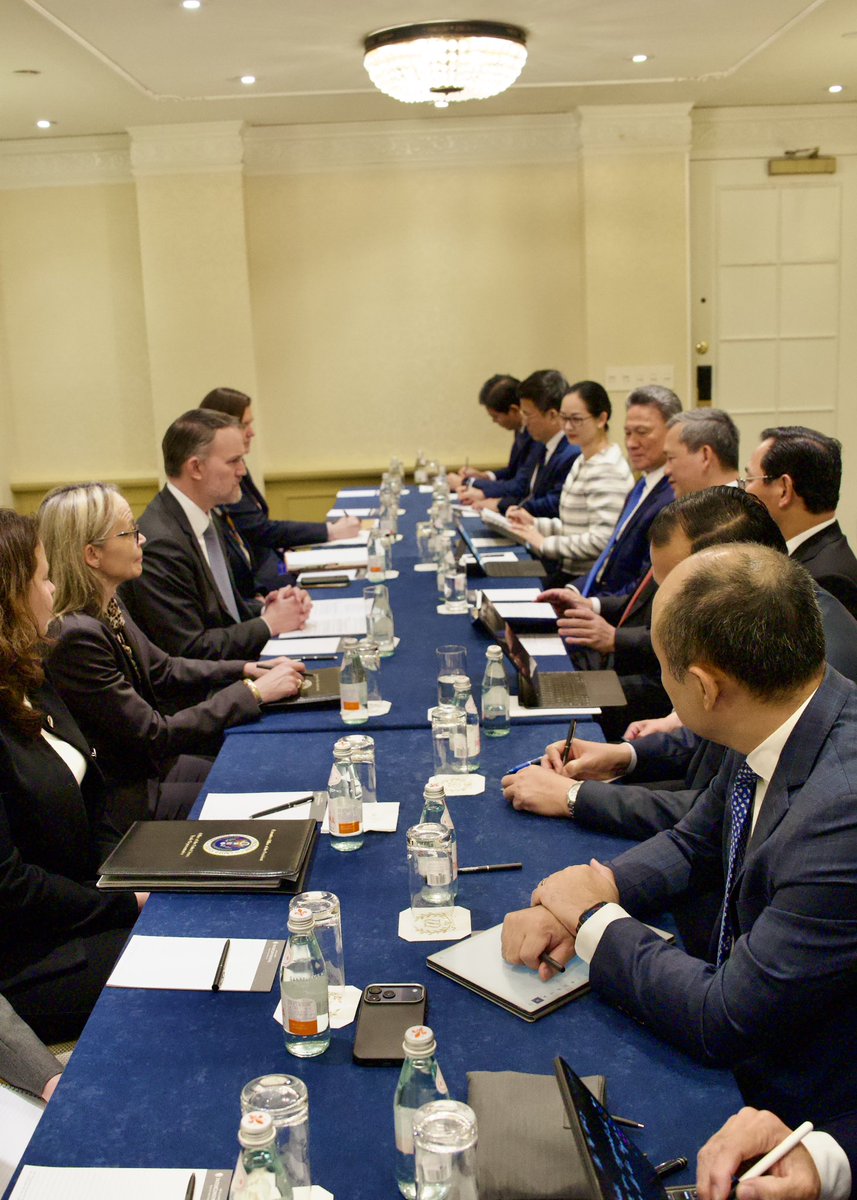
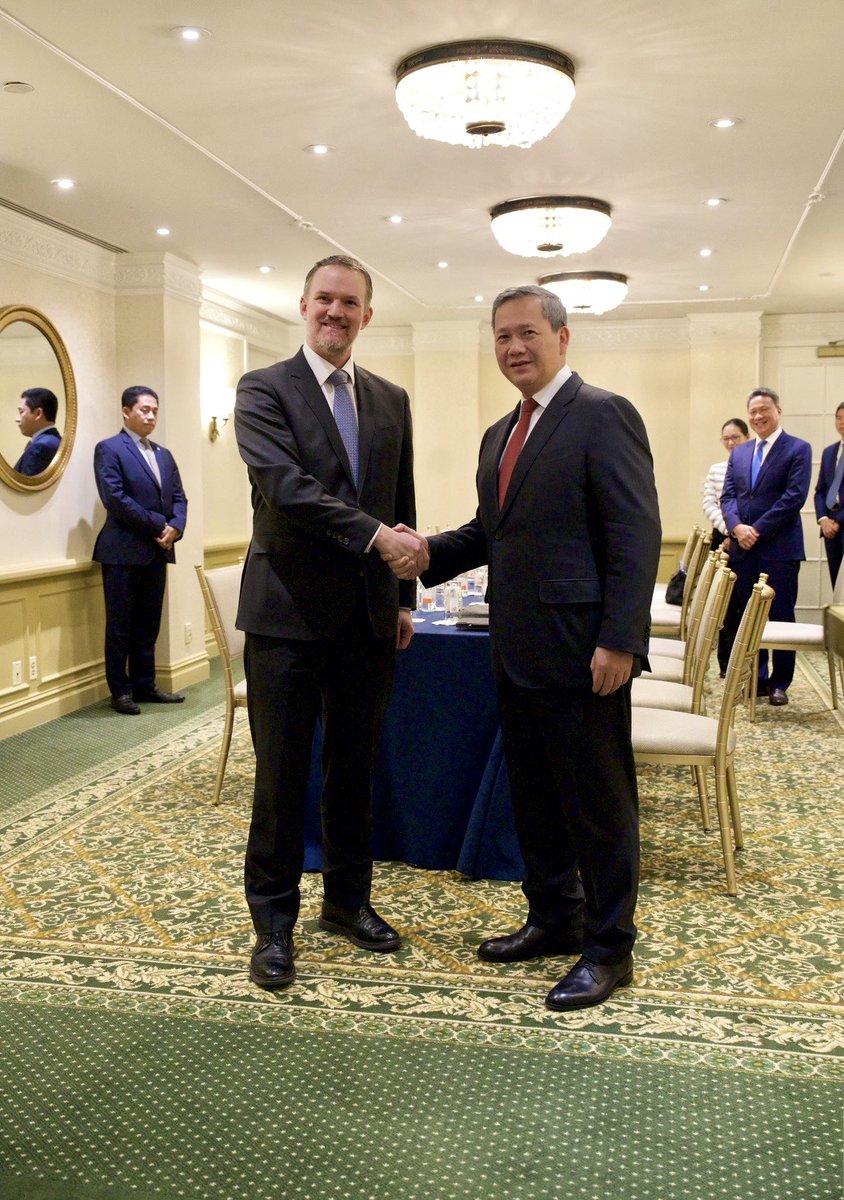
Ambassador Greer met with Cambodia Prime Minister Hun Manet to discuss advancing our shared interests while locking in access for U.S. agricultural and industrial exports.
Cambodian Prime Minister Hun Manet told Reuters Thai forces have not withdrawn from Cambodian territory after fighting last year and a US-brokered peace accord https://t.co/jlAar5IAcK
Today, the American Chamber of Commerce in Cambodia provided aid to 541 Cambodian families displaced by Thai airstrikes, artillery and shooting. These families represent a few of the approximately 700,000 displaced people in Cambodia.
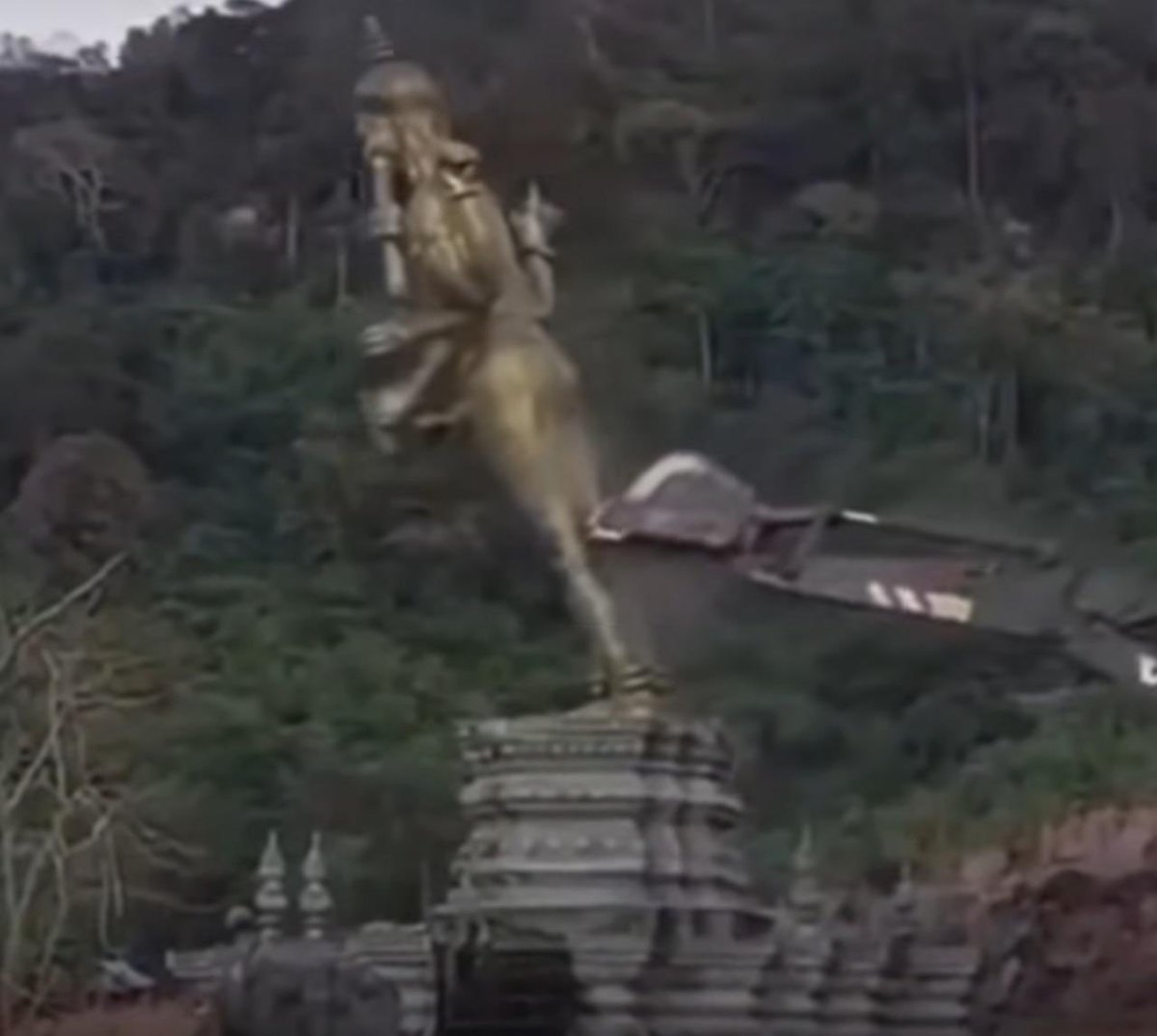
Destroying a Hindu deity’s statue under the pretext of a border dispute is unacceptable. Whether placed by Cambodia or not, attacking faith and heritage only exposes intolerance.
Both Thailand and Cambodia are Buddhist nations, yet history records repeated persecution of Hindu temples and attempts to erase them. Violence against sacred symbols cannot be whitewashed with slogans. No religion proves its “peace” by destroying another’s faith.
Hon’ble PM @narendramodi Ji,
Hon’ble HM @AmitShah Ji, @RSSorg
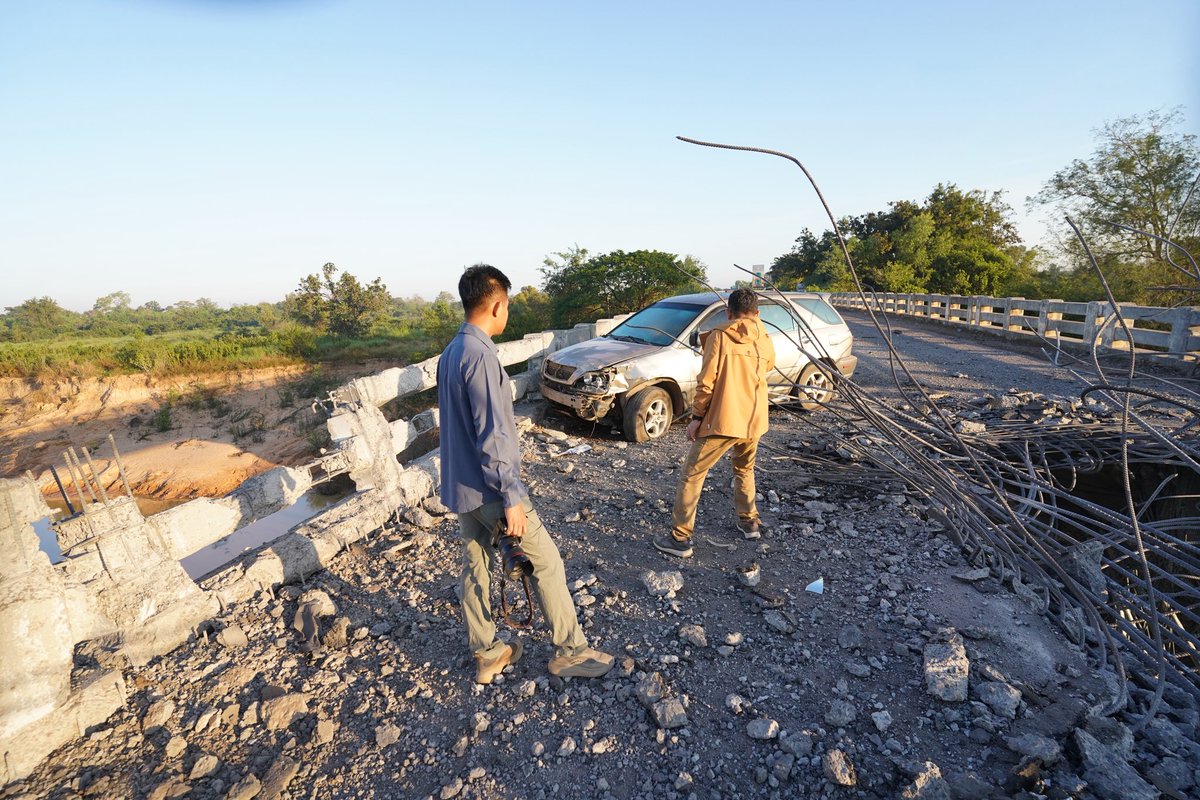
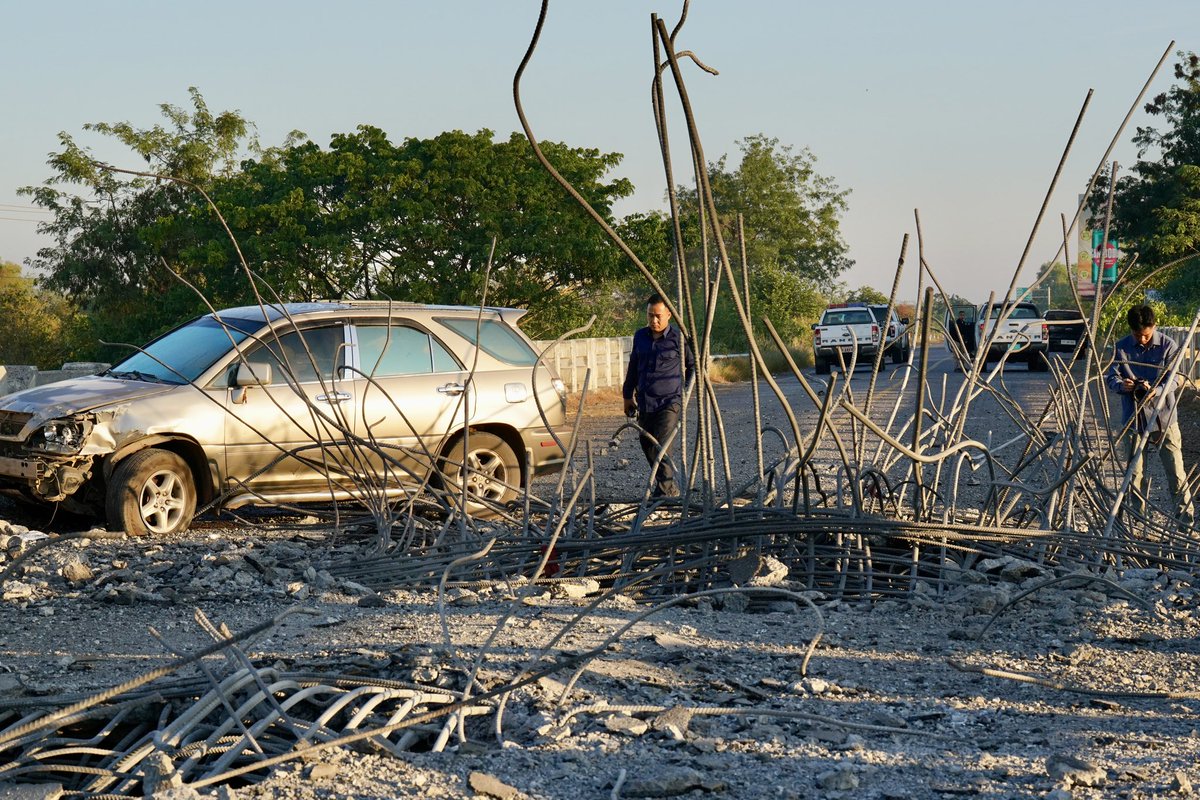
Thailand’s military actions constitute a clear act of armed aggression and a serious violation of the United Nations Charter. The use of force against Cambodia’s sovereignty, coupled with attacks that have affected civilians and civilian infrastructure, is unacceptable under international law and international humanitarian law. No security claim authorizes the bombing of civilian areas or the violation of another state’s territorial integrity. #Thailandcommitcrimesagainsthumnity #Thailandviolatehumanrights
Casey Barnett, President of the American Chamber of Commerce in Cambodia, on Thursday (Dec. 18) highlighted striking historical parallels between Thailand’s current actions against Cambodia and its 1941 invasion during World War II.
In a statement posted on social media, Barnett noted that Thailand’s use of alleged cross-border incidents as justification for military action mirrors the narrative employed more than eight decades ago.
“In 1941, Thailand invaded Cambodia and later declared war on the United States and the United Kingdom,” he wrote.
“In 2025, Thai accusations that Cambodian soldiers fired across the border are again being used to justify an ongoing Thai invasion of Cambodia. Similar claims formed the basis of Thailand’s 1941 invasion of Cambodia. Then, as now, Thailand’s military action was intended to annex Cambodian territory,” he added.
“Despite full knowledge of Japan’s genocidal conduct in China, including the 1937 Nanjing Massacre in which approximately 200,000 civilians and prisoners of war were killed, Thailand entered into a treaty with Japan on June 12, 1940. This agreement laid the groundwork for Japan’s subsequent occupation of French Indochina and British Malaya. After ratifying the treaty, Thailand invaded Cambodia and Laos in January 1941, claiming that French colonial forces in Cambodia had fired across the border into the Thai town of Aranyaprathet. In reality, Thailand had been preparing for invasion for months. Within weeks, Thailand forcibly annexed northern Cambodian provinces and western Lao territories,” Barnett said.
He added that in December 1941, Thailand and Japan concluded a further agreement providing for mutual military support, with Japan explicitly backing Thailand’s territorial claims covering annexed areas of Cambodia, Laos, Malaya, and Burma. This agreement secured Thailand’s role as a logistics hub and staging ground for Japan’s conquest of British Malaya and Burma between 1941 and 1942.
He also highlighted that in July 1943, Japan rewarded Thailand for its cooperation by transferring to it six provinces of British Malaya and Burma. During this period, Thailand facilitated and materially benefited from Japan’s use of forced labor to construct the Burma Railway, linking Bangkok to Yangon. Among the enslaved laborers were 30,131 British and 686 American prisoners of war. Of these, 6,904 British and 131 Americans died as a result of brutal working conditions.
Following the Allied victory in World War II, Thailand was compelled to relinquish all territories it had annexed in Cambodia, Laos, Malaya, and Burma. Britain initially sought punitive measures, including extended occupation of Thailand and potential control over the Thai Isthmus. The United States, however, opposed harsh postwar treatment, arguing that severe demands would destabilize Thailand and the wider region. As a result, Barnett noted, Thailand faced limited accountability for its wartime territorial aggression.
“Now, in 2025, with little apparent collective memory of the consequences of its earlier irredentist ambitions, Thailand is once again invading Cambodia,” he concluded.