All Paid Courses (Free for First 4500 People)
𝗣𝗮𝗶𝗱 𝗖𝗼𝘂𝗿𝘀𝗲 𝗙𝗥𝗘𝗘 (PART - 1)
1. Artificial Intelligence
2. Machine Learning
3. Prompt Engineering
4. Claude,Chatgpt,Grok
5. Data Analytics
6. AWS Certified
7. Data Science
8. BIG DATA
9. Python
10. Ethical Hacking
(72 Hours only )
Like + RT + comment ' Drive '
Must Follow me so I can DM you.
MANUALLY DRAGGING BOXES FOR ARCHITECTURE DIAGRAMS IS FINALLY DEAD
There is a new open-source agent skill that turns raw codebases into cleanly routed https://t.co/f9zjBxfJLp diagrams without you placing a single coordinate.
The project, drawio-skill, runs directly inside Claude Code, Cursor, or Copilot.
Instead of opening a blank canvas, you just ask your agent to map the repo.
Here is what it actually does:
→ Extracts the module structure (supports Python, JS/TS, Go, Rust)
→ Uses Graphviz for auto-layout and routing
→ Drops redundant edges so the graph stays readable
→ Builds native, editable https://t.co/f9zjBxfJLp files
But the standout feature is visual self-checking.
Once it generates the diagram, the agent "looks" at the resulting PNG. If it sees stacked edges or clipped text, it auto-fixes the layout across up to 5 iterative rounds.
It runs from a single file. No MCP server. No background daemon.
Best part?
It's 100% free and open-source.
repo link in 🧵↓
Andrej Karpathy just explained the future of software engineering without directly saying it.
The best AI engineers are no longer “prompting.”
They’re building systems around the agents.
Karpathy’s biggest insight wasn’t:
“Claude can code.”
It was:
LLMs become dramatically better when you force them into disciplined workflows.
That’s why "CLAUDE.md" files are suddenly everywhere.
Not because they’re prompts.
Because they behave like an operating system for the agent.
Karpathy called out the exact problems with AI coding:
- models assume instead of asking
- they overengineer simple tasks
- they hide confusion
- they rewrite unrelated code
- they optimize for completion, not correctness
So developers started encoding rules directly into the workflow:
→ Think before coding
→ Simplicity first
→ Surgical edits only
→ Goal-driven execution
And the results are wild.
People are now running multiple Claude Code agents in parallel like engineering teams:
• one agent researching
• one debugging
• one writing tests
• one optimizing code
• one validating outputs
Not “AI assistance.”
Actual orchestration.
And this part from Karpathy changes everything:
“Don’t tell the model what to do. Give it success criteria and let it loop.”
That is the shift.
From:
“write this function”
To:
“here’s the goal, constraints, tests, and verification system — now iterate until correct.”
The craziest part?
This already feels like a phase shift in engineering.
A lot of developers quietly went from:
80% manual coding → to 80% agent-driven coding in just months.
Not because AI became perfect.
Because the leverage became impossible to ignore.
We’re entering an era where the highest leverage engineers won’t necessarily be the best coders.
They’ll be the people who build the best systems around AI agents.
SYSTEM DESIGN PLAYBOOK
Giveaway Alert!!!
• System design fundamentals.
• Condensed notes to read before system design interview.
• Must know concepts from real-world software engineering case studies.
To get it for free:
1 Retweet & Follow @systemdesignone
2 Reply "Playbook"
Then I'll DM you the details.
ClamAV, l'antivirus libre bien connu, vient d'annoncer la version 1.5.0. Il apporte un meilleur support des documents MS-Office OLE2, un rapport des URI trouvées dans les docs HTML et PDF, etc ... ⬇️
https://t.co/59gev7OcKY
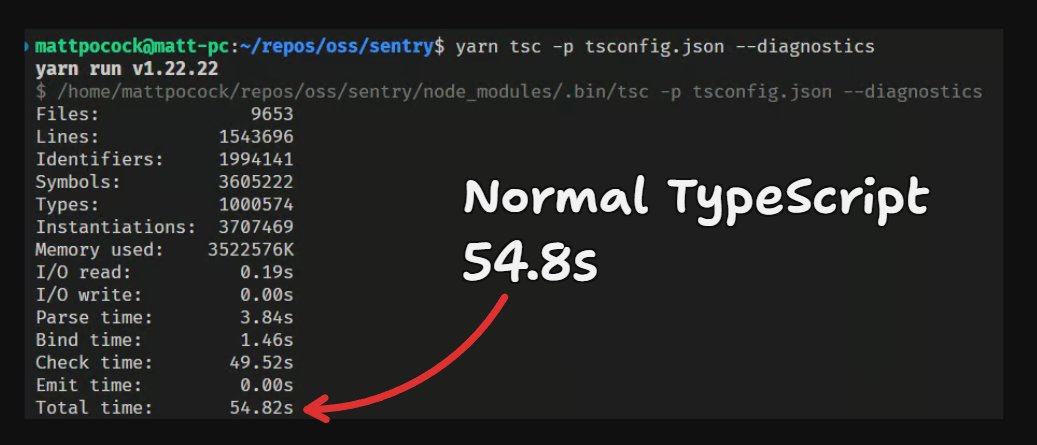
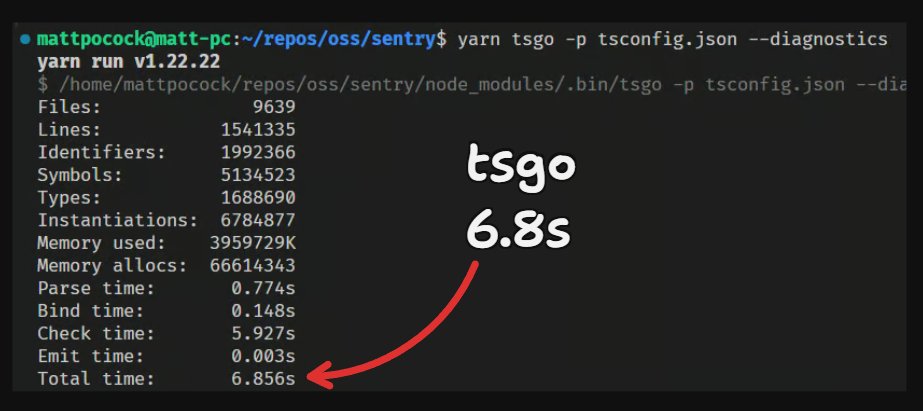
Today we're announcing previews of the native port of TypeScript! These nightly previews will be available on npm and the VS Code marketplace!
npm install -D @typescript/native-preview
npx tsgo --version
Read up more on our blog!
https://t.co/7uIO2NO8fz
More #Angular pipes: I18nPluralPipe
Do you use it in your apps? What plural forms do you have in your languages?
#100daysofdocumentation https://t.co/PoglHEzpq9
How do we design effective and safe APIs?
APIs have increasingly become the backbone of modern software.
To understand some of the key principles and best practices of API design, Let's analyze a social media platform example:
🔹 Resource naming
Clarity is key when creating APIs.
Adopting simple resource names, like /users for accessing user profiles and /posts for retrieving user posts, streamlines the development process and reduces mental strain.
🔹 Use of plurals
It's important to maintain a standard of consistency in API design.
For consistency and readability, use plural resource names, such as GET /users/{userId}/friends vs. /friend), to avoid ambiguity in API requests.
🔹 Cross-referencing resources
Interlinking resources, like taking comments on a post using GET /posts/{postId}/comments, simplifies the retrieval of related data.
It provides a more streamlined and well-organized user experience.
🔹 Security
It goes without saying, security is a must-have.
To secure the API endpoints, employ authentication methods like X-AUTH-TOKEN and X-SIGNATURE, and use authorization headers for verifying user permissions.
🔹 Versioning
Using versioning and communicating version updates is another important practice.
Endpoints like GET /v2/users/{userId}/posts allow API versioning to maintain functionality regardless of updates.
This approach ensures backward compatibility and a smooth transition for users and us.
🔹 Pagination
This technique is important for performance.
Paginate large datasets, like feeds or comment lists, with GET /posts?page=5&pageSize=20 to enhance data delivery and UX.
🔹 Idempotency
Maintaining API reliability is necessary.
Idempotency ensures that operations like profile updates (PUT /users/{userId}/profile) achieve their intended result, regardless of how often they are executed.
Thorough documentation, robust monitoring and logging, and consistent error handling are just a few more of the many essential habits required for designing effective and safe APIs.
Adopting these principles and practices enables us to develop secure and performant APIs that deliver good user experiences.
~~
Thank you to our partner Postman who keeps our content free to the community.
Want to increase your API knowledge and skillsets? POST/CON 25 is a great way to do so.
Subscribe to be notified of first access to event updates, speaker announcements, and discounted tickets!
Check it out: https://t.co/yYAH4VqG8u
I have something for you.
2 digital copies each of the books -
1. Hands-On Microservices with JavaScript
2. Scalable Application Development with NestJS
To participate you have to -
- Follow me (you will keep getting more insights and giveaway opportunities)
- Comment -> I'm in
- Repost
You can find the book links in the comment section.
I will announce the winners tomorrow.
Happy Learning!!