2/4 the vault is a separate, isolated environment that runs locally in your browser.
the main app can request a signature, but the review, approval and signing all happen inside the vault.
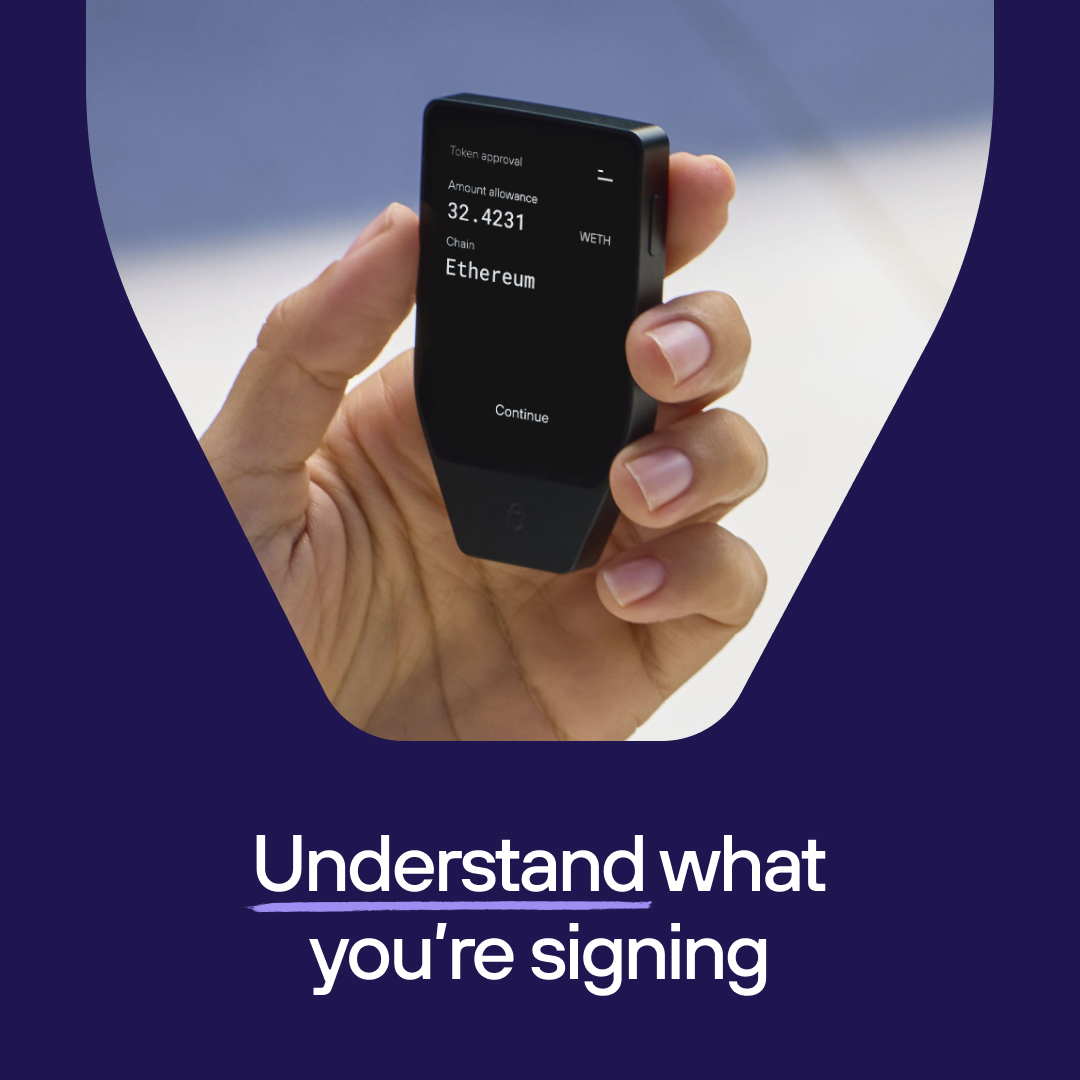
bundled in with this, the vault enforces Clear Signing (@SourcifyEth), so that you know exactly what you're about to sign.
your PIN, passkey-derived secrets (WebAuthn PRF) and spending keys never get passed back to the app.
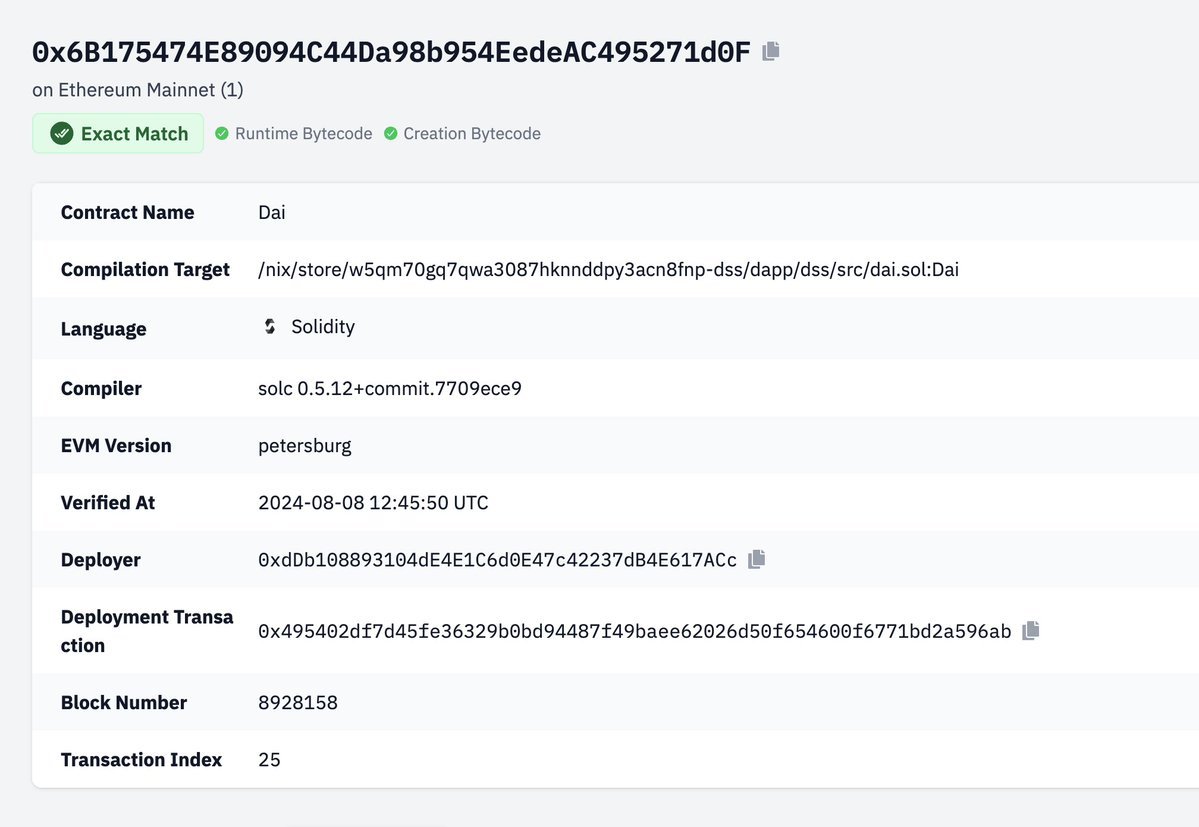
Mainnet $DAI was only a partial match on Sourcify. The 2019 build paths were lost.
Claude dug through MakerDAO's old nix build, re-evaluated the dss-deploy closure in Docker, recovered the 19 /nix/store remappings, and recompiled.
DAI is now an exact match 🤯
Fe 26.4 is here! Grab 26.4.1, which fixes a borrow-checking regression found right after 26.4.0.
Inside: more building blocks for DeFi, better Solidity interop, a more capable compiler, and a first experimental step toward native programs.
Highlights 👇
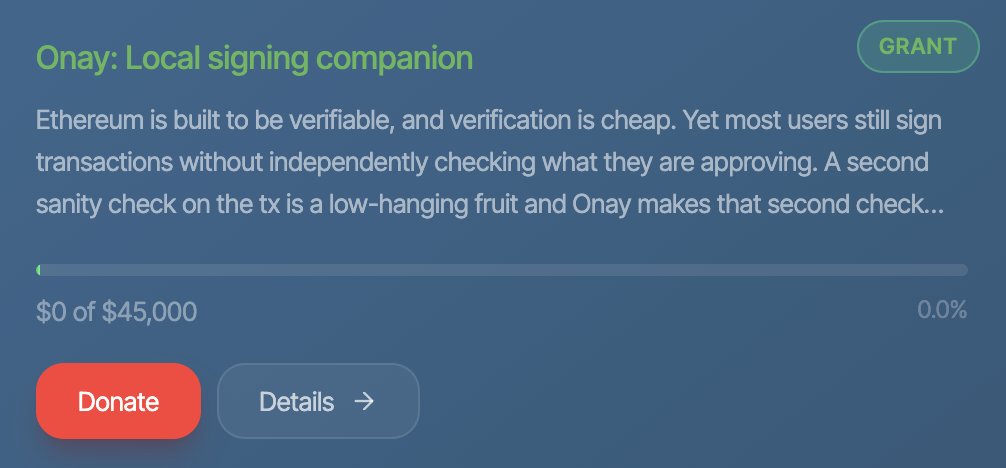
We have 2FA for email and banking but not for signing crypto transactions, the most sensitive step of all. Onay by @SourcifyEth, featured in @thedaofund's second round, adds a local sanity check to every signing request.
Fe 26.3 is here! 🧵
First-class memory pointers, new array and ERC-20 helpers, important compiler fixes, and foundations for source-level debugging.
Here’s what’s new 👇
shoutout to the folks on the Clear Signing Working Group (@kaanuzdogan) who merged our PR for @staycloakedxyz !
https://t.co/eWKw9QH04x
knowing what you sign is extremely important and we're trying to make that as easy as possible.
Smart contract transactions can be complex.
Clear Signing makes them easier to understand. Your Trezor decodes supported EVM transactions and shows the action, tokens, amounts, and destination on its trusted screen.
See it. Verify it. Sign with confidence.
EF Protocol teams have ranked Quick Slots, a proposed upgrade to begin making Ethereum L1 faster, as B-tier, clearing their bar for consideration in Hegotá.
https://t.co/pSnI33bdB2
They have listed four concrete requirements to increase their level of confidence in delivering better UX, better markets and better censorship-resistance for Ethereum all at once in Hegotá. Work is now fully underway to close all four requirements:
1. Specifications covering all expected changes to the core protocol are proposed and actively discussed here https://t.co/H1tgsmB0yv I appreciate @jtraglia for his valuable input here.
2. Two individual core developers from two distinct client teams have started the work of prototyping the change, including @terencechain from Prysm. There is more to do here, and I thank both of them for their time.
3. An in-depth assessment of downstream effects is in progress, with the support of @SourcifyEth. A preliminary write-up was shared here: https://t.co/HgG7mFknMx and the analysis is currently being expanded to cover more sources of dependencies, including EIP-4788.
4. @fradamt in our team is an integral part of the effort of specifying decoupled consensus, working in closest collaboration with the EF Protocol Finality team. On our side, we are confident that Quick Slots do not complicate decoupled consensus.
In fact, since one of the objectives of decoupled consensus is to deliver shorter slots via decoupling block production and finality, doing Quick Slots in Hegotá means that decoupled consensus delivers maximum value once it fully ships. This is on top of faster blocks providing an additional latency reduction to finality, close to 20%.
Job is not done 🫡 and we will keep raising our efforts to derisk Quick Slots and ensure its inclusion. The opportunity is to make Ethereum meaningfully faster in its next major upgrades, rather than waiting for two or more cycles.
If you want to know more about why we think it's important and are committed to pushing it forward, check out our Hegotá view on the topic: https://t.co/sKp23UHnnh