@wiseconnector The common thread: people who are full give. People who are empty take. Watch how someone reacts to your wins and you'll know which one they are.
@RayDalio The real challenge is articulating your principles clearly enough to an AI or a person. That’s exactly why delegating real decision-making takes years in corporate life.
Reading broadly is the cheapest R&D you’ll ever do on yourself. A few dollars and a few hours to discover an entire field you didn’t know you were built for. Nothing else has that ROI.
Elon Musk on the most underrated reason to read a lot of books:
Asked about the search for meaning, the Tesla and SpaceX CEO goes straight to reading volume.
"I encourage people to read a lot of books. Just read, I mean basically try to ingest as much information as you can and try to also just develop a good general knowledge, so you at least have like a rough lay of the land of the knowledge landscape."
The standard he sets is low on purpose. A rough lay of the land is all he asks for:
"Try to learn a little about a lot of things."
Then comes the reason, in the form of a question most people never think to ask themselves:
"You might not know what you're really interested in. How would you know what you're really interested in if you at least aren't doing a peripheral exploration broadly of the knowledge landscape?"
That question is the whole point. Reading widely works as a search function.
You can only be drawn to a field you have actually encountered. The set of things you are capable of wanting is capped by the set of things you have been exposed to, and for most people that exposure arrives by accident: whatever your parents did, whatever your school offered, whatever your first job put in front of you. Read nothing outside that and you are choosing from a menu someone else handed you.
Books are one input. Musk applies the same logic to people:
"And you talk to people from different walks of life and different industries and professions and skills and occupations. Like just try, you know, learn as much as possible."
Same mechanism, more surface area.
When the interviewer reframes all of this as a search for meaning, Musk accepts the framing and routes it straight back to reading:
"Yeah, what's the meaning of life and all. But just generally, like I said, I would encourage people to read broadly in many different subject areas and then try to find something where there's an overlap of your talents and what you're interested in."
The reading populates one half of that overlap. Talent, the other half, tends to reveal itself whether you go looking or not.
@elonmusk is specific about why talent on its own falls short:
"People may be good at something, or they may have skill at a particular thing, but they don't like doing it."
Talent on its own is a trap. Being good at something generates praise, money and more of the same work, which locks you in years before anyone asks whether you enjoy it. Plenty of people end up a decade into a career they excel at and quietly resent, having optimised for the half of the equation that pays out fastest.
His conclusion:
"So you want to try to find a thing where that's a good combination of the things that you're inherently good at, but you also like doing."
25 years ago I measured success by what I earned.
Now I measure it by what I don’t have to do, don’t have to attend, and don’t have to explain.
The scoreboard changes the moment your assets start working harder than you do.
@RayDalio Chokepoints have decided the fate of empires for 3,000 years. The Phoenicians understood it, Britain built an empire on it, and it still holds. Whoever controls the passage controls the trade, and the trade is the real prize. Energy is simply today’s cargo.
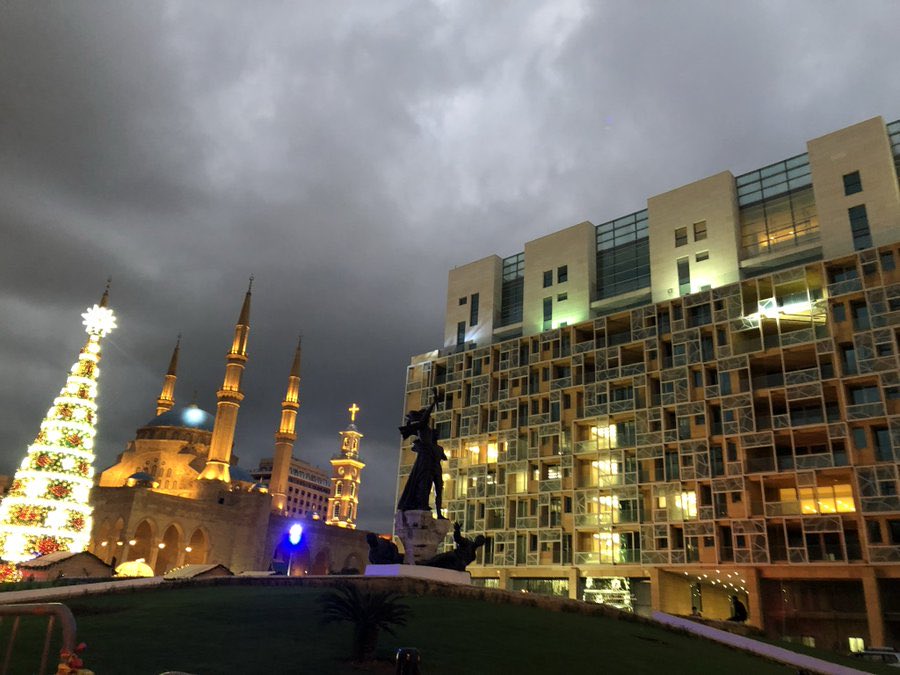
Beirut doesn’t just survive. It rebuilds.
The Phoenicians sailed from this coast 3,000 years ago and built the Mediterranean’s first trading empire. No natural resources. No empire behind them. Just ships, an alphabet, and nerve.
Their descendants have rebuilt this city after every collapse, every war, every explosion… relentlessly, while always maintaining their warm smile and world class hospitality.
The currency fails. The trade doesn’t.
That’s the kind of resilience the world will need in the next transformation.
@RiddleSphere So true. The relationships I built when no one had anything, are still the ones that matter most.
Nothing we build now carries the same bonds.