It is Resurrection Sunday.
A reminder that every dead thing can live again, every broken place can be restored, and every promise God made still stands.
That's what this altar is for
You don't have to carry those burdens anymore
There's a light in the darkness and there's a love that's true
And Jesus is waiting, He is waiting here for you
Go quickly now before they close the door
That's what this altar is for
Ecclesiastes 12:14 NASB1995
[14] For God will bring every act to judgment, everything which is hidden, whether it is good or evil.
https://t.co/t8BoEenJEX
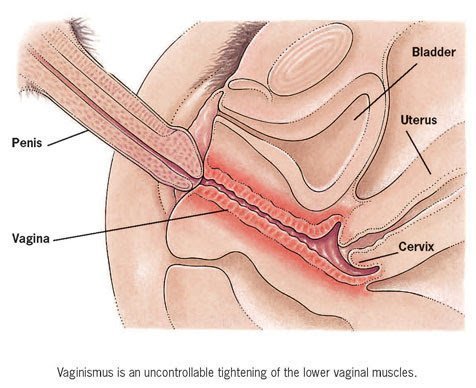
VAGINISMUS:
THIS HAS DESTROYED MANY HOMES.
NO, SHE'S NOT PRETENDING.
READ, SHARE AND REPOST.
Dear Women and Men, come and learn...,
When the Body Says No: Vaginismus, Silence, and the Myth of a Closed Door
They come quietly, these messages, and they often begin the same way, Dear Doc, and then a confession wrapped in confusion, and sometimes shame. I married my wife as a virgin, and yet it feels like something is blocked, and I can touch her, and we can linger in foreplay, but when it is time for intercourse, the door closes. And in that sentence, a woman is almost turned into a riddle, and sometimes into a suspect. As though her body has decided to be wicked. As though pain is rebellion. As though fear is witchcraft.
But let us say this clearly, and say it gently, and say it loudly enough to undo years of silence: this is not witchcraft. She is not wicked. Her body is not conspiring against love.
This is called vaginismus, and it is far more common than we admit, and far more human than we allow.
Vaginismus is the body tightening when it should soften, and closing when it should welcome, and doing so without permission from the mind. It is an involuntary spasm of the vaginal muscles during penetration, during sex, during examinations, sometimes even during the thought of penetration.
Many women say, my vagina is blocked or I am too small, and what they are really saying is that their body has learned fear. And this fear does not belong only to first-timers, although many first sexual experiences are marked by it. It belongs also to women who have had sex before, and to women who have known trauma, and to women whose bodies remember pain from surgery, from radiotherapy, from infections, from stories whispered by aunties about how sex is suffering and womanhood is endurance. It belongs to women who were assaulted, and to women who grew up learning that sex is danger dressed as desire.
And yes, vaginismus has broken hearts, and strained marriages, and turned bedrooms into battlegrounds of guilt and misunderstanding. But it is not a moral failure. It is not stubbornness. It is not punishment. It is the body doing what bodies do when they feel unsafe, protecting itself.
So what do we do, when the body says no?
We begin with belief, belief in the woman, and belief that healing is possible. We begin with counselling, especially when there has been sexual trauma, because the body listens closely to the mind. We seek help not from one person, but from a team, the gynaecologist, and the psychologist, and the counsellor, and the physiotherapist, and the specialist nurse, because vaginismus is not a single story and cannot be solved by a single voice. We talk about lifestyle, and hydration, and the quiet power of pelvic floor exercises like Kegels, and we talk about lubricants, yes, generously, and some that soothe pain as they ease entry. We talk about patience, and vaginal massage, and gentle exploration, sometimes guided, sometimes slow, sometimes awkward, and always kind.
We talk about foreplay, not as a prelude, but as a language of reassurance. And sometimes, when anxiety refuses to loosen its grip, we use medication to help the body learn calm again. Vaginal dilators may be used, slowly and consistently, not to force the body open, but to teach it that opening does not equal harm. Surgery, we say clearly, is rare, and only for true physical obstruction, not for fear, not for memory.
This is a big issue, yes, and it can unmake intimacy if left alone in the dark. But it is also a treatable one. Help exists. Compassion works. Conversations heal.
And so, if your body has been saying no, listen to it, not with anger, but with curiosity. Seek help. Book consultations. Treat infections. Drink water. Be patient. Be gentle. Because sometimes the door is not locked.
Sometimes, it is only afraid.
DYSPAREUNIA (PAINFUL SEX)
LETS TALK ABOUT PAINFUL SEX WITHOUT SHAME BECAUSE SEX IS NOT MEANT TO HURT
IT IS MORE COMMON THAN YOU THINK.
READ. SHARE. REPOST
When Pleasure Hurts: A Woman’s Body Is Speaking, and We Must Listen
There is a story many women carry quietly, and it begins in a bedroom and ends in silence. It is the story of pain where pleasure is expected, and of endurance where joy should live. Dyspareunia is the name medicine gives to painful sex, and yet the experience itself has existed long before we learned to label it. As a gynaecologist, I say this without apology and without whispering: sex is not meant to hurt, and when it does, the body is not being dramatic, it is being honest. According to the guidance of the Royal College of Obstetricians and Gynaecologists(RCOG), painful sex should never be dismissed, because pain is often a message, and messages deserve interpreters, and interpreters deserve time.
Sometimes the pain waits at the doorway of the vagina, like a guard refusing entry, and sometimes it hides deep inside the pelvis, like a secret with sharp edges. Superficial pain may come from dryness, from infections, from conditions of the vulva, and from the quiet hormonal changes of menopause or breastfeeding, when oestrogen slips away like a lover who forgot to say goodbye. Deep pain, however, may whisper the names of heavier things: endometriosis, pelvic infections, fibroids, ovarian cysts, or adhesions, and these are not small matters, even when they are spoken of in small voices.
But the body does not live alone, it shares space with memory and fear and culture. And so pain is not always only physical. Anxiety tightens muscles. Past trauma writes itself into tissue. Relationship stress creeps into nerves. Cultural shame sits heavily on the pelvis. The muscles clench not because they are stubborn, but because they are afraid. This is why silence is dangerous, and why secrecy delays healing. Many women think, This is normal, and so they endure. And endurance becomes habit. And habit becomes harm. Painful sex erodes self-esteem, strains love, dulls desire, and leaves emotional bruises that cannot be seen on a scan, yet they are real, and they are heavy.
It is also important to name things properly, because language shapes understanding. Dyspareunia means intercourse is possible, but painful, often because something medical can be found and treated. Vaginismus, on the other hand, is when the vaginal muscles tighten without permission, when the body says no even if the mind says yes. Dyspareunia says, 'Something hurts.' Vaginismus says, 'I am protecting you.' And sometimes, they walk together, hand in hand, pain and fear, feeding each other.
Care, when it is done well, begins with listening, and continues with gentle examination, and then with tests when needed, and imaging when the pain lives deep.
Treatment may look like lubricants or vaginal oestrogen for dryness, antibiotics for infections, hormonal therapy for endometriosis, physiotherapy for tense pelvic muscles, and counselling when fear or trauma is part of the story. This is not indulgence; it is medicine. This is not weakness; it is wisdom.
So let us say it clearly, and say it loudly, and say it without embarrassment: painful sex is common, and medical, and treatable. You are not broken. You are not abnormal. You are not overreacting. Your body is speaking, and it is speaking in the language of pain, and pain is a language we must learn to understand. Because pleasure should not require suffering, and love should not demand endurance, and silence should never be the price a woman pays for intimacy.
Unpopular opinion: IT IS OKAY TO MARRY BEFORE YOU MAKE YOUR MILLIONS...
Upcoming in-person couples finance workshop - Money & Matrimony: March 14, 2026.
Join the waitlist now 👉🏾 https://t.co/ZjwHyZe5fS
Philippians 4:6 NASB1995
[6] Be anxious for nothing, but in everything by prayer and supplication with thanksgiving let your requests be made known to God.
https://t.co/5qcXoQwiwz