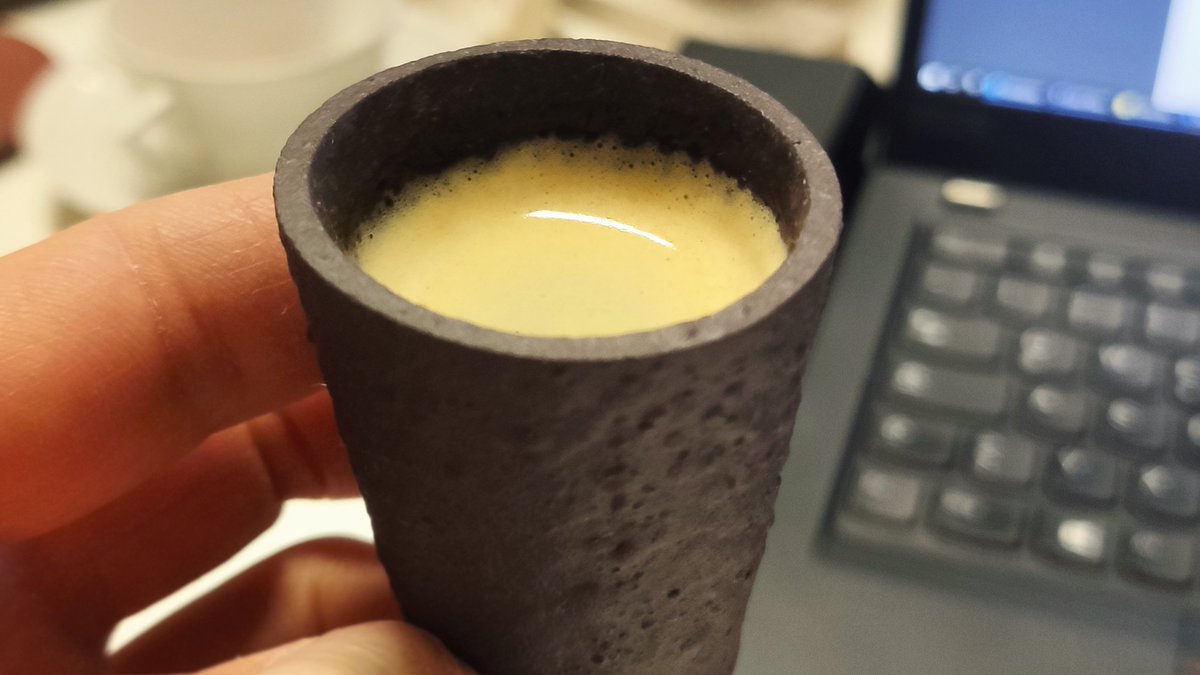
at @TUBerlin and enjoying the last espresso from a real spaceceramics cup (made using Mars simulant MGS-1 supplied by @ExolithLab and @kmcannon) before further lockdown starts on monday. the ceramic cup is dense sintered to maturity with a lot of bloating and looks/feels ✨✨✨
Incredible paper on artificial hibernation: „The concept of inducing torpor-like hypothermia and hypometabolism by artificial means was initially proposed in 1960 as a biomedical solution to reduce energy consumption during long-term human spaceflight.“ https://t.co/cn6R3TvD5v
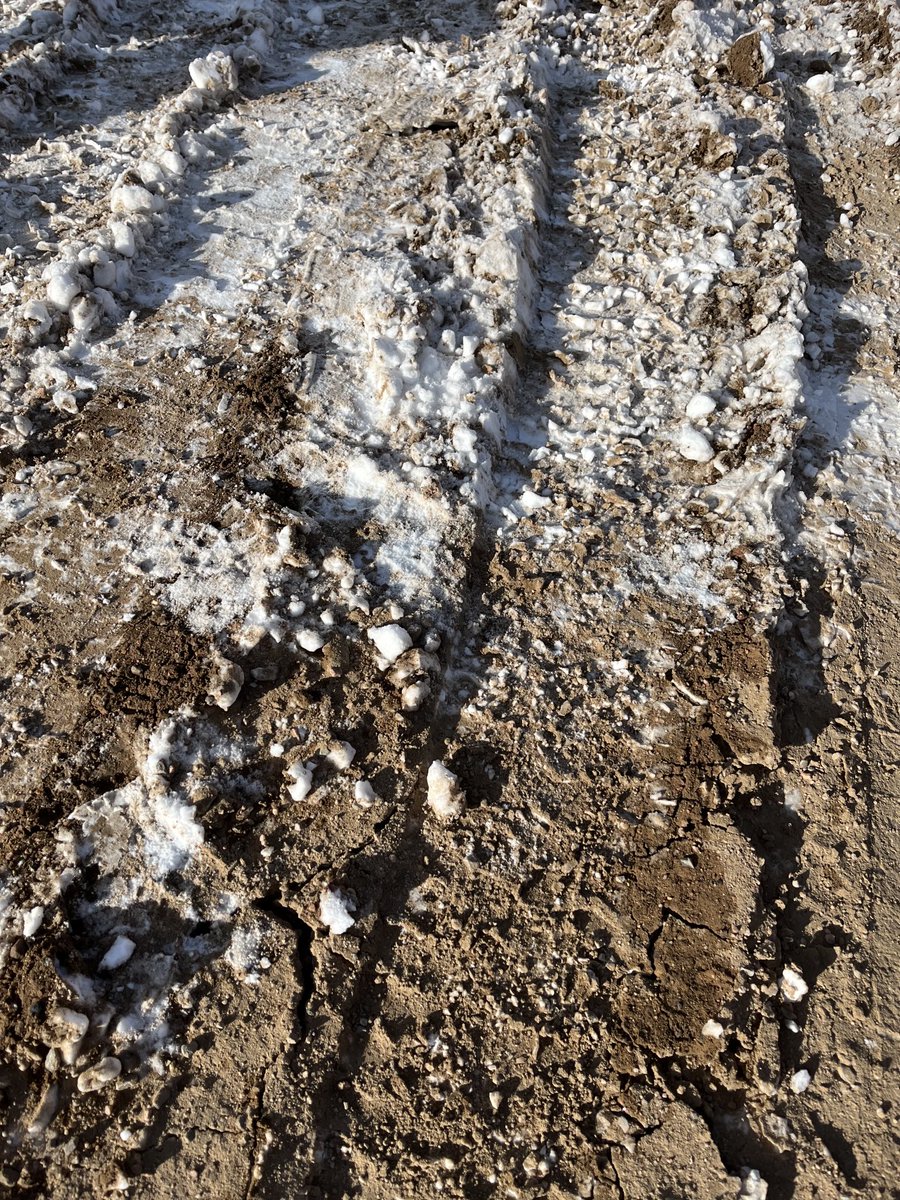
"An ice-rich initial composition that leads to a material dominated by phyllosilicates after aqueous alteration (with an initial ~13 wt% H2O consumed completely for the aqueous alteration leading to a composition with ~60 vol% hydrated silicates as suggested by the water content"
Water-rich asteroids found! 💧 @DLR_de researchers have helped identify a previously unknown class of #asteroids similar to dwarf planet #Ceres, located in the main asteroid belt between Mars and Jupiter. 🔴🟠 It is likely that they brought water to Earth: https://t.co/uqZqksgdo4
@ChrisSciEng@SocGlassTech Originally from Mike Ashby’s Materials Selection in Mechanical Design. I used the digital version from here: 10.13140/RG.2.2.19391.25763
@LPItoday released the #LPSC2023 program just now (https://t.co/sqM2384WEh). Count 26 accepted submissions with the word ‘simulant’ in it (4 orals and 22 posters):
Image description: Reactions to Space Mining: Mean approval and negative affect ratings for mining Antarctica, asteroids, the moon, and the ocean. Approval was measured using a 1–7 scale; negative affect was measured using a 1–6 scale. Taken from: https://t.co/0iEFSAxhgD
@SocGlassTech Well, Michael F. Ashby is a metallurgical engineer. So I think the glass and ceramics people need to forgive his bias here. Also, there just seems to be so little space at the bottom of this diagram 🤔. But of course, I do agree with your objection to little detail on glasses.
"The costs for heavy launches in low-Earth orbit (LEO) have fallen from $65,000 per kilogram to $1,500 per kilogram (in 2021 dollars)—a greater than 95 percent decrease." from https://t.co/qf3aZB2c4J
New work out on #ISRU in Elsevier’s @IcarusJournal – we cold sintered @ExolithLab MGS-1 simulants at only 150 °C to 250 °C and got tablets with up to 45 MPa compressive strength. Most of the work was done at @iyteedutr – thx to colleagues there!
See https://t.co/yuerrfjq0R
trying to teach a 5-year-old, why it is not a good idea to throw coins out of his 4th floor window (as opposed to the paper propeller we threw out a couple of weeks back):
https://t.co/vWjb9gI8Gf
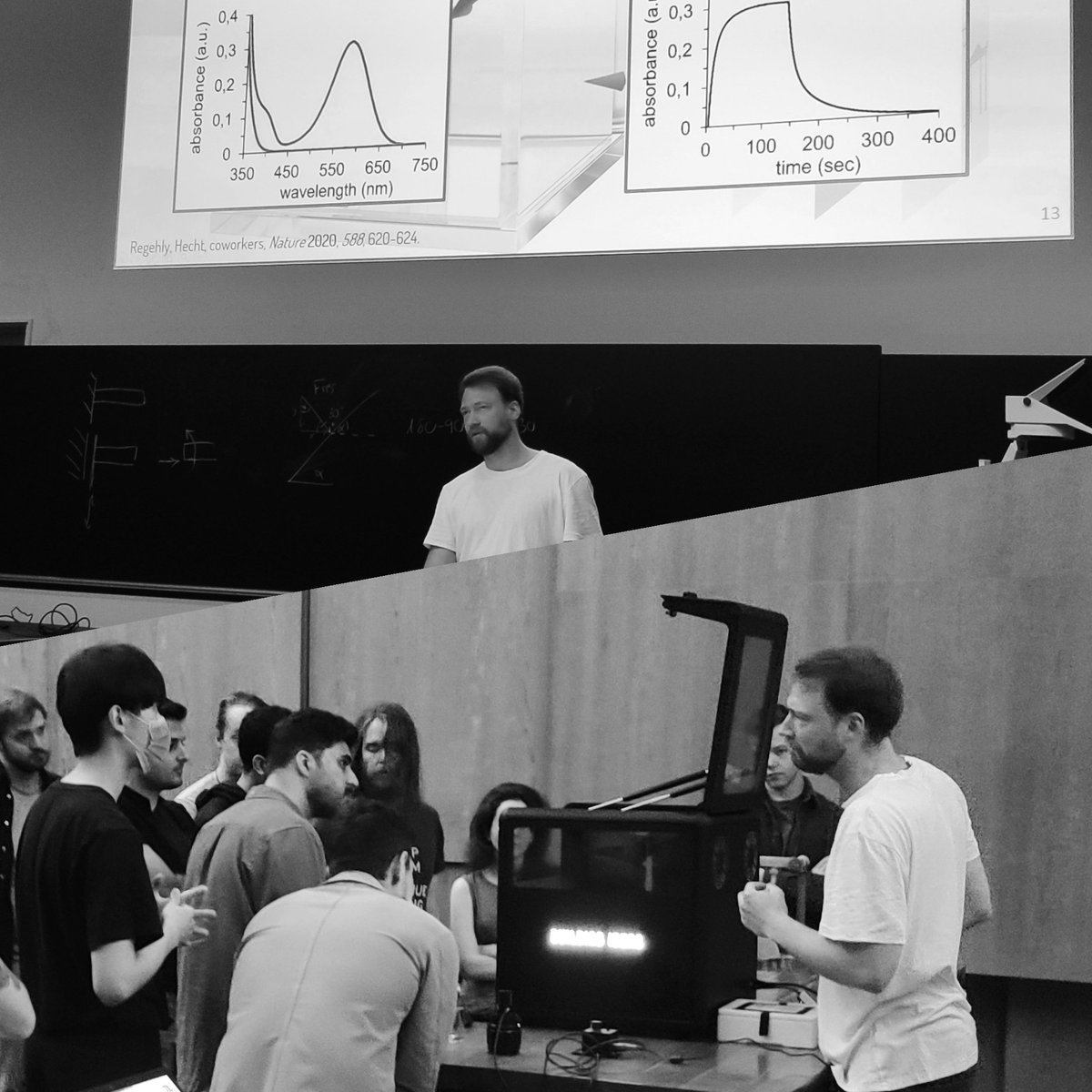
their volumetric 3D printing is made possible by photoswitchable photoinitiators - check out the physics when a UV lamp hits (and heats) these chemicals. pure magic. thanks @Nikkel_K!
@xolo3D's Niklas Koenig giving a lecture @TUBerlin in my #AM course. he brought their machine and printed during the talk (4 min and done). students were rubbing their eyes - #xolography is like witchcraft. check their incredible nature paper for details: https://t.co/ayZWVb07ae