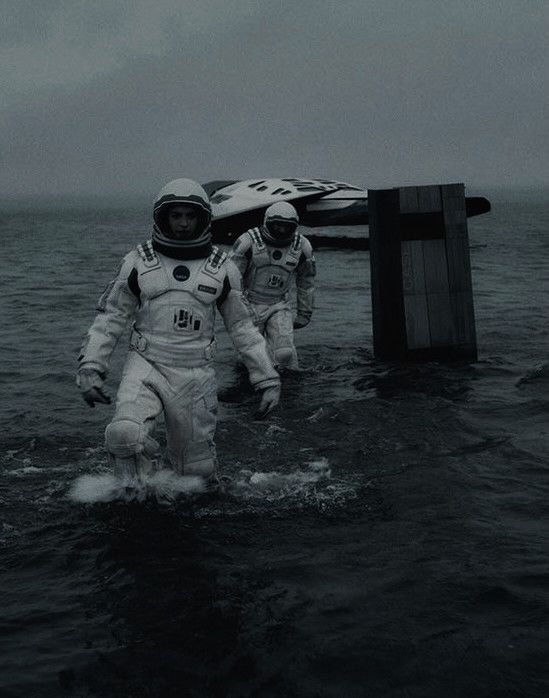
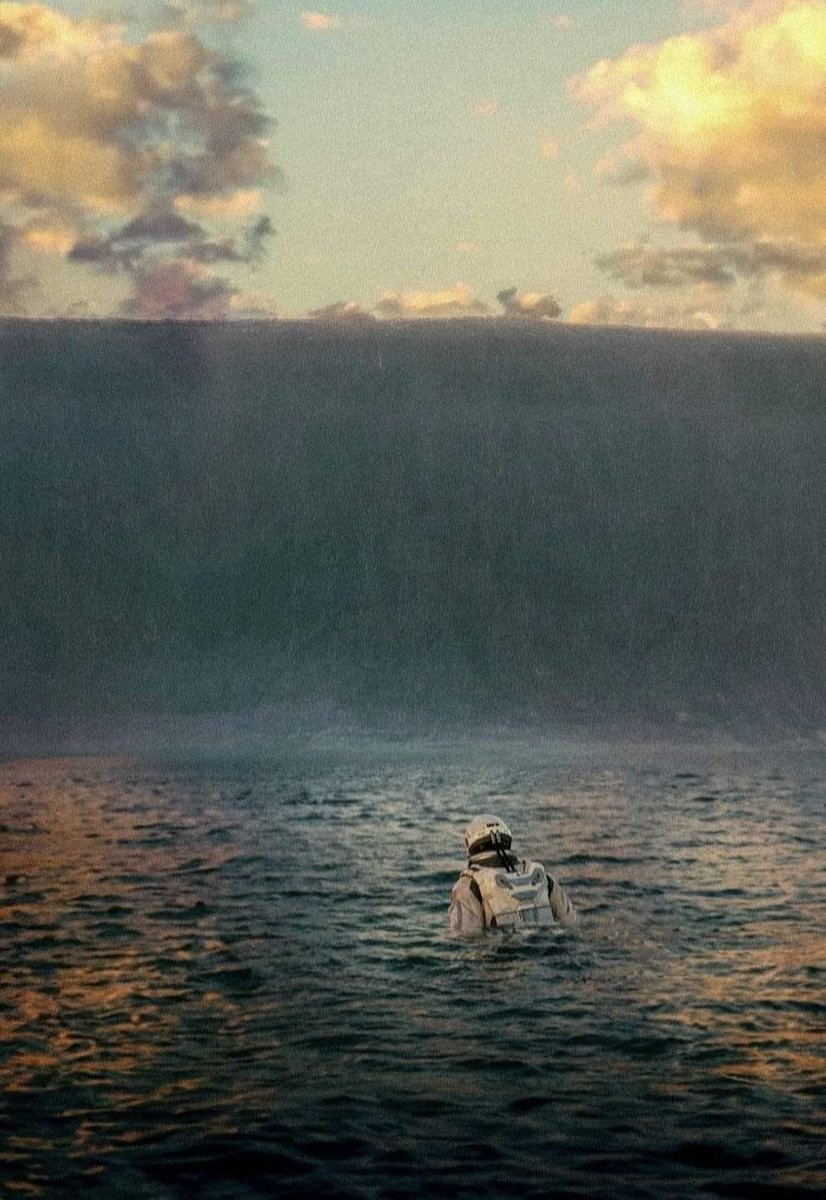
There is an alien world with absolutely no land. None.
It’s all water.
TOI-1452 b, a super-Earth nearly five times our planet's mass, is completely enveloped by a massive, endless ocean.
Located about 100 light-years from Earth in the Draco constellation, TOI-1452 b represents a groundbreaking class of exoplanets known as super-Earths. Measuring approximately 1.67 times Earth’s radius and boasting nearly five times its mass, this colossal world is far from your typical rocky planet.
Its unique combination of size and density has led researchers to propose a fascinating possibility: a dense, rocky core buried deep beneath a vast, global ocean.
Unlike Earth, where water accounts for less than one percent of the total mass, this extraordinary world could be composed of a substantial fraction of water, making it a true 'water world.'
While astronomers have not directly photographed the surface of TOI-1452 b to confirm the total absence of land, the physical data collected by NASA's Transiting Exoplanet Survey Satellite (TESS) strongly suggests a volatile-rich composition.
This makes the planet an exceptionally enticing target for deeper atmospheric analysis using advanced instruments like the James Webb Space Telescope. If these models hold true, humanity may be looking at an entirely new category of planetary environments—one where the ocean has no shores, wrapping the entire world in an unbroken aquatic embrace.
🚨:Scientists mapped every connection in a fly’s brain - which has 130,000 cells - marking a major step towards understanding how complex brains, including the human brain, works!
🚨 : Astronomers have discovered 31 of the oldest known quasars ever seen—some formed just 670 million years after the Big Bang. Their existence is challenging everything we thought we knew about how supermassive black holes formed. 🌌
Scientists found a galaxy that shouldn’t exist.
Experts say it should be impossible. But it’s there.
Astronomers have discovered a puzzling phenomenon in deep space: a small, isolated galaxy is somehow managing to form new stars despite residing in a cosmic desert.
Known as NGC 6789, this dwarf galaxy lies about 12 million light-years from Earth inside the Local Void—an enormous, largely empty region of the universe lacking in gas, galaxies, or star-forming material. And yet, new research reveals that about 4% of its stars were born in just the last 600 million years, a surprising finding given the galaxy’s desolate environment.
What makes NGC 6789 even more mysterious is that it shows no evidence of past collisions or mergers with other galaxies—events that might have delivered fresh gas. That leaves astronomers with two intriguing possibilities: either the galaxy preserved a reservoir of ancient gas since its formation, or it somehow drew in hydrogen from the surrounding void and rapidly converted it into stars. Either scenario challenges long-held assumptions about how and where galaxies can grow. In short, NGC 6789 is defying the odds—thriving in isolation where it shouldn’t be able to survive.
source
"Deep imaging of the very isolated dwarf galaxy NGC6789." ArXiv, 2026.