This statue is over 2300 years old.
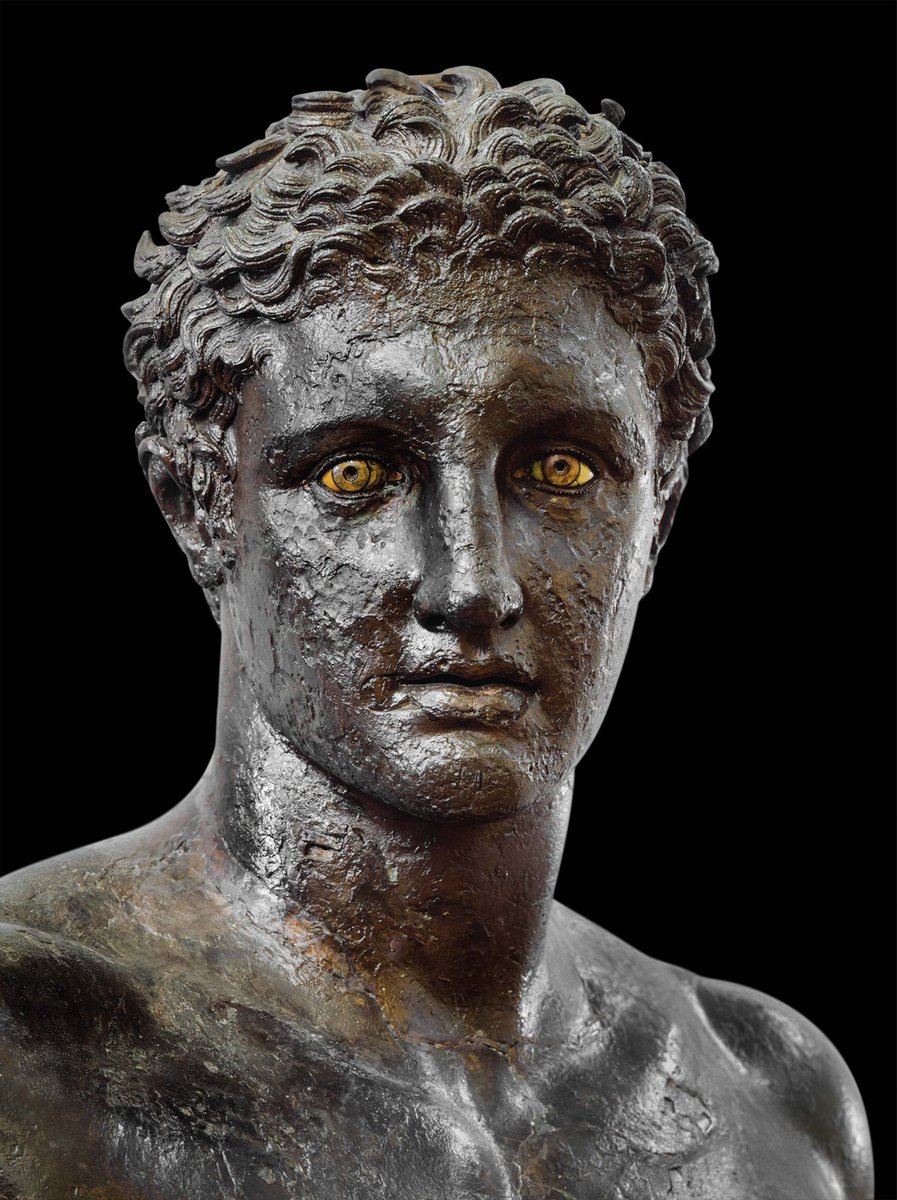
It's one of the very few ancient sculptures left with its original eyes, and I can’t get over how real they look...
The statue is the Antikythera Ephebe, a Greek bronze of a young man made around 340 to 330 BC, and strangely enough, the reason it survived is because it sank. In antiquity, bronze statues were constantly melted down for their metal, turned into weapons and coins, which is why almost none survive.
This one went to the bottom of the sea in a shipwreck around 60 BC and lay there for nearly two thousand years, until sponge divers found it in 1900.
But let’s go back to my favorite detail: the eyes.
When a bronze statue is made, the eyes are often set separately, inlaid with glass, stone, and colored paste to make them lifelike, and over the centuries almost every ancient bronze has lost them, leaving those hollow, blank sockets we think of as classical.
The Ephebe still has his original eyes, made of glass paste, one of only a handful of ancient Greek bronzes in the world that do. And it changes everything because he does not gaze blankly into nothing, he seems to be looking, intently, at something that vanished more than two thousand years ago...
📌 #Βοτανικός: Σε εντατικούς ρυθμούς οι εργασίες - Η τελευταία εικόνα από το νέο γήπεδο
👉 Οι εργασίες για το νέο γήπεδο του Παναθηναϊκού στον Βοτανικό συνεχίζονται με έντονους ρυθμούς και τα τελευταία πλάνα από το εργοτάξιο δείχνουν πλέον πολύ πιο καθαρά τη μορφή που αποκτά η νέα έδρα των «πράσινων».
👉 Μετά την καλοκαιρινή περίοδο, κατά την οποία υπήρξαν επιμέρους προσωρινές παύσεις εργασιών λόγω των θερινών αδειών (χωρίς όμως να σταματήσει συνολικά το εργοτάξιο) οι ρυθμοί έχουν ενταθεί ξανά.
👉 Οι κερκίδες έχουν προχωρήσει σημαντικά, ενώ τα νεότερα πλάνα δίνουν πλέον εικόνα ακόμη και από το δεύτερο διάζωμα προς το εσωτερικό του γηπέδου.
👉 Παράλληλα, έχει αρχίσει να διαμορφώνεται πιο καθαρά ο αγωνιστικός χώρος, με τις εργασίες να είναι ιδιαίτερα εμφανείς προς την πλευρά του βόρειου πετάλου.
👉 Σε εξέλιξη βρίσκονται και οι εργασίες για τις εγκαταστάσεις του Ερασιτέχνη Παναθηναϊκού, όπου έχουν ήδη προχωρήσει οι σκυροδετήσεις και τα πρώτα δομικά στοιχεία.
👉 Το έργο έχει πλέον περάσει σε μία από τις πιο έντονες κατασκευαστικές περιόδους του καθώς όλοι έχουν στοχεύσει στην ολοκλήρωση του ιστορικού έργου το Μάιο του 2027.
👉Οι εικόνες του Σεπτεμβρίου δείχνουν, πάντως, κάτι πολύ συγκεκριμένο: το νέο γήπεδο έχει ξεφύγει από το στάδιο των θεμελιώσεων και η τελική του μορφή γίνεται μήνα με τον μήνα όλο και περισσότερο ορατή.
[Πηγή βίντεο: PRASINOS HULK]
#Panathinaikos #PAOFC #TheFootballFlix
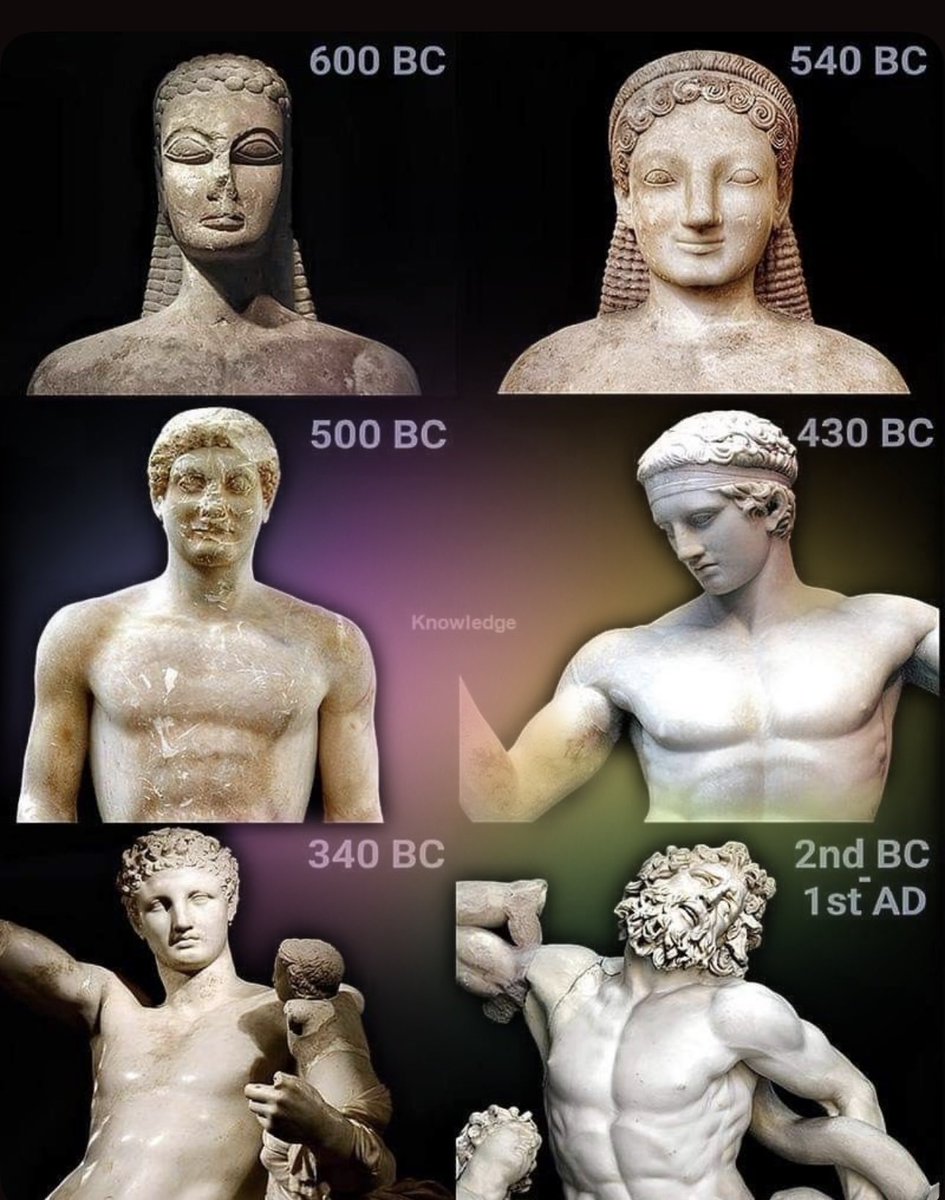
It took the Greeks nearly 200 years to go from rigid figures to sculptures that seemed alive.
Each generation studied what came before, improved it, and passed something better to the next.
Perhaps we need to start thinking in centuries again.
Michelangelo hated painting. He considered himself a sculptor.
Yet, he created one of the world’s greatest masterpieces out of sheer, unyielding spite.
Believe it or not, the commission to paint the Sistine Chapel was actually a TRAP because - 🧵1/
⛏️ The Tunnel of Eupalinos: A 2,500-Year-Old Engineering Marvel
Hidden beneath the island of Samos, Greece, the Tunnel of Eupalinos is one of the most remarkable engineering feats of the ancient world.
Swedish warship Vasa sank to the bottom of the Baltic Sea in 1628.
In 1961 it was salvaged and the wood was still strong enough to be able to walk the decks.
Today is the world's best-preserved XVII century ship.
Rome conquered Greece in 146 BC when they burned Corinth to the ground. And then the strangest thing in ancient history happened. The winners spent the next few centuries desperately trying to become the losers.
It actually started before the final conquest. When the general Marcellus sacked Syracuse in 211 BC, he shipped boatloads of Greek statues and paintings back to Rome, and the city went crazy for it. Suddenly every rich Roman had to have Greek art in his house. Decades later Cicero built an entire court case around prosecuting a governor named Verres for looting Greek masterpieces, and Romans ate it up.
Then came the schools. Wealthy families started buying Greek slaves specifically because they were educated, and handed them the job of raising their children. So the sons of the men who crushed Greece grew up speaking Greek, memorizing Greek poetry, and learning philosophy from Greeks. The elite eventually sent their teenagers abroad to Athens and Rhodes to finish their education, the way people today send kids to study overseas. Cicero did it. Julius Caesar did it.
Their gods were Greek gods wearing name tags. Zeus became Jupiter. Hera became Juno. Aphrodite became Venus. Ares became Mars. Same myths, same family drama, mostly just relabeled.
Their entertainment was borrowed too. The first big Roman playwrights, Plautus and Terence, basically adapted Greek comedies into Latin. Their doctors were Greek. Their architecture leaned on Greek columns, the Doric and Ionic and Corinthian orders you still see on bank buildings today.
And the art obsession left a strange fingerprint on history. Romans loved Greek bronze statues so much that they mass produced marble copies of them. A huge chunk of what people walk past in museums today and call "Greek sculpture" is actually a Roman copy. The Greek originals melted down or vanished long ago. The knockoffs are what survived.
Not everyone was thrilled. Cato the Elder spent his whole life warning that Greek culture would rot the Roman character. He sneered at Greek philosophers, distrusted Greek doctors, and wanted them kept out of the city. And then, as an old man, he quietly sat down and learned Greek anyway. Even the loudest hater caved.
The trend went all the way to the top. Virgil wrote the Aeneid, Rome's national epic, by openly modeling it on Homer. The emperor Nero competed in Greek games and toured Greece like a superfan. Hadrian was so obsessed he grew a Greek philosopher's beard and poured money into rebuilding Athens. And Marcus Aurelius, master of the entire Roman world, wrote his private journal not in Latin but in Greek, because that was the language of serious thinking.
The poet Horace nailed it in a single line: captured Greece took her savage conqueror captive. Rome won every war on the battlefield and then handed its whole soul to the people it had beaten.
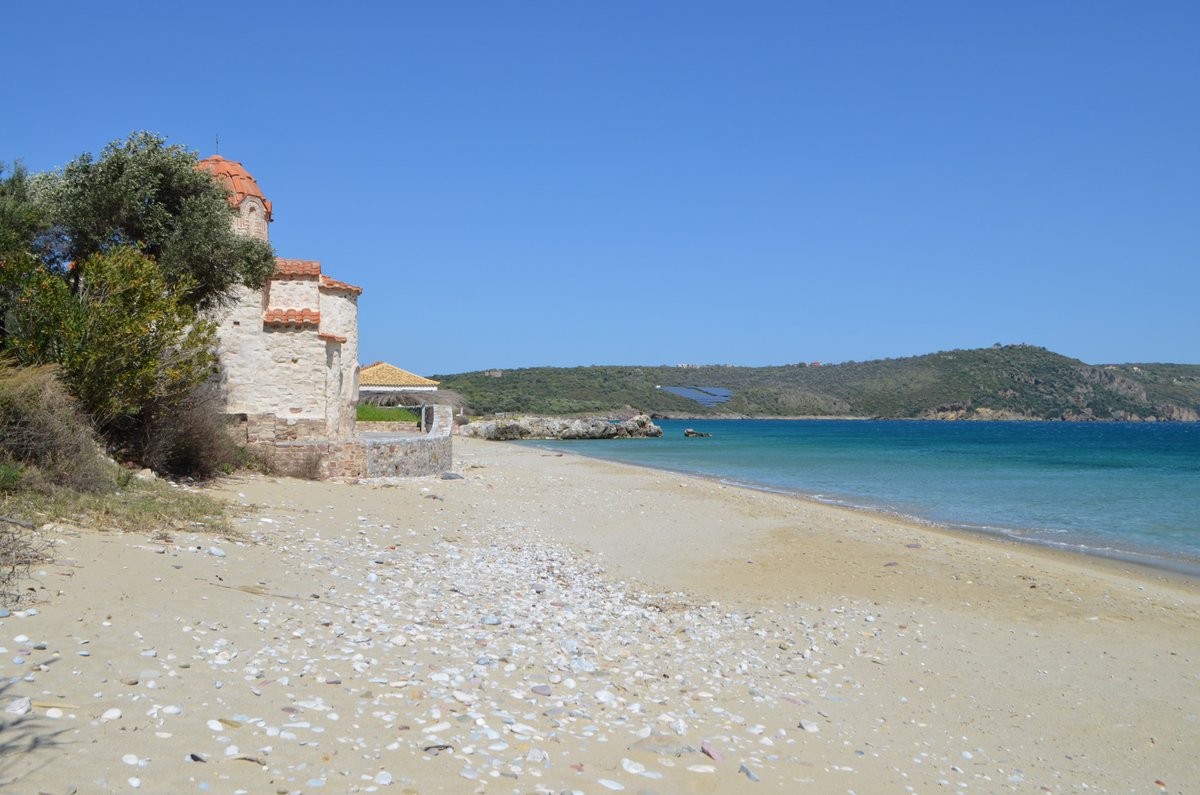
Το κρυμμένο εκκλησάκι στο αεροδρόμιο «Ελευθέριος Βενιζέλος»!
Πρόκειται για τον Ιερό Ναό του Αγίου Φιλίππου του Διακόνου, ο οποίος βρίσκεται στον τρίτο όροφο του κεντρικού αεροσταθμού, στην περιοχή των γραφείων της διοίκησης, ακριβώς πάνω από τον χώρο των αναχωρήσεων. Η επιλογή του συγκεκριμένου Αγίου δεν είναι τυχαία, καθώς ο Άγιος Φίλιππος θεωρείται προστάτης των ταξιδιωτών και των μεταφορών, καθιστώντας τον τον ιδανικό «οικοδεσπότη» για έναν τέτοιο χώρο.
Αρχιτεκτονικά, το εκκλησάκι συνδυάζει την παραδοσιακή ορθόδοξη ναοδομία με τις σύγχρονες γραμμές του υπόλοιπου κτιρίου. Στο εσωτερικό του, ο επισκέπτης αντικρίζει ένα προσεγμένο εικονοστάσι και μια ατμόσφαιρα κατάνυξης που έρχεται σε πλήρη αντίθεση με τις ανακοινώσεις των πτήσεων και τον θόρυβο των αποσκευών που επικρατεί λίγα μέτρα πιο μακριά. Ο ναός είναι ανοιχτός καθημερινά για το κοινό, προσφέροντας στους επιβάτες, αλλά και στο προσωπικό του αεροδρομίου, τη δυνατότητα να ανάψουν ένα κερί, να προσευχηθούν για ένα ασφαλές ταξίδι ή απλώς να καθίσουν για λίγα λεπτά σε ένα περιβάλλον απόλυτης ησυχίας.
Εκτός από τον Ορθόδοξο Ναό του Αγίου Φιλίππου, αξίζει να σημειωθεί ότι το «Ελευθέριος Βενιζέλος» διαθέτει στον ίδιο όροφο και έναν ειδικά διαμορφωμένο Χώρο Προσευχής για Πιστούς Άλλων Δογμάτων και Θρησκειών. Η κίνηση αυτή αντανακλά τον διεθνή και συμπεριληπτικό χαρακτήρα του αεροδρομίου, διασφαλίζοντας ότι κάθε ταξιδιώτης, ανεξαρτήτως θρησκευτικής πεποίθησης, μπορεί να βρει ένα καταφύγιο πνευματικής συγκέντρωσης πριν από την πτήση του.
Αν, λοιπόν, βρεθείτε σύντομα στο αεροδρόμιο της Αθήνας και έχετε λίγο χρόνο στη διάθεσή σας πριν από την επιβίβαση, αξίζει να αναζητήσετε τον τρίτο όροφο. Είναι μια ευκαιρία να ανακαλύψετε μια διαφορετική, πιο ανθρώπινη και ήρεμη πλευρά του «Ελευθέριος Βενιζέλος», που αποδεικνύει ότι ακόμα και στα πιο τεχνολογικά εξελιγμένα σημεία του σύγχρονου κόσμου, υπάρχει πάντα χώρος για εσωτερική αναζήτηση.
Η λειτουργία του ναού είναι απόλυτα εναρμονισμένη με τη ζωή του αεροδρομίου. Εκτός από τους ταξιδιώτες που αναζητούν μια στιγμή ηρεμίας πριν από μια μακρινή πτήση ή μετά από ένα κουραστικό ταξίδι, το εκκλησάκι αποτελεί σταθερό σημείο αναφοράς για τους εκατοντάδες εργαζόμενους του αερολιμένα. Πιλότοι, αεροσυνοδοί, υπάλληλοι εδάφους και στελέχη της ασφάλειας επισκέπτονται συχνά τον χώρο κατά τη διάρκεια των διαλειμμάτων τους, βρίσκοντας εκεί ένα πνευματικό στήριγμα στην απαιτητική καθημερινότητά τους. Κατά καιρούς, μάλιστα, στον ναό τελούνται κανονικά θείες λειτουργίες, ιδιαίτερα κατά τις μεγάλες θρησκευτικές εορτές, συγκεντρώνοντας την κοινότητα του αεροδρομίου..!
The ancient Theater of Epidaurus in Greece is over 2,300 years old and so remarkably well preserved that it still hosts live performances today.
The Ancient Theatre of Epidaurus is one of the finest surviving theaters of the ancient Greek world. Located in the Peloponnese near the modern village of Ligourio, it forms part of the Sanctuary of Asclepius, one of antiquity’s most important healing centers dedicated to the Greek god of medicine.
Constructed in the late fourth century B.C., the theater was built within a sacred complex where visitors sought both physical and spiritual healing. Ancient Greeks viewed health as a balance of body and mind, so the sanctuary combined medicine with religious rituals, athletics, music, and dramatic performances.
The theater is especially celebrated for its remarkable acoustics. A speaker standing in the circular orchestra at its center can be heard clearly from the highest rows without any modern amplification. Its elegant proportions, near-perfect symmetry, and hillside setting have made it one of the greatest architectural achievements of the Hellenistic world.
With seating for approximately 12,000 to 14,000 spectators, the theater continues to host live performances today, particularly during the Athens Epidaurus Festival, where audiences still experience ancient Greek drama in the same venue used more than 2,300 years ago.
In 1988, the Sanctuary of Asclepius at Epidaurus, including the theater, was designated a UNESCO World Heritage Site.
A replica of Mocha Dick, one of the most famous whales in history. This 70-foot sperm whale became legendary in the 19th century after reportedly battling around 100 whaling ships, sinking roughly 20, and avoiding capture for nearly three decades.
Mocha Dick was a real sperm whale who became one of the most famous legends among 19th-century Pacific whalers. He was frequently spotted near Mocha Island off the coast of Chile, which inspired his name. Sailors described him as an unusually pale and powerful whale, covered in scars and old harpoons from previous battles with whalers.
Unlike most whales that simply attempted to escape hunters, Mocha Dick became famous for fighting back when attacked. Stories of his encounters spread throughout whaling communities decades before Herman Melville published Moby-Dick in 1851.
In 1839, explorer and writer Jeremiah N. Reynolds published an account titled “Mocha Dick: Or the White Whale of the Pacific,” helping transform the whale into a maritime legend. While many details come from sailors’ accounts and are difficult to confirm, the story of Mocha Dick came to symbolize the danger, violence, and relentless pursuit that defined the whaling era.
According to reports, Mocha Dick was killed in 1838 after approaching whalers who had attacked another whale and her calf. When his body was examined, it was said to contain numerous old harpoons, revealing the many encounters he had survived.
Although Mocha Dick helped inspire Herman Melville’s Moby-Dick, the novel was also influenced by the 1820 sinking of the whaleship Essex, which was attacked and sunk by a sperm whale in the Pacific.
📌Δημιουργία Εθνικού Μουσείου για το 1821
✍️Υπεγράφη την 9η Ιουλίου 2026, από τον Υπουργό Εθνικής Άμυνας Νίκο Δένδια και την #ΥΠΠΟ Λίνα Μενδώνη, η σύμβαση δωρεάς για τη δημιουργία του Εθνικού Μουσείου για το 1821.
🔗https://t.co/chpW84LbOo
#MinCultureGr