The iconic photograph of Ukrainian Marine Serhii "Borets" Udut, taken by volunteer photographer Volodymyr "John" Myronyuk during the opening days of the Russian invasion in 2022. It shows Borets cycling across a bridge toward Irpin, an RPG-7 launcher slung over his shoulder and three rounds in hand, riding straight toward a Russian armored column pushing on Hostomel, Irpin, and Bucha. In the chaos and panic of those first days, when the outcome of the entire war for Kyiv still hung in the balance, that image became one of the defining symbols of Ukrainian resistance, an ordinary man on a bicycle, armed and utterly unafraid, going to meet tanks head-on.
Borets was part of the Tengri reconnaissance and sniper group under Ukraine's Main Intelligence Directorate, and he went on to become, in the words of fellow soldier and commander Yurii Butusov, one of the finest warriors of this war, a man who consistently inspired the soldiers around him by his own example throughout the fighting that followed.
He was recently killed in a Russian airstrike while commanding a marine unit in combat. The exact scale of what he and his comrades accomplished across the war may never be fully known, the kind of quiet, uncounted cost that defines so much of this conflict.
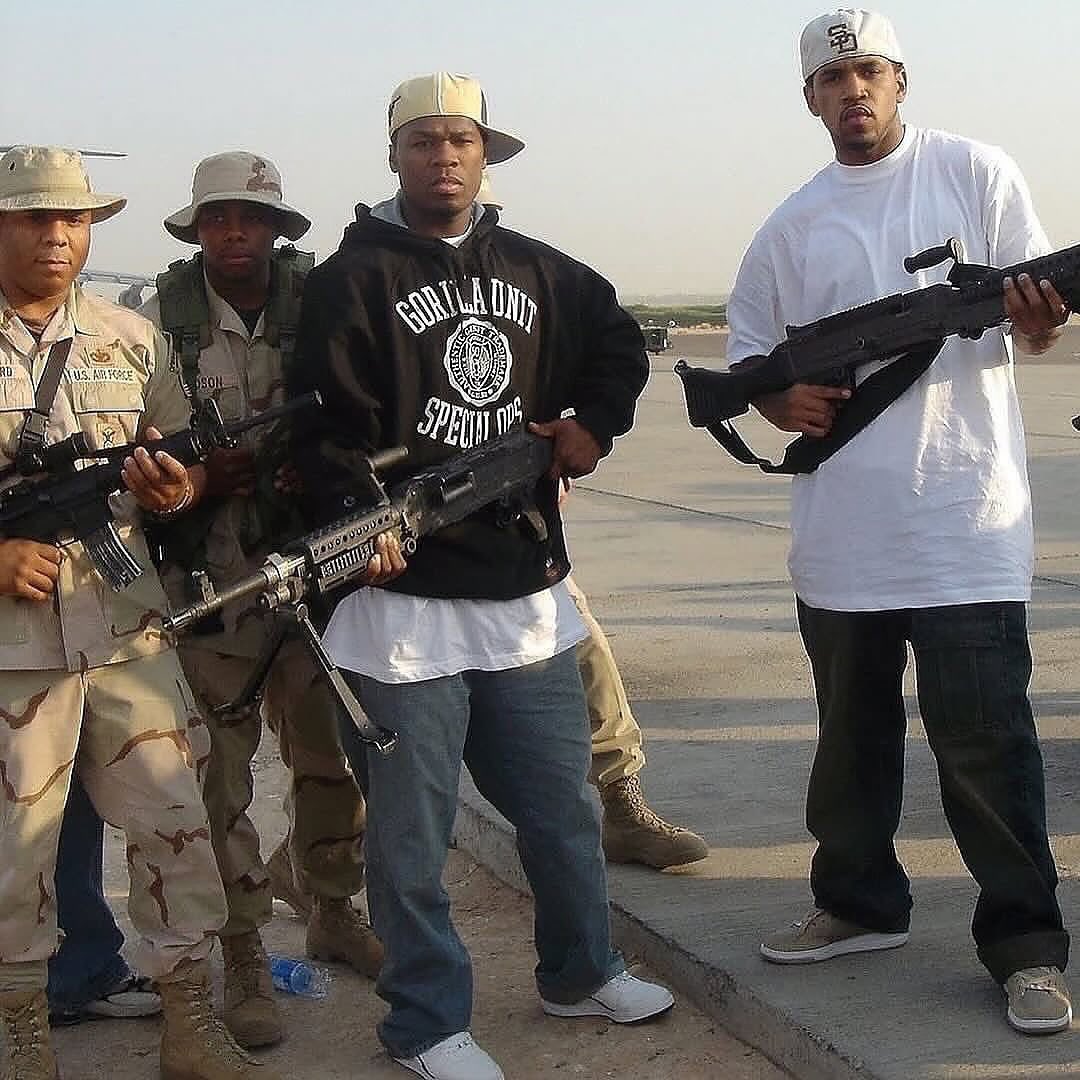
In 2004, during the Iraq War, 50 Cent flew into Camp Anaconda, one of the most dangerous bases in the country, nicknamed "Mortaritaville" because it was getting hit by mortar fire nearly every day. Located near Balad and officially known as Logistics Support Area Anaconda, it was one of the most frequently attacked American installations in the entire country, and reports say the camp had already taken a missile hit on the very day he arrived.
Just hours before he landed, an officer looked at him and told him straight, no BS, that he could die that day. He'd already survived being shot nine times in New York a few years earlier, so he decided to do the show anyway. Wearing a bulletproof vest, surrounded by military personnel, he walked out and opened the set with "What Up Gangsta."
The trip was part of a USO tour meant to boost morale during one of the more brutal stretches of the war, and by every account it did exactly that, a rapper at the absolute peak of his fame choosing to fly into a base most people were desperate to leave, because the guys stationed there deserved a night that felt like something other than incoming fire. A strange, memorable footnote in the long list of ways people found to support the troops during two decades of war.
Soldiers of the U.S. 10th Special Forces Group in Beirut, Lebanon, 1983, during one of the most volatile and dangerous deployments of the entire decade. Officially, these Mobile Training Teams were there on a Foreign Internal Defense mission, helping stand up and modernize the Lebanese Army amid the country's brutal civil war, but the reality on the ground rarely stayed that clean. Green Berets found themselves pulled into ad hoc security roles around diplomatic facilities as fighting between Druze militias, the Lebanese Armed Forces, and other factions repeatedly spilled into the areas they were operating in, at one point providing security for two straight days while Druze fighters loyal to Walid Jumblatt exchanged fire nearby and eventually sought sanctuary inside the embassy itself.
The stakes of that entire deployment were laid bare on April 18, 1983, when a suicide bomber detonated a truck packed with 2,000 pounds of explosives at the U.S. Embassy in Beirut, killing 63 people, including 17 Americans, among them much of the CIA's Beirut station. It remains one of the deadliest attacks on any American diplomatic mission in history, and it was only the beginning. That October, a separate truck bombing struck the Marine barracks at Beirut International Airport, killing 241 American service members in a single morning, the deadliest single day for the Marine Corps since Iwo Jima.
Beirut in 1983 became the grim proving ground for a threat the United States hadn't fully reckoned with yet, the suicide truck bomb, and it reshaped how American forces and diplomatic missions secure themselves overseas to this day. The Green Berets who spent that year training a fractured army and improvising security under fire were living through the opening chapter of a threat the country would spend the next four decades fighting.
Captured MP7s and Glocks photographed by Al-Shabaab after a failed French DGSE hostage rescue attempt. In 2009, two officers from France's external intelligence service, the DGSE, were seized in Somalia while working with forces of the Transitional Federal Government, posing as journalists and military trainers. One later escaped under mysterious circumstances. The other, Denis Allex, remained in captivity for more than three years.
On the night of January 11, 2013, France sent roughly 50 operators from the DGSE's highly secretive direct-action unit, Division Action, into Bulo Marer, a Shabaab-held town in Lower Shabelle, in an effort to finally free him. Six helicopters supported the assault, including Tiger attack helicopters launched from the Mistral. The raid went wrong almost immediately, a 45-minute firefight erupted, reinforcements poured in, and the operation collapsed. Two French operators were killed, one of them left behind on the ground and later shown in Shabaab propaganda photos. Allex himself was executed by his captors in the chaos. Roughly 17 Shabaab fighters and as many as eight civilians also died in the crossfire.
Al-Shabaab wasted no time turning the failure into propaganda, posting photos of the recovered weapons, including these MP7s and Glocks left behind in the fighting, on their official Twitter account within days. President Hollande himself acknowledged publicly that the operation did not succeed.
It's an episode that's seldom discussed outside France, which is unfortunate, because it's one of the starkest reminders in recent memory of exactly how badly a hostage rescue can go, even for one of the most secretive and capable units in the world.
An American Air Force officer was shot down over Iran. Wounded and alone, with the enemy closing in, he spent 50 hours trying to survive as he waited for a rescue. For the first time, he tells his story. This Sunday on CBS 60 Minutes.
Former DEVGRU operators DJ Shipley and Cole Fackler during an Iraq deployment with SEAL Team 10 in 2009. The two met in BUD/S in 2003, graduated together, and were both assigned to SEAL Team 10 in Virginia Beach, deploying to Iraq together three separate times before both earning their place at the Command. Neither man went it alone getting there, and neither man went it alone leaving either, both were eventually medically retired due to injuries sustained across their combined 17-plus years of deployments and training.
That bond didn't end with the uniform. In 2019 they co-founded GBRS Group together, DJ as Chief Training Officer and Cole as CEO, building it into one of the most respected names in tier one adjacent tactical training and gear, backed by a combined 34-plus years of special operations experience between the founders. As Shipley has put it, working in high-performance teams to achieve a common goal is a universal formula for success, whether that team is clearing a compound in Iraq or building a company from nothing.
Twenty-plus years of friendship, from BUD/S class to Team 10 to the Command to business partners, the kind of bond this community produces that outlasts the uniform entirely. Respect to both.
Among the most unforgettable images of the Iraq War, the photo of 1st Sgt. Brad Kasal being helped from Fallujah's "Hell House" by LCpl Chris Marquez and LCpl Dane Shaffer on November 13, 2004, during the Second Battle of Fallujah. Despite being critically wounded, still gripping his 9mm Beretta in one hand and his K-Bar in the other, he maintains flawless trigger discipline, finger straight along the frame, exactly as trained, even after everything his body had just been through.
Kasal was providing overwatch nearby when he heard heavy gunfire erupt and Marines came pouring out of a house, pinned down inside by an unknown number of insurgents. He didn't hesitate. He joined the squad making entry, killed an insurgent at point-blank range in the first room, and pushed forward, finding a wounded Marine, Private First Class Alex Nicoll, in the next. As the insurgents opened up with AK-47 fire, both Marines were hit repeatedly. When the enemy dropped grenades to finish them, Kasal used his own body to shield Nicoll from the blast, absorbing more than 40 pieces of hot shrapnel on top of seven 7.62mm gunshot wounds to his legs. He kept fighting anyway, killing multiple insurgents with his pistol, and refused medical attention or extraction until every other wounded Marine had been treated first, shouting encouragement to the men still clearing the house around him. By the time he reached a trauma surgeon, he'd lost roughly 60 percent of his blood.
Doctors operated on him more than 20 times over the following year, repairing the gunshot wounds and 44 pieces of embedded shrapnel. He stayed in the Marine Corps for nearly 34 years total, retiring with a reputation for genuine modesty about a moment that's since been immortalized in a bronze sculpture outside Camp Lejeune's Warrior Hope and Care Center. Marines still call this photo No Man Left Behind, and the trigger discipline in it, more than the blood, is the detail they point to first. Semper Fi.
Mario Romero, former Navy SEAL, our Navy SMU veteran, NASA diver, and aspiring astronaut. Romero's story starts about as far from a typical astronaut's résumé as it gets, by his own account he barely graduated high school, and everything that followed was built on refusing to let that beginning define where he ended up.
He spent over eight years as a Navy SEAL, augmented into the Command's Red Squadron, deploying to Ramadi during some of the hardest fighting of the Iraq War, the same city and era that shaped Jonny Kim, whose own SEAL-to-astronaut story we've covered on this page. Romero has spoken openly about praising Kim's humility, a kind of quiet respect between two men who've walked strikingly similar paths years apart.
After leaving the Teams, he enrolled at Columbia University and earned a Bachelor's degree in Pure Mathematics, then worked his way into NASA as a diver, part of the crew supporting astronaut training and spacewalk simulation in the Neutral Buoyancy Lab, all while pursuing his own application to the astronaut corps. As he's put it himself, working at NASA is the thing every kid keeps in the back of their mind, but what he actually wanted, first, was to be a SEAL. He got both.
A story built entirely on refusing self-imposed limits, from barely finishing high school to a Red Squadron deployment in Ramadi to a mathematics degree to training divers for astronauts, with his own trip to space still the goal ahead of him.
Marcus Luttrell on the set of Lone Survivor alongside actors Mark Wahlberg and Taylor Kitsch during production in 2012. Wahlberg played Luttrell in the film, while Kitsch played Lieutenant Michael Murphy, the officer who moved into open ground under enemy fire to make the call that saved Luttrell's life and cost Murphy his own, earning him the Medal of Honor posthumously.
Luttrell wasn't a distant consultant on this one, he was embedded in nearly every stage of the production. Before filming began, he put Wahlberg, Kitsch, Emile Hirsch, and Ben Foster through roughly a month of genuine training, and by his own account he and the other SEALs on set didn't cut them any slack, putting them through it fast with a brutal learning curve. Each actor had his own assigned SEAL working alongside him throughout the 43-day shoot, and Luttrell was present for most of the filming itself, stepping away only occasionally.
Director Peter Berg built the screenplay directly from Luttrell's own eyewitness account in his memoir, cross-referenced against autopsy and incident reports from Operation Red Wings, the mission we've covered in depth on this page, the ambush that killed Murphy, Danny Dietz, and Matthew Axelson, and the sixteen more Americans lost in the failed rescue attempt aboard Turbine 33. At the New York premiere, Mohammad Gulab, the Afghan villager who sheltered Luttrell after the ambush, made his first-ever appearance in an American movie theater, standing alongside the families of the men who never came home. A film built from the inside out, by the one man who lived it. Never forgotten.
Navy SEAL divers spent four months conducting a covert operation to clear Iranian mines from the Strait of Hormuz, according to a Financial Times report published this weekend. The mission ran mostly at night, amid ongoing exchanges of strikes between the United States and Iran in and around one of the most strategically vital waterways on earth.
The scale of the problem was genuine. The International Maritime Organization estimated roughly 80 mines had been laid along major shipping lanes since the war began in February, deterring commercial vessels from transiting the strait for months. Rather than relying primarily on traditional Navy minesweepers, which were reportedly stationed elsewhere in the Indian and Pacific oceans, the operation leaned on small teams of divers working from inflatable-hulled boats, paired with unmanned surface vessels and underwater robots towing high-resolution sonar arrays to scan the seabed and pinpoint threats without putting crews at unnecessary risk.
The truly dangerous part came after a mine was found. A diver, or in some cases a robotic system, had to physically approach the device and attach an explosive charge to destroy it, precise, deliberate, and unforgiving work with essentially no margin for error, conducted underwater and in darkness against ordnance specifically designed to sink ships. As one mine-warfare expert put it, these forces are inherently vulnerable, slow-moving and lightly defended by nature of the job itself. Remarkably, no U.S. casualties have been reported from the operation.
President Trump announced last week that all mines in the strait's international waters had been cleared, a claim the U.S. military has since confirmed, though maritime security advisers remain more confident about the waters near Oman than the strait as a whole. Iran's Foreign Ministry has dismissed the American announcement as propaganda. Whatever the political dispute, the divers who spent four months doing this work in the dark, one mine at a time, did it quietly and came home.
Most people who know the Battle of Mogadishu remember two names, Gary Gordon and Randy Shughart, the operators from America’s Army SMU who made their last stand at the crash site. The movie Black Hawk Down made them household names, and for good reason, they were posthumously awarded the Medal of Honor for it. Almost no one talks about the third sniper who was on that same helicopter. His name is Brad Halling.
On October 3, 1993, Halling was aboard Super Six-Two alongside Gordon and Shughart, providing sniper overwatch as the mission unraveled below them. When the crew chief was shot through the arm, Halling took over the helicopter’s minigun to keep the aircraft’s fire support running. Twice Gordon requested permission to insert on the ground at the Super Six-Four crash site to protect the wounded crew trapped there. Twice command said no. On the third request, they got the green light, jumping out while Halling stayed behind on the gun.
It wasn’t long before Super Six-Two took its own RPG hit, severing Halling’s left leg. With his own limb gone, he improvised a tourniquet out of another soldier’s belt and a screwdriver to keep himself from bleeding out, and kept the aircraft functioning until it made it back to base. Gordon and Shughart never made it back. Halling did, and he’s spent the decades since as one of the earliest amputee soldiers to fight to stay in the fight, paving the way for other wounded warriors to keep serving after losing a limb. Two names became legend. The third one kept flying with a screwdriver and a belt holding his leg together.
U.S. Army Sgt. Jonathan Duralde and Sgt. Luis Gamarra of Bravo Troop, 1-71 Cavalry, hold onto each other aboard a MEDEVAC helicopter after being wounded by an IED near Kandahar, Afghanistan, June 25, 2010. This became one of the defining photographs of the entire war, and the story behind it is exactly as raw as the image suggests.
Duralde had already done two tours in Iraq after enlisting straight out of high school before this deployment to Afghanistan. His unit was on a reconnaissance mission in Rumbasi, part of Kandahar Province, when he stepped on a land mine wired to a pair of 84mm mortars. The blast was devastating. Gamarra was badly wounded in the same explosion, but despite his own injuries and the pain, he managed to get a tourniquet onto Duralde before the two of them were pulled aboard the MEDEVAC bird from Charlie Company, 6th Battalion, 101st Airborne Combat Aviation Brigade, Task Force Shadow.
That photo, two wounded soldiers gripping each other's hands mid-flight, faces contorted in pain, became a symbol of exactly what this war actually cost the men fighting it, stripped of any distance or abstraction. Five months later, journalist Roy Hoffman found Duralde back home in Alabama, sitting on a park bench, smiling, his prosthetic leg beside him, alive to tell the story that photograph could only hint at. Gamarra's tourniquet is a big part of why he got that second chance. Two brothers, holding onto each other in the worst moment of their lives. Rest easy to everyone who's ever needed that same grip. Never forgotten.
Val Kilmer at an LA shooting range with weapons adviser Mick Gould, a former British SAS soldier, during preparation for the 1995 film Heat. Director Michael Mann hired Gould alongside fellow ex-SAS soldier Andy McNab, the man who once led the famous Bravo Two Zero patrol, to spend three months training Kilmer, Robert De Niro, and Tom Sizemore in genuine tactical firearms handling, starting with live-ammunition drills and real ride-alongs with LAPD.
The results speak for themselves. Kilmer's rapid, technically flawless magazine change during the downtown bank shootout became so respected within the training world that it's reportedly been used by military instructors as a teaching example, and Kilmer himself said he'd heard Marine instructors show the clip to recruits and tell them if they can't reload as fast as an actor, they don't belong in the Army. The sequence used between 800 and 1,000 blank rounds per take with real street audio layered in to keep it as raw and authentic as possible.
The story has an odd, sobering postscript too. Just fourteen months after the film's release, the 1997 North Hollywood shootout played out with striking similarities to that same bank scene, heavily armed robbers who reportedly owned a VHS copy of the film, and the incident exposed real gaps in police equipment at the time, gaps that directly influenced departments moving to arm patrol officers with rifles. A film built on real SAS tradecraft ended up shaping real-world policing in return.
John "Shrek" McPhee, our Army SMU, "The Sheriff of Baghdad." McPhee's road there started as a young Army Ranger, and he's been candid about that first hard test, RIP, the Ranger Indoctrination Program, no joke, brutal every day was the standard from the very first week. From there he built one of the most seasoned careers in modern special operations, over two decades of service spanning Bosnia, South America, Iraq, and Afghanistan, developing a reputation for calm precision under fire in solo operations and complex direct action work.
His name is written directly into one of this page's earlier stories. In Kill Bin Laden, author Dalton Fury, real name Tom Greer, described McPhee as one of the best reconnaissance operators in the business, the man handed the job of locating Osama bin Laden's actual bedroom during the Tora Bora operation. Fury wrote that Shrek, deeply tanned and bearded from months in the mountains, might draw stares on a street corner in Iowa but blended in perfectly among the Afghan locals, a man who understood the culture as intimately as any operator in the Unit, already decorated for valor from that same hunt through the mountains nearly a year earlier.
Since retiring as a Sergeant Major, McPhee has built SOB Tactical, "Sheriff of Baghdad" Tactical, offering firearms coaching, consulting, and gear, and become one of the most recognizable and outspoken voices in the veteran podcast space, unfiltered about growing up in a rough neighborhood, surviving abuse at home, and the belief that greatness sits just one step past the failure most people give up on too soon. A career that ran from RIP to Tora Bora to teaching the next generation everything he learned along the way.
The rifle carried by Corporal Cameron Baird, VC, MG, 2nd Commando Regiment, during the action at Ghawchak village, Uruzgan Province, Afghanistan, on June 22, 2013, the mission that led to his posthumous Victoria Cross. This M4 carbine, fitted with an underslung 40mm grenade launcher and an Aimpoint CompM2 sight, now sits in the Australian War Memorial’s Hall of Valour, and it’s a genuinely rare kind of artifact, a weapon whose exact use in combat is documented word for word in the citation of a Victoria Cross.
That citation reads almost like a battle log of the rifle itself. Baird charged toward enemy positions and, when his team was hit by fire on their flank, neutralized the new threat with grenades and rifle fire, closing on the prepared position. Pushing forward while firing into the building, totally exposed, he was forced to withdraw only when the rifle itself ceased to function, a stoppage in the middle of a gunfight. He fixed it, redistributed his team’s remaining ammunition, and advanced on the same door a second time under heavy fire, engaging through it before taking cover to reload. His body was later found at the entrance to the room, his rifle seized once more in that final encounter, leaving him without a functioning weapon in his last moments.
His father, Doug Baird, said handing the rifle and equipment over to the Memorial was a continuation of his son’s story, a way for it to be seen by the public rather than kept away in the dark. A colonel who spoke at its unveiling called the carbine symbolic of Cameron’s commitment to his team and the mission, right to the very end. A single weapon, and an entire act of valor written into its service record. Lest We Forget.
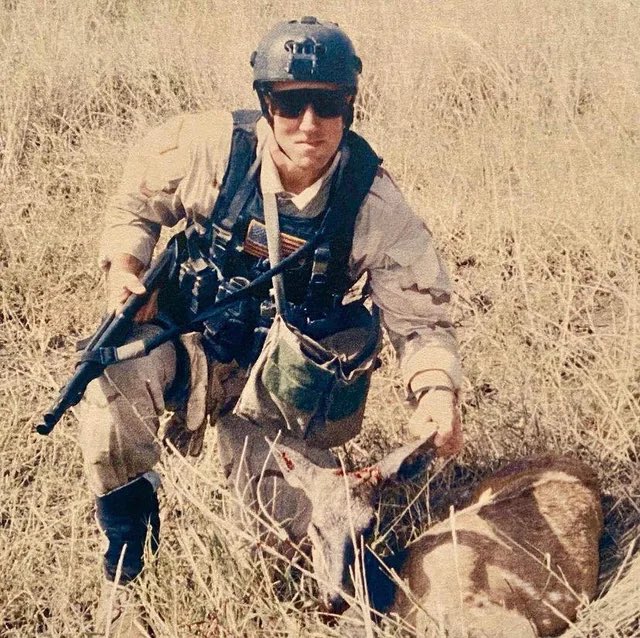
Kevin Holland with Saddam Hussein, moments after his capture. Holland is the only known operator to have served in both of America’s tier one units, first at the Navy SMU and later at the Army SMU, a career that in any other context would sound made up.
He graduated West Wilkes High School in North Carolina in 1988 and went straight into the Navy, deploying into Desert Storm with a SEAL platoon doing deep reconnaissance and sniper work in northern Iraq at barely 20 years old, later supporting Operations Provide Comfort and Uphold Democracy. Ranked in the top one percent of Navy SEALs, he was tapped for the Navy SMU before leaving the service in 1997 to become a North Carolina Wildlife Officer, walking away from special operations entirely, until September 11th pulled him right back in. He returned to active duty and, remarkably, transitioned into the Army, earning his place at the Army SMU as well.
That combined career put him on the ground in Ad-Dawr, Iraq, on December 13, 2003, as part of Task Force 121’s C Squadron element that closed on a small spider hole hidden under debris. Holland was among the small team that reached in and pulled Saddam Hussein out by his hair and beard. Someone shouted a warning, and Holland put his rifle on the deposed dictator’s chest with the safety off before confirming he was unarmed. The Ace of Spades was in custody.
He suffered a severe combat injury in 2011 and retired in 2013 after twenty-five years of service split almost evenly between two branches and two of the most secretive units in the American military. SEAL. Wildlife officer. Delta operator. The man who pulled Saddam out of the hole.
Chris Beck, retired Senior Chief Petty Officer and our Navy SMU veteran. Born on a farm in 1966, Beck served twenty years in the Navy, graduating BUD/S with Class 179 in 1991 and serving first with SEAL Team One before moving to the Command, where he completed thirteen deployments, seven of them combat rotations across the Balkans, Afghanistan, and Iraq. He was decorated with the Bronze Star with Combat Distinguishing Device, the Purple Heart, and two Defense Meritorious Service Medals, retiring in 2011 as a Senior Chief Special Warfare Operator.
His story became publicly known for reasons that had nothing to do with combat. In 2013, Beck came out as transgender, taking the name Kristin Beck and becoming, by most accounts, the first openly transgender former Navy SEAL, a story chronicled in his memoir Warrior Princess and the CNN documentary Lady Valor, which reached nearly nine million viewers. He spent the years that followed as a visible advocate, briefing SOCOM’s Science Director on special operations technology, receiving the NDIA Special Operations Award in 2010, and later speaking before members of Congress.
In 2022, Beck announced he had detransitioned, saying publicly that the decision to transition had been a mistake tied to unresolved trauma from his childhood, and crediting his Christian faith with helping him find his way back to living as Chris. He’s spoken candidly since about that entire journey, encouraging young people to think carefully before making similar decisions themselves.
Twenty years in the Navy, thirteen deployments, and a personal story that’s touched public conversations about gender identity from more than one direction. A complicated, fully human life, lived in the open. Respect for the service, whatever one makes of the rest.
UK Special Boat Service operators during a deployment in Afghanistan. On the right is Anthony “Staz” Stazicker, awarded the Conspicuous Gallantry Cross, second only to the Victoria Cross in the British honors system, for his actions in Afghanistan in 2013.
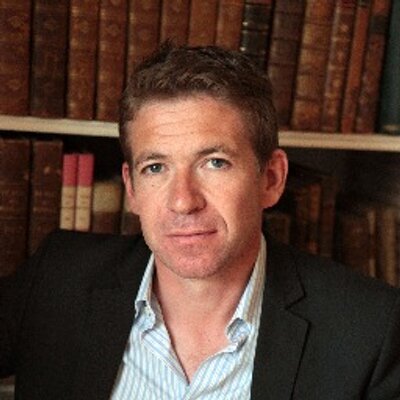
Stazicker’s path into UK Special Forces started nowhere near the military. Born in Bolton in 1984, he grew up chasing a career in professional football until a serious injury ended that dream, and he spent time working as a gym instructor instead. The invasion of Iraq changed his direction entirely, and he found his way into the Royal Marines, where his interest in Special Forces was sparked during his first deployment. In 2009 he put himself forward for selection and spent the following decade serving with the SBS, the last three years as a chief sniper instructor and demolitions expert.
He left the military in 2018 after 13 years of decorated service and co-founded ThruDark alongside fellow Special Forces veteran Louis Tinsley, building high-performance outerwear tested in the same brutal environments they’d once operated in. The brand has since backed genuinely serious mountaineering achievements, including the fastest ever ascent of all fourteen 8,000-meter peaks and the first winter ascent of K2. Stazicker has since become a familiar face on Channel 4’s SAS: Who Dares Wins and authored The Hard Road Will Take You Home. From a footballer’s shattered dream to one of the SBS’s most decorated modern operators. By Strength and Guile.
An FBI SWAT team member during the June 29, 1981, hostage situation at the FBI’s Atlanta field office. That day, Morris E. Roberts Jr., a mentally ill gunman, seized the office and held nine employees hostage for roughly three hours. Two hostages suffered minor injuries before Roberts was ultimately shot and killed by the FBI SWAT team and Atlanta Police.