Spectrum for the Future advocates for a shared spectrum approach to making more bandwidth available to more users – boosting competition and creating jobs.
At @UNLincoln, CBRS is helping connect advanced wireless research with STEM education. Through private 5G innovation and new educational opportunities, the university is helping prepare the next generation of innovators.
Read more: https://t.co/wBBnjmgWti
From edge computing to next-generation applications, @CarnegieMellon is using CBRS-powered private 5G to advance wireless research and innovation.
See how shared spectrum is supporting the future of STEM: https://t.co/duJXJ5Iyrc
At @NotreDame, students are putting spectrum sharing to the test. Through hands-on research using CBRS, future engineers are gaining practical experience in wireless technology and network performance. Learn more: https://t.co/9RZgjkm2E5
Did you see the latest? Dean Bubley argues in @Light_Reading that spectrum sharing can help expand commercial access to the 4 GHz band. Drawing on proven successes like CBRS and 6 GHz AFC, he makes the case for expanding access while protecting federal operations. https://t.co/uWuzKhTj1Z
ICYMI: Analyst @disruptivedean argues that the lower 7 GHz band is better suited for unlicensed Wi-Fi than an exclusive mobile auction, pointing to growing enterprise demand and the risk of dormant spectrum in rural areas. Discover the latest: https://t.co/6e6pj0KJ9W
At @ericsson's USA 5G Smart Factory in Texas, CBRS supports energy management, environmental monitoring, augmented reality for remote support, and mobile alerts. It’s a look at how shared spectrum can help modernize a factory while it builds the technologies connecting our future. More here → https://t.co/LzwzuSuOge
At manufacturing facilities in Illinois and Iowa, @JohnDeere uses CBRS-powered private networks to connect video analytics, autonomous vehicles, and robots to production operations.
See how shared spectrum is helping bring advanced technologies to the factory floor → https://t.co/WjVDSqXuXF
@ToyotaMHS replaced wireless with a private 5G network at its Columbus, Indiana, facility. Powered by CBRS, the network supports automation, AI, and real-time sensor monitoring, helping connect the technologies behind smarter operations. Learn more →
https://t.co/ko4s80gy1k
At Dow Chemical’s Freeport, Texas, campus, CBRS is helping workers move beyond paper-based processes. In just four months, teams completed 28,000+ digital procedures across a 20-square-mile facility. See how shared spectrum is helping modernize operations → https://t.co/uWkROtFsXT
In Chicago, MxD’s CBRS-powered private network gives manufacturers a place to test automation and connected technologies before bringing them onto the factory floor, forming a clearer path to putting smart manufacturing into practice. More here → https://t.co/c5OV7oL7A3
New data highlighted by @disruptivedean shows 6 GHz Wi-Fi use among U.S. Android Speedtest users grew more than 600% from Q1 2024 to Q1 2026. This highlights that the band is moving beyond early adoption to broader use in homes, businesses, and venues nationwide. More here: https://t.co/eDw0KO5b8G
In a new op-ed, @disruptivedean highlights how 6 GHz Wi-Fi adoption is reaching an inflection point, and why the band will become increasingly important as video, interactive, and AI-enabled applications drive demand for high-capacity connectivity. Get the latest → https://t.co/VAUudUecBw
.@disruptivedean explains why 6 GHz stability matters. The band has significantly improved Wi-Fi performance and reliability for millions of users. Disrupting it now would harm that progress and damage confidence in American spectrum policy.
https://t.co/IqJxvYuKzr
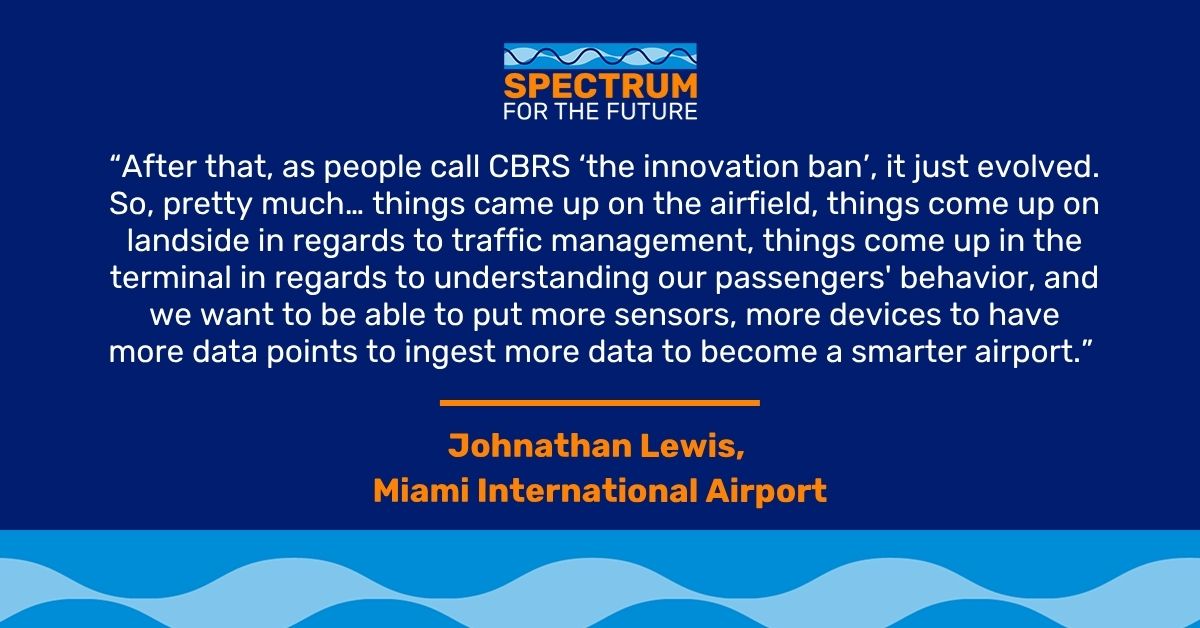
@iflymia's Johnathan Lewis said it best… CBRS doesn’t constrain innovation, it unleashes it. Discover how the Miami airport now deploys sensors, tracks operations, and protects passengers thanks to shared spectrum. Learn more → https://t.co/W4eYxOByYc
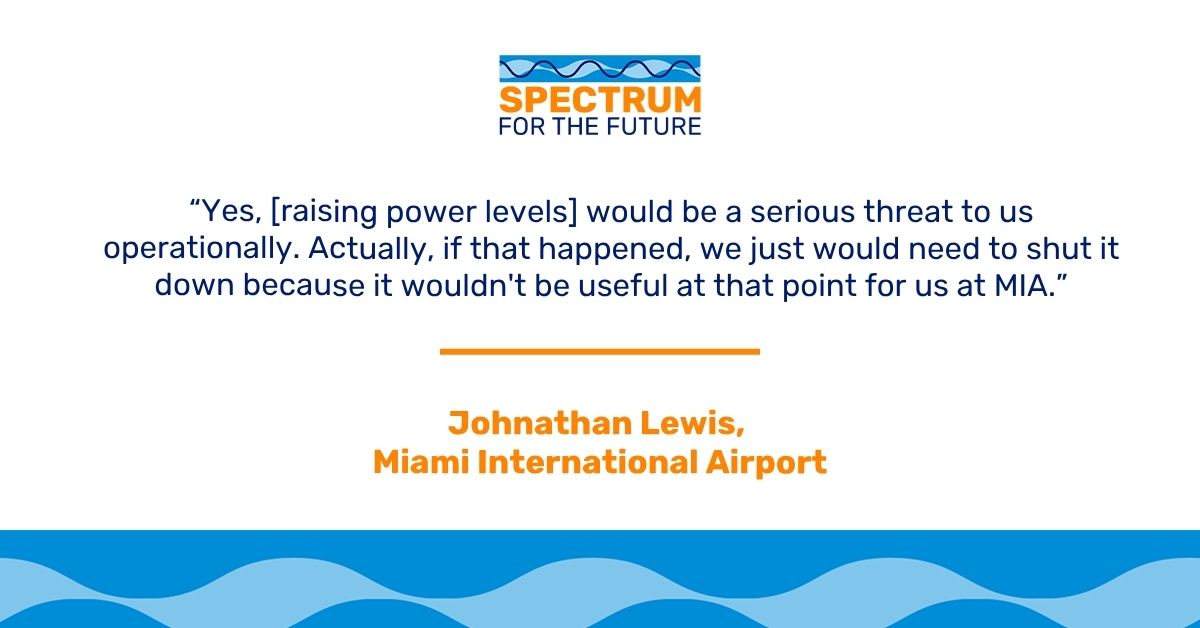
According to Johnathan Lewis of @iflymia , raising power levels in the CBRS spectrum band would threaten operations at Miami International Airport. Read more: https://t.co/AyYD7Lcpdn
Before the pandemic, Jason Eyre developed a CBRS spectrum network to close the homework gap in Murray City, Utah. When remote learning hit, that connectivity was already there, supporting students when they needed it most. More here → https://t.co/tS4QFxTarv
ICYMI: Andrew Clegg argues in the @dcexaminer that spectrum sharing should be part of the conversation as the U.S. expands wireless capacity for AI, allowing commercial users to access spectrum sooner while protecting federal systems. Get the latest → https://t.co/1udUHVdrxK
Check out the latest: Andrew Clegg’s @dcexaminer op-ed argues that spectrum sharing could bring more 4.4 GHz spectrum online sooner, expand access for AI-enabled industries, and reduce the cost and disruption of relocating federal systems. More here: https://t.co/rfEW3Nd4p9
At the @TaranaWireless Summit, SFTF Policy Director Dave Wright highlighted a Valo study finding that the “spectrum sharing regime would maximize the potential of the 4.4 GHz band for new commercial operations, as well as the ongoing federal operations.” Read more: https://t.co/Nh5QNcEog7
Spectrum sharing is working. At @TaranaWireless's Connecting Communities Summit, CBRS proved its worth: 450K+ devices deployed across 81% of U.S. counties, driving innovation in enterprise, agriculture and broadband. Next stop: 4.4 GHz sharing. Read the recap: https://t.co/eCSmYE1CvL