@andyharry819 That’s why I was asking in the first place. This stuff is confusing. For clothes it looks like if the fabric is American made from imported fibers or yarns, it’s still made in the USA. The standard seems more lenient for textile goods. Anyways have a good day
@andyharry819@AM_Pines@dieworkwear So then don’t follow the standard as long as final assembly is in the USA is how this works? Does anyone follow the standard or is it more of a nice to have rule?
@AM_Pines@dieworkwear Going by the standard here https://t.co/hKtyxE8KXo it says all or virtually ingredients need to be made and sourced in the United States? Portuguese fabric should count as a substantial ingredient in a shirt right? I’m missing something
@andyharry819@AM_Pines@dieworkwear So then this blue Oxford https://t.co/95JnseJ2FJ shouldn’t be allowed to say “made with love in the USA” since it’s using fabric from Portugal?
Bonds are much riskier for long-term investors than previously thought.
An "optimal" portfolio can quickly become disastrous if volatility results in bad investor behaviour.
Where does this leave retirement asset allocation?
https://t.co/RlieG0tb6i
1/ Met this week with someone from the FBI 👀 - not for a good reason - b/c we've been pulled into an impersonation scheme 🙁.
Scammers created fake accounts on various channels (Whatsapp, X, Line, Wechat, FB, Insta, Linkedin...) posing as my 'niece', someone affiliated with Cowboy VC, or me.
They use a profile photo of an attractive young asian woman. 'She' cold DMs strangers, and builds a rapport with the target - often an elderly white man - messaging about life, and investing tips.
Rick Rubin tells Andrew Huberman how he deals with creative or writer’s block.
He treats his work like a diary entry (and doesn’t worry about internal or external judgment):
➡️ “What's the cause of the block?
The block is usually something that's either personal ("I'm not good enough") or it can be a confidence issue ("I don't have anything to say") or it could be...thinking about someone else ("nobody's going to like what I make").
Do you know what I'm saying?
So, it's either fear of self-judgment or external judgment.
If you're making something with a freedom of "this is something I'm making for myself for now", that is all [you have to do].
It is a diary entry.
Everything I make is a diary entry.
The beauty of a diary entry is that I can write my diary entry and you can't tell me that my diary entry wasn't good enough.
Or that [the diary entry] is not what I experienced. Of course it's what I experienced: I'm writing a personal diary for myself and no one else can judge if it is my experience of my life.
Everything we make can be that: a personal reflection of who we are in that moment of time.
It doesn't have to be the greatest you could ever do.
It doesn't have to have any expectation that it's going to change the world.
It doesn't have to sell a certain number of copies for any reason.
It doesn't have any of those things at all.
It is "I'm making this thing for me and I want to do it to the best of my ability and to where I feel good about it".
[The work] is honest of where I'm at and if you're living in this world of just being honest to where you're at, there's nothing blocking you.
There are no blocks.
The blocks are all based on dealing with a different force or a different perception that is made up.” ⬅️
There’s a hidden danger, lurking in the shadows, waiting to ambush your retirement plan.
What is it?
It’s called “sequence of returns risk”, or SORR for short.
Here’s how it works, and how to catch it before it pounces.
I think about these data a lot.
Estimated 30-year real loss probabilities for stocks, bonds, and bills:
Domestic stocks: 13%
International stocks: 4%
Domestic bonds: 27%
Domestic bills: 37%
Allocate your assets accordingly.
Ketchup descends from fish sauce.
It's a wild story on global trade that dates back to 300-200 BC.
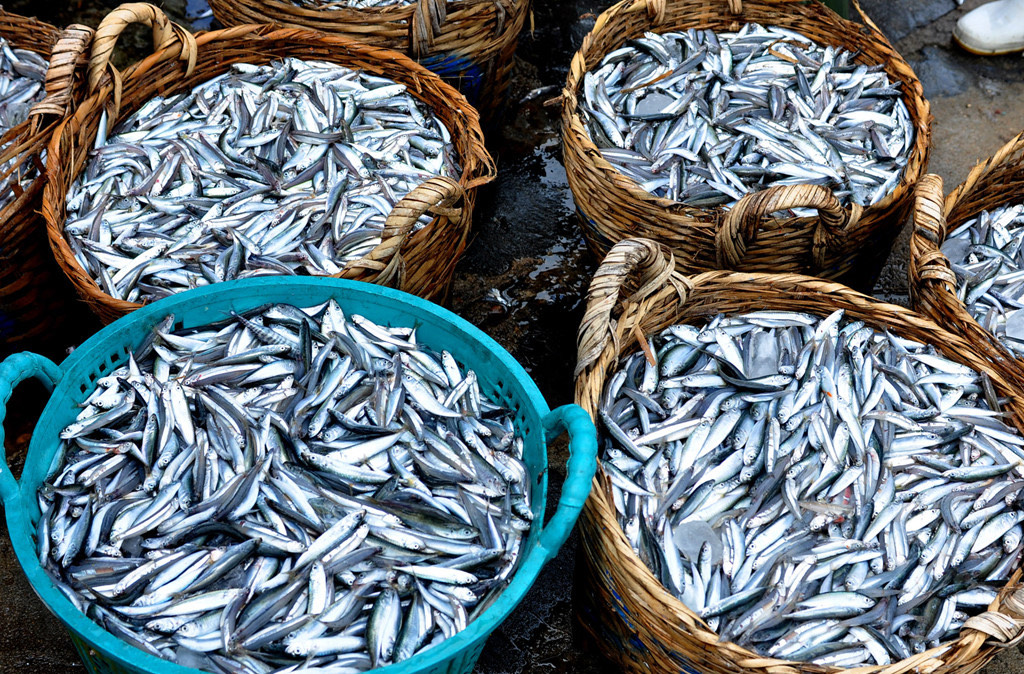
In two parts of the world, a sauce was made from oily fish guts (anchovies, sardines) mixed with salt and herbs that was fermented for months in the sun.
Ancient Greece called it garum while Ancient China called it kê-chiap (Hokkien for "brine of pickled fish").
Garum later became popular in the Roman empire but disappeared as trade routes with coastal production centres were disrupted. Fermented fish sauce fell out of favour in China but — thankfully — it became and stayed a staple in Southeast Asia.
Fast forward to the 16th century, Chinese seafarers were re-introduced to fish sauce while trading with Vietnam (called nước mắm) and Thailand (nam pla).
These same Chinese explorers transported the sauce back to China and modern-day regions of Indonesia, Malaysia, Hong Kong etc.
Soon, Dutch and British traders made contact with the fish sauce — which travels very well because it's fermented — and took it home.
Back in Europe, the fish sauce was often recreated by substituting the fish for other local ingredients that could bring out the dark brown hue (walnuts, mushrooms, mussels).
Remember the Hokkien name? Kê-chiap. The name was adapted to "ketchup" or "catsup" and given to all these remixes.
Over the next 200 years, the sauce took a total detour from the OG recipe (Worcestershire sauce is one of the off-shoots).
In 1812, an American horticulturist James Mease created the first tomato ketchup. The recipe called for brandy and didn't have two ingredients that are abundant in today's ketchup: vinegar and sugar.
Of course, the most famous popularizer of the condiment was Henry John Heinz, who created the first Heinz Tomato Ketchup in 1876 (originally called "catsup").
In addition to tomatoes, the Heinz sauce had salt, vinegar and brown sugar spices (sources tell me no fish guts).
Ketchup is now the staplest staple possible: over 650 million bottles of Heinz are sold a year and >95% of American homes have a bottle in the house.
All of this because of fermented fish. Pungent and savory and umami-giving fermented fish.