$SOFI is back under $16, and the market is completely mispricing the risk.
The market is trading off rate fears. Management has already underwrote them.
While retail panics, CEO Anthony Noto is loading the boat.
Here is why $SOFI might be the most asymmetric risk/reward play in fintech right now. 👇
🛑 The Bear Case (Why the Market is Spooked)
Let’s be objective. The risks are real, and they are heavily macro-driven:
The Rate Reversal: At the start of 2026, SoFi assumed 2 rate cuts. Now, they expect 1-2 rate hikes.
The EPS "Stagnation": Management kept adjusted EPS guidance flat at $0.60, largely due to a massive 700 bps increase in their expected tax rate (up to 22%).
Fair Value Accounting: High rates pressure the non-cash "fair value" marks on their loan book, slightly dinging asset values on paper.
The market saw the words "rate hikes" and "flat EPS" and immediately sold the stock down to its 52-week low.
But the market stopped reading the earnings transcript too early.
🚀 The Bull Case (Why the Core Engine is Accelerating)
Despite absorbing a 700 bps tax hike and completely flipping their macro outlook from rate cuts to rate hikes, the structural strength of SoFi is overpowering the headwinds.
Here are the 5 reasons the ecosystem is unstoppable:
1. Revenue Guidance actually went UP.
Despite the rate scare, management raised 2026 adjusted revenue guidance to $4.75–$4.85B (32-35% YoY growth). You don't raise revenue in a tightening macro environment unless your core business is a juggernaut.
2. The Member & Product Flywheel is Parabolic.
Added a record 1.1M new members (+35% YoY to 15.8M)
Added a record 2.2M new products (+42% YoY to 24.4M)They are adding products faster than members, proving the ecosystem "cross-buy" strategy is working flawlessly.
3. The De-Risking is Complete.
SoFi is no longer just a student loan company. 87% of products are now non-lending. They have diversified into a capital-light, fee-generating platform that is insulated against interest rate shocks.
4. 19 Straight Quarters Smashing the Rule of 40.
In Q2, SoFi delivered +40% YoY Revenue growth AND a 30% EBITDA margin. 19 consecutive quarters of hitting this elite SaaS metric is virtually unheard of in banking.
5. The EPS "Sandbag".
Why hold EPS flat if revenue is ripping? Noto explicitly stated it wouldn't be prudent to raise earnings expectations without more visibility on rates. The current guide already has a cushion for 2 hikes. If those hikes don't happen, the upside drops straight to the bottom line.
🚨 The Bullish Call: Follow the Insider Money
When a CEO speaks, listen. When a CEO buys, pay attention.
Anthony Noto didn't just talk a big game on the Q2 call; he backed it up. In 2026 alone, Noto has purchased roughly $2.25M of $SOFI on the open market at an average price of around $17.29.
Let's look at his track record:
He previously bought ~$2.58M of stock back in 2023 at around $5.37.
$SOFI subsequently squeezed above $32.
Today, $SOFI is back near the 52-week lows of $15-$16.
The Bottom Line:
The market is pricing $SOFI like a vulnerable, rate-sensitive bank. The internal metrics prove it is a high-margin, compounding tech ecosystem. Management has already built a fortress to withstand the rate hikes, yet the stock is priced for a recession.
The CEO is buying the drawdown. Management has already adjusted the plan. The revenue outlook was just raised.
At $15, the downside is macro noise. The upside is a fundamental re-rating of the best execution in fintech.
Not a promise. Not financial advice. But I know which side of the trade I want to be on.
🚨JUST IN
Broadcom $AVGO is lining up more than $50B in financing for the custom AI chip it's building with OpenAI.
Apollo $APO and Blackstone $BX are among the potential lenders.
Talks are early. It's expected to close before year-end and could cover several gigawatts of OpenAI chip capacity.
22 members of congress hold $AVGO including President Donald Trump and Nancy Pelosi
Bitcoin is trading around $83,000 to $84,000, and the bigger question for crypto isn't whether tokenized stocks are coming.
It's whether they can matter before macro stops mattering.
Brent crude pushed above $101 after attacks on tankers in Hormuz, Treasury yields moved higher, and somewhere between $400M and $547M in leveraged longs were liquidated. The total crypto market is still roughly $2.86T, and Bitcoin ETFs are providing some support, but prices are reacting to oil, yields and the dollar before anything happening onchain. ⚠️
At the same time, tokenized real world assets have reached roughly $38B to $46B in AUM, up sharply from the start of the year. Treasuries make up about $14B to $16B, with credit and tokenized stocks making up much of the rest.
OKX and Intercontinental Exchange just disclosed plans for OKXICE, a 24 hour tokenized stock exchange covering more than 60 large US companies, including Nvidia, Apple, Microsoft, Amazon, Tesla, Coinbase and SpaceX.
The proposed setup would trade permissioned assets on X Layer through Uniswap v4 pools using stablecoins, under a five year SEC Innovation Exemption, with issuers able to opt out on 30 days' notice.
This is a real step forward. Tokenized stocks could give global investors 24 hour access, let collateral move in real time, and bring TradFi activity onto blockchains that already have stablecoin liquidity.
But I don't think a bigger tokenized asset number automatically means a new bull market.
The current products are still permissioned, volume constrained and mostly concentrated in reserves and government debt. They are not yet deeply composable across DeFi. And the market just showed how little it cares about the long term story when oil spikes and yields rise.
My base case is bullish on tokenization over the next few years, but neutral on its ability to overpower macro in the next few months. Bitcoin may still need to hold the $80,000 to $87,000 range until the Fed turns, the Clarity Act moves, or retail demand returns.
So which is it?
Does tokenization create a new institutional demand engine that can push Bitcoin above $100,000 and finally pull altcoins along with it, or is it mostly better infrastructure waiting for lower yields and clearer rules before the capital actually arrives?
What The Chip Happened To AI & Semiconductor Investors Today?
1) AMD $AMD plans to substantially increase chip supply in 2027, Lisa Su told Reuters in Taipei. Her visit focused on expanding CPU and GPU production. That follows AMD’s August 4 forecast for server CPU revenue to grow more than 70% in 2027 and total data-center revenue to more than double, alongside the Helios and MI450 ramp. The underlying CPU opportunity has expanded too: AMD’s forecast for the 2030 server CPU market rose from roughly $60B at its November 2025 Financial Analyst Day to about $220B at its July 2026 AI event.
2) Marvell $MRVL raised its FY2028 revenue outlook to about $20B at Investor Day, versus $18B at its August 27 earnings call and $16.5B one quarter earlier. Management attributed the latest $2B increase to scale-out optics, scale-up optics and switching, the same businesses behind August’s raise. It now expects roughly $18B of data-center revenue in FY2028, almost a year ahead of the prior FY2029 target. The FY2029 custom-silicon target also increased to more than $12B from $10B+. Its new FY2031 model calls for $70–90B in revenue and implies non-GAAP EPS above $30 at the revenue midpoint.
3) SpaceX $SPCX is seeking about $40B to buy NVIDIA $NVDA chips, the Financial Times reports. Apollo $APO is expected to lead roughly $10B in bank loans and $30B in investment-grade debt, with closing expected in 2027. This remains prospective financing, not completed funding or recognized NVIDIA revenue. On its August 4 earnings call, SpaceX reported $1.6B in incremental Q2 AI infrastructure revenue from Colossus cloud services, plus another $6.7B of contracted cloud-services revenue over a six-month period, with the ramp beginning in October.
Google $GOOGL and Constellation $CEG agreed on 3,590MW of power in PJM through two arrangements: a 20-year agreement supporting 890MW of new nuclear output from upgrades at 11 existing units, with the first upgrade expected in 2028, and a 15-year agreement for 2,700MW from the operating fleet. Constellation plans more than $4.3B of investment under the arrangement. The package combines future nuclear expansion with existing generation. It follows Alphabet’s July increase in its 2026 capital-spending forecast to $195–205B from $180–190B, primarily because capacity was being delivered faster to meet demand.
Penguin Solutions $PENG lifted its FY2027 revenue outlook to a $2.43B midpoint from the preliminary $2.17B midpoint outlined in July. Q4 FY2026 revenue reached $566.7M, up 68% year over year. Integrated Memory grew 158% to $341M, while Advanced Computing grew 11% to $154M. Looking ahead, management raised its preliminary FY2027 Advanced Computing growth forecast from the mid-teens to about 40%, plus or minus 10 percentage points, citing stronger AI-infrastructure bookings and its neocloud pipeline. An unnamed neocloud also selected Penguin to deploy and operate a 36,000-GPU AI factory in Norway.
We traded the jewellery sector pretty much right from the start. Same way we caught Pharma, Healthcare, Defence and other sectoral moves this year. reference is available on my Twitter and private stock groups.
Catching sector is the real game which helps in growing your short term portfolio at faster pace. That is where the real quick money is made.
Spend 5-10 minutes on every weekend to do SECTORAL TOP DOWN ANALYSIS
Simply sort them from M W D and use AI or screener to check stocks from the respective sectors. Go for leaders to trade if you don’t understand fundamentals much.
Trust me simple things work in the market. Don’t waste your time in searching holi grail and fancy indicators.
Focus more on execution
$TSLA Analysis 📊 👀
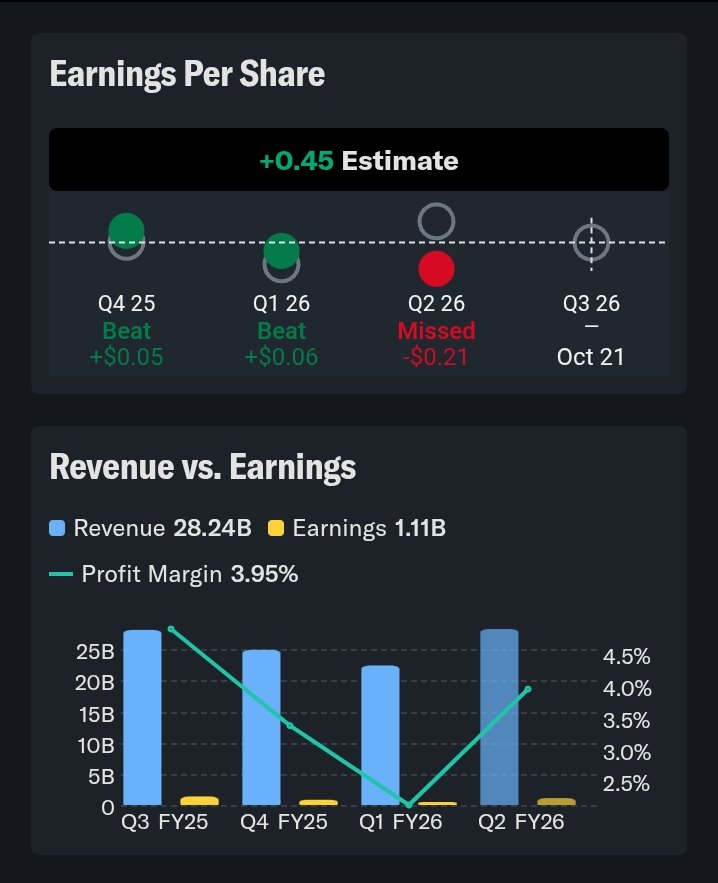
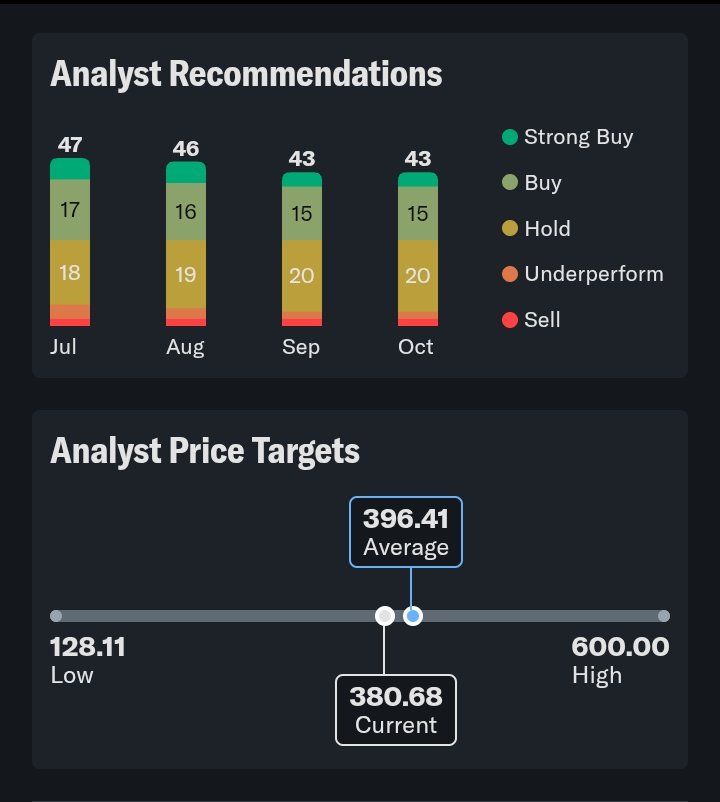
Tesla near $381 is only about 4% under the $396 average target. Ratings are still buy-heavy, but cooling: strong buys fell from 47 in July to 43 in October, and holds rose. Goldman and Truist are at Hold deliveries beat, but they want proof on FSD, robotaxi, and Optimus.
Q4 and Q1 beat; Q2 missed by $0.21. Revenue rebounded to $28.2 billion, yet operating margin was about 1.4% and free cash flow went negative, with 2026 capex guided above $25 billion.
Q3 is due October 21, Street at $0.45 EPS. The multiple is rich against thin upside. A clean margin or robotaxi update can justify it; another profit miss likely cannot.
Tomorrow’s Futurum Equities YouTube video is on my 5 favorite small-cap Physical AI names as robotics starts to scale.
Instead of trying to pick whether $TSLA, $CCXI, Figure or someone else wins humanoids I’m looking underneath the robot at the sensing, edge compute, power and control layers every platform needs.
If robotics scales the way I think it will then those suppliers can win across multiple manufacturers without needing to pick the one robot brand that comes out on top.
🚨 $HIMS Arboretum just launched as a precision-medicine infrastructure company, and Hims & Hers is among the investors next to GV, F-Prime, and Amgen 👇
About Arboretum...
Arboretum is a next-generation molecular information company built to make precision medicine a reality for common diseases. By generating and integrating molecular and clinical data, Arboretum enables better clinical trial design, more efficient patient enrollment, and new models for biopharma collaboration and company creation. The company is headquartered in Cambridge, Massachusetts.
Arboretum’s model is for...
- For health systems, clinically indicated genetic testing plus a research network that returns actionable findings and builds longitudinal molecular registries.
- For drug developers, genomically stratified trial design, patient matching, and better commercialization of therapies that only work in defined subgroups.
The series A is $30 million, led by F-Prime, GV, .406 Ventures, Hims & Hers, Amgen, and other healthcare investors.
Why it is bullish for Hims?
1. Sitting as a named lead alongside F-Prime, GV, and Amgen is a credibility marker. Those firms do not bring a consumer telehealth brand into a Broad-origin genomics round unless the strategic fit is real. It supports the shift from “GLP-1 / ED / hair DTC” to a data-driven care system.
2. It matches the roadmap management has already described. Hims Labs was the first layer: blood, metabolism, hormones, cardiovascular risk. Management has also talked about a multi-year stack that runs from labs and devices through preventative screening and genetics, then into physicians, coaches, and pharmacy. Arboretum is the genomic layer of that stack, polygenic and clinical genetic signal in the exact categories Hims already monetizes: weight, metabolic disease, and heart risk.
3. Arboretum’s edge is turning a genetic result into a care and research loop. Hims already owns the action side: affiliated pharmacy footprint, prescribing workflows, and a large subscribed base. Blood biomarkers tell you the current state. Genomics tells you who is high-risk before the labs look bad, and who is more likely to respond to a given therapy. That is the personalization story (MedMatch and beyond) with a real molecular input instead of demographics alone.
4. Category expansion without building a genomics lab. Hims does not need to become a diagnostics company. It needs access to molecular signal and the workflows around it. Partnering with systems like Geisinger (MyCode) and Advocate, via an investor relationship, is a cheaper path than building clinical-grade variant interpretation and registries in-house.
$LMND Revenue took an inflection point upwards due to:
a) accelerating IFP growth, and
b) lowering the amount of reinsurance used
As the reinsurance change works it way through, the Revenue will more or less follow the IFP growth.
50 Sites That Show What Billionaires Buy and Read for Free👇
📊 https://t.co/nWmWy4rLnI → Current portfolios of famous investors
🐋 https://t.co/RyvZecrZyC → Quarterly fund trades
🏛️ https://t.co/z94cx2rNjz → Stock transactions of US politicians
🕵️ https://t.co/EVi35R3eYU → Executives' own company stocks
🧾 https://t.co/x84QmFXAtJ → Making fund filings readable
📑 https://t.co/ETsWGUH6ap → Companies' official reports
📬 https://t.co/Js9OEeqitM → Buffett's letters since 1977
🎥 https://t.co/QUnvC3zzV7 → Video archive of Buffett meetings
📝 https://t.co/PoQyCKBKgW → Howard Marks' investor memos
🌊 https://t.co/0fxkFkWHUo → Research from Ray Dalio's firm
🧭 https://t.co/pT4Jq2cGf3 → Dalio's principles for free
🌱 https://t.co/4R46aOaS7D → Jeremy Grantham's market notes
📈 https://t.co/2glCe2XM6h → Quantitative fund research
🏷️ https://t.co/uyiDfmsMMU → Damodaran's valuation data
✍️ https://t.co/4mk9spdKLs → Valuation professor's blog
🧠 https://t.co/6NSYuQjUpH → Morgan Housel's money writings
🧩 https://t.co/RvFI0lK5Fd → Mental models for decision-making
🏦 https://t.co/TMAmhgXIoR → JPMorgan's free market guide
🚀 https://t.co/s0zZo8sQRz → Innovation-focused fund research
💼 https://t.co/K3jxRyD4Ky → Venture capital essays
📚 https://t.co/WQsdXvFVlO → Value investing lecture notes
🎓 https://t.co/BVoIsjruSx → Columbia's value investing archive
📉 https://t.co/z92gF51wAo → Fed's economic data archive
🏛️ https://t.co/kcJgkKdIpq → Fed decisions and statements
🇪🇺 https://t.co/DEB3uDOfZx → European Central Bank data
🌐 https://t.co/ApRyoX9azk → Reports from the central bank of central banks
🌍 https://t.co/gqSjkqEJkz → Countries' economic indicators
📆 https://t.co/mdvdjQnWYs → Companies' long-term charts
🧮 https://t.co/IJaOG9Gefy → Company financials for free
🏢 https://t.co/BMY99oJnV7 → Companies' market cap rankings
🔥 https://t.co/j0xyh8Njth → Stock screener and heat map
🔁 https://t.co/1QA38kpO4b → Portfolio backtesting
📊 https://t.co/DxjdCvyTa8 → Charts and market analysis
🖥️ https://t.co/7LFrFWvlTf → Professional market screener
🗂️ https://t.co/88VdFOgSy8 → Company activity reports archive
🛡️ https://t.co/3hpTXstbg3 → SEC's investor education site
🧑🤝🧑 https://t.co/gjWB1sSVjZ → Passive investing encyclopedia
📖 https://t.co/GCe4jEFJfV → Financial terms dictionary
💰 https://t.co/1T44FQ8MPi → Free finance guides
🎖️ https://t.co/K1XJzU07Jo → CFA research publications
⭐ https://t.co/RyIXR437cC → Fund and stock evaluations
🧱 https://t.co/NMG2s3D0uV → Companies' visual analysis
🗃️ https://t.co/nACajvGry4 → Archive of selected investment theses
🧺 https://t.co/cf09h8TqXm → Seeing what's inside funds
🇪🇺 https://t.co/ZnKNLUbVVI → European fund backtests
📐 https://t.co/xF9aYsrXgt → Investment writings with data
🧠 https://t.co/NEVFwFJ5xt → Market history notes
🎭 https://t.co/XVYfcc8LFu → Investor psychology writings
🗺️ https://t.co/t7FNJSsQJk → Explaining the economy with charts
🌎 https://t.co/xiXU3xuC1C → Analysis of energy and financial system limits
Save this. You’ll definitely need some of these later. 🔖
Follow @Amelia_With_Ai for more useful websites, AI tools & tech resources.
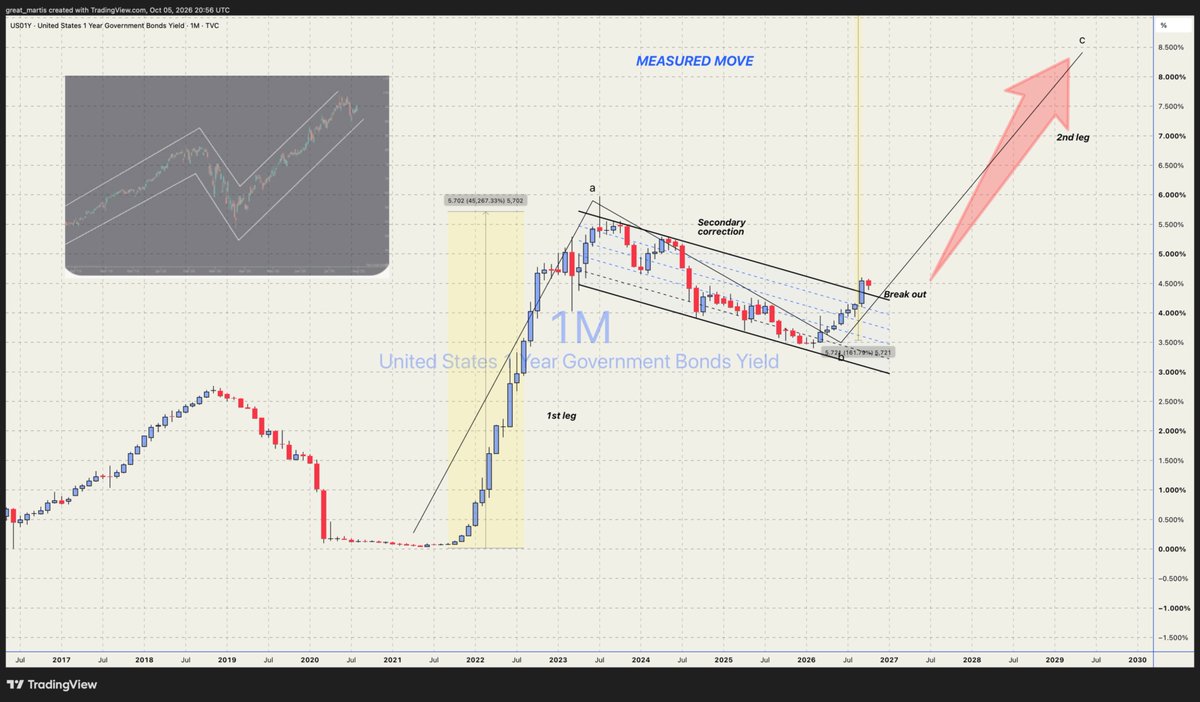
The nightmare.🚨
While the herd is misdirected, the bond market just sent out a major smoke signal. The technical significance of what you are seeing below is a measured move. If it follows its playbook, the yield ceiling might surprise a few people.
The best possible resolution to avoiding such a nightmare scenario is if we get a deleveraging event of significant proportions and without intervention.
Hope this helps.
Yours truly,
The Greta Martis.
She's beautiful.
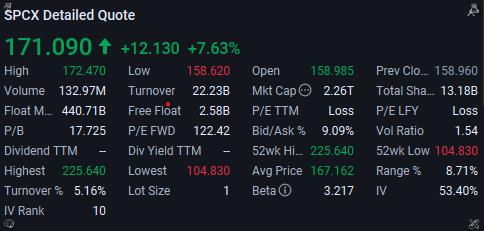
$SPCX jumped almost 7% on Musk’s AI-to-superintelligence story. Morgan Stanley sees it cheap before Starship Flight 15. Is the market underreacting or overreacting? #SPCX
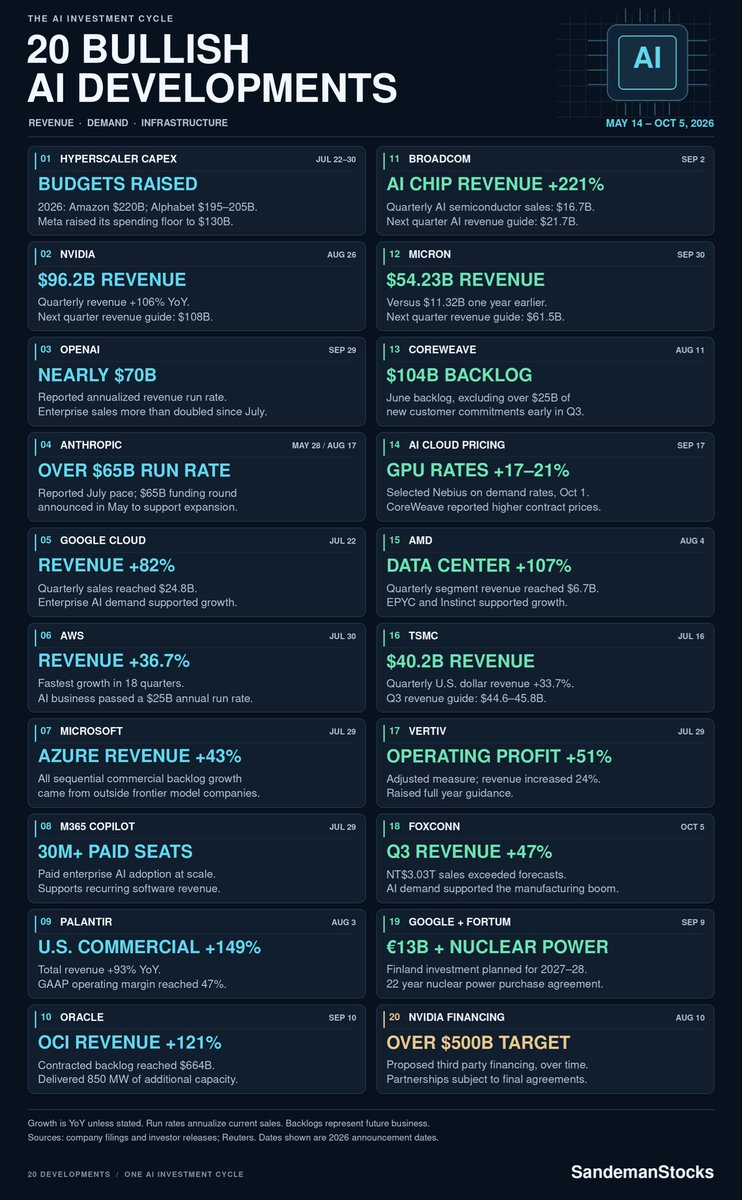
$NBIS since May 14th I’ve counted 43 bullish updates on Nebius. In addition many bullish updates on the overall AI trade.
Since then $NBIS is only up $11. Here are the top 20 $NBIS specific updates and AI related updates.
This won’t stay down much longer.
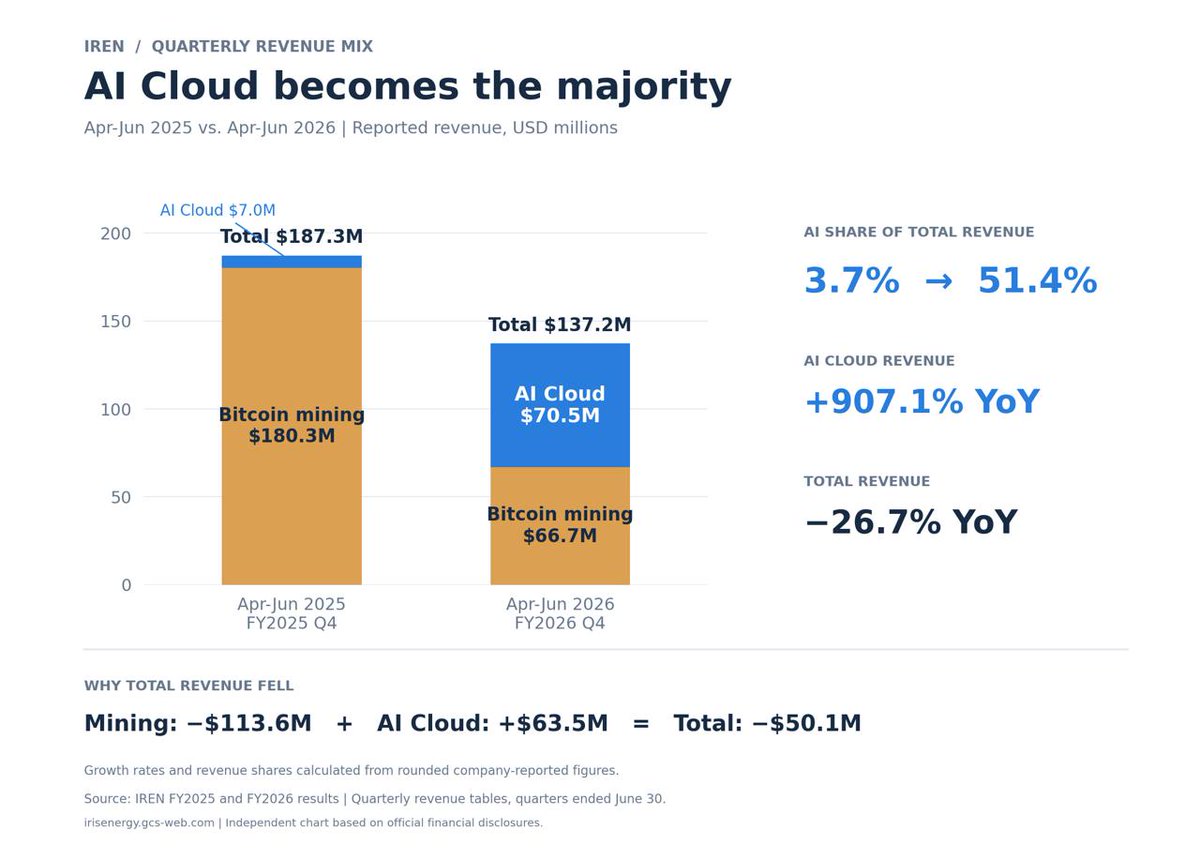
Last night I mentioned IREN’s cloud business. Some friends said it wasn’t clear, so here’s a quick breakdown. $IREN total revenue fell 26.7%, while AI Cloud revenue rose about 907%. Put together, these two numbers give a clearer picture of the transition.Breaking down the actual revenue makes it easier to see. In April–June last year, IREN reported about $187.3 million in revenue. Mining contributed $180.3 million; AI was only $7 million. At that point, revenue was almost entirely from mining.Inthe same period this year, mining revenue fell to $66.7 million, while AI revenue rose to $70.5 million. AI already accounts for more than half of revenue, and the two together total only $137.2 million.Why is AI growing so fast while total revenue is still down?The starting bases are very different. Mining revenue dropped by $113.6 million. AI revenue is roughly 10x last year’s level, but the actual increase is only $63.5 million—leaving a $50.1 million gap. It’s similar to a company that mainly sold gas cars and is shifting to EVs. EV sales can grow quickly from a small base, but the lost gas-car revenue is larger, so overall revenue can still decline. IREN has an additional timing issue: the transition takes time. The company has said some mining equipment is being retired and sites are being converted to AI use. Legacy revenue falls first, while new GPUs still need to be installed and commissioned before they contribute revenue.SoI look at the two questions separately.AIrevenue going from $7 million to $70.5 million shows the new business is starting to deliver. Whether the company can close the overall revenue gap still depends on the pace of future deliveries. Even after revenue catches up, costs still matter. GPU purchases, depreciation, financing interest, and operating expenses will all affect what is left for shareholders. If revenue rises but the share count also increases, the impact on per-share value has to be checked separately.That’s why I’m still tracking IREN: power, land, and data centers give it a base. Horizon deliveries, GPU utilization, and cash flow will determine what those resources are actually worth