Welcome to SPI Logistics Network! We offer comprehensive support, advanced software systems, and efficient AR and AP back-office services to empower independent
Cross-border freight is becoming more strategic than ever.
The numbers tell the story:
- U.S. intermodal volume is up 7.5% YoY
- The Port of Los Angeles handled 892,340 TEUs in May (+6.1% YoY)
- Laredo is investing $100M in new rail infrastructure
What does that mean?
Truckload still wins on speed. Drayage keeps freight moving through ports and border crossings. Intermodal shines on longer-haul lanes where efficiency matters most.
The best brokers don't just book freight, they choose the right mode for the right lane.
For years, the answer was simple: Need to move freight? Put it on a truck. But not every lane needs the same solution.
With transportation pricing elevated and route guide depth reaching 1.78 for 600+ mile freight, intermodal is becoming a more attractive option for certain moves.
Truckload still wins on speed and flexibility. Intermodal wins when distance, efficiency, and cost start mattering more.
The smartest freight strategy isn't choosing one mode. It's knowing when each one gives you the advantage.
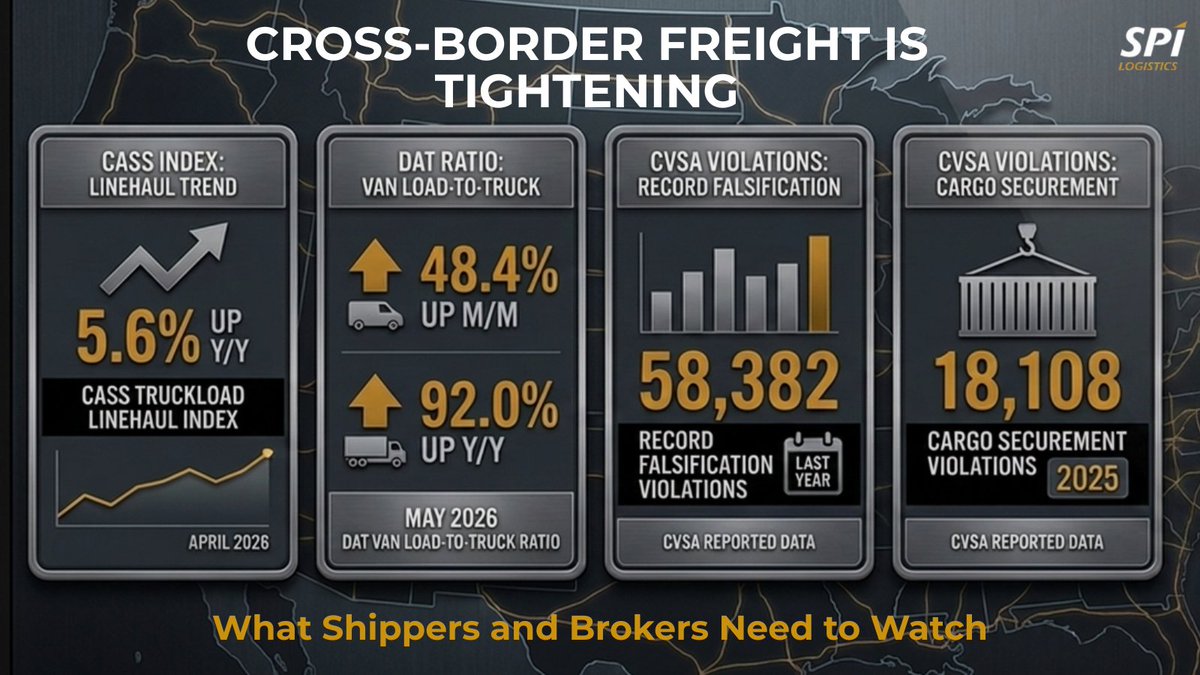
Cross-border freight is tightening, and becoming more complex at the same time.
• Cass Linehaul Index: +5.6% YoY (Apr 2026)
• DAT van L/T ratio: +48.4% MoM, +92% YoY (May 2026)
• CVSA: 58,382 HOS falsification violations last year
• CVSA: 18,108 cargo securement violations in 2025
Capacity is shifting, compliance scrutiny is up, and inland coordination is getting harder to manage.
In this market, execution matters more than ever: Secure capacity earlier, and plan cross-border moves before problems show up at the border.
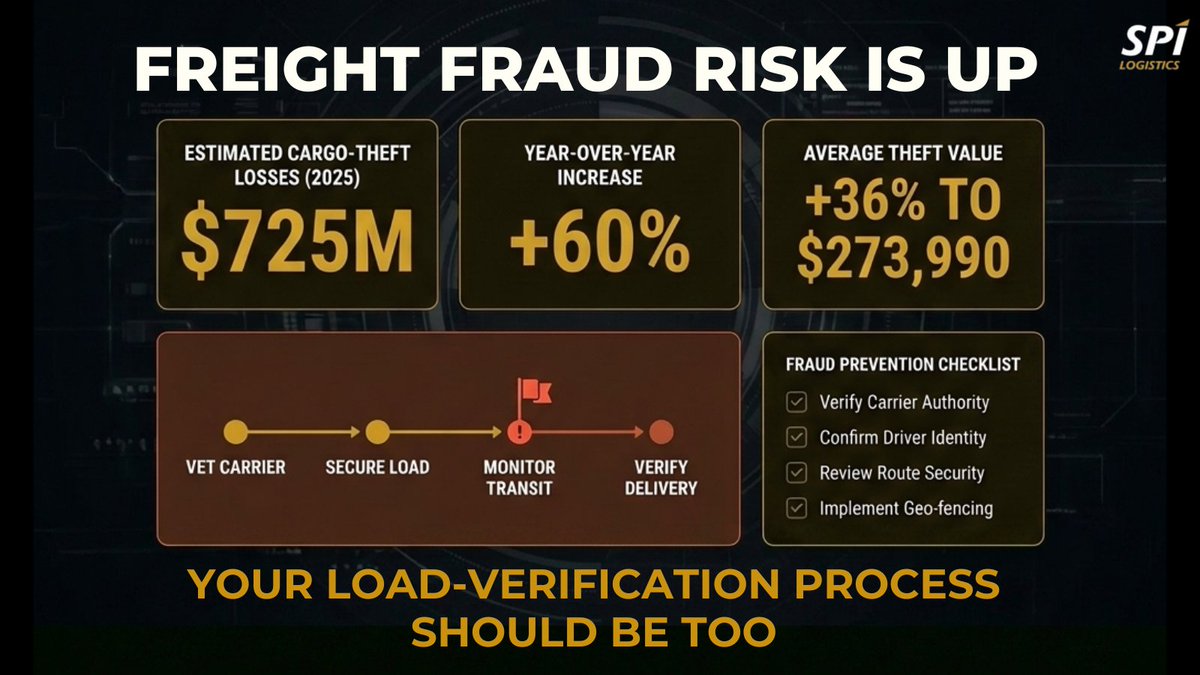
Freight fraud is rising right alongside the market.
- Cargo theft losses hit $725M in 2025
- Losses increased 60% YoY
- Average theft value jumped 36% to nearly $274K
- Rates are at their highest levels in over two years
As freight becomes more valuable, it becomes a bigger target. The best defense isn't after the load is booked. It's before.
Verify the carrier. Verify the contacts. Verify the details.
Because in the current market, protecting freight starts long before pickup.
Capacity is tightening in parts of the freight market... even though shipment demand is still uneven.
Why?
- Carrier exits after a prolonged downturn
- Rising operating costs
- More selective carrier networks
- Increased focus on compliance and risk
The result: there may be enough trucks overall, but not always the right capacity in the right place at the right time.
In this market, strong carrier relationships matter more than ever.
Spot rates are climbing again
At the same time, brokers are becoming more selective about the carriers they use after the recent broker liability ruling.
According to DAT, van spot rates reached $2.52/mile while flatbed rates climbed to $3.09/mile, the highest levels seen in over two years.
In 2026, speed still matters. But now risk management does too.
For years, brokerage was built around one thing: moving freight fast. But a recent Supreme Court ruling could reshape how brokers think about carrier selection. The Court confirmed that brokers can still face negligent hiring claims tied to the carriers they choose even if the carrier has active authority and insurance. Now the conversation is changing from: “Can this carrier move the load?” to “Can we defend why we chose them? Because the cheapest truck on the board can become very expensive later.
DOT Blitz Week is here 🚨
And every year, the same thing happens:
- Capacity tightens
- Some drivers park voluntarily
- Delays increase
- Compliance suddenly becomes everyone’s priority
For brokers, this week is more than inspections. It’s a real-time stress test of carrier relationships, vetting, and operational discipline.
The cheapest truck usually isn’t the concern… until it gets parked at a weigh station.
A lot of small carriers start out thinking they don’t need brokers. Go direct. Cut the middle layer. Keep more of the rate.
And at first, it feels right. But over time, consistency becomes the real challenge. Empty miles add up. Load flow gets unpredictable. Direct freight isn’t always steady.
That’s where brokers quietly become part of the equation again, not just for loads, but for stability.
Freight isn’t clearly up or down right now. It’s both, depending on the lane, the week, and the load.
That’s what makes this market tough. The brokers winning aren’t guessing where it’s going… they’re tightening how they operate inside it.
Better decisions, stronger relationships, disciplined pricing. Uncertain markets don’t reward speed. They reward control.
Freight sales used to be simple: Be available. Have capacity. Win on price.
That worked… when the market allowed it. 2026 is different. Now it’s about knowing your lanes, protecting margin, and actually solving problems.
Speed is expected. Value is what wins.
A lot of brokers are still selling like it’s 2021…and that’s where they lose.
Most brokerages aren’t losing because they’re bad. They’re losing because they’re basic.
Same lanes. Same carriers. Same pitch.
In the current market, that’s replaceable.
What wins now:
- Specialization
- Speed & execution
- Real market insight
- Solving shipper problems
Average doesn’t fail overnight. It just gets ignored.
No hack. No fake emails. Just one person controlling the system.
Over $800K paid for freight that never moved.
What went wrong:
- Same person approved carriers & assigned loads
- No verification after onboarding
- No internal audits
- Too much trust, not enough control
In freight, fraud isn’t always external.
Sometimes… it’s built into the process.
Cargo theft isn’t just rising, it’s evolving. Organized groups are now using fake carriers, stolen credentials, and spoofed emails to hijack loads before pickup.
This isn’t about broken seals anymore. It’s about broken systems. For brokers, speed without verification = risk.
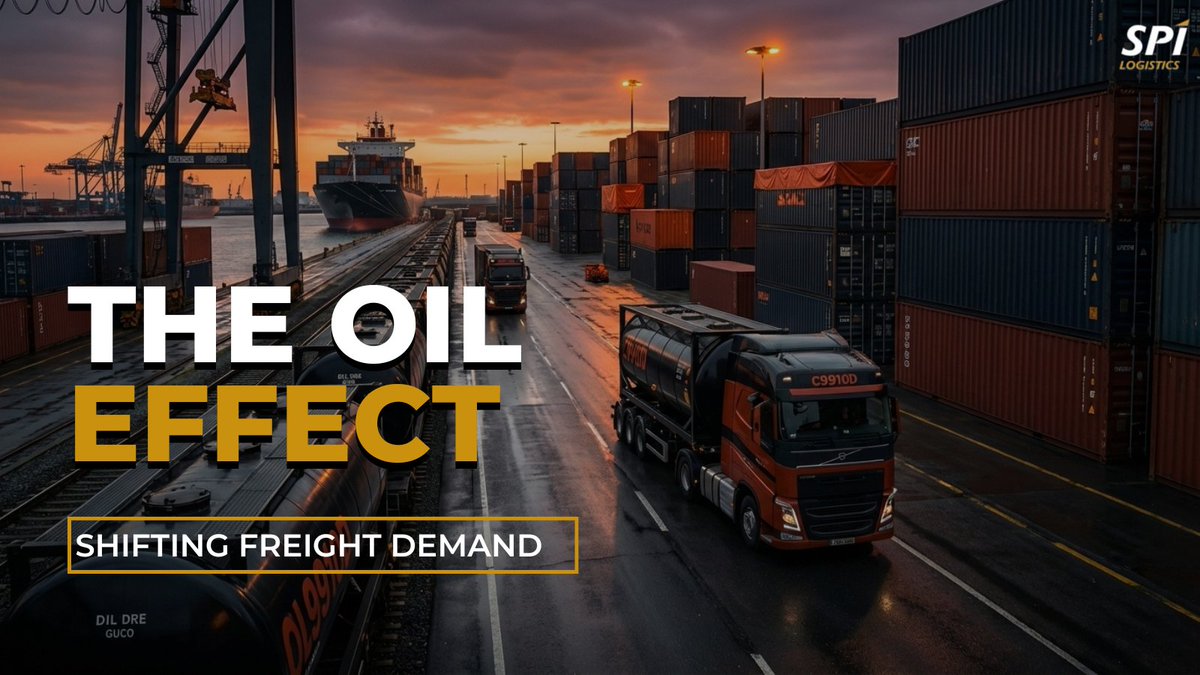
Oil prices are rising again.
Most people see higher fuel costs. But in freight, there’s another side: increased demand.
As prices climb, activity picks up in energy, refining, and petrochemicals, driving more shipments, especially in specialized lanes and key regions.
In this market, rising costs don’t just pressure margins… they can also create new opportunities. 🚚
There’s been a quiet market for aged DOT numbers, because a clean history gets carriers past the 90-day barrier, lowers scrutiny, and unlocks freight.
FMCSA is now stepping in, warning that DOT/MC numbers can’t be bought or transferred outside real business sales.
For brokers, this means fewer shortcuts in the system, and a bigger need to truly vet who’s behind the authority. 🚨
FMCSA just put the industry on notice: no more buying or leasing DOT/MC numbers. The aged DOT number shortcut is under fire, targeting chameleon carriers using borrowed histories to access freight.
For brokers, this is a reminder: Don’t just trust a clean record. Verify it. Credibility in freight has to be built, not bought.
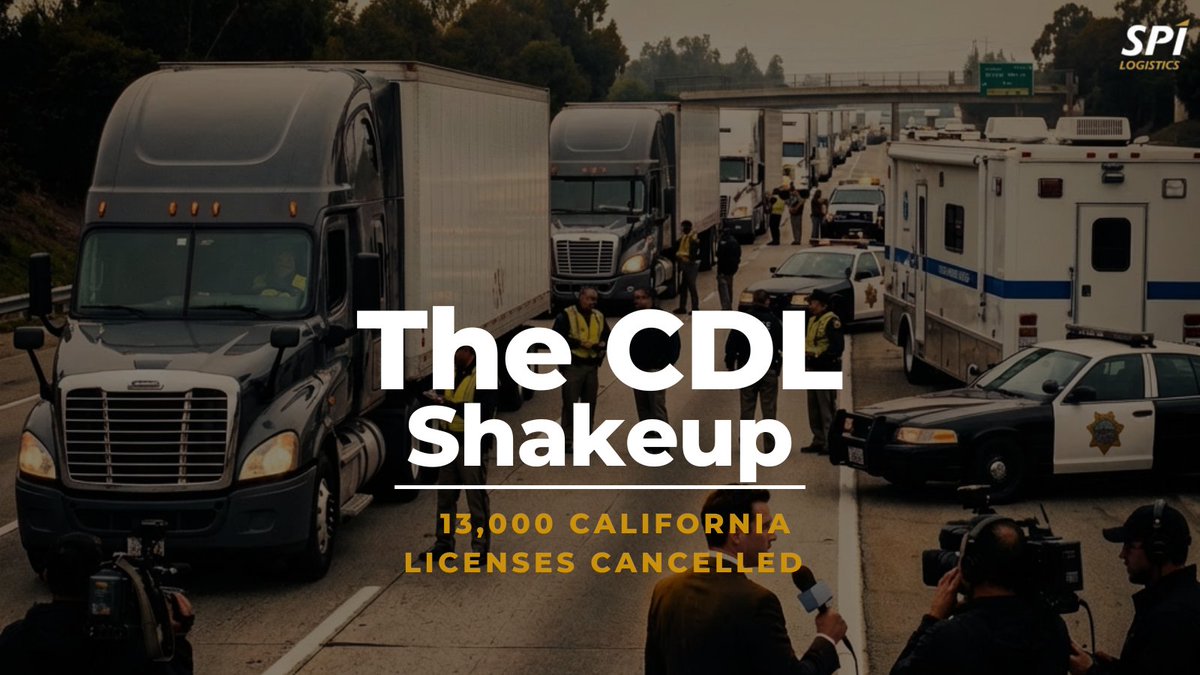
13,000 non-domiciled CDLs were just cancelled in California after a federal audit flagged licensing issues.
And the bigger shift may be coming: a new FMCSA rule could disqualify up to 97% of the ~200,000 drivers in that category nationwide. In freight, capacity can disappear faster than people think.
Everyone talks about Q2 produce season and Q4 peak freight. But smart brokers know Q1 is the real opportunity.
It’s the window to fix payment workflows, clean up AP/AR systems, and strengthen carrier pay before freight volume ramps up.
Fix the operations now… before the market tests them.