Not only should we not anthropomorphise chatbots, chatbots should not anthropomorphise themselves. That is to say, chatbots should not present themselves as having human-like attributes they lack, or otherwise deceive the user into thinking so.
RT @[email protected]
Super proud/excited to share our paper "Pygmalion Displacement: When Humanising AI Dehumanises Women" wherein we develop a lens to help us trace a type of harm towards women within/by AI as a field & as a technology: (1/2)
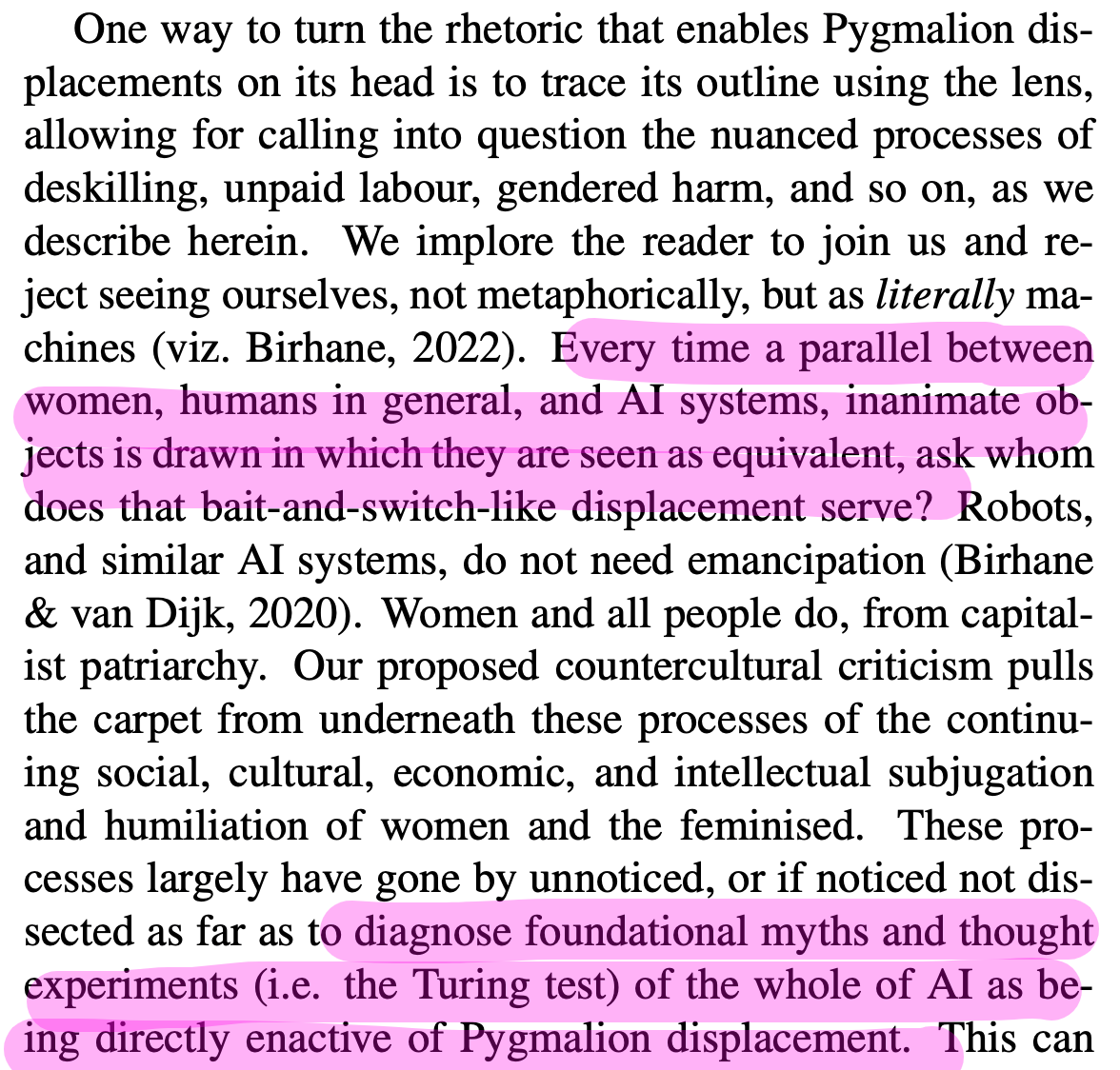
We end on asking you to use our lens where useful to note Pygmalion displacements as a first step towards escaping the cycle of sexist AI-based harm. When a parallel between women and AI is drawn, ask whom does that bait-and-switch serve?
More here: https://t.co/rFbUyx8Hpb
4/4
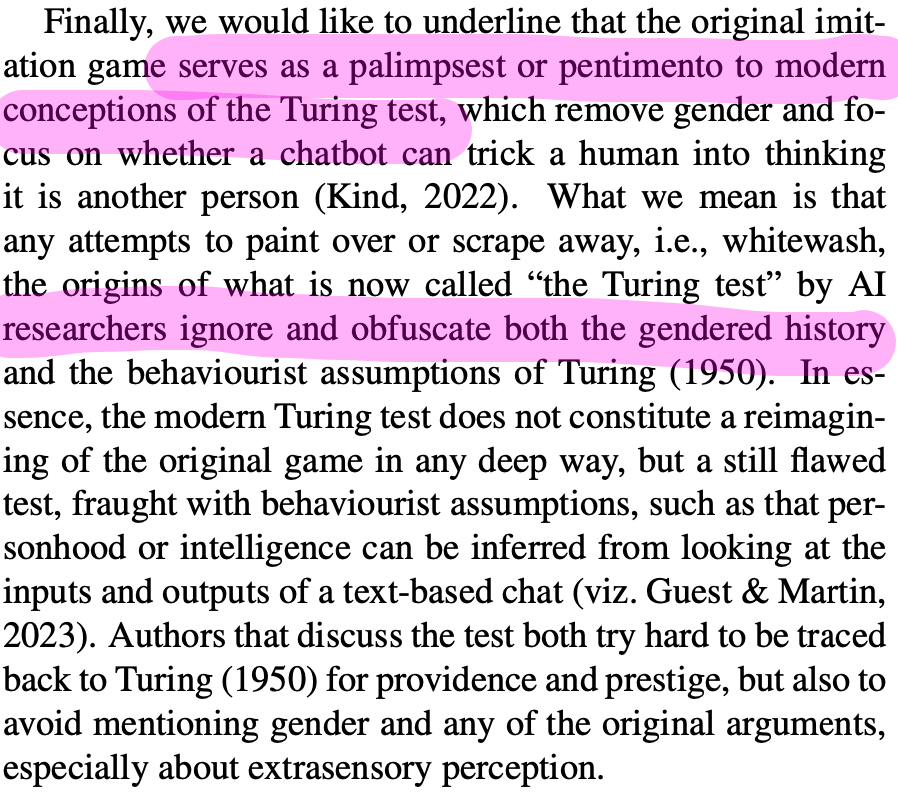
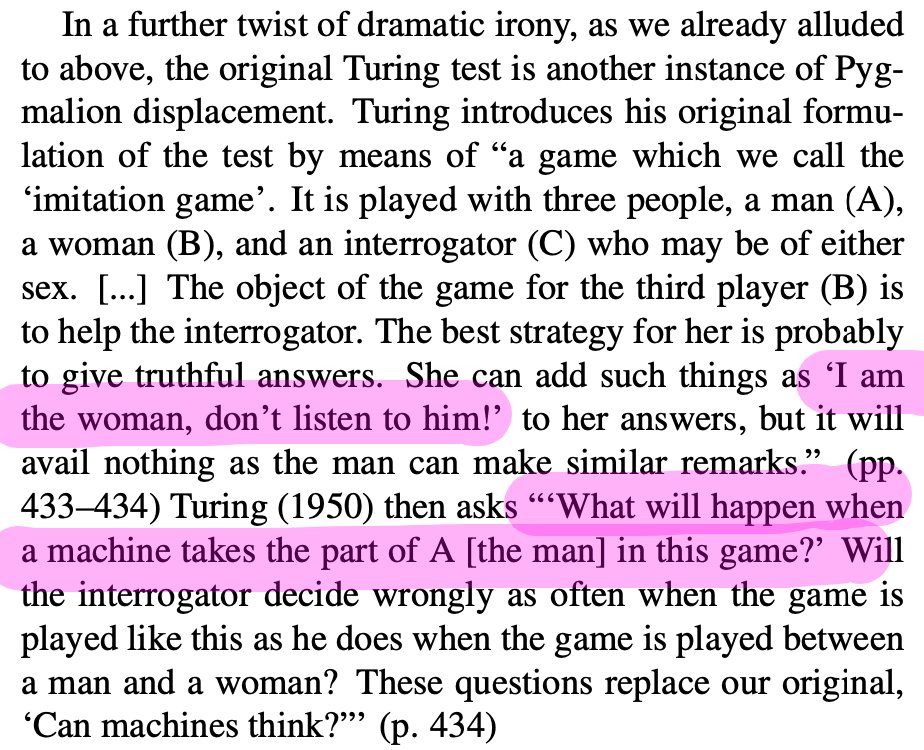
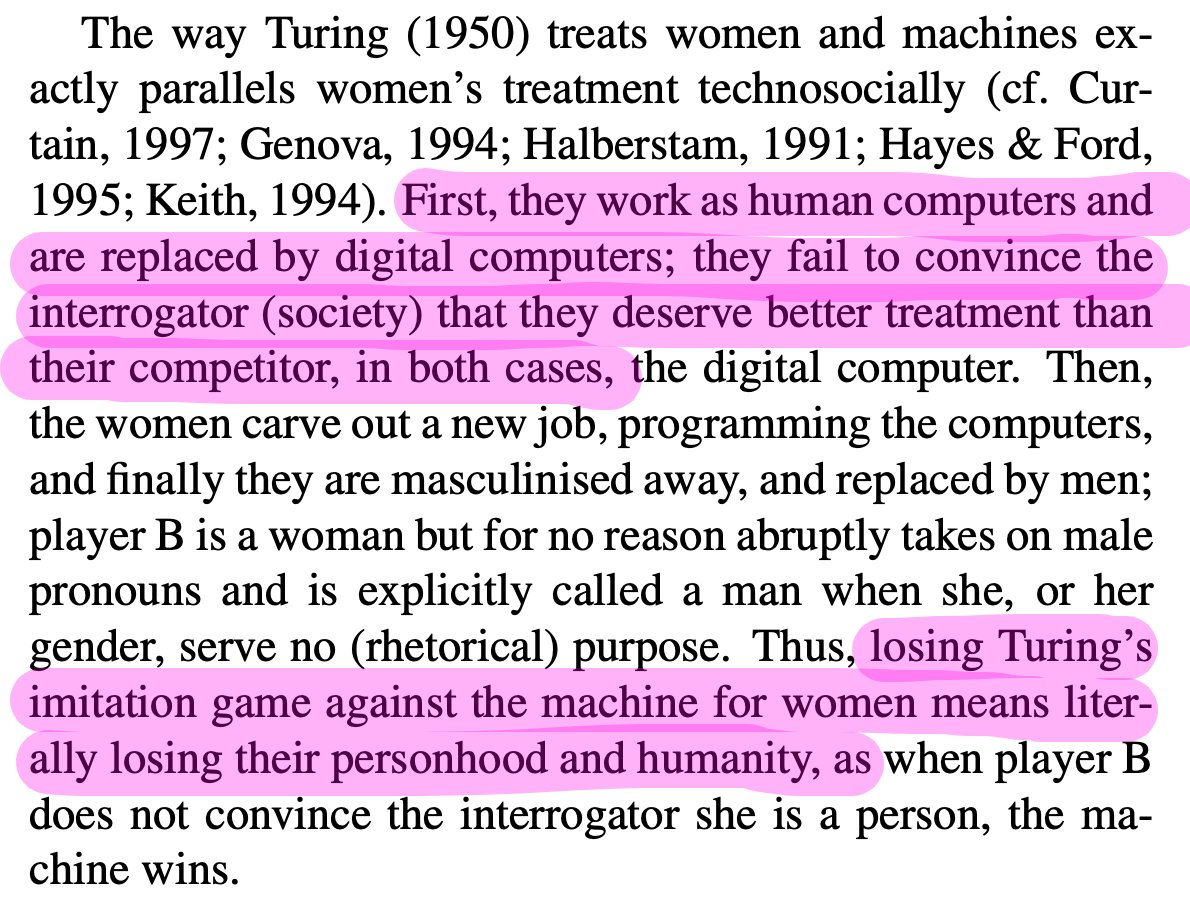
We also make the case that the Turing test, the imitation game (see "Interlude: Can women think?" in https://t.co/rFbUyx8Hpb) rhetorically helps to form the founding historical example of Pygmalion displacement: when women computers were replaced by digital computers. 3/4
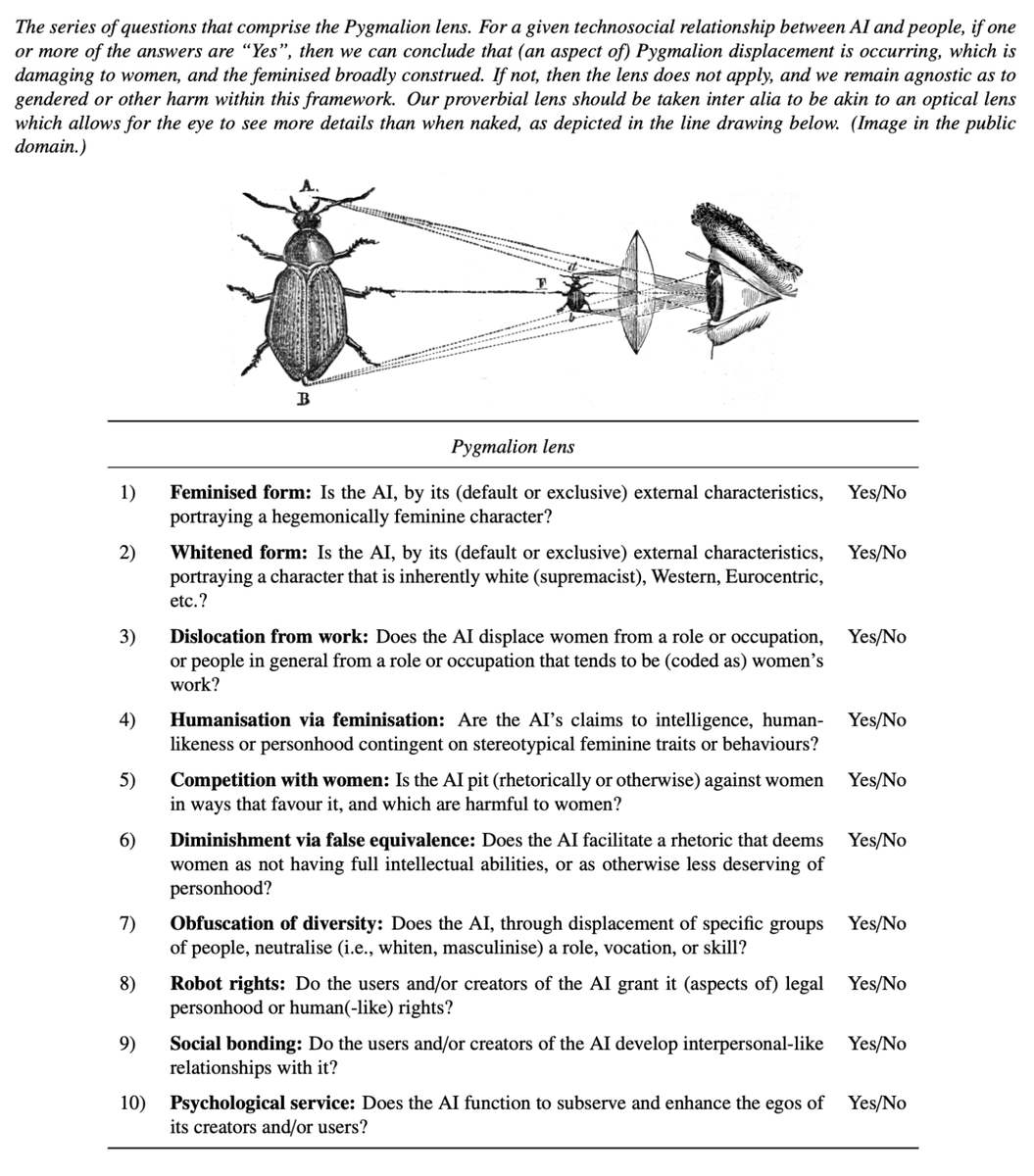
We first build our "Pygmalion lens" through examining literature, film, and other media (see the figure above, Figure 2 in https://t.co/rFbUyx8Hpb
); and then apply the lens (also above, Table 1) to current types of technologies like voice assistants to demonstrate its use. 2/4
Super proud/excited to share our [@spookkachu@kleinherenbrink] paper "Pygmalion Displacement: When Humanising AI Dehumanises Women" wherein we develop a lens to help us trace a type of harm towards women within/by AI as a field & as a technology:
https://t.co/rFbUyx8Hpb
1/4





![o_guest's tweet photo. Super proud/excited to share our [@spookkachu @kleinherenbrink] paper "Pygmalion Displacement: When Humanising AI Dehumanises Women" wherein we develop a lens to help us trace a type of harm towards women within/by AI as a field & as a technology:
https://t.co/rFbUyx8Hpb
1/4 https://t.co/UpjepWPPxH](https://pbs.twimg.com/media/FostSNrX0AUSIYA.jpg)
![o_guest's tweet photo. Super proud/excited to share our [@spookkachu @kleinherenbrink] paper "Pygmalion Displacement: When Humanising AI Dehumanises Women" wherein we develop a lens to help us trace a type of harm towards women within/by AI as a field & as a technology:
https://t.co/rFbUyx8Hpb
1/4 https://t.co/UpjepWPPxH](https://pbs.twimg.com/media/FostNFFXoAcZdQ5.jpg)



![o_guest's tweet photo. Super proud/excited to share our [@spookkachu @kleinherenbrink] paper "Pygmalion Displacement: When Humanising AI Dehumanises Women" wherein we develop a lens to help us trace a type of harm towards women within/by AI as a field & as a technology:
https://t.co/rFbUyx8Hpb
1/4 https://t.co/UpjepWPPxH](https://pbs.twimg.com/media/FostVPTX0AEW0q3.png)


