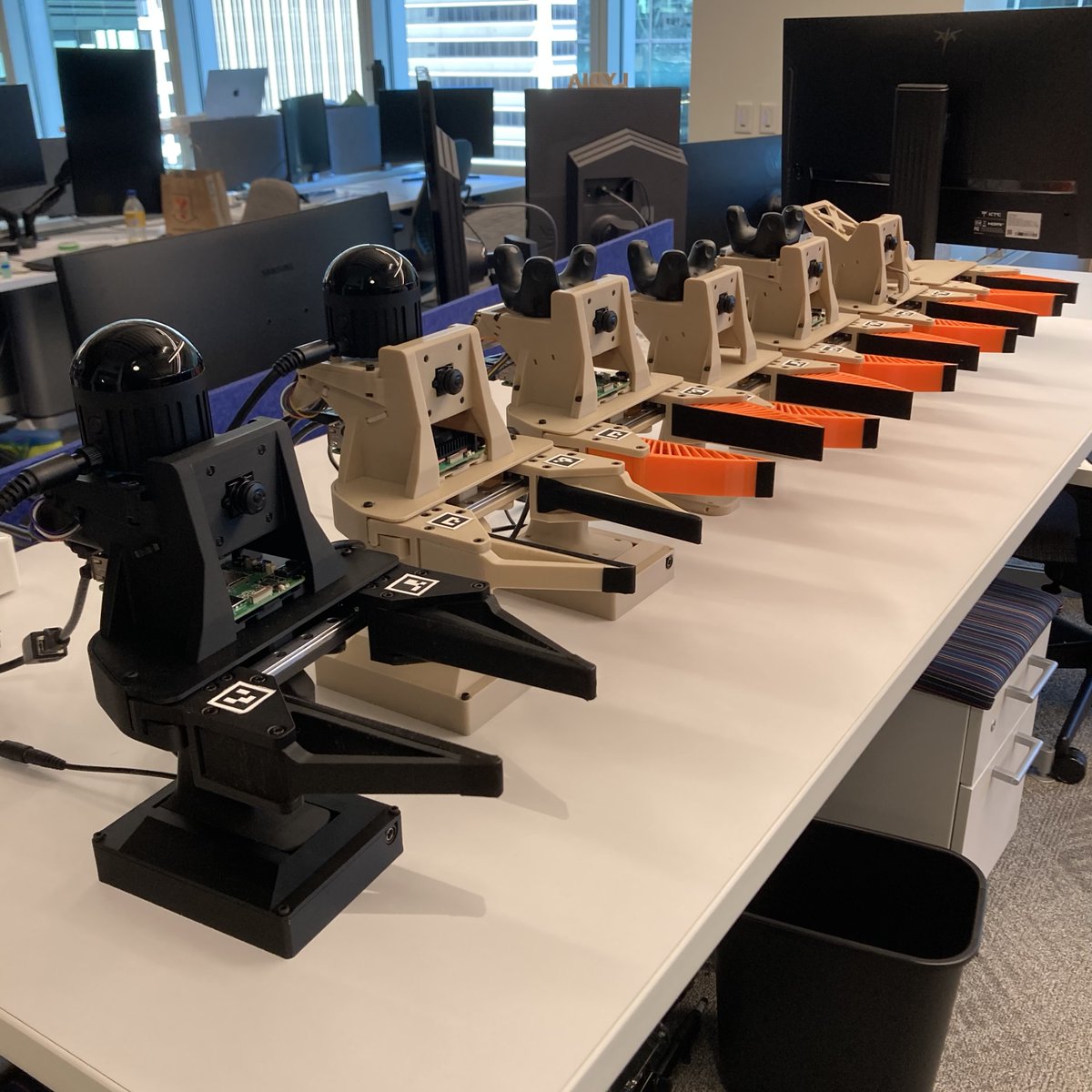
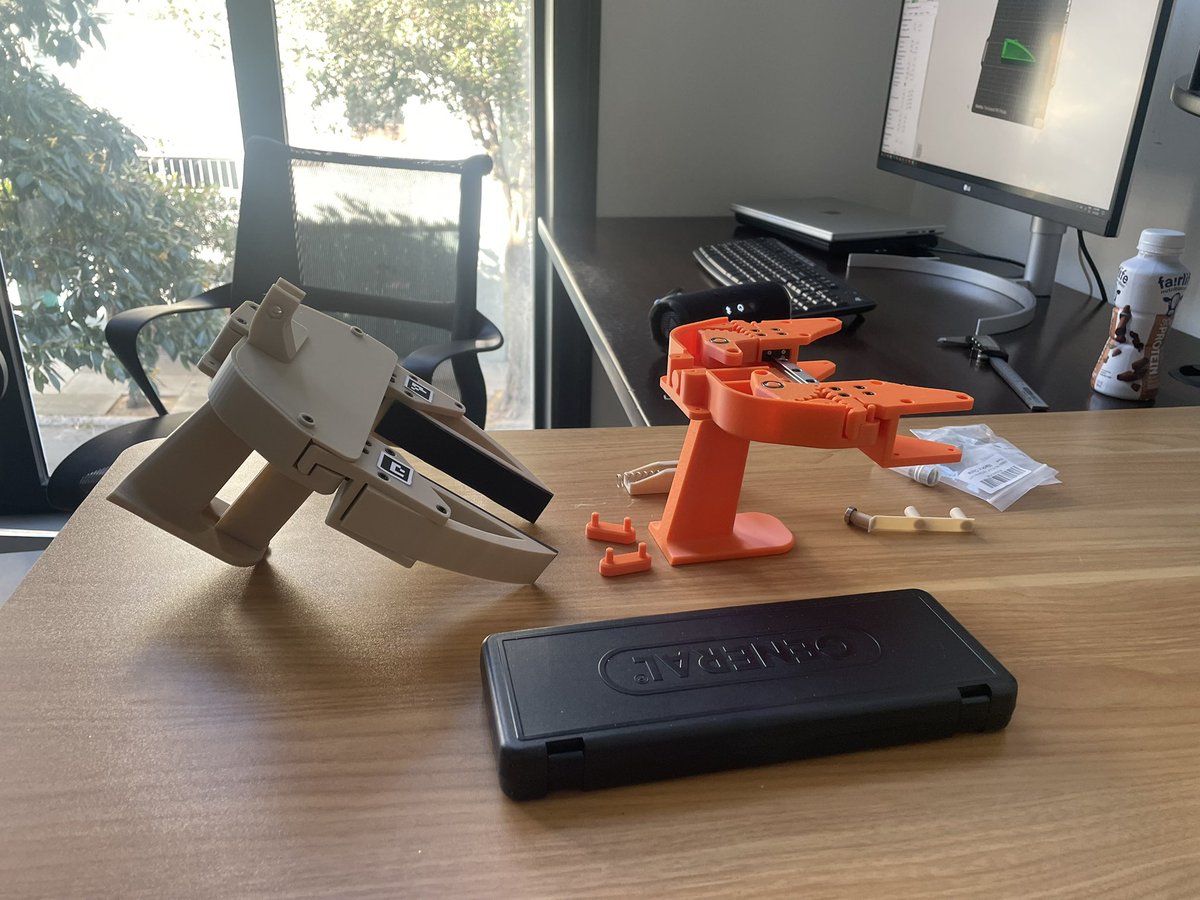
@clankrmedia@amish_sethi04 Yes, the cost can definitely be reduced. Our biggest cost drivers are the Airy LiDAR and Raspberry Pi, but UMI-Live’s modular design makes it easy to swap them out for cheaper alternatives depending on the use case. Curious which Chinese alternatives you’re referring to!
@almosttomorrowe@amish_sethi04 External contractors learned to use UMI-Live in only a few minutes. About 75% of their demos passed quality checks for our 6-DOF YAM arms.
Nearly all rejected demos had motions the arm could not reproduce. On more dexterous arms, the usability rate would likely be much higher.
UMI-Live is officially released!
Bimanual, in-the-wild data collection is now as easy as pressing a button.
Check out the full details and open-source release on our website!
https://t.co/007eOa3EZT
Can collecting robot data be as easy as 𝗽𝗿𝗲𝘀𝘀𝗶𝗻𝗴 𝗿𝗲𝗰𝗼𝗿𝗱?
Introducing UMI-Live, a 𝗰𝗼𝗺𝗽𝗹𝗲𝘁𝗲𝗹𝘆 𝗼𝗽𝗲𝗻-𝘀𝗼𝘂𝗿𝗰𝗲 bimanual UMI we made that takes you from handheld demonstrations all the way to a trained robot policy.
It's built to be easy to use. Each gripper has its own camera, LiDAR, compute, and battery, so there are no base stations to mount and nothing to calibrate in the scene. You press one button and both hands start recording.
While you keep collecting, our pipeline processes finished episodes in parallel and turns them into LeRobot datasets, automatically uploaded on Huggingface. VLAs fine-tuned mostly on this data succeed in 𝟭𝟬/𝟭𝟬 (π0.5) and 𝟴/𝟭𝟬 (MolmoAct2) trials on a real bimanual task.
We're open-sourcing everything, from the hardware designs and build guides to the code and ~40 hours of data 🧵
Can collecting robot data be as easy as 𝗽𝗿𝗲𝘀𝘀𝗶𝗻𝗴 𝗿𝗲𝗰𝗼𝗿𝗱?
Introducing UMI-Live, a 𝗰𝗼𝗺𝗽𝗹𝗲𝘁𝗲����𝘆 𝗼𝗽𝗲𝗻-𝘀𝗼𝘂𝗿𝗰𝗲 bimanual UMI we made that takes you from handheld demonstrations all the way to a trained robot policy.
It's built to be easy to use. Each gripper has its own camera, LiDAR, compute, and battery, so there are no base stations to mount and nothing to calibrate in the scene. You press one button and both hands start recording.
While you keep collecting, our pipeline processes finished episodes in parallel and turns them into LeRobot datasets, automatically uploaded on Huggingface. VLAs fine-tuned mostly on this data succeed in 𝟭𝟬/𝟭𝟬 (π0.5) and 𝟴/𝟭𝟬 (MolmoAct2) trials on a real bimanual task.
We're open-sourcing everything, from the hardware designs and build guides to the code and ~40 hours of data 🧵
AI data labeling company @AfterQuery is now valued at $3.2 billion, sources say, 10xing its valuation since April. That would make it the fastest YC company to go from inception -> unicorn. Oh, and its founders are 22 and 23 years old. https://t.co/fjALTcrR1s