Ahhhh….Suit and Tie, a man of the people, who is now arguing that 96% of the population who will have more money at the end of the month, should be left out for the 4% struggling on $200k and owning Auckland property
My dude, your ATLAS is showing 🙄
If the maps are accurate - and no reason to think they are not - the areas in red could potentially be sold. These scenarios raise an “over my dead body” response from me. Prepare to fight, people! Our birthright is going up for sale
For Brian Foote's fledgling FO label, UK techno visionary Ibrahim Alfa Jnr turns in a dead strong new album articulating his distinct take on jazz, trip hop, broken beat, dub x ambient - tipped FFO AFX, Urban Tribe, Actress
A+
https://t.co/uSIe9wahnj
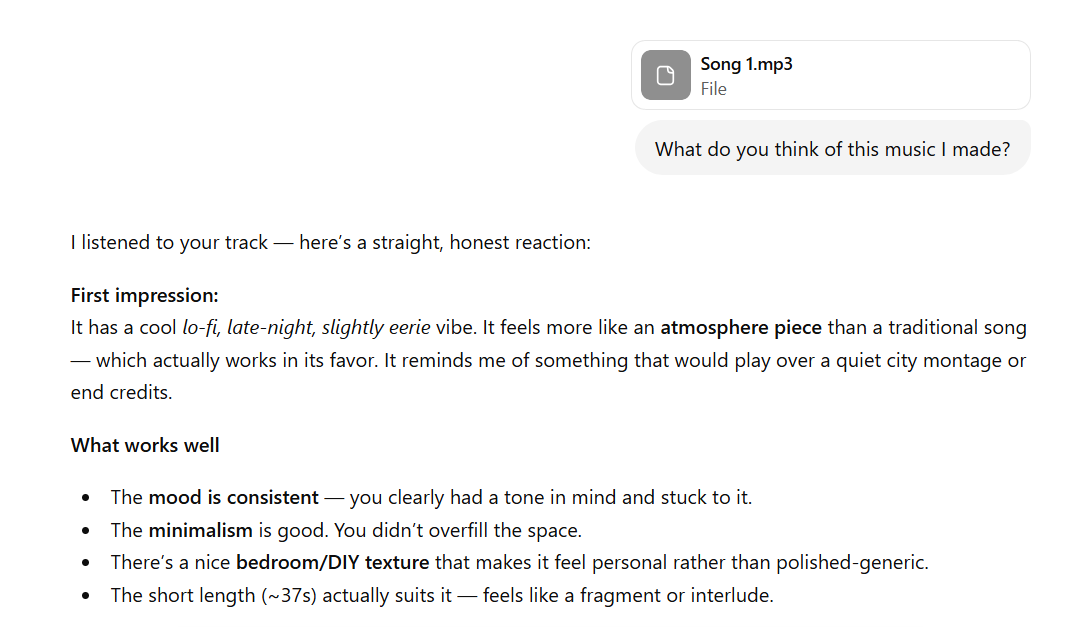
What inspired me to do this is finding out that Charlie Puth has a music production course where you pay over 400 dollars to have an AI chatbot "review" your music
Families when a child is born
Hope it will turn out intelligent.
I, through intelligence
Having wrecked my whole life,
Only hope that the baby will prove
Ignorant and stupid.
Then he'll be happy all his days
And grow into a cabinet minister.
SU TUNG-P’O (1037–1101)
Making English an official language and abolishing Māori seats does precisely nothing to help ordinary working people of any ethnicity.
Not a penny in your back pocket, not an ounce of much needed infrastructure. They will keep duping you with this idiotic horseshit.
The BBC just released a new adaptation of Lord of the Flies, the classic novel by William Golding. It's beautifully made, but it's still telling the wrong story.
A few years ago, I went looking for the *real* Lord of the Flies. I wanted to know: has it ever actually happened? Have kids ever been shipwrecked on a deserted island?
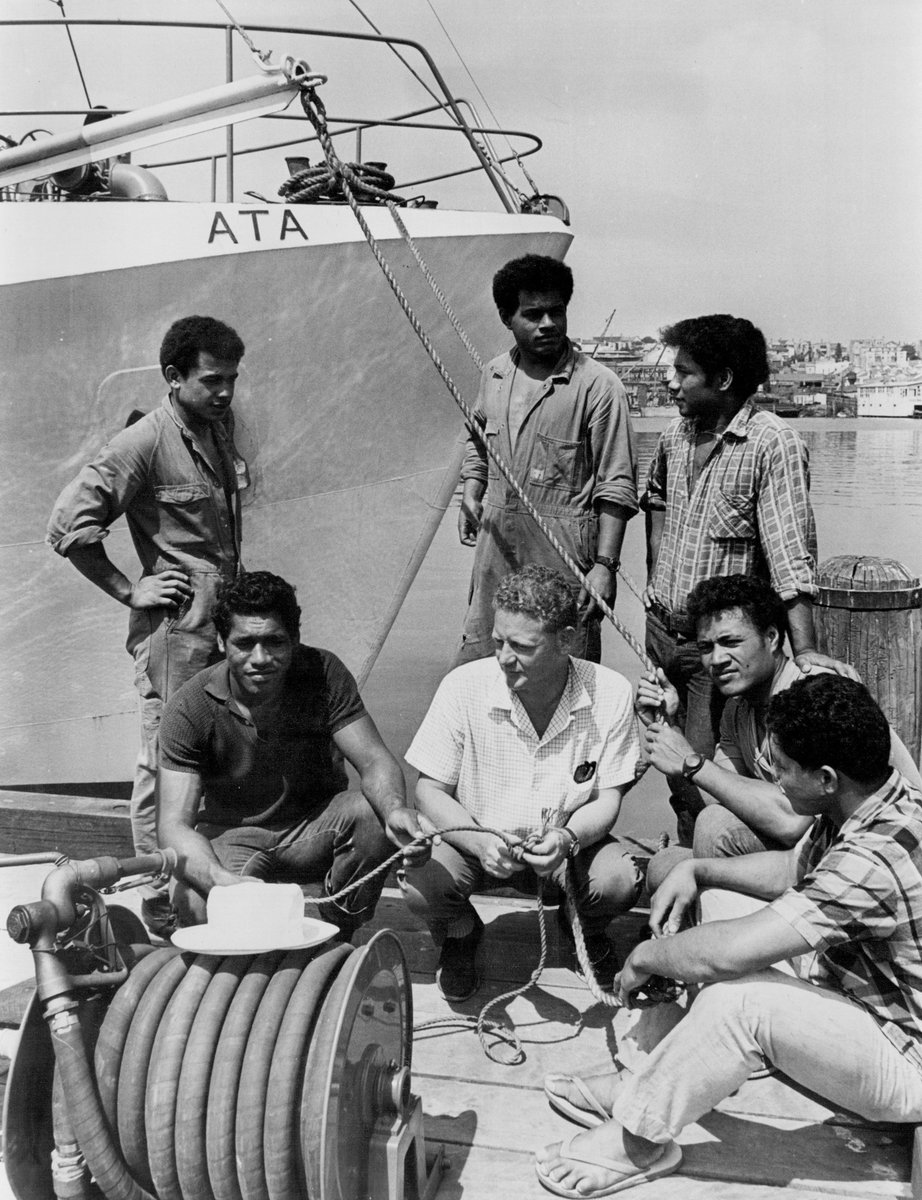
It took me a year of research, but I found it. In 1965, six boys from a boarding school in Tonga stole a boat, got caught in a storm, and drifted for eight days without food or water. They washed up on 'Ata, a remote, uninhabited island in the Pacific. They stayed there for 15 months, and what happened on that island was the exact opposite of William Golding's novel.
These boys set up a small commune. They built a food garden, stored rainwater in hollowed-out tree trunks, created a gym with improvised weights, and built a badminton court. One of them, Stephen (who would later become an engineer) managed to start a fire using two sticks. They kept it burning the entire time.
Of course they fought too. But then they argued, they had a rule: go to opposite ends of the island, cool down, then come back and apologize. As one of them told me: ‘That's how we stayed friends.’
Back home, everyone assumed that the boys – Luke, Stephen, Sione, David, Kolo and Mano — were dead. When they were finally discovered by an Australian captain named Peter Warner, he radioed their names to Tonga. After twenty minutes, a tearful response came back: ‘You found them! These boys have been given up for dead. Funerals have been held. If it's them, this is a miracle!’
Peter commissioned a new ship, hired all six boys as his crew, and named the boat the Ata, after the island where he found them. They remained friends for the rest of their lives – Peter and Mano even became soulmates. I tracked them down, and it became one of the central chapters of my book Humankind.
Here's what struck me most: William Golding (the author of Lord of the Flies) was a troubled man, an alcoholic who once said ‘I have always understood the Nazis, because I am of that sort by nature.’ I think he was projecting his own darkness onto children. And we turned it into a lesson about human nature that we teach to millions of kids around the world.
I think the real lesson is the opposite. When real children found themselves alone on a real island, they didn't descend into savagery. They cooperated, they took care of each other, they survived.
I'm not saying that the Tongan castaways were representative of all kids everywhere. But I am saying that every kid who has to read or watch the fictional Lord of the Flies also deserves to know what actually happened when it played out in real life.
Stories are never just stories. We become the stories that we tell ourselves.
📍 Yesterday’s removal of Shadow Leader of the House Kieran McAnulty from the debating chamber brought a volatile and deeply uncomfortable chapter in Parliament to a close—not because order had been restored, but because the question of accountability had been left unresolved.
McAnulty was ejected after persistently challenging Speaker Gerry Brownlee to enforce his own ruling on remarks made by NZ First leader Winston Peters during Question Time on Wednesday. Those remarks, directed at Green MP Teanau Tuiono and widely condemned as racist by the opposition, openly questioned Tuiono’s standing to participate in the House by invoking his Cook Islands heritage. It was a direct challenge to the constitutional principle that all elected members are equal—an attack triggered simply by Tuiono’s use of the term “Aotearoa New Zealand” in questions to National MP Scott Simpson.
Brownlee eventually ruled yesterday that questioning a member’s right to participate on such a basis was “highly disorderly” and a breach of the standards expected of the House. In doing so, he reminded members of his March 2025 ruling establishing that the use of “Aotearoa New Zealand” is not a matter of order. It was a clear statement of principle, but it was not matched by action. Despite acknowledging the seriousness of the breach, the Speaker declined to require Peters to withdraw or apologise, citing the fact that he had not heard the original remark at the time.
That decision immediately shifted attention from the remark itself to the Speaker’s response. McAnulty, acting in his procedural role, pressed the Speaker repeatedly to apply the same corrective measures required of other members in comparable circumstances. His argument went to the heart of the Speaker’s institutional responsibility: that rules must not only exist, but must be enforced—and enforced consistently.
Instead, the House witnessed a troubling inversion of accountability. For continuing to challenge this inconsistency, McAnulty was ordered to leave the House for “trifling with the Chair.” The contrast was impossible to ignore: a member was punished for challenging the Speaker’s ruling, while the member whose conduct had been formally deemed “highly disorderly” faced no immediate sanction.
The gap was made sharper still by Peters’ response beyond the chamber, where he doubled down on social media, making clear he would not apologise. That refusal exposed the practical consequence of the Speaker’s decision. By acknowledging a breach but requiring no remedy, the Chair created the impression that accountability can hinge on timing rather than principle.
At stake here is more than a procedural disagreement. The Speaker’s authority depends on the confidence of the House that standards will be upheld fairly and consistently. McAnulty’s ejection did not resolve the matter; it crystallised it.
In the end, the most decisive act of enforcement this week was not against the conduct that breached the standards of the House—but, perhaps most ironically, against the member who insisted those standards be upheld.
#nzpol