The Ninth Circuit just ruled that Oregon could not force foster/adoptive parents to affirm a child’s gender identity—it’s unconstitutional compelled speech and a religious burden.
If the state can’t impose its orthodoxy on *foster* parents, it should follow that it may not rip a child from her biological parents under the same basic viewpoint-discriminatory rationale in CA.
@AlyashchenkoX's 14-year-old daughter was stolen by the State of California because she wouldn't affirm her transgender delusion.
She was fed into foster care by the 501(c)(3) nonprofit, EA Family Services (trans flag displayed on website).
Who is paying for it? You are.
Based on publicly available financial information, 99.7% of their $41 million annual revenue in 2024 comes from government grants (both state and federal).
Is it any wonder why the California foster system is so keen on stealing children from loving parents who don't "affirm" they delusions?
Of course not. They're financially and ideologically incentivized to steal as many children as possible - the more children in foster care, the more money private nonprofits get in return.
The question is why has the Trump administration not withheld federal tax dollars from this system of legalized kidnapping.
If they can do it with the children's hospitals who mutilate kids, why can they not do it with the foster care companies who steal them?
Counterpoint: the Justices are good at figuring out what they think about a case of this magnitude, and Neal’s four coaches had zero effect on the outcome.
I don’t think I have ever seen a SCOTUS advocate claim so much personal credit for a win before…yeesh.
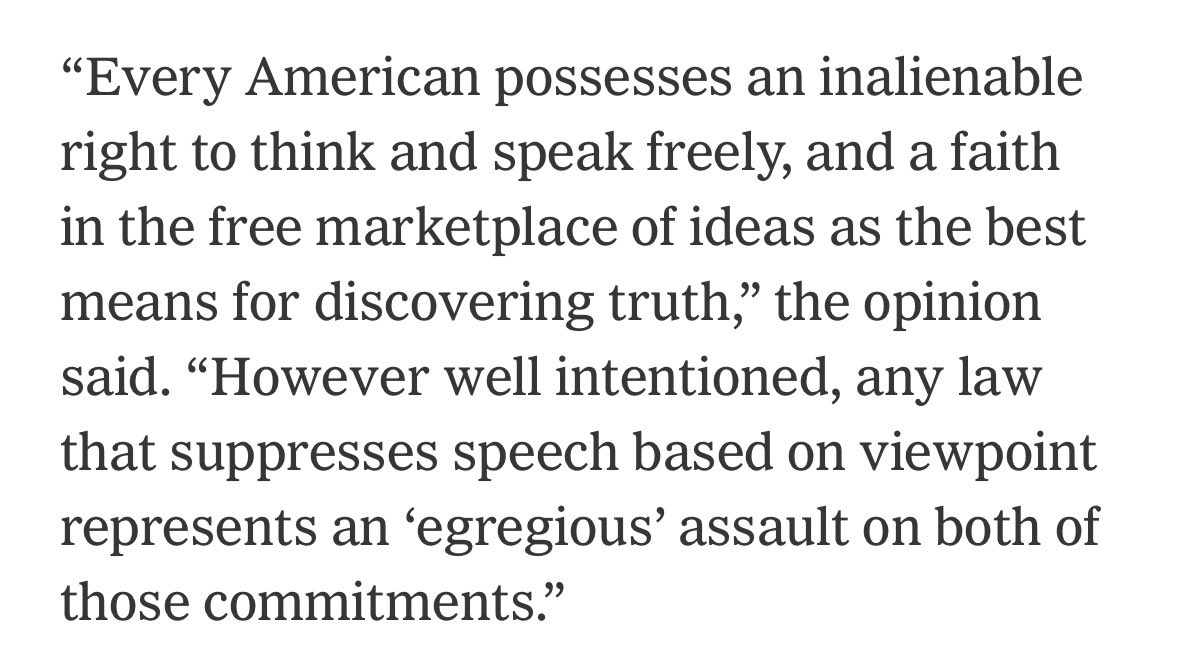
“The First Amendment stands as a bulwark against any effort to prescribe an orthodoxy of views, reflecting a belief that each American enjoys an inalienable right to speak his mind and a faith in the free marketplace of ideas as the best means for finding truth. Laws like Colorado’s, which suppress speech based on viewpoint, represent an egregious assault on both commitments.” - Chiles v. Salazar
@MorrellMDmph@DrNWLuna@EithanDHaimMD Interesting conversation. Just catching up.
To go with the OP, your sea-animal / turtle example is worlds away coding for *disease / illness X* that either (a) doesn't actually exist in any stretch of the imagination, or (b) wouldn't have existed but for the intervention.
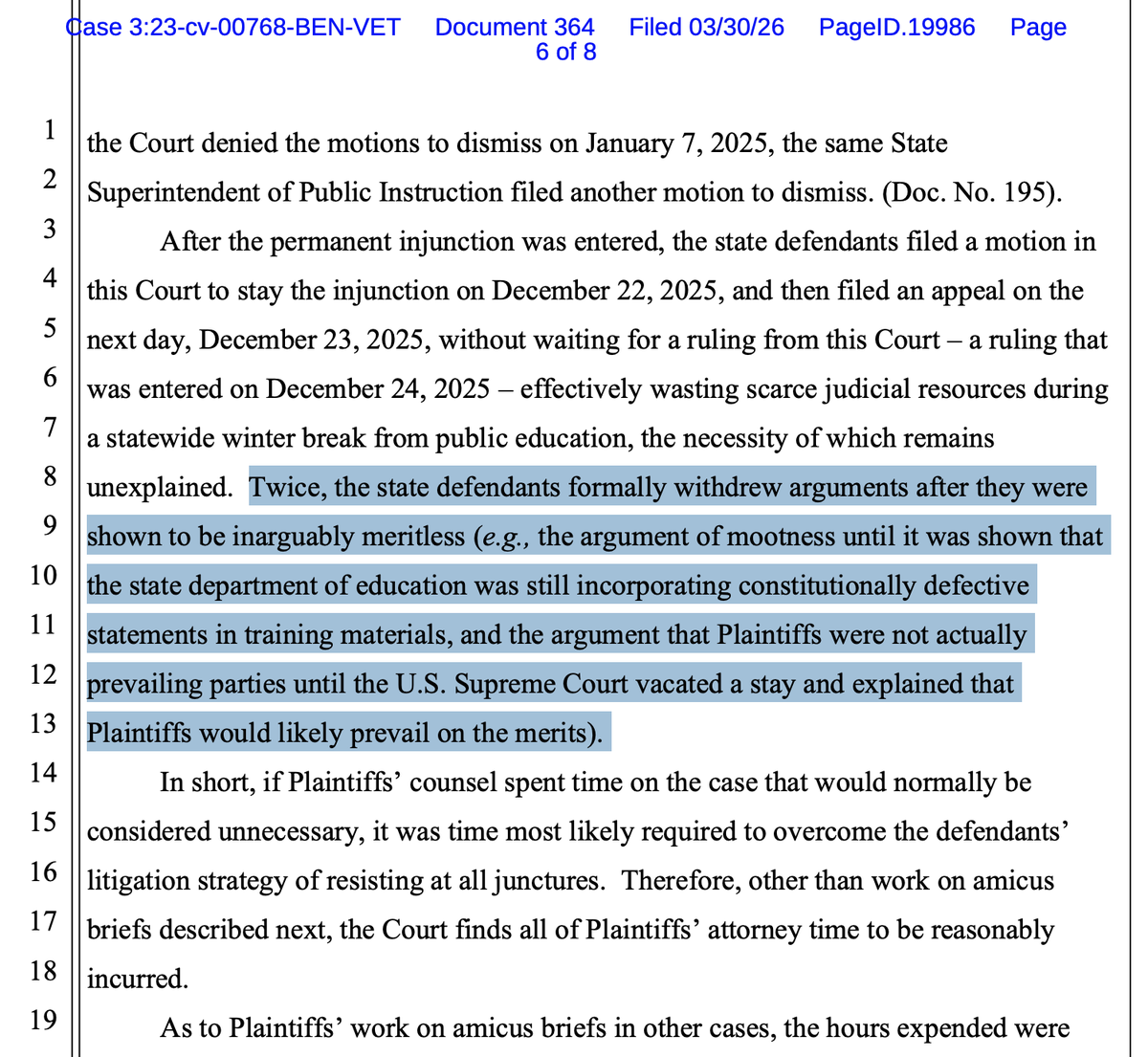
$4.5M attorneys' fees awarded in Mirabelli case, the one involving parents / teachers suing to enjoin CA school districts' secret gender transitions.
The court refers to CA defendants' meritless arguments on mootness and improper / excessive litigation tactics
One of the best federal judges I ever tried a case in front of was E. Robert Coyle in the Eastern District of California.
Before being appointed he was a business transactions attorney.
Never tried a case in his life.
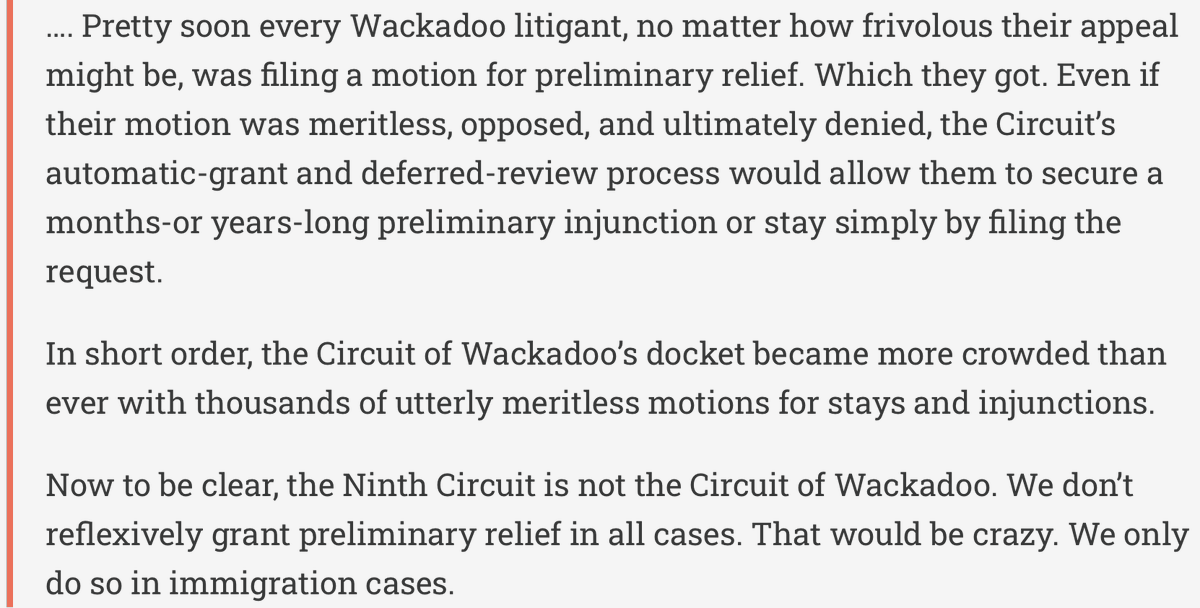
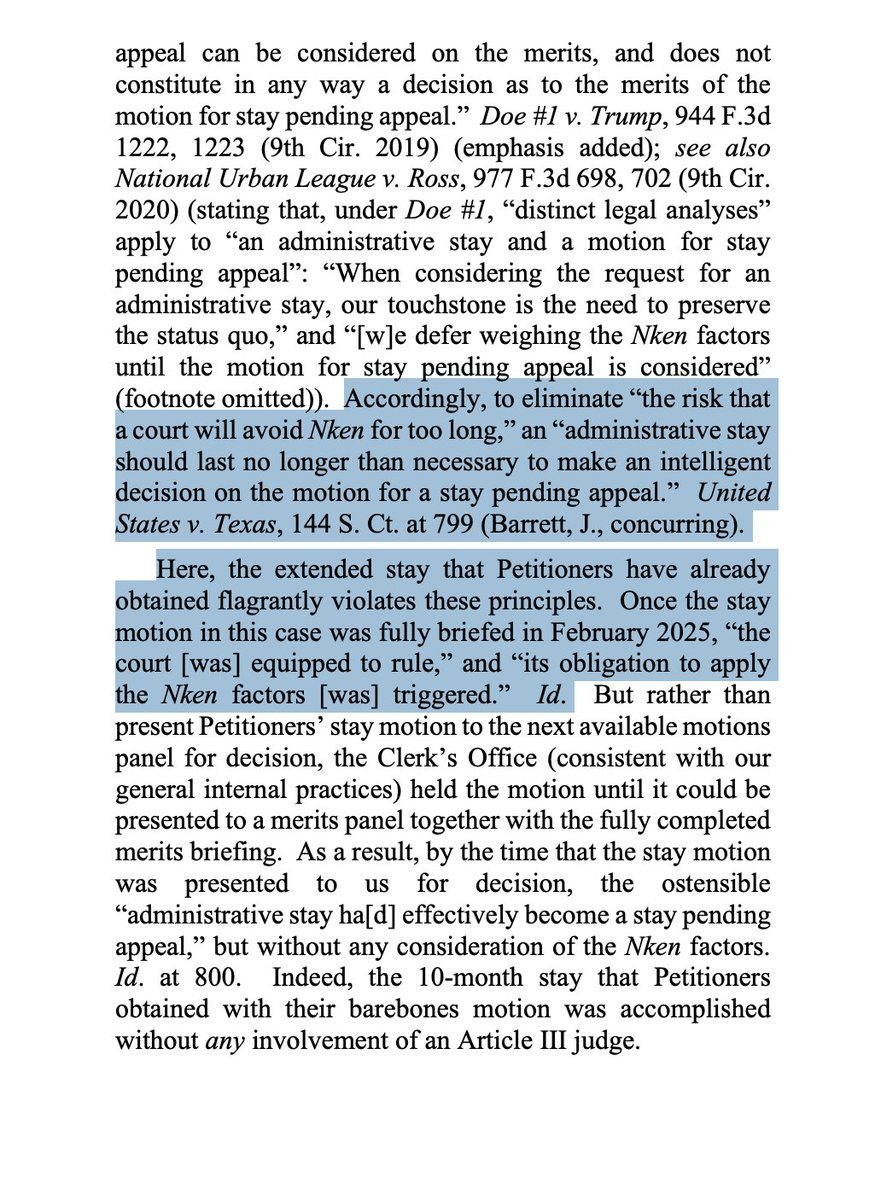
@shipwreckedcrew The most shocking aspect of this whole case, though, that is making headlines in legal circles is how the en banc panel literally erased this sound and valid published opinion with *zero* rebuttal substantively as to why these internal circuit procedures are unlawful.
The panel said the 9th Cir. practice "flagrantly violates" the core principles governing both administrative stays and full stays pending appeal.
It also violates the standards and timelines under Nken for a substantive stay pending appeal.
The whole point of an administrative stay is that it's a short-term stopgap device to "freeze legal proceedings" till the court can fully consider a stay pending appeal or some other emergency relief.
In short, the 9th Circuit established a practice through its general order where an administrative stay was automatically issued and then transformed into a stay pending appeal given that it had effect for a long time without any showing of the elements required for a stay pending appeal.
I was revising and inadvertently deleted it (apologies). I'll try to recreate.
The panel said the 9th Cir. practice "flagrantly violates" the core principles of administrative stays, citing Justice Barrett's concurrence. See below.
The whole point of an administrative stay is a short-term stopgap device to freeze legal proceedings" till the court can fully consider a stay pending appeal or some other emergency relief.
@EWess92 Administrative stays "can influence the stopgap decision even if they do not control it" -- Justice Barrett in her great overview of administrative stays in United States v. Texas (cited in the order you posted above)
Did no one think this through? Is the consequence of this complaint that all government attorneys must not only decide whether they think they have legal authority to do something, but they must also ask, "Is the D.C. Bar going to agree with me?"
It never was evidence from the start, was it? It was some strange combination of feelings, ideology, and highly biased anecdotal evidence.
And the cult has spawned so many peripheral industries and institutional frameworks from education to medicine that all depend on each other (not unlike the medical societies that cite each other's standards, or the courts that cited them all) for their existence.
But at bottom, it's just feelings and ideology untethered from science or reality given so much weight that the construct itself is imbued with the power to erase sex and fairness and medical necessity.
Rant over -- Too much coffee today
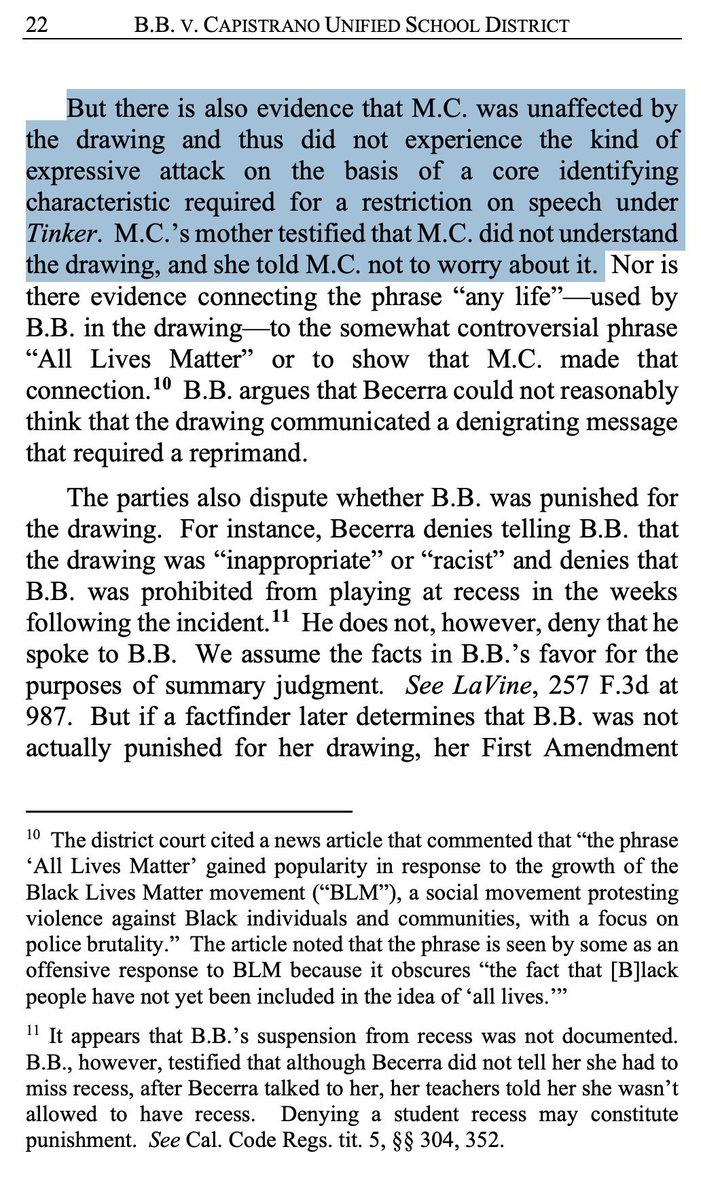
Footnote 11 reveals some evidence that the first grader (BB) was also punished by not being allowed recess (she testified that her "teachers told her she wasn't allowed to have recess," and that this occurred after the school principal had corrected her for the drawing.
In same note, panel held that "[d]enying a student recess may constitute punishment."
This is where the punishment evidence may be in dispute sufficiently to prevent SJ for the plaintiff. But the appeals court didn't note any dispute about the censorship aspect of the discipline, or at least wasn't clear about if this was disputed. /2
To clarify, I don't think it's close call on the question whether the drawing interfered w/ and invaded the other student's rights, i.e., the 2nd prong of Tinker as applied should *not* result in a genuine issue on the (apparently) undisputed facts (the drawing is undisputed, and it's undisputed that the other student didn't understand it and was not affected)
But the appeals court inexplicably cites the parent's obvious hyper-reactivity to the benign drawing received by her child as relevant evidence to create a dispute about whether invasion or interference w/ her child's rights occurred—even though the child "was unaffected" by the drawing and "did not understand" it. This seems improper to me and overly deferential to a sort of hypersensitive, unrealistic standard that favors censorship over even *perceived* (not actual) slights. /1