@AaronBMacLean@schoolofwarpod Looking forward to reading this, right now I'm listening to an audiobook called Red Tide, All fiction of course, but it's pretty sobering nevertheless. It's all about how the next war could start because of chips
@JasonRomano ots of people are posting about this, I think we're going to need an update from someone. 🤣 Can't imagine what they're thinking after seeing this go viral?
On this day in 1943, an American submarine was sunk in the Pacific, and a senior officer aboard made a terrible choice. He knew secrets so vital that he could not risk being captured and made to talk, so he rode the sinking submarine down to the bottom rather than let himself be taken alive. This is the loss of USS Sculpin and the sacrifice of Captain John Cromwell.
The Sculpin was a US Navy submarine on patrol near the Japanese stronghold of Truk, part of the great American push into the Central Pacific. Aboard her, in addition to her own crew and captain, rode Captain John Cromwell, a senior officer commanding a group of submarines, who was along to coordinate a coordinated attack. And Cromwell carried in his head some of the most dangerous knowledge in the Pacific. He knew the secret of the major Allied offensive about to open in the Gilbert Islands, and, far more sensitive still, he was aware of the Allied ability to break Japanese codes, the priceless intelligence secret that was helping win the war.
On November 19, after tracking a Japanese convoy, the Sculpin was caught by a Japanese destroyer and savagely depth charged. Badly damaged, she was forced to the surface, where she had no choice but to fight it out with her deck gun against a far more powerful warship. It was hopeless. The destroyer's fire smashed into the submarine, killing men and wrecking the boat, and the surviving crew were ordered to abandon ship and scuttle her, opening the valves to send her to the bottom.
Here Cromwell faced his decision. He could climb out and go into the water with the others and be taken prisoner. But he knew what he knew. If the Japanese captured him and realized who he was, they might torture or drug him and pull from him the secrets of the coming offensive and the broken codes, knowledge that could cost thousands of lives and undo one of the Allies' greatest advantages. He could not take that risk. So Cromwell chose to stay aboard the sinking submarine and ride her down into the depths, deliberately giving his life to make certain the secrets died with him.
The Sculpin went down, taking Cromwell and others with her. A number of the crew did survive and were captured, but their ordeal was not over, and here the story takes a final, almost unbearable twist. The prisoners were loaded aboard a Japanese aircraft carrier to be taken to Japan. That carrier was torpedoed and sunk on the way by another American submarine, the Sailfish, and many of the Sculpin survivors drowned, killed by their own side's torpedoes. And the Sailfish had once been the Squalus, a sunken submarine that the Sculpin herself had helped locate and rescue men from years before the war. The boat Sculpin had once saved now unknowingly sent Sculpin's survivors to their deaths.
For his supreme sacrifice, choosing death to protect the secrets that could have cost so many lives, John Cromwell was posthumously awarded the Medal of Honor, the most senior American submariner to receive it in the war. He had made the hardest choice a man can make, to go down in the dark with his ship so that others might live and the war might be won, on this day in 1943.
Fighting cancer is… uh…not as fun as you might expect, but…working on a book with your kid is pretty great. Over the past few months, my daughter Alex and I wrote a book in hospital hallways — Redeem The Time. It’s not a cancer memoir (woof that’s boring) — but some of our reflections on time, habits, workaholism, and family. We’re all on the clock, and although death is absolutely wicked, the strange “gift of dying” is that it shatters our self-delusions about control.
https://t.co/FxJvv2h0a2
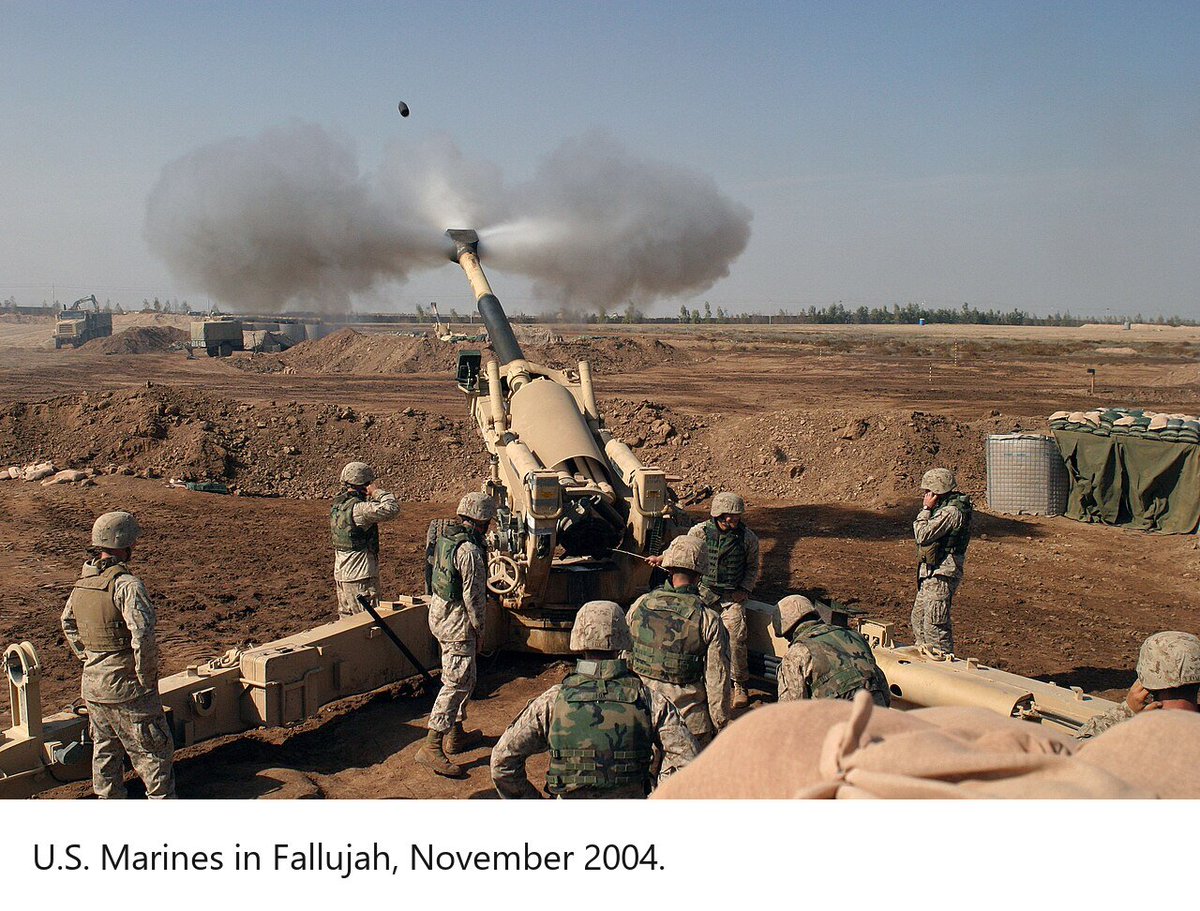
There is a photograph from Fallujah in November 2004 that hangs on the wall of almost every U.S. Marine Corps barracks in the world.
It shows First Sergeant Bradley Kasal being carried out of a concrete house covered in blood from the waist down, with his right hand still locked tightly around his pistol and his index finger straight along the frame.
On November 13, 2004, three young Marines were trapped inside a fortified concrete building that became known as the Hell House. A wounded Marine staggering out the front door told Kasal that his friends were still pinned down inside.
Kasal did not wait for a backup platoon. He grabbed his rifle and charged through the doorway into a hail of AK-47 fire coming down the stairs.
After killing an insurgent at close range to reach a trapped young Marine named Private Alexander Nicoll, bullets fired through the doorway shattered both men's legs. Neither of them could stand.
Then an insurgent on the upper landing tossed a live fragmentation grenade straight onto the concrete floor inches away from them.
Why could Kasal not kick the grenade away or pull the young Marine out the door?
Because four concrete walls boxed them into a tiny room with their legs broken, and kicking a live grenade in a cramped corner would only bounce the blast into their faces.
With less than two seconds left, First Sergeant Kasal rolled on top of the young private, wrapped his arms around him, and absorbed the entire explosion with his own body.
Seven AK-47 bullets and forty-three pieces of jagged grenade shrapnel tore into Kasal's legs and back. He lost sixty percent of the blood in his body.
When Marines finally breached the house and rushed to treat him, Kasal refused medical attention until the younger Marines were carried out first.
As two Marines lifted him into the sunlight, half-conscious and bleeding out, he still held his Beretta M9 pistol at the ready in case the enemy attacked the men carrying him.
Rank in the Marine Corps is not a privilege. It is a promise of who takes the blast first.
🚨 JUST IN: America has lost its OLDEST PEARL HARBOR SURVIVOR. 🇺🇸🙏🏻
Freeman Johnson died Saturday at his home in Centerville, Massachusetts, at 106 years old.
On December 7, 1941, the 21-year-old Navy fireman was below deck on the USS St. Louis, working inside a steam drum while the attack raged above him.
Years later, he watched JAPAN'S SURRENDER from the mast of the USS Iowa.
He was there for the start of the war and for the end of it.
He was a quiet sailor who just did his job.
Fair winds, Freeman. RIP