Introducing Sakana Fugu: A full multi-agent orchestration system accessible via a single model API.
Our ‘Fugu Ultra’ model matches the performance of Fable and Mythos, delivering frontier capability without the risk of export controls.
Try it: https://t.co/hhO6qTawgb 🐡
Lo que se hizo en Zapopan merece reconocimiento. Más de 250 mujeres de Etzatlán tejieron una obra monumental que hoy luce rumbo al Mundial 2026. Trabajo, talento, identidad y tradición mexicana. Quedó espectacular. Felicidades a quienes hicieron posible este proyecto.
@ElBuenChico_@marccrosas Obviously no puede, su imagen le pertenece a un contrato con algún privado.
El fotógrafo debía entenderlo rápido al ver que TRAEN SU PROPIO FOTÓGRAFO.
Denota más su falta de experiencia en el medio.
Introducing Project Glasswing: an urgent initiative to help secure the world’s most critical software.
It’s powered by our newest frontier model, Claude Mythos Preview, which can find software vulnerabilities better than all but the most skilled humans.
https://t.co/NQ7IfEtYk7
Con la presencia de todos sus miembros, la Junta de Gobierno del #BancodeMéxico decidió por mayoría disminuir la Tasa de Interés Interbancaria a 1 día, a un nivel de 6.75% con efectos a partir del 27 de marzo de 2026. Consulta el comunicado en: https://t.co/JKJnzGfjcB
Introducing TurboQuant: Our new compression algorithm that reduces LLM key-value cache memory by at least 6x and delivers up to 8x speedup, all with zero accuracy loss, redefining AI efficiency. Read the blog to learn how it achieves these results: https://t.co/CDSQ8HpZoc
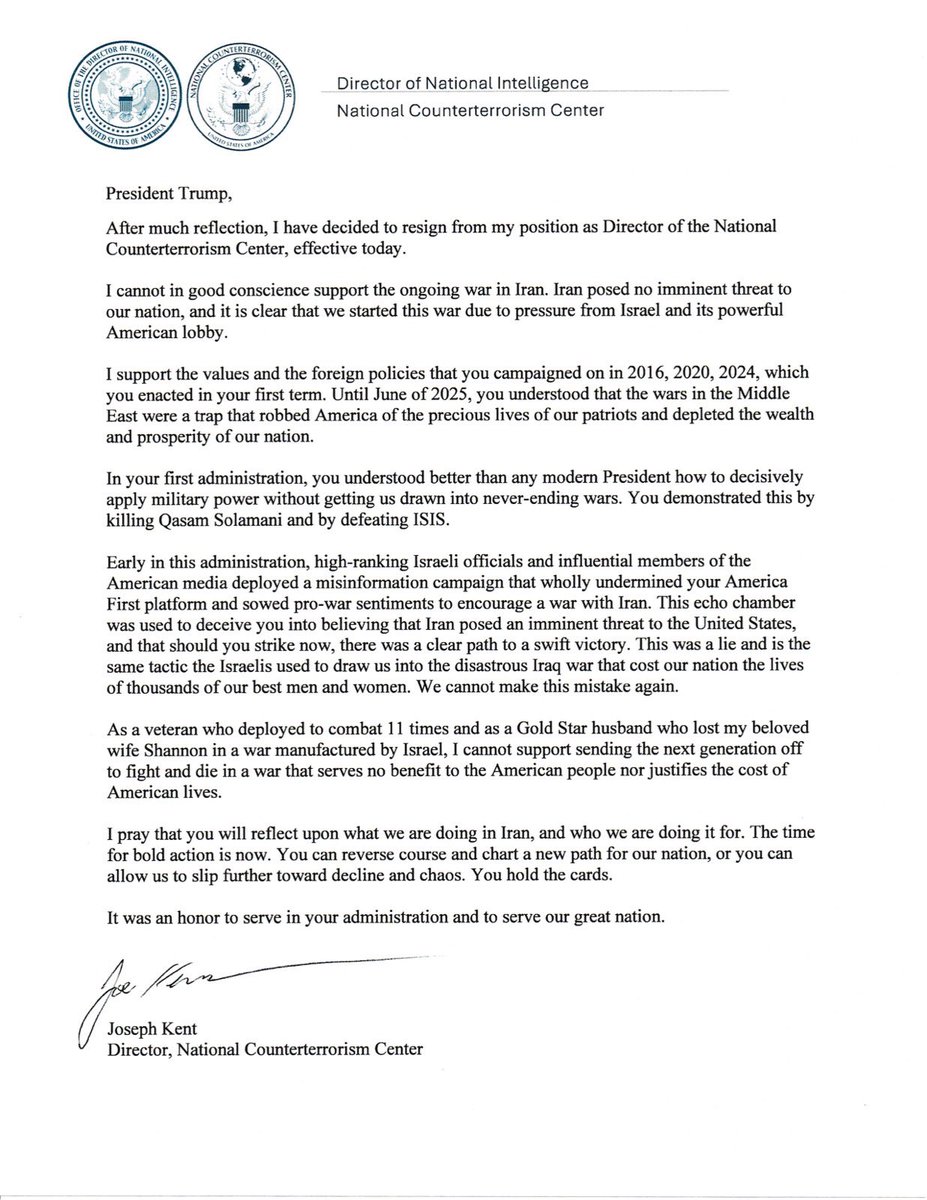
After much reflection, I have decided to resign from my position as Director of the National Counterterrorism Center, effective today.
I cannot in good conscience support the ongoing war in Iran. Iran posed no imminent threat to our nation, and it is clear that we started this war due to pressure from Israel and its powerful American lobby.
It has been an honor serving under @POTUS and @DNIGabbard and leading the professionals at NCTC.
May God bless America.
Anthropic is valued at $380 billion.
For nearly a year during its fastest growth period, their entire marketing operation was one guy.
Austin Lau, a non-technical growth lead, was running paid search, paid social, email & SEO completely solo.
Just Claude Code & some insane automation he built himself without writing a single line of code.
Here's the exact workflow:
- Export ad performance CSVs into Claude Code
- AI flags what's underperforming
- Sub-agent 1 writes headlines
- Sub-agent 2 writes descriptions
- Figma plugin auto-swaps copy into 100 ad templates
- MCP server pulls live Meta data to close the loop
Output went up 10x.
Creation went from 2 hours to 15 minutes.
Conversion rates beat industry average by 41%.
This isn't AI helping a marketing team.
This is one person replacing what used to be a 50-person department.
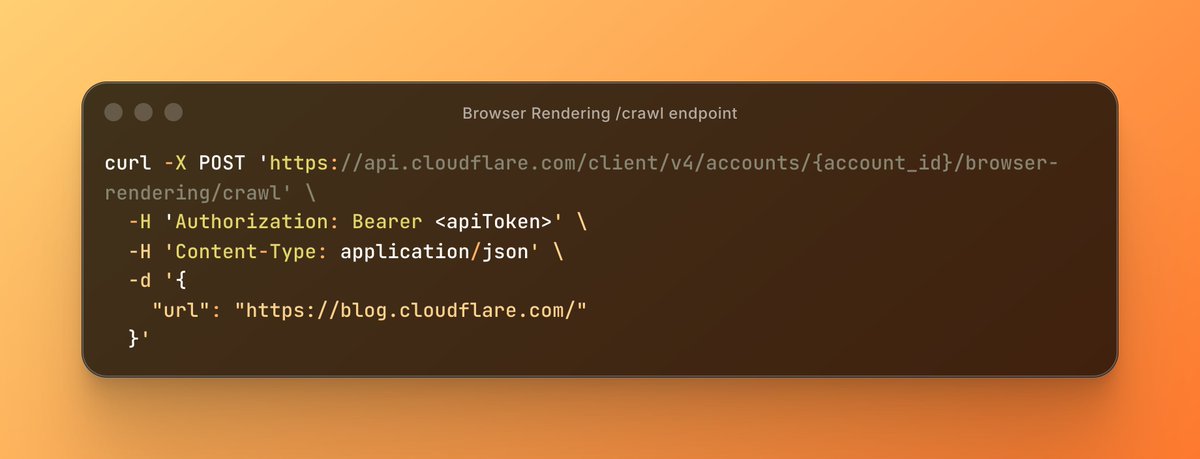
Introducing the new /crawl endpoint - one API call and an entire site crawled.
No scripts. No browser management. Just the content in HTML, Markdown, or JSON.
Our Mexico City desk can confirm that Pemex and senior Mexican government officials privately acknowledge that the spike in crude prices near $100 and the paralysis risk in the Strait of Hormuz expose a structural vulnerability in Mexico’s energy system that is far more severe than the government publicly admits.
Roughly 20% of global oil flows move through the Strait of Hormuz, making any disruption a systemic shock to global energy markets. The current price surge reflects the market beginning to price in that risk. If Iran mines the strait or tanker traffic remains constrained, the shock would not remain confined to oil markets. It would propagate through refined fuels, petrochemical products, insurance, and global trade simultaneously.
Mexico enters this environment with an unusually fragile energy balance. Despite being an oil producer, the country depends structurally on imported fuels and imported natural gas. The United States exports more than 1.9 million barrels per day of refined petroleum products to Mexico, covering over 70% of the country’s gasoline, diesel, and jet fuel consumption. In parallel, CFE´s electricity production has become structurally dependent on U.S. pipeline gas.
Approximately 74% of Mexico’s natural gas demand is satisfied through imports from the United States, most of it flowing from Texas shale basins. This dual dependency means Mexico’s energy security is effectively externalized.
Under normal conditions, that dependency is manageable because U.S. supply is abundant and cheap. In a war-driven energy shock, however, the system becomes exposed. Oil above $100 immediately raises refined product prices in the Gulf Coast market where Mexico buys most of its gasoline. At the same time, global LNG competition and oil-linked contracts tend to push natural gas prices upward. Mexico does not maintain significant strategic reserves of gasoline or natural gas to buffer these shocks. If global prices spike while domestic prices are artificially suppressed, the imbalance manifests not as higher prices but as shortages.
The current discussion inside the Mexican government about using the IEPS tax mechanism or pressuring fuel distributors to hold gasoline below 24 pesos per liter reflects exactly this risk. Fiscal subsidies or price caps can temporarily dampen inflation, but they do not change the physical supply constraint. When governments suppress prices during supply shocks, consumption remains high while suppliers reduce deliveries or divert fuel to higher-paying markets. This results in shortages, rationing, and fiscal strain. Mexico experienced a version of this dynamic in 2022, when fuel subsidies cost the treasury more than $15 billion.
The strategic concern becomes more acute if the Hormuz crisis escalates into a prolonged conflict between Iran and the United States. In that scenario, Washington’s political and military focus would shift heavily toward the Middle East. Energy markets would tighten globally, and the United States would prioritize domestic stability and allied supply chains critical to its own industrial base. Mexico’s heavy reliance on U.S. fuels and gas means that any tightening of Gulf Coast supply would immediately propagate south through pipeline and shipping networks.
The paradox is that Mexico remains an oil producer while lacking fuel security. The country produces crude but lacks sufficient refining configuration and capacity to meet domestic demand, forcing it to export crude while importing gasoline and diesel. At the same time, the power sector increasingly runs on imported natural gas. This combination leaves Mexico exposed to exactly the kind of external shock now emerging from the Middle East.
If the Sheinbaum administration does not begin securing strategic fuel reserves, alternative supply arrangements, or emergency storage capacity, the country risks entering a supply shock environment within weeks if the conflict persists. Rising global prices, combined with domestic price suppression, would push Mexico toward the classic symptoms of energy stress: fiscal drain, fuel shortages, electricity cost spikes, and inflationary pressure across transport and agriculture.
The problem is no longer oil prices alone. It is the structural fragility of Mexico’s hydrocarbon balance. A prolonged disruption in global energy markets would expose how little buffer the country has built into its system. Without rapid contingency planning, the combination of global war risk, price suppression, and external energy dependence could push Mexico into a full supply shock scenario.