Episode 3 of Dharma Dīpaḥ
Once there lived a humble Brahmin named Ganapati Bhatta, whose heart belonged entirely to Ganesha. Though he revered all deities, he longed to behold only his beloved Gajanana.
During the sacred Snana Yatra at Puri, he stood before Jagannath and prayed silently, "O Bhagavan, if You are truly the Supreme dwelling in all forms, bless me with the vision of Ganesha."
Ishvara heard his unspoken prayer.
The next day, devotees witnessed the divine Hati Vesha (Gajanana Vesha), Jagannath adorned in the form of an elephant. Overwhelmed, Ganapati Bhatta realized that Ishvara had not become someone else; the One Supreme had simply revealed Himself in the form His devotee's heart could embrace.
This beautiful tradition reflects a timeless Vedantic truth: the formless Brahman responds to every seeker according to their bhava.
Shubh Ratri 🙏🏽
How many examples do you need, Hindu girls?
How can you accept to live in a tent after growing up as a free bird? After using all the freedom given by your parents, ditching them for a Muslim guy who wants to keep you in a burqa and as a children making machine?
Has anyone gifted her freezer or Suitcase?
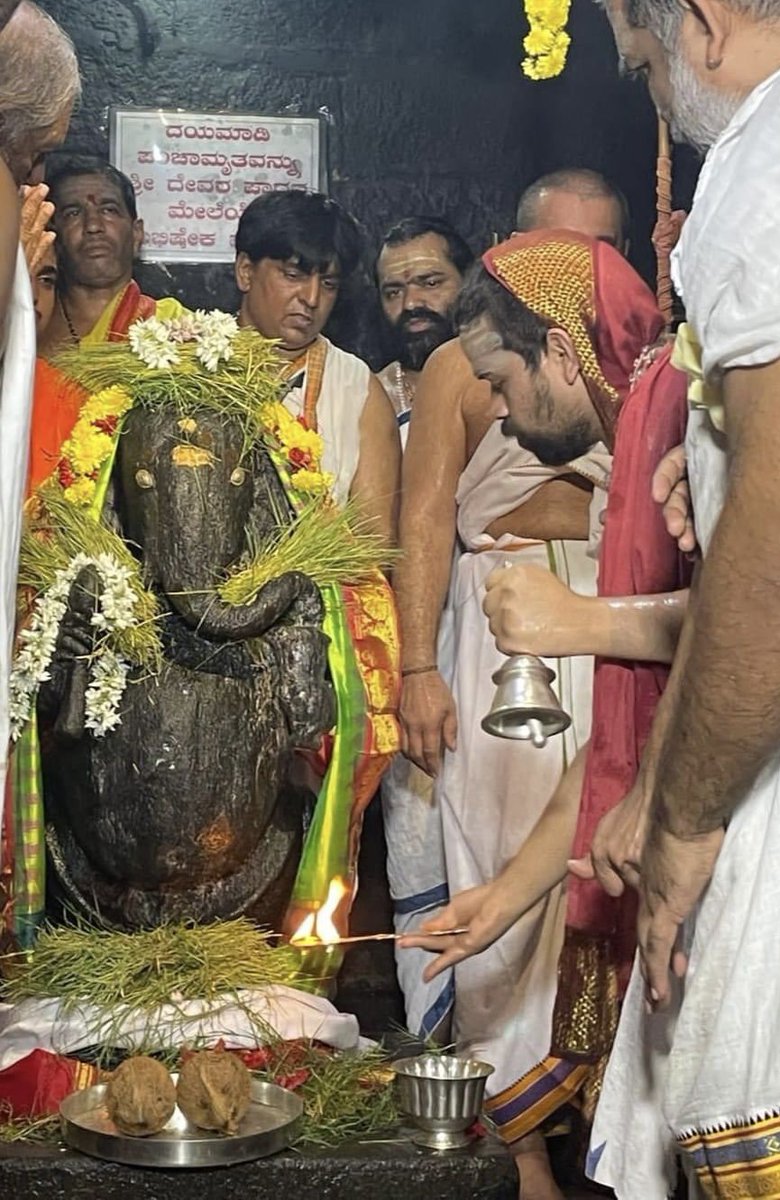
Why is Tulasi not offered to Ganesha
Ganesha is the one who removes all obstacles, but for Ganapati Pooja Tulasi leaves are not taken. Durva grass is offered. Here is the reason
Eri Katha Shri Ramar at Maduranthakam, Tamil Nadu 🪷
Significance of why स्ववलयम् is highest and purest in wet clothes as per Shastras
स्ववलयम् in Sanskrit means, our own aura which is like a protection shield around us, as we perform the Poojan of Bhagwan after taking a bath. In Marathi स्ववलयम् is called सोहळ. It is actually the purity shield around us.
But when a person comes out wet after taking a bath, for instance, after a Ganga nadi Snaanam or any river Snaanam, or even at home, his/ her स्ववलयम् or purity is the highest. While being wet if the person performs the Poojan of Bhagwan or Abhishekam of Bhagwan, it is extremely pure and bestows immense blessings.
That is the reason, in big Teertha Kshetrams, many people do a Snaanam in the Ganga or other rivers and roll and perform the Pradakshina or Parikrama of Bhagwan. Even in Kashi and Rameshwaram, devotees do the Snaanam in Ganga and Rameshwaram Kundas respectively and walk in their wet clothes to perform the Pradakshina and poojan of Bhagwan.
You are the purest and your स्ववलयम् is the highest when you are wet after a Snaanam and perform any Mangalakaarya of Bhagwan in that state.
Also, whenever you do a Ganga Snaanam or any other Nadi (river) snaanam, never use soap. If soap is used, you dont get the Punya phalam of that Nadi snaanam.
Such beautiful traditions we have in our eternal Vedic Dharma 🙏
Seeta kaanta smarana jaya jaya Rama Rama 🌷
#Maduranthakam
Āṣāḍha Māsa begins today!
It is not just the beginning of the monsoon but a sacred invitation to turn inward. As nature is nourished by the rains, the mind too is encouraged to seek purification, devotion, and self-reflection.
Traditionally, many communities avoid weddings and major new ventures during this month, as its energies are believed to favor spiritual discipline and inner growth over worldly expansion.
Āṣāḍha is blessed with some of Hindu Dharma's most sacred observances; the Pandharpur Wāri, Jagannath Rath Yatra, the beginning of Vishnu's Yoga Nidra and Chaturmasa, the celebration of Guru Purnima, and the practice of Dāna (charity).
It is a month that reminds us that true progress begins within.
Shivprabhat 🙏🏽
🌺।।कथा पंच केदार की - यह कथा द्वापर युग के अंत और कलयुग के प्रारंभ की संधि की है, जब कुरुक्षेत्र का मैदान रक्त से लाल हो चुका था।।🌺
महाभारत युद्ध की समाप्ति के बाद पांडवों ने राजपाट तो संभाल लिया, लेकिन उनके अंतर्मन में शांति नहीं थी। अपने ही बंधु-बांधवों और गुरुओं के वध के कारण उन पर 'गोत्र-हत्या' और 'ब्रह्म-हत्या' का दोष था। भगवान श्री कृष्ण के परामर्श पर, पांडव महादेव से क्षमा याचना करने और उनका आशीर्वाद लेने के लिए निकल पड़े।
पांडव सर्वप्रथम काशी पहुँचे, लेकिन भगवान शिव पांडवों द्वारा किए गए विनाश से रुष्ट थे। वे उन्हें दर्शन नहीं देना चाहते थे, इसलिए वे गुप्त रूप से हिमालय चले गए। पांडव भी हार मानने वाले नहीं थे; वे उन्हें खोजते हुए केदारखंड (वर्तमान उत्तराखंड) की ऊँचाइयों तक पहुँच गए।
भगवान शिव ने पांडवों को आते देख एक बैल (वृषभ) का रूप धारण कर लिया और गुप्तकाशी के पास चर रहे पशुओं के झुंड में शामिल हो गए।
🌺पांडवों को आभास हो गया कि महादेव इसी झुंड में छिपे हैं। तब भीम ने एक युक्ति अपनाई:
भीम ने अपना शरीर अत्यंत विशाल किया और दो पर्वतों पर अपने पैर फैला दिए।
सारे पशु भीम के पैरों के नीचे से निकल गए, लेकिन महादेव (बैल रूपी) ने एक वीर पांडव के चरणों के नीचे से निकलना स्वीकार नहीं किया।
जैसे ही भीम ने बैल को पकड़ने का प्रयास किया, महादेव भूमि में समाने लगे।
तभी भीम ने फुर्ती दिखाते हुए बैल की कूबड़ (पीठ का भाग) को कसकर पकड़ लिया। पांडवों की इस अडिग श्रद्धा को देखकर महादेव का हृदय पिघल गया और वे अपने वास्तविक रूप में प्रकट होकर उन्हें पापमुक्त कर दिया।
🎯जब महादेव बैल के रूप में अंतर्ध्यान हुए, तो उनके शरीर के अंग पाँच अलग-अलग स्थानों पर ज्योतिर्मय रूप में प्रकट हुए। इन पाँचों स्थानों को पांडवों ने मंदिरों के रूप में स्थापित किया
🔱1.केदारनाथ - यहाँ बैल की पीठ के आकार की शिला पूजी जाती है।
🔱2.तुंगनाथ - यह विश्व का सबसे ऊँचा शिव मंदिर है।
🔱3.रुद्रनाथ - यहाँ महादेव के 'नीलकंठ' मुख के दर्शन होते हैं।
🔱4.मध्यमहेश्वर - यहाँ शिवजी के मध्य भाग की पूजा होती है।
🔱5.कल्पेश्वर - यहाँ महादेव की जटाओं की पूजा होती है; यह वर्षभर खुला रहता है।
कहा जाता है कि जब शिव जी बैल रूप में धरती में समाए, तो उनका ऊपरी भाग (सिर) नेपाल की राजधानी काठमांडू में प्रकट हुआ, जिसे आज हम पशुपतिनाथ के नाम से जानते हैं। केदारनाथ और पशुपतिनाथ को एक ही स्वरूप का हिस्सा माना जाता है।
पांडवों द्वारा निर्मित ये मंदिर आज भी भक्तों के लिए मोक्ष का द्वार हैं। मान्यता है कि जो व्यक्ति केदारनाथ के दर्शन के बाद अन्य चार केदारों की यात्रा करता है, उसके पितर तृप्त हो जाते हैं और उसे शिवलोक की प्राप्ति होती है।
हर हर महादेव🙏🔱🚩
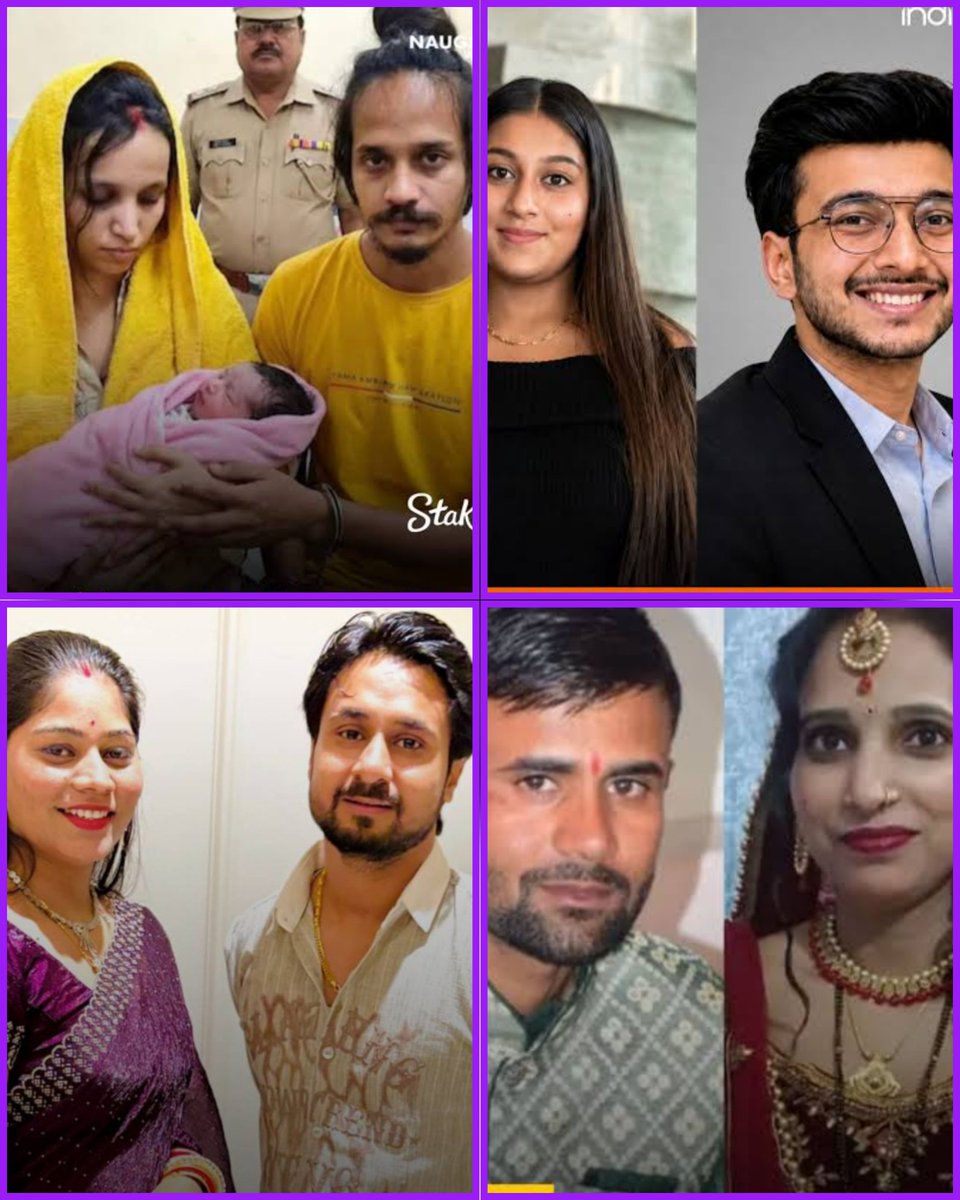
1. Sonam Raghuvanshi (Indore- Meghalaya case)
Conspired with her boyfriend and hired killers to murder her husband Raja during their honeymoon in Meghalaya.
Progress in the case : Charges framed, trial to be held in Shillong.
Status: Granted bail in April 2026 after around 10 months in jail. Trial ongoing.
2. Muskan Rastogi (Meerut)
Along with her lover Sahil Shukla, drugged, stabbed, dismembered and concealed the body of her husband, Merchant Navy officer Saurabh Rajput, in a cement filled drum.
Progress in case : Chargesheet filed, both confessed, case is before the court.
Status: In judicial custody. No bail reported.
3. Shivani (Uttar Pradesh)
Drugged and strangled her husband, Deepak Kumar, initially passing it off as a natural death. Police say the motive was to secure his government job and pursue a relationship with another man.
Status : Confessed and sent to judicial custody. Case ongoing....
Same will happen in Siya Goyal, Ketan Agarwal's case.
Our judicial system needs a complete overhaul.
"Every sinner has a future" is producing more criminals than deterring them.
Based on real incident ..
‼️An Indian family visits Venice & can't take the sewage stench 🤢
Husband asks the wife,You wanted to visit Venice after watching a movie.
How is it..?
Then looking at his children closing their noses, he laughs and asks what happened?
If this was India,
X would give million views.
But here the ecosystem sleeps all time..
All Bad is in Bharat ..
All good is West..
कोल्हापुर की महालक्ष्मी मंदिर एक पवित्र शक्ति पीठ हैं जहां के मंदिर में माता चतुर्भुज स्वरूप में विराजमान है।
🔅माता के शीश पर मुकुट है , अर्धचंद्र शीश पर सुशोभित है। गले में स्वर्णाभूषण माला धारण किए हुए है । एक हाथ में गदा और दूसरे हाथ में ढाल लिए हुए है।
🔅महालक्ष्मी माता के हाथ की ढाल और गदा, शक्ति और रक्षा दोनों का संतुलित स्वरूप का दर्शन करता है।
🔅माता की भक्ति की शक्ति महालक्ष्मी मंदिर के प्रति भक्त का आकर्षण इसको सनातन के भक्ति परंपरा में महत्वपूर्ण बनाता है।
Here is the story of the Yantroddharaka Hanuman Temple in Hampi.
It began with the Madhwa saint, Sri Vyasa Tirtharu also known as Sri Vyasarajaru. Every morning, after bathing in the Chakra Teertha at Hampi, he would meditate where the temple now stands. While meditating, he felt a monkey stepping out from a large rock in front of him to play. But every time he opened his eyes, the monkey vanished back into the stone. After this happened for several days, Sri Vyasarajaru realized something mystical was happening.
Seeking guidance, the saint composed a kirtan one night starting with "Neene Varaguru Mukhyaprana," (You alone are the great Guru, the chief life-force) praising the deity and asking how to serve. That early morning, Lord Hanuman appeared in his dream. Hanuman explained that he had once seen Lord Rama at that exact spot and told the saint to install him there.
Sri Vyasarajaru went to the rock the next day and used charcoal to draw Hanuman, applying twelve sacred marks. To his surprise, the drawing flew away and disappeared as soon as he finished. He tried drawing the deity twelve more times in different postures, but every single image vanished into thin air.
Realizing he needed a more spiritual approach to hold the deity's energy, he used his knowledge of the Tantrasara to draw a sacred geometric yantra on the rock. In the center, he drew Hanuman seated in a meditative yoga pose, Padmasana, holding a prayer mala.
To keep the deity from disappearing, he drew the twelve monkey forms that had previously vanished in a circle around the yantra, holding each other to form a binding garland. After performing a digbandhana ritual to lock the directions, he applied the twelve sacred marks one last time.
This time it worked. The image of Hanuman remained permanently on the stone. Sri Vyasa Tirtharu consecrated the idol and began worshipping it with panchamrutha. The sacred rock was originally had no roof, but later, the Vijayanagara ruler Tammaraya built the temple structure that visitors see today.
|| Namami dutam Ramasya, Sukhadam cha suradrumam ||
I bow to the messenger of Lord Rama, who is a giver of happiness and is like the divine Kalpavriksha. 🙏
This is real contemporary dance choreography!
Where they really put in some effort and showcase their talent!
Not the woke LeLi garbage that happens in India where confused agendas are peddled by mediocre dancers incapable of anything substantial!
In the second episode of our micro-documentary series ‘Kaarigari’, we travel to Bastar, Chhattisgarh to witness a metallurgical marvel that dates back 4,000 years: the Dokra art.
Watch the Full Kaarigari – Ep2 – Dokra Art on Youtube
https://t.co/9s65t5SemI
Śrīmad Varavaramunaye Namaḥ
Śrī Raṅganātha (Śrīman Nārāyaṇa) is the first amongst Ācāryas, who imparted the knowledge of the Vedas to Brahmā. Despite being the first amongst the Ācāryas, despite being Sarveśvara, He still yearns to have an Ācārya Himself - because it is the greatest honour to have a true Ācāryan, to think of the Ācāryan's noble qualities, and always render services unto that Ācāryan. The glories of the Ācārya exceed that of even Bhagavān, as he exists just for the upliftment of all beings and is an ocean of compassion and complete devotion to Bhagavān. Due to this desire, Bhagavān took shelter of several sages.
As Rāma, He surrendered unto Viśvāmitra. Yet Viśvāmitra didn't satisfy Bhagavān's desire to have an Ācāryan, as he wasn't fully perfect himself. Despite having many good qualities, he was prone to curse when angered, which meant he is not a Parama-sāttvika. Moving onto Kṛṣṇāvatāram, He took shelter of Sāndīpani Muni. Yet he also didn't satisfy Bhagavān's desire have an Ācāryan. When asking dakṣiṇā from Bhagavān, he demanded Him to bring back his children from the dead. This showed he still had worldly attachments, thus Bhagavān wasn't fully satisfied in his desire to find an Ācāryan. Even though Āḻvār, and later Bhagavad Rāmānuja exemplified the state of a Parama-sāttvika, they themselves had surrendered to Śrī Raṅganāthan, so He couldn't seek shelter in them.
So, He finally surrendered unto Maṇavāḷa Māmunigaḷ, who is known as Yatīndra Pravaṇar (the one who considers Bhagavad Rāmānuja as his means and end). Māmunigaḷ is filled with noble qualities, bliss, and even a slight thought of him removes all that is inauspicious. By taking shelter of his divine feet, even the most lowly is uplifted. And even Bhagavān, who rules all the worlds, eagerly seeks to have sambandham with Māmunigaḷ. Bhagavān joyfully heard the entirety of Īdu Kālakṣēpam (the authoritative commentary on Āḻvār's Tiruvāymoḻi) from him. Having greatly enjoyed the lectures, He submitted the following tanıyan:
śrīśalēśa dayāpātram
dhībhaktyādi guṇārṇavam
yatīndra pravaṇam vandē
ramyajāmātaram munim
"I worship Ramyajāmātara Muni (Maṇavāḷa Māmunigaḷ), who is the recipient of Śrīśalēśa's (Tiruvāymoḻi Piḷḷai) compassion, who is filled with auspicious qualities such as bhakti (devotion to Bhagavān) and is completely attached to Śrī Rāmānuja."
Having glorified His Ācāryan with jewel like words and propagated such words far and wide, Śrī Raṅganāthan also offered His own śēṣa paryaṅkam (His serpent bed, Ādiśēṣan) to Māmunigaḷ as dakṣiṇā, which is why we always see him seated on the serpent bed.
Thus, by taking shelter of Māmunigaḷ, Bhagavān delightfully fulfilled His search for an Ācāryan. Let us too worship the lotus feet of Maṇavāḷa Māmunigaḷ (which are personified as Ponnadikkāl Jīyar) and be uplifted.
Jīyar Tiruvadigaḷē Śaraṇam
Jīyar Tiruvadigaḷē Śaraṇam
A 15-year-old dream has come true today. I started a PhD with the dream of creating a system that chants any Sanskrit shloka perfectly.
And here I am opening sourcing 𝐕𝐚𝐠𝐝𝐡𝐞𝐧𝐮 - 𝐀 𝐯ṛ𝐭𝐭𝐚 (𝐦𝐞𝐭𝐞𝐫) 𝐚𝐰𝐚𝐫𝐞 ś𝐥𝐨𝐤𝐚-𝐭𝐨-𝐜𝐡𝐚𝐧𝐭 𝐭𝐞𝐱𝐭-𝐭𝐨-𝐬𝐩𝐞𝐞𝐜𝐡 (TTS) 𝐬𝐲𝐬𝐭𝐞𝐦 𝐟𝐨𝐫 𝐒𝐚𝐧𝐬𝐤𝐫𝐢𝐭. This is the world's first vrutta-aware, open-source TTS for Sanskrit Chanting.