New @NotebookLM: The Science Of Ben Franklin, a featured notebook created with @googlearts and one of the world's most esteemed scientific orgs, @royalsociety. Original papers, letters, contemporary sources, and studio creations give us a new vista into Franklin's work.
This featured notebook is particularly meaningful to me for two reasons. First, there is the history of the institution itself. The Royal Society essentially invented the modern container of scientific publishing: the peer-reviewed paper, developed in the mid-1800s to manage an earlier explosion of scientific writing. That format has survived as one of the central units for organizing human knowledge for almost two hundred years. Our hope is that public and featured notebooks like The Science Of Ben Franklin can be a format that builds on that tradition, creating a new atomic unit for sharing, synthesizing, and exploring knowledge in the age of AI. So there’s something especially sweet in partnering with the Royal Society on this project.
Second, this project brings me full circle to my 2009 book The Invention of Air, where Franklin and the Royal Society were central characters. Invention was ostensibly a biography of the British chemist and political radical Joseph Priestley, who was in many ways Franklin’s most significant intellectual partner. (Among other things, Priestley wrote the book that popularized the now legendary story about Franklin’s kite and the discovery of electricity.) To bring that history to life, the new collection features two dazzling slide decks that tell the story of Priestley and Franklin’s friendship, and the long, fruitful partnership between Franklin and the Royal Society.
I keep thinking of how amazing it would have been to have had access to this notebook two decades ago, when I was researching Invention of Air. Like all of our featured notebooks, The Science Of Ben Franklin is designed to adapt dynamically to the interests, native language, and comprehension level of whoever happens to be exploring it. Whether you are a dedicated scholar or simply someone curious about history, this notebook offers a genuinely new way to explore Franklin’s extraordinary mind.
https://t.co/Io5kDtFT5A
The only two books to ever win all three of the leading writing awards in the U.S. - the Pulitzer Prize, the National Book Award and the National Book Critics Circle Award.
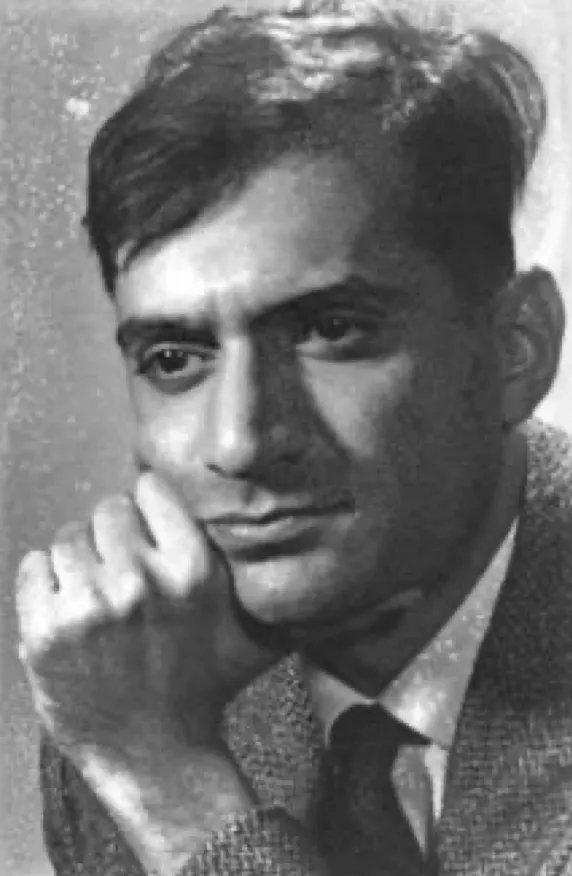
Those who saw’A Beautiful Mind’, would remember that John Nash’s doctoral thesis had just 26 pages and 2 references, yet it was instrumental in advancing “Game theory”. What if I told you there is a scientist whose achievement is so astounding that he is perhaps the only Indian to “create” an intersectional branch of science? What if I told you that every year, his name echoes across the hallowed halls of science in foreign lands, but most of our students haven't even heard of him?
Aneesur Rahman was born in Hyderabad in British India in 1927. His father was a professor and a philanthropist. His family generously donated their property for the creation of Urdu Hall in Hyderabad. His maternal uncle was a professor too. Rahman had a natural flair for subjects that would terrify ‘normal’ students — maths and physics. After getting BSc in Mathematics, he went on to get Tripos in Mathematics and Physics at the prestigious Cambridge University in the UK. From there, he went to Louvaine University in Belgium and got DSc in Physics under Professor Mannenbeck. It’s here that Rahman met a Chinese student Yueh-Erh Li who was doing MD( called Dr Jady by friends). They fell in love and got married.
He came back to teach in Osmania university along with his wife. Soon after, he developed interest in the structure of water molecule - especially the polarisation of the hydrogen atom. Unfortunately research in India was at infancy in those days and Dr Rahman realized he was a whale in a tiny pond. He had to move to the ocean. He joined the Argonne National Laboratory in Illinois.
His foundational paper in 1964 birthed “molecular dynamics” , one of the two pillars on which a vast body of computational physics rests.(the other is Monte Carlo method). His equation made it possible to calculate the trajectory of large number of interacting atoms with ease.
His work, like Ramanujan’s , was so ahead of his time - that even today, potential applications are being discovered. The Nobel prize in physics for 2013 went to Karplus, Levitt and Warshel whose work depended heavily on Dr Aneesur Rahman’s.
Some say there is an inverse association between genius and compassion -Dr Rahman was a prominent exception. He was known not just for his intellect, but also kind nature and mentored many students all over the world. His quiet, unassuming nature made him a much loved professor — and he remained so, until he got Non Hodgkin’s lymphoma — a cancer that took him away from us prematurely, at the age of 59. Perhaps he might have got a Nobel, if only he had lived longer.
American Physical Society honors him as the father of computational physics and has instituted an annual award in his name.
As a doctor with little idea of theoretical physics, writing Dr Aneesur Rahman’s portrait has been difficult , because of the complex nature of his work that straddles so many areas of science : mathematics, physics, computer science and chemistry. His equations are mind boggling, even intimidating, but
what I do understand is this : Dr Rahman didn't just have a beautiful mind, but also a beautiful heart.
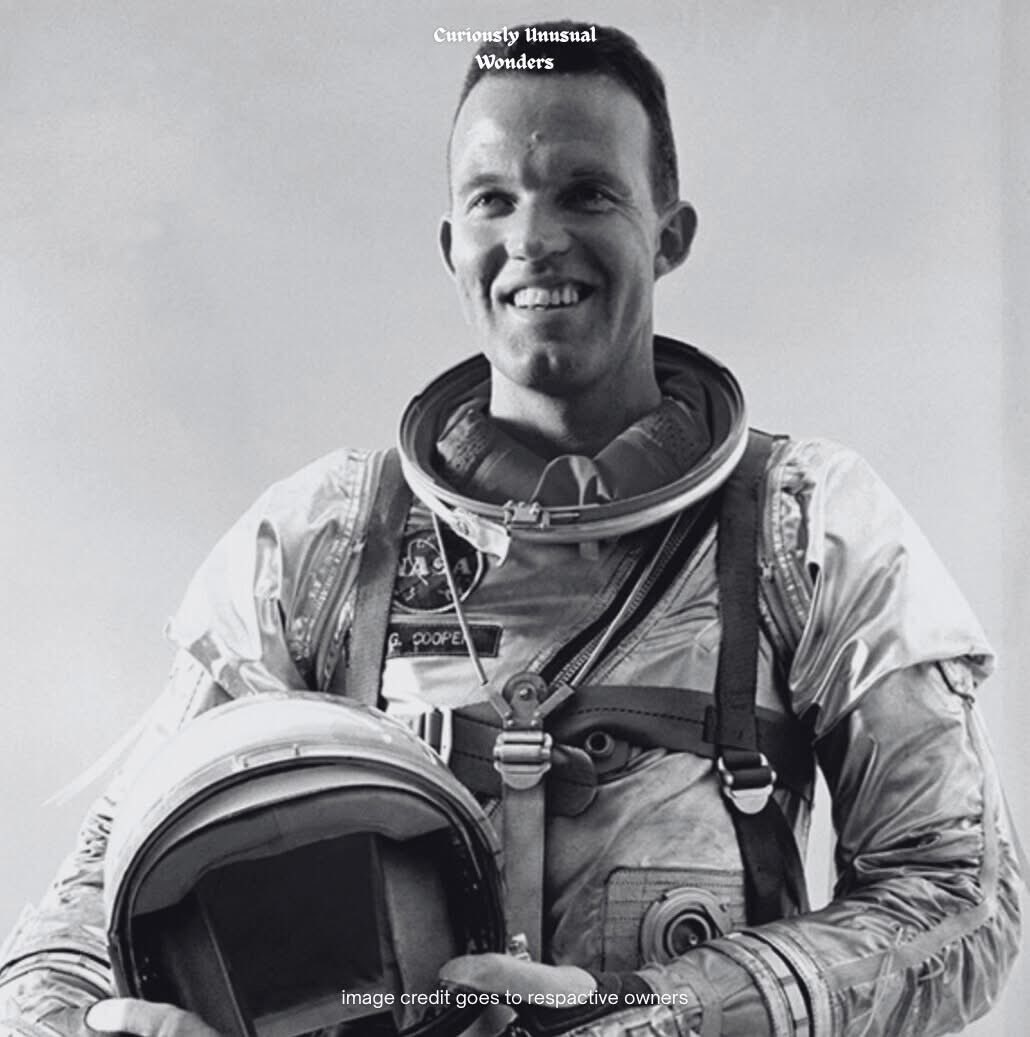
May 16, 1963. Gordon Cooper was orbiting Earth alone inside a capsule barely big enough to turn around in, moving at 17,500 miles per hour.
He had been up there for over a day.
Then the warnings started.
First a faulty sensor screaming that the ship was falling — it wasn't. He switched it off. Then something far worse: a short circuit knocked out the entire automated guidance system. The one that kept the capsule steady. The one that was supposed to bring him home.
Without it, reentry was nearly impossible.
Too shallow an angle and the capsule would bounce off the atmosphere back into space. Too steep and it would incinerate. The margin for error was razor thin — and every computer that was supposed to hit that margin was dead.
Down on the ground, NASA engineers watched the telemetry in silence. They could see everything going wrong. They could fix nothing.
Cooper didn't panic.
He uncapped a grease pencil and drew lines directly on the inside of his window to track the horizon. He looked up at the stars he had spent months memorizing and used their positions to orient the ship by eye. Then he set his wristwatch.
Because when you have no computers left, you become the computer.
At exactly the right moment — calculated in his head, confirmed by the stars outside — he fired the retrorockets. The capsule shook. The sky turned to fire. For several minutes, no one on Earth could reach him as plasma swallowed the ship whole.
Then the parachutes opened.
Faith 7 hit the water just four miles from the recovery ship — the single most accurate splashdown in the entire Mercury program.
The man with a wristwatch and a few pencil marks on a window had outperformed every automated system NASA had.
We talk a lot about technology saving us. And it often does.
But Cooper's story is a quiet reminder that behind every machine, there still has to be a human being who can look out the window, think clearly under pressure, and decide what to do next.
The final backup was never the software.
It was him.
@shreyas "Don’t make your child your unfinished project" Thank you! Reminds me of Kahlil Gibran's poem on children https://t.co/Node3RtjSS and you are probably familiar with Dr.Barkley's view on engineer vs shepherd on parenting (time stamp 1:20 onwards) https://t.co/5qezMLfrDa
@DanWuori@irishexaminer If you get a chance, please visit the book stores especially Hodges Figgis one of the oldest book stores founded in 1768. I was blown away by the number of independent book stores there.
The Prettiest Library in India
Rampur library is probably the best preserved early modern library in the country: home to around 30,000 rare manuscripts in Pashto, Sanskrit, Hindi, Urdu, and even Tamil.
When people think of menswear crafted with a high-degree of workmanship, they think of places such as France, Italy, and the UK. Some may think of Japan. But few will think of India, even though some of the most incredible workmanship is happening there now. Let me show you. 🧵
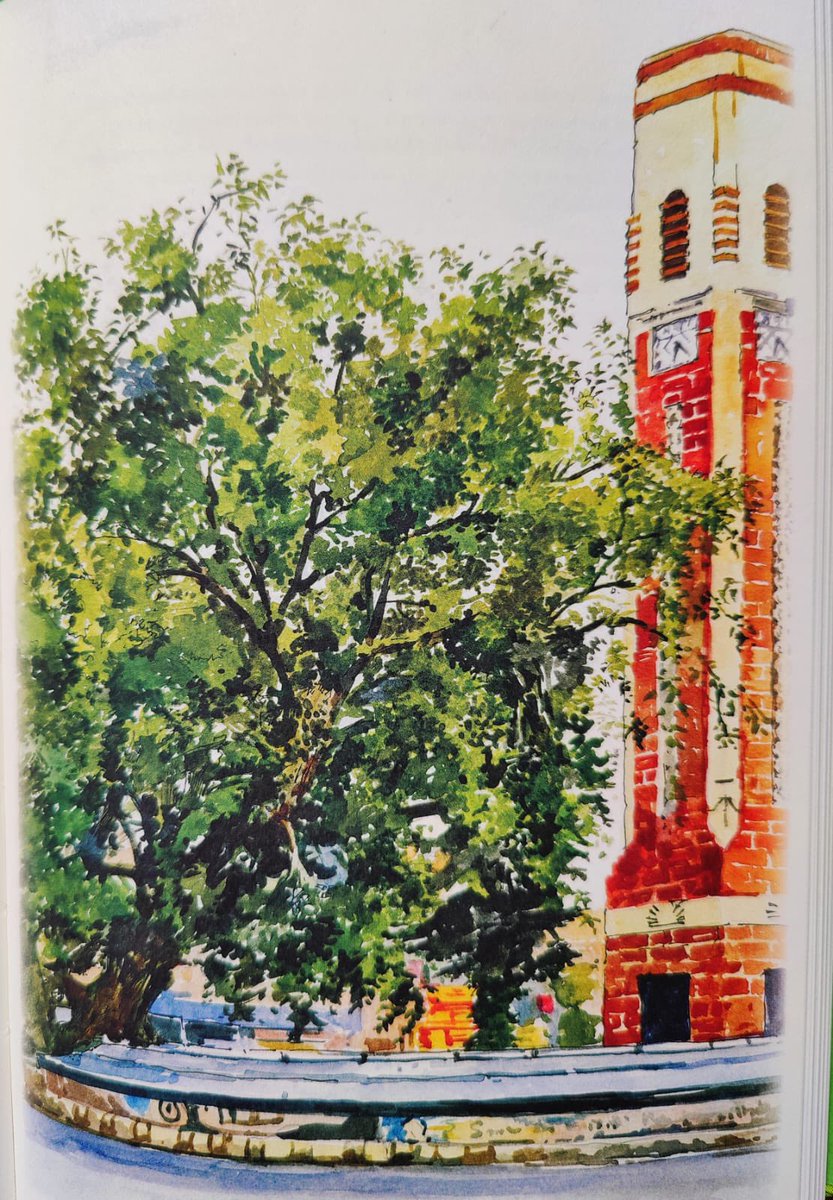
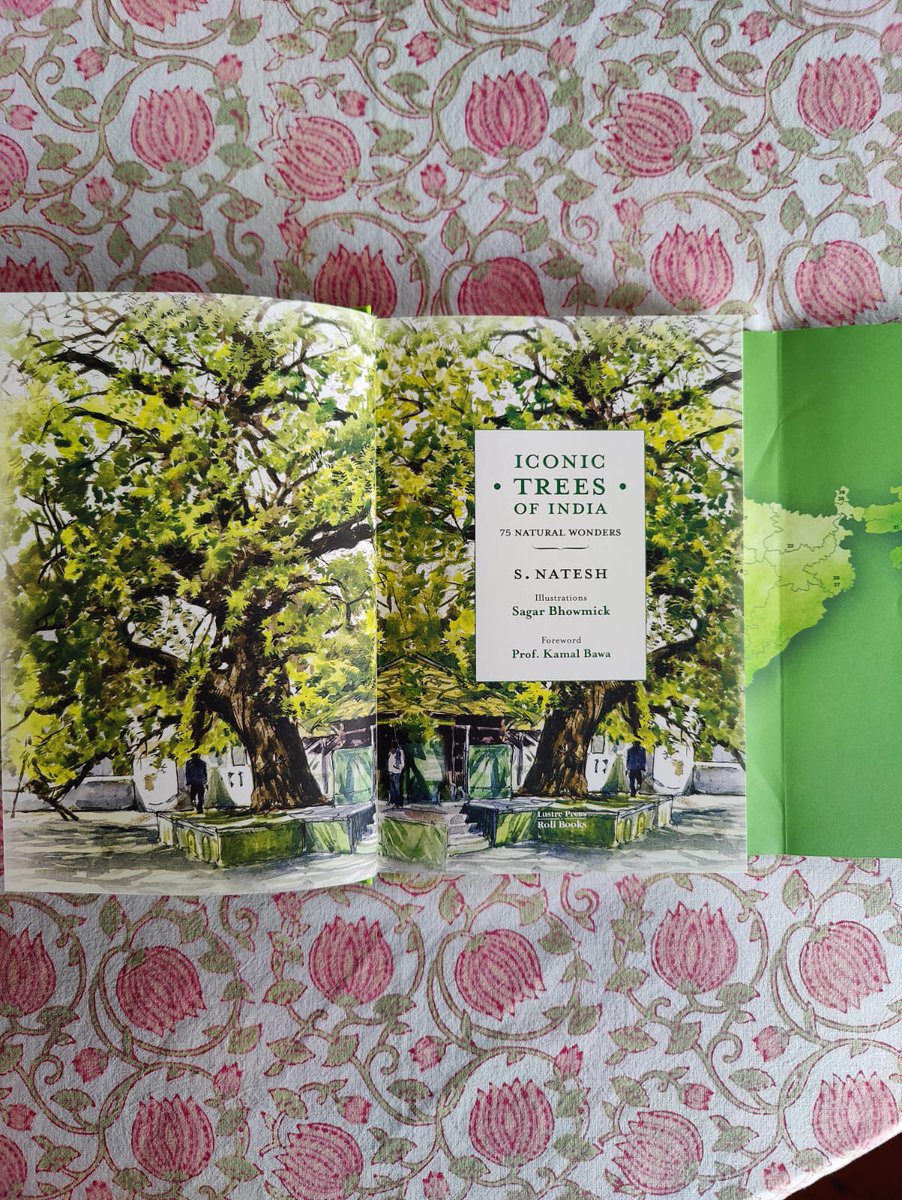
This may just be one of the most beautiful books we've published.Iconic Trees of India by S. Natesh is a celebration of the country's most remarkable trees. Each of the 75 trees tell us a larger story about the cultural, biological or spiritual value that they hold. @RoliBooks
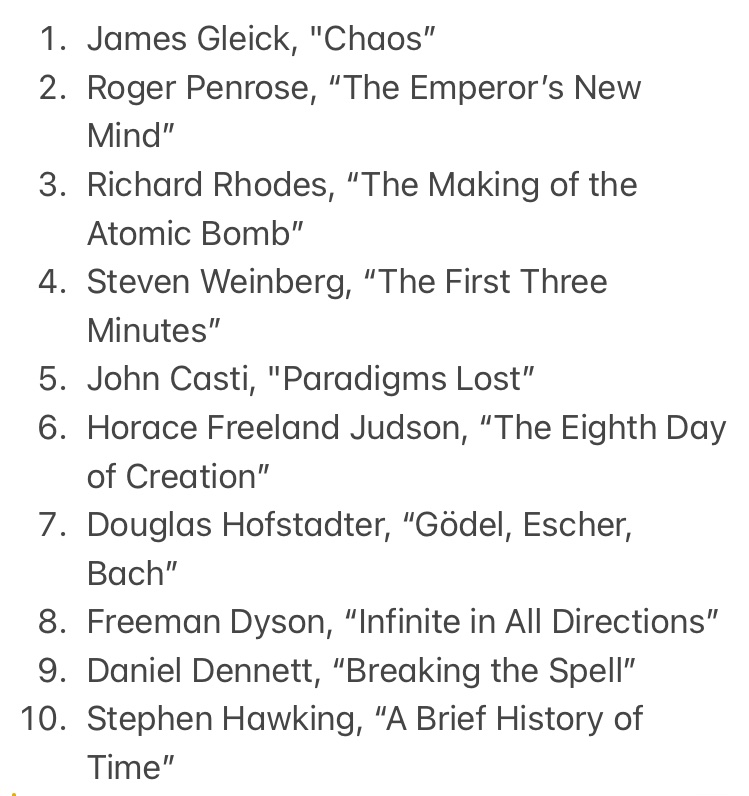
List of favorite top ten "classic" science books. All communicate profound, mind-expanding ideas, often in profound prose. Many are multidisciplinary; some touch deeply on history, philosophy and society. All give repeated reading pleasure, revealing something new each time.
@sanjaysub Was really sad to have missed this...my heart was in the convention center thinking of all the songs and the surprise you always manage to sneak in each time. I really hope you are coming back again this year
Enjoy this playlist (with 96 videos & counting) anytime you’re looking to watch or listen to (or binge on 😄) advanced product & leadership content.
(this link will open the playlist in the YT app, so you can save the playlist for later)
https://t.co/lpZ2kUjsIu