Top 6 Database Models.
Data models provide the foundation for storing, retrieving, and manipulating data in database management systems (DBMS) and influence how data is structured and accessed.
The diagram below shows top 6 data models.
🔹 Flat Model
The flat data model is one of the simplest forms of database models. It organizes data into a single table where each row represents a record and each column represents an attribute. This model is similar to a spreadsheet and is straightforward to understand and implement. However, it lacks the ability to efficiently handle complex relationships between data entities.
🔹 Hierarchical Model
The hierarchical data model organizes data into a tree-like structure, where each record has a single parent but can have multiple children. This model is efficient for scenarios with a clear "parent-child" relationship among data entities. However, it struggles with many-to-many relationships and can become complex and rigid.
🔹 Relational Model
Introduced by E.F. Codd in 1970, the relational model represents data in tables (relations), consisting of rows (tuples) and columns (attributes). It supports data integrity and avoids redundancy through the use of keys and normalization. The relational model's strength lies in its flexibility and the simplicity of its query language, SQL (Structured Query Language), making it the most widely used data model for traditional database systems. It efficiently handles many-to-many relationships and supports complex queries and transactions.
🔹 Star Schema
The star schema is a specialized data model used in data warehousing for OLAP (Online Analytical Processing) applications. It features a central fact table that contains measurable, quantitative data, surrounded by dimension tables that contain descriptive attributes related to the fact data. This model is optimized for query performance in analytical applications, offering simplicity and fast data retrieval by minimizing the number of joins needed for queries.
🔹 Snowflake Model
The snowflake model is a variation of the star schema where the dimension tables are normalized into multiple related tables, reducing redundancy and improving data integrity. This results in a structure that resembles a snowflake. While the snowflake model can lead to more complex queries due to the increased number of joins, it offers benefits in terms of storage efficiency and can be advantageous in scenarios where dimension tables are large or frequently updated.
🔹 Network Model
The network data model allows each record to have multiple parents and children, forming a graph structure that can represent complex relationships between data entities. This model overcomes some of the hierarchical model's limitations by efficiently handling many-to-many relationships. However, it can be complex to design and query, and it has largely been superseded by the relational model in most applications, though it still finds use in certain specialized domains.
Over to you: Which database model have you used?
--
Subscribe to our weekly newsletter so you won't miss it: https://t.co/uc5M7CdXXC
El otro día me preguntaron qué roadmap recomendaría alguien que está empezando o a alguien que se ha dado cuenta de que los frameworks no van a solucionar su código
Comparto por aquí lo que recomendé por si le sirve a alguien más
🧵 👇
¡SORTEO de 5 Libros de Programación 📚!
La edición física de "Código Sostenible"
Pasos para participar:
❤️ Like y RT
🐦 ¡Sígueme!
Participación abierta a todo el mundo
🌎 Haremos envíos internacionales
El sorteo termina el viernes 7 de julio
Voy a contar un poco como trabajamos en mi equipo. Somos un equipo bastante grande unas 12 personas somos un equipo mixto entre ThoughtWorkers y la gente del cliente.
No hacemos Scrum ni kanban, pero si hacemos dailies y tenemos un kanban board. Planificamos todas las semanas
Tip: Store sharable state in the URL.
Examples:
Filter
Sort
Search
Page number
Toggles
Record IDs
Why put these things in the URL?
✅I can share the URL.
✅I can bookmark the URL.
✅The code doesn't need to store these values. The URL stores it.
✅Less code = less bugs.
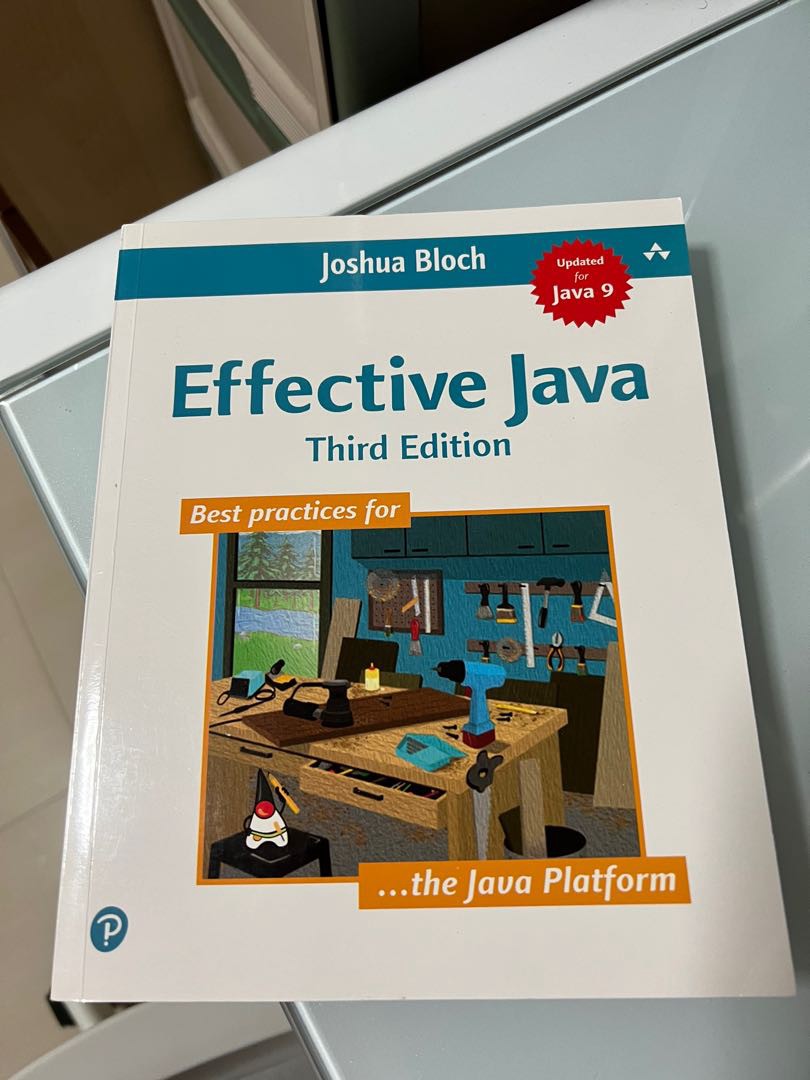
Functional Programming in Java, Second Edition by Venkat Subramaniam @venkat_s
Convert your complicated imperative code into elegant function-style: expressive, concise, and with reduced complexity.
https://t.co/x2aTfGAQW1
I'm a Chief Technology Officer at Deloitte.
I've hired 100+ people in my career and I know in the first 9 minutes if a candidate has what it takes.
Here are 10 things that will make you stand out in any interview:
Una cosa que estuve hablando el otro dia con @carlosble que nosotros aplicamos en topi, es tener diferentes contratos satisfechos por la misma implementación. Es una forma interesante de aplicar el principio de segregación de interfaces. Pongo un ejemplo.
/1 𝐇𝐨𝐰 𝐝𝐨 𝐰𝐞 𝐥𝐞𝐚𝐫𝐧 𝐄𝐥𝐚𝐬𝐭𝐢𝐜𝐒𝐞𝐚𝐫𝐜𝐡?
Based on the Lucene library, Elasticsearch provides search capabilities. It provides a distributed, multitenant-capable full-text search engine with an HTTP web interface. The diagram below shows the outline.
Normalmente se olvida que en una entrevista hay dos partes: la empresa y el candidato.
Te comparto preguntas que yo hacía en las entrevistas como candidato y normalmente ponían nervioso al entrevistador porque no es habitual.
Las hacía cuando el entrevistador era técnico.
⤵️