"Children are now 3 times more likely to grow up in poverty despite all adults in the household working full time" - GMB
⏰ It's time for Free School Meals for All
Fast fact: Every year, nearly 1/2 of Rwanda’s food supply goes uneaten.
➡️Inadequate food storage and processing
➡️Spoiled harvests and
➡️Household waste
...result in a 40% loss of the country’s total food production every year, equal to 12% of its GDP.
One emerging solution is “circular food systems.” and small businesses in Rwanda are building a blueprint for circular food systems across Africa. Learn more➡️ https://t.co/QgDDGL45Be
Read more #SolutionsInFocus stories around the world to remind you that positive impact is in progress➡️ https://t.co/AUSePxUuzU
Stop megadosing Vitamin D until you read this.
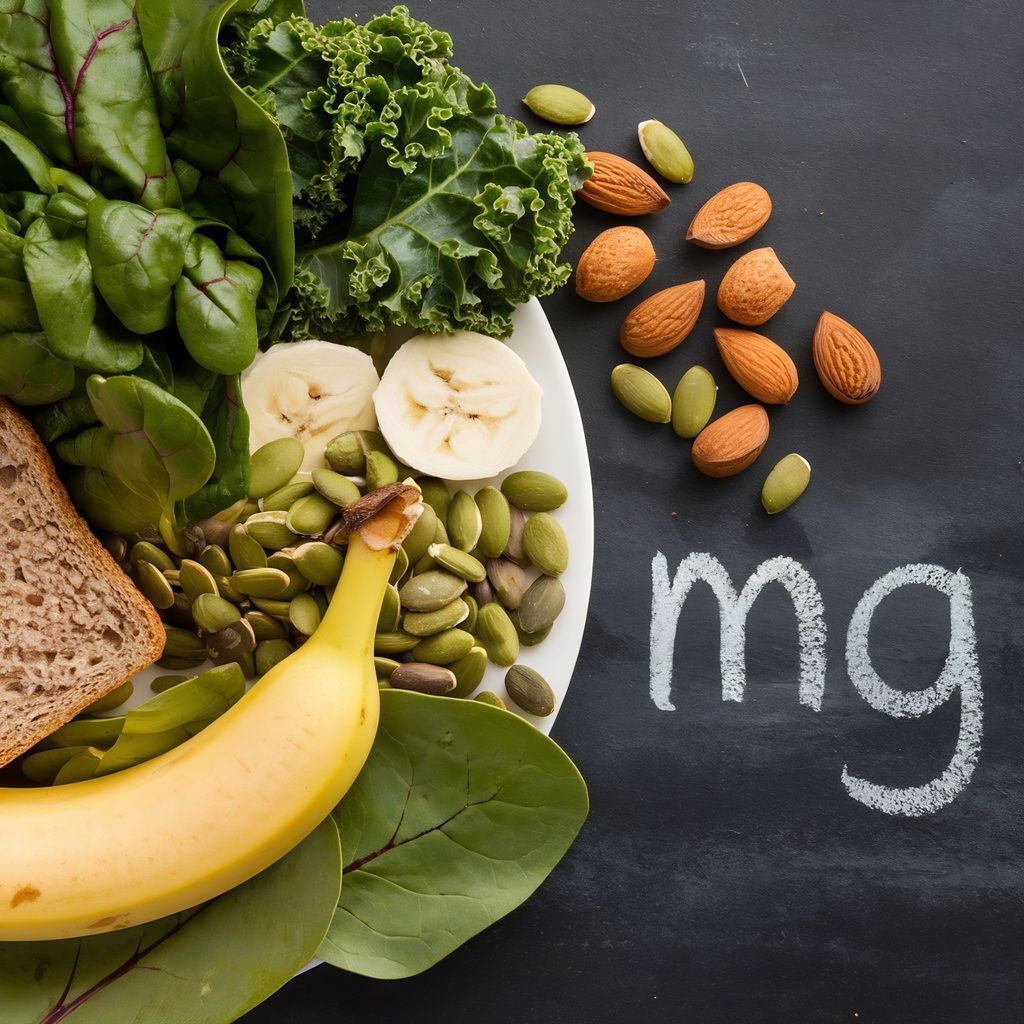
Most people treat Vitamin D like a solo act. It’s not. It’s a Magnesium-dependent process.
Clinical reality: Case reports suggest that with severe Mg deficiency, even 600,000 IU of Vitamin D fails to work. The body simply stays "resistant" until Magnesium is added.
With over 50% of adults insufficient in Magnesium, we are seeing a silent epidemic of Vitamin D resistance.
The risk? If you push high-dose D without Mg, you’re not raising your "D" levels, you’re likely raising calcium and phosphate, which can contribute to vascular calcification.
The "D3-Magnesium" Action Plan
1. Food First: Add pumpkin seeds and leafy greens daily. Whole foods are the foundation for a healthy magnesium level.
2.Test RBC Magnesium: Don’t rely on "Serum" labs; they only show 1% of your body's stores. Get an RBC test to reveal intracellular stores.
3.The 2-Week Lead: If you’re starting high-dose D3, supplement Magnesium for 14 days first to "prime" the activation enzymes.
4. Match the Ratio: Avoid supplementing D3 in isolation . Anecdotal reports and mechanistic plausibility suggest Magnesium depletion underlies the restlessness and energy crashes some people experience on D3."
5. Add Vitamin K2: Take 100mcg (MK-7) to keep that calcium out of your arteries. (Talk to your doctor first)
Nutrients work in networks. Getting the cofactors right matters as much as the dose.
Source: Uwitonze & Razzaque, J Am Osteopath Assoc., 2018.
#Nutrition
#VitaminD
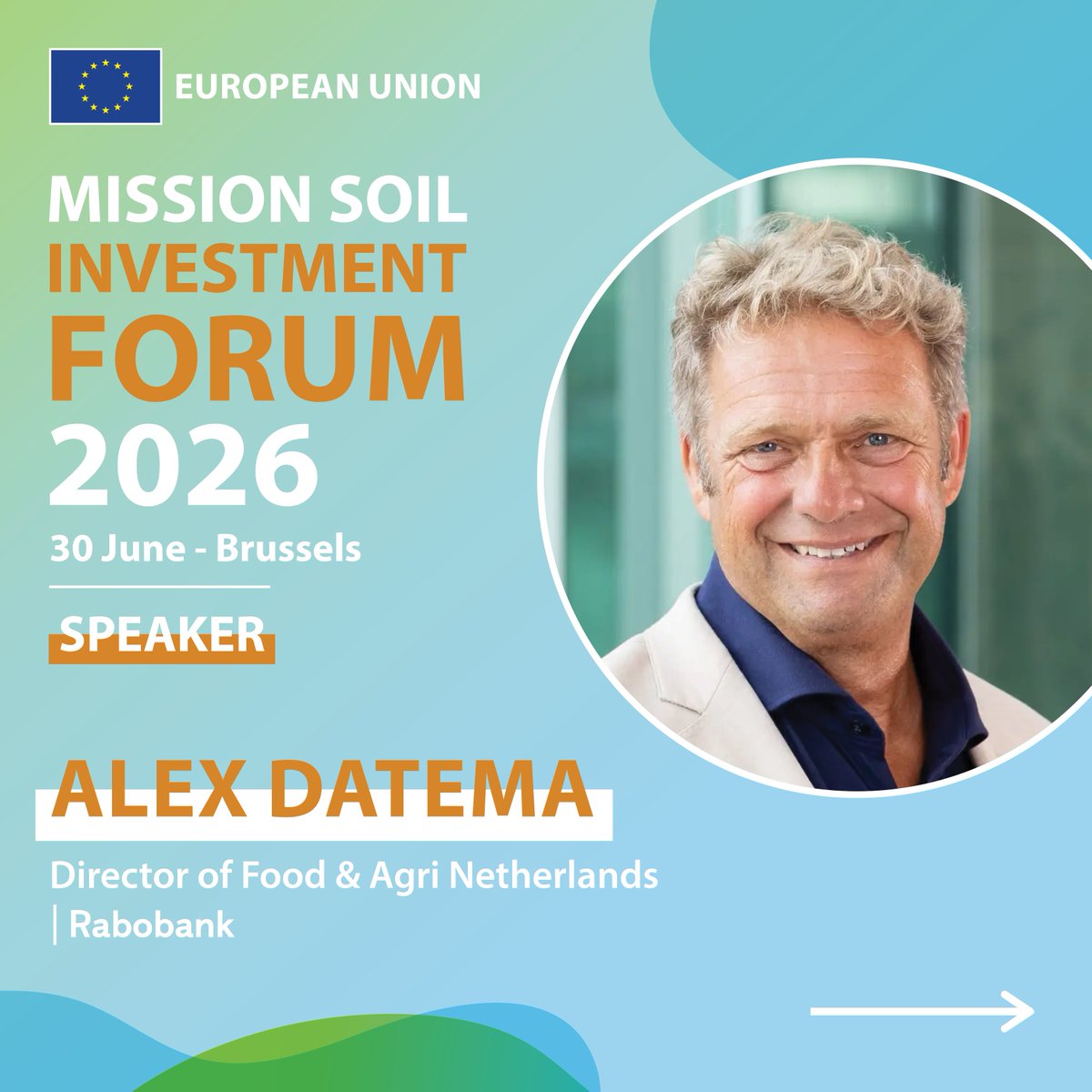
🎤Meet the voices shaping the conversation.
Explore confirmed speakers & key topics at the Mission Soil Investment Forum - 30 June, Brussels
From policy to investment to real-world solutions🌱
🔗Discover the agenda & register: https://t.co/J8i2Li5eX7
#MissionSoil#SoilHealth
🚨Stunning Fact About Berries & Purple Veggies 🫐
Those vibrant reds, blues, and purples come from anthocyanins.
Scientists used to think they were barely absorbed (<1%).
Yet they powerfully support heart, brain, metabolism, and inflammation.
A human study found absorption to be around 12%.
Your body rapidly converts them into phenolic metabolites that stay active in your blood for up to 48 hours.
Even better:
~70% reach your colon, where gut bacteria turn them into bioactive compounds that act as prebiotics, feeding Akkermansia and Bifidobacterium while crowding out the bad guys.
What looked like poor stability is actually their superpower.
Add more color to your plate for smarter aging. 🫐
#Anthocyanins
#GutHealth
#Microbiome
The UK government has announced plans to introduce a social media ban for under-16s by spring 2027.
Professor @Sander_vdLinden shares his reaction to today's news, and measures it against the evidence we already have about social media restrictions.
Learn more about his proposal for social media passports 👉 https://t.co/jqdggjan0E
Professor Sander van der Linden is the Director of the Cambridge Social Decision-Making Laboratory and a Professorial Fellow of @ChurchillCol.
#SocialMediaBan #SocialMedia
Spoke at #LSEFestival today about my new book, The Common Good Economy. Thank you to Larry Kramer and the audience for their incisive questions.
Philosophy has always had a rich tradition of the common good—from Aristotle’s telos and polis to Sandel’s critique of Rawls. Economics has not.
We have public goods, but that is a theory of what the private sector fails to provide. We have the commons, but that is a correction to governance failure. Neither constitutes a positive theory of good.
The Common Good Economy attempts to bring that tradition into economics—with a compass that asks not which failure to fix but what kind of economy we are trying to build.
AI Isn’t Killing Education
“What artificial intelligence is destabilizing may not be learning at all, but an educational temple that quietly displaced ‘cognitive veritas’ with substitutes that don’t just feel correct, but are ready for translation to Latin.”
— @JohnNosta 👇🏻
🌳😌🌇The cooling power of trees starts with shade.
When surfaces like pavement, rooftops and buildings are exposed to direct sunlight, they absorb and store heat, releasing it back into the air long after the sun goes down. Trees interrupt that process. They shade sidewalks, streets and people, preventing surfaces from heating up in the first place. They also cool the surrounding air through evapotranspiration, the release of water vapor from leaves.
Learn more about the cooling potential of urban trees➡️ https://t.co/bUGls96O6L
Essentials that we forget ARE essentials:
- Choosing what food you want to eat
- Bills and rent paid
- Coffee with a friend
- Reliable internet
- Replacing worn-out clothes or shoes
- Living in a safe, comfortable home
Growth is not a mission – it is an outcome of missions done well. To deliver a fair, green transition, the UK government must get this logic right. Read our new policy report with @annahopeemerson and @annapick_ at the link in replies.
Why does food always seem to fall between the cracks when it comes to policymaking?
Politicians @PauletteHamilto@JimBethell@SarahDykeLD and @EmilyLincOBrien ponder this question as they analyse key findings in our new #BrokenPlate report.
🎧 Listen in full: https://t.co/WfFVkZMXfo
Elder abuse has no place in our societies.
On #WEAAD2026, we stand with older people affected by abuse and discrimination.
Protection should not stop at borders: new EU rules will strengthen safeguards for vulnerable adults across the 🇪🇺.
🔗https://t.co/IEa0cHa8JS
Aging may not be a steady downhill process it may happen in stages
A large study of over 4,000 people aged 18 to 95 analysed nearly 3,000 proteins in blood plasma to understand how the body changes over time. Because these proteins reflect key biological activity such as immune function metabolism tissue repair and cell communication they act as a snapshot of how the body is aging
Researchers expected gradual change across the lifespan. Instead they found something more complex many proteins linked to aging shifted in noticeable bursts rather than slowly over time
These changes appeared to cluster around roughly three key life periods around the mid 30s around 60 and again in the late 70s suggesting that aging may happen in waves rather than a straight line
The shifts were connected to systems like inflammation cardiovascular health immune response and energy metabolism hinting that the body may periodically reorganise itself biologically at certain stages of life
Using just a subset of around 373 proteins scientists were able to estimate a person’s age from a blood sample with an average error of about three years. Interestingly individuals whose biological profiles appeared younger than their chronological age also tended to show better overall health
The research also highlighted strong differences between males and females with a large proportion of age related proteins behaving differently in men and women suggesting that aging pathways may not be identical across genders
Overall the findings challenge the idea of aging as a smooth decline and instead point to a process that may unfold in distinct biological phases
Northern Ireland remaining in the EU single market for goods means we have an entire region running as a counterfactual on how much wealthier we’d have been had we stayed. It’s actually outperformed London.
Curse of Tory Privatisation
UK faces deindustrialisation without relief from high energy cost
Energy companies profiteer. Thousands of jobs at risk.
Discount schemes passing cost to other customers isn't the answer
End profiteering. Nationalise energy.
https://t.co/zQZJe9pOIP
With an estimated 42% of Barbadian 🇧🇧 youth now classified as overweight or obese, the Heart & Stroke Foundation of Barbados has launched a new national public awareness campaign to shield school environments from pervasive #junkfood advertising.
The campaign comes at a critical time for public health. Childhood #obesity significantly elevates the risk of developing life-threatening non-communicable diseases #NCDs in adulthood, including Type 2 #diabetes and high blood pressure.
A broad coalition of #health organizations is backing the effort, including the Pan American Health Organization (@pahowho), @UNICEF, the Healthy Caribbean Coalition @, the Caribbean Institute for Health Research (CAIHR), and the Barbados Childhood Obesity Prevention Coalition.
https://t.co/nInzdI890v