Architecture's highest honour in the world was given to a Pakistani woman in 2023.
She received it for building mud houses.
Yasmeen Lari. Born Dera Ghazi Khan 1941. Pakistan's first female architect.
Rejected from architecture school in London. Studied arts for two years. Reapplied. Got in. Graduated Oxford 1964. Returned to Karachi at 23. Opened Lari Associates. Construction workers on site refused to take orders from a woman.
She showed up every day.
For three decades she built some of the most iconic structures in Karachi. Taj Mahal Hotel 1981. Finance and Trade Centre 1989. Pakistan State Oil House 1991. Glass towers. Gilded elevators. Polished granite. Designing for Pakistan's most powerful clients.
In 2000 she retired from that world.
And built an entirely different one.
2005 Kashmir earthquake. She went to Mansehra with no brief and no client. Sat with women who had lost their homes. Listened to what they needed. Then designed with what they had.
Mud. Lime. Bamboo. Local materials. Zero cost. Zero carbon. Zero waste.
She did not hand over finished houses. She trained communities to build their own. Because dignity matters more than charity.
2010 floods. Bamboo structures on stilts. Waterproof. Standing in seven feet of water.
40,000 disaster-resilient homes built across Pakistan.
A smokeless chulah stove that transformed women's health in rural communities. World Habitat Award 2018.
Cambridge University appointed her Professor of Sustainable Design 2022.
RIBA Royal Gold Medal 2023. The highest honour in world architecture. First Pakistani ever.
She said: I never imagined focusing on my country's most marginalised people could lead to this.
From glass towers for the powerful to mud homes for the forgotten.
Same woman. Same country. Two completely different Pakistans served.
Yasmeen Lari.
Pakistan Zindabad. 🇵🇰
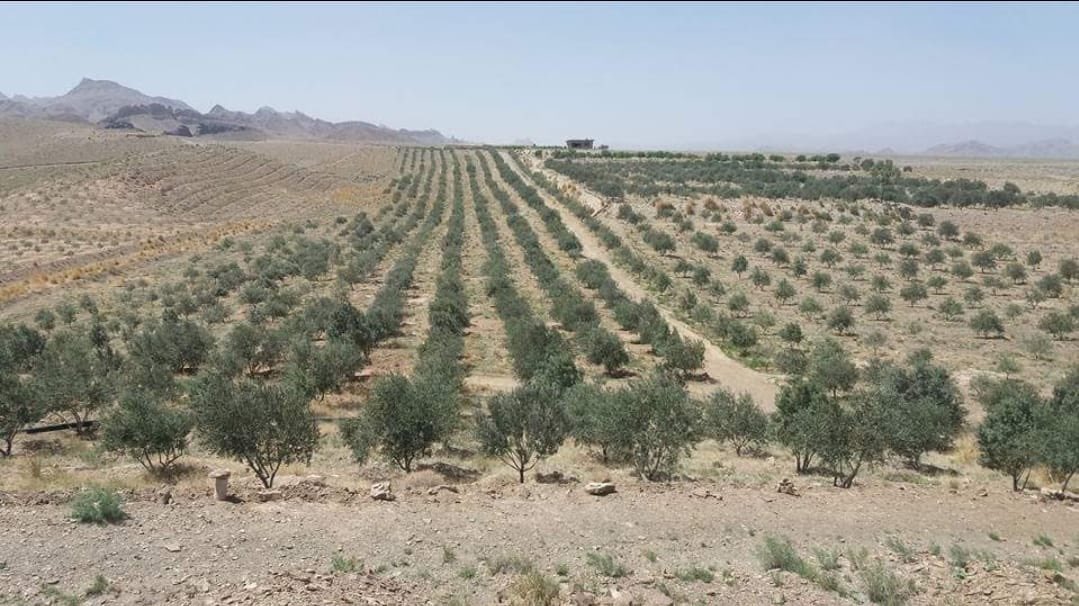
Pakistan just won Gold at the London International Olive Oil Competition 2026 , first time ever. Loralai Olives (Balochistan) took the top honour in a blind tasting against the world’s best.
Pakistan is also now a full member of the International Olive Council.
We’re moving from olive oil importer to recognized producer of premium EVOO.
From Loralai, the Olive Oil capital of Pakistan to the world.
This isn’t just good news for one brand, it elevates the entire “Pakistani food” proposition globally and shows what’s possible when quality meets modern processing and storytelling.
The ripple effect for other Pakistani food brands could be significant. Quality wins open markets. 🇵🇰🫒
In 1879, a simple Egyptian peasant woman named Mubarka Khafaji from a village in Kafr El-Sheikh married a farmer, Ibrahim Atta, who worked for daily wages. Due to financial hardship, he divorced her even though she was in the final months of her pregnancy.
Mubarka moved with her mother and brother to Alexandria, where she gave birth to her son, Ali Ibrahim Atta. She made a firm decision to do everything possible to raise and educate him in the best way.
She had countless reasons to despair and grow bitter toward men, but she did not. She could have forced her son into child labor selling tissues at traffic lights, but instead she worked as a cheese seller in the streets of Alexandria to support him.
She enrolled her son Ali in the Ras El-Tin Primary School. After he completed primary education, his father came to take him away to make him work with only a basic certificate.
But Mubarka’s dreams were much greater. She secretly moved her son from the roof of her house to the neighboring roof and fled with him to Cairo, enrolling him in the Khedivial School in Darb El-Gamamiz. She worked for a family in order to fund his education.
Ali excelled in his studies and was admitted to medical school in 1897, graduating in 1901.
Fifteen years later, Sultan Hussein Kamel fell seriously ill, and doctors were unable to diagnose his condition. Dr. Othman Ghaleb suggested the name of Dr. Ali Ibrahim. He successfully performed a critical surgery, after which he was appointed as the Sultan’s chief surgical consultant and personal physician, receiving the title of "Bey."
In 1922, King Fouad I granted him the title of "Pasha."
In 1929, Dr. Ali Pasha Ibrahim became the first Egyptian dean of the Faculty of Medicine at Fouad I University (Cairo University). He later became the university’s president.
In 1940, he was appointed Minister of Health. In the same year, he founded the Egyptian Medical Syndicate and became its first president. He also served as a member of the Egyptian Parliament.
His mother was: An uneducated, rural, divorced peasant woman.
Yet she raised a son who changed history.
The reform of any society begins with a mother.
Salute to every mother who is a true school of life.
A British biologist looked at 200,000 years of human history and found that the entire reason humans broke out of poverty was not intelligence, not language, not even agriculture, but one mechanism so simple a 6-year-old could explain it.
His name is Matt Ridley.
He is a zoologist by training, an evolutionary biologist by career, and in 2010 he wrote a book called The Rational Optimist that quietly argued the most important fact about human progress had been hiding in plain sight for the entire history of economics.
Naval Ravikant has been telling people to read everything Ridley has ever written for the last 15 years. The reason is the argument inside this one book.
For 200,000 years, anatomically modern humans walked around with the same brain you have right now. Same skull size. Same neural architecture. Same raw capacity for language, planning, and abstract thought.
For roughly 190,000 of those years, almost nothing happened. Generation after generation lived and died inside the same Stone Age toolkit their great-great-grandparents had used. Then somewhere around 50,000 years ago, the line on the chart of human progress started to tick upward. Then it bent. Then it exploded.
The question Ridley spent years on was the only question that mattered. What changed.
It was not the brain. The brain had been the same for 190,000 years. It was not language, which had existed long before the takeoff. It was not even agriculture, which arrived only 10,000 years ago and was actually preceded by the upward bend, not the cause of it.
What changed was that humans started trading with strangers.
This sounds too small to be the answer. Ridley argues that it is the answer to almost everything. The moment one human exchanged a useful object with another human from a different group, something happened that no other species on earth had ever done.
Two ideas that had developed in isolation came into contact. The flint knapper learned what the spear maker had figured out. The fisherman from the coast learned what the hunter from the forest had figured out. The two pieces of knowledge fused into something neither side could have produced alone.
Ridley calls this ideas having sex. The phrase sounds frivolous and it is meant to. The point is that ideas, like genes, get better when they combine with other ideas from different lineages.
An idea sitting inside one head, no matter how brilliant the head, eventually hits a ceiling. The same idea exposed to ten thousand other ideas does something genes do under sexual reproduction. It mixes. It recombines. It produces offspring nobody planned.
The cleanest proof of this argument is the most uncomfortable case study in the book. Tasmania.
Around 10,000 years ago, rising sea levels cut Tasmania off from mainland Australia. A population of roughly 4,000 humans was now isolated on an island, with no possibility of contact with the rest of humanity. They had the same brains. The same language. The same starting toolkit as their cousins 150 kilometers north. The natural experiment was now running.
What happened next is something no economist or geneticist had ever predicted.
The mainland Australians kept inventing. Boomerangs. Spear-throwers. Fishing nets. Bone needles for sewing fitted clothes. Watercraft with paddles. Their technology compounded slowly across the centuries.
The Tasmanians went the other way. They did not just fail to invent the new tools their cousins were developing. They started losing the tools they already had. Fishing was abandoned within a few thousand years. Bone tools disappeared. Fitted clothing disappeared. They forgot how to make fire from scratch and started carrying lit firebrands from camp to camp instead, relighting their fires from a neighbor's whenever their own went out.
By the time European explorers arrived in the 17th century, the Tasmanians had the simplest toolkit of any human society ever recorded. Their material culture had gone backward for 8,000 years.
The archaeologist Rhys Jones called it a slow strangulation of the mind.
Joseph Henrich at Harvard later proved with formal mathematical models that there was nothing wrong with Tasmanian brains. There was something wrong with their network. A toolkit requires a critical mass of people exchanging skills to maintain itself.
The act of teaching a skill is imperfect. Every generation loses a small percentage of what the last generation knew. If your population is large enough and trading widely enough, those losses get caught and corrected by someone else who still remembers.
If your population shrinks below a certain threshold and stops mixing with outsiders, the small losses compound until entire technologies disappear.
This is the part that should haunt anyone reading this in 2026.
Intelligence is not a property of the individual brain. Intelligence is a property of the network the brain is connected to. A genius in isolation will produce less than a mediocre thinker inside a dense exchange of other mediocre thinkers.
The thing your ancestors needed in order to break out of 190,000 years of stagnation was not better brains. It was better connections between brains they already had.
The implication for any individual is direct and uncomfortable. If you are smart and isolated, you will be outproduced by people half as smart who are connected.
The most successful people in any field are almost never the smartest people in it. They are the ones positioned at the intersection of the most idea flows. They are reading more authors than their competitors. They are talking to more people from more disciplines. They are in the rooms where ideas from different lineages bump into each other.
Ridley ends the book on the line that sounds optimistic but is actually a warning its this "The future will be invented by people who connect ideas, not by people who guard them."
1,20,000.
That is the number of artefacts sitting inside a single museum in Lahore.
Established in 1865–66 in a smaller building (the Tolinton Market).
The iconic, grand red-brick building was designed by Sir Ganga Ram.
Opened to the public in 1894.
The oldest and largest museum in Pakistan.
It holds one of the finest collections of Gandhara art on earth; sculptures and relics from a civilisation that blended Greek and Buddhist art 2,000 years ago right here on Pakistani soil. Alexander the Great came through this land. The Silk Road ran through it. Every empire that ever mattered left something behind.
It is all in Lahore.
The museum holds Mughal miniature paintings of breathtaking detail. Ancient coins spanning 2,500 years of civilisations. Hindu, Buddhist, Sikh and Islamic artefacts sitting in the same building, because this land was home to all of them.
Rudyard Kipling's father was its first curator. Rudyard Kipling himself immortalised it in his novel Kim, calling it the Wonder House.
The Wonder House.
عجائب گھر۔
That name has not aged a single day.
1,20,000 artefacts. 2,500 years of human history. Every empire. Every faith. Every civilisation that walked through this part of the world.
All under one roof.
In Lahore. In Pakistan. 🇵🇰
Have you visited? Tag someone who needs to go ↓
@LahoreMuseum@Lahore@WCLAuthority@TravelMagazine@museumfacts
Raza Mohsin needed motor testing equipment for the @VLEKTRA factory. China was too expensive. A local engineer took an advance and delivered something that never worked.
Then someone walked in with a different offer.
No degree. No English. No CV. His only credential was 15 years of working alongside his electrician father.
What happened next is the best argument I've heard for where Pakistan's real talent actually lives.
📢 Pakistan's first AI-powered WhatsApp Summer Camp is back bigger & better!
Beaj Education's (https://t.co/q0HJLKPe2O) Summer Camp 2026 teaches Pakistani kids English, Math, Science & life skills entirely over WhatsApp, for just Rs. 1,050 ($3.75). Excellent project from @zqures and team Beaj.
Last year 1,000+ kids joined. This year they're going even further. 🌱
Be the change you want to see, at this price point if you do nothing this summer, at least pay it forward and give the gift of education to underserved Pakistani kids. Sponsor this as a summer gift..
🆓 Try it free:https://t.co/yC8PvQRB06
#EdTech #AIforGood #SummerCamp
Graham Hancock a British author says that no body knew Indus valley civilization existed until it was discovered in Pakistan. So it belong to Pakistan only
High IQ people don’t solve problems, Deep Generalists do. High IQ people excel at narrow problem solving where they can slice a problem to its most granular level and compose a solution working back from that.
They are terrible at solving truly complex global problems. These are wicked problems. They’re nonlinear and cross-system, and full of unknown unknowns. Narrow high-IQ thinking consistently fails here.
This is because high IQ people usually become specialists since high-IQ paths are rewarded most in one discipline. And specialists don’t get systems which are multidisciplinary. On top of that these systems are always affected by technology diffusion rates and culture, politics and economics.
High IQ people rationalise excellently but because they can’t solve system level issues their excuses sound amazing and they get away with not solving problems and they never get solved.
Deep generalists achieve expert-level fluency in multiple domains . That allows them to see leverage points that specialists miss because the leverage points sit at disciplinary boundaries.
I’ve seen Deep Generalists have two superpowers. One they can see patterns no one sees so they can predict failures and solutions related to complex ecosystems. Secondly they know what they don’t know allowing them to actually have the humility to identify areas to research solutions.
High IQ people look at the world elegantly which is why they fail at systems level problems. Deep generalists see the world as messy and chaotic and empathise with that reality to come up with solutions that work at scale.
The Pink Tree is a Khi based fashion house. They work with Sindhi artisans and their clothes have been worn on the red carpet in Hollywood and they also made the wardrobe for Jemima Khan's film. What is it going to take for the Foreign Ministry to see this as soft diplomacy?
Between Pakistan mediating talks between the U.S. and Iran, Riz Ahmed's incredible show Bait on Amazon Prime (w/ amaaazing music by the likes of @arooj_aftab & @rukhsanakartoos) & now the potential acquisition of Cursor by SpaceX for $60B, a company co-founded by Pakistani Sualeh Asif, what a good time to be Pakistani 🥲🇵🇰
https://t.co/Ae42cWlWLM
Not a National Geographic clip — this is
@Urban_Clifton#CliftonUrbanForest. A video made by Ahmer Rizvi in 2023. A place only 500m from Bilawal House. If restoration is possible here, it’s possible in every city in Pakistan. Join hands & strengthen our mission. #Karachi
Al-Biruni wrote the following about India around 1030 CE.
'The Hindus believe that there is no nation like theirs, no kings like theirs, no religion like theirs, no science like theirs. They are by nature niggardly in communicating that which they know, and they take the greatest possible care to withhold it from men of another caste among their own people, still much more, of course, from any foreigner. Their haughtiness is such that if you tell them of any science or scholar in Khurasan or Persia, they will think you both an ignoramus and a liar. If they travelled and mixed with other nations, they would soon change their mind, for their ancestors were not as narrow-minded as the present generation is.'
In Şanlıurfa, Turkey, a newlywed couple asked their wedding guests to bring an orphan each instead of jewelry or gifts. Around 100 orphans attended the celebration and received gifts.
A 71 year old man dies in March.
Will. Trust. Beneficiaries on every account. He did everything right.
BUT he kept his entire life on his IPHONE.
Banking apps. Brokerage accounts. Crypto wallets. PayPal. Venmo. Credit cards. Passwords. Financial records going back many years.
And every photo he ever took. His grandkids. His anniversaries. Years of family memories that exist nowhere else.
His wife found a passcode scribbled on a piece of paper in his desk drawer.
It didn't work.
She tried everything. Nothing worked.
What followed was months of frustration and thousands in legal fees recovering accounts and memories that were never hidden from her.
A perfect estate plan on paper.
Zero estate plan for his phone.
Nobody ever told him his smartphone needed one too.
Here's the free two minute fix that could have saved her all of that. 🧵
Pakistan should create a DIFC/ADGM-style commercial regime with a trusted legal framework, dedicated courts, and nationwide enforceability without re-litigation. This allows capital to flow in Pakistan while jurisdiction sits in a credible system that global investors trust.