Eating more colour is an easy way to make your diet less repetitive.
Greens, purples, yellows and other whole foods bring different vitamins, minerals, fibre and plant compounds.
You don’t need to chase every colour daily, just aim for variety across the week.
A guy lives in an apartment building with 40 units. Every unit has a router. Every router shipped from the ISP on the same default Wi-Fi channel.
40 routers. One channel. All screaming over each other like 40 people trying to talk in the same room at the same volume.
He called Comcast 3 times complaining about slow internet. They upsold him from a 200 Mbps plan to a 500 Mbps plan $30/month more. His speeds didn't change. Because the problem was never the plan. It was the channel.
His neighbor, a network engineer who's spent 14 years designing and securing corporate networks for hospitals and data centers, heard him complaining through the wall one night during a dropped Zoom call.
"Can I look at your router for 2 minutes?"
He looked at the settings. He looked at the placement. He ran one speed test.
"You're paying for 500 Mbps and getting 74. Your ISP sold you a faster highway. The problem is your on-ramp. Your router is inside a cabinet, on a congested channel, running 3-year-old firmware, using the slowest DNS in the country, broadcasting on the wrong band, and secured with a password printed on a sticker anyone in this hallway could read. You don't need a faster plan. You need 15 minutes in your router settings."
He changed 9 things. The speed test went from 74 Mbps to 440 Mbps. Same plan. Same apartment. Same ISP.
He called Comcast the next day and downgraded back to the 200 Mbps plan. His Wi-Fi was still faster than it was on 500.
"Your ISP would rather sell you a faster plan than fix your settings. One makes them $30/month. The other costs them a 5-minute phone call they'll never make."
Here are the 9 things he changed 🧵
El PADRE NUESTRO es probablemente la oración más conocida del cristianismo.
Pero hay algo que casi nadie nos enseñó:
Podemos repetirla durante años sin entender realmente lo que estamos diciendo.
Cada frase contiene una petición.
Una enseñanza.
Y una forma distinta de mirar la vida.
Cuando entiendes el Padre Nuestro, dejas de recitarlo de memoria.
Empiezas a vivirlo.
Te lo explico frase por frase:
Hilo. ↓↓↓
I am praying for all those affected by the devastating flash floods in Nepal and Tibet.
I pray for those who are grieving, and for those who are still waiting for news of their missing loved ones. I pray for the emergency workers in the region, operating in immensely difficult conditions to rescue people and bring relief. I pray too for those who are injured, and for the doctors and nurses working tirelessly to bring healing and rebuild lives.
Into the hands of our loving God, and in the name of Jesus Christ, I place all those who watch, wait and weep. Lord in your mercy, hear our prayer.
"(Ghost) Riders in the Sky: A Cowboy Legend" is a cowboy-styled country/western song written in 1948 by American songwriter Stan Jones.
Lawrence Welk and His Orchestra released this unforgettable instrumental version in 1961.
Did you know?
The original Nokia ringtone, known as the Nokia tune, is derived from a piece of solo guitar music called Gran Vals, composed by Francisco Tárrega in 1902.
I was just in Mumbai, and I have to give them credit for the progress they’re making on infrastructure. The new Aqua Line metro is phenomenal. But the amount of work India still has to do on basic cleanliness and sanitation and it is hard to understand until you see it yourself. Would love for more westerners to go just to understand how wealthy they are, but that's a different point.
Mumbai is completely surrounded by water, yet there are almost no places where people can actually enjoy the water. The beaches are filled with trash, the water is badly contaminated, and almost nobody swims, even when it’s brutally hot outside. Walking on the beach is just mud and trash meeting filthy water on the horizon.
There are much poorer places around the world where people can still use the beaches. This is not just about money. India has gone decades without adequate trash collection, sewage treatment, or enforcement for a population of more than a billion people. At this point, the scale of the problem feels almost impossible, and the oceans around the world are paying the price for Indias garbage output as well.
I like the direction Modi is taking the country, but India needs to treat cleanup like a national emergency. Stop with the small campaigns and organize a full scale blitz.
Offer unemployed people paid work picking up trash, clearing drains and waterways, cleaning beaches, and maintaining public spaces. Give them proper equipment and supervision. Then build the collection and waste processing systems needed to stop everything from becoming filthy again a week later.
India has shown that it can build metros, airports, highways, and digital infrastructure. Clean streets and usable water should be treated as infrastructure too.
Mumbai should have one of the greatest waterfronts in the world. Instead, it's has basically an irrelevant feature of the city and feels surrendered to sewage and garbage.
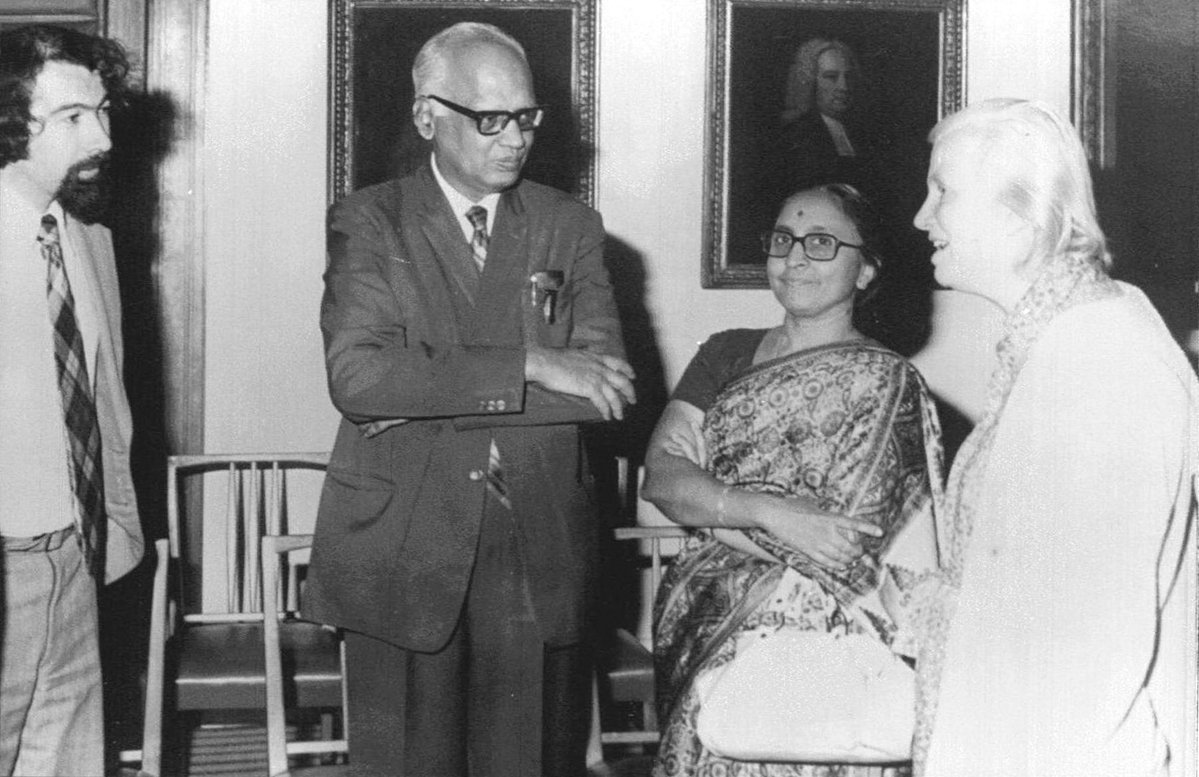
In 1954 a young professor in Madras walked to the leather institute down the road and asked them for a piece of kangaroo tail.
With it he worked out the structure of the most common protein in the human body.
Then Francis Crick, who had just cracked DNA, told the world he was wrong.
His name was Gopalasamudram Narayanan Ramachandran.
He was born on 8th October 1922 in Ernakulam. His father taught mathematics. He topped the physics honours course in the whole of the Madras Presidency, studied under C V Raman at the Indian Institute of Science, and took a second doctorate at Cambridge under Lawrence Bragg.
At 29 he was made a full professor and the founding head of the physics department at the University of Madras.
He decided to work on collagen. Collagen is the protein that holds you together. It is in your skin, your bones, your tendons and your muscles. It is the most abundant protein in the animal body. Nobody knew what shape it was.
The tools he had were not the tools of Cambridge or Caltech. He needed a sample rich in collagen, so he got kangaroo tail tendon from the Central Leather Research Institute nearby, and studied how X rays scattered off it.
In 1954, with Gopinath Kartha, he published a model in the journal Nature. 3 chains, twisted around each other. Europe and America started calling it the Madras Triple Helix.
In 1955 Francis Crick and Alexander Rich published a criticism. They said certain atoms in his model sat impossibly close together. Crick said the idea was basically correct but the actual structure was wrong.
He was competing against Cambridge, King's College London and Caltech, from a new department in Madras, and the most famous molecular biologist alive had just said he was mistaken.
He did not write a rebuttal.
He went back to first principles and asked a much bigger question. Forget collagen. What shapes can any protein chain physically take, and which are impossible because the atoms would collide.
In 1963, with C Ramakrishnan and V Sasisekharan, he published the answer. It is a simple graph, and it is now called the Ramachandran plot.
Every structural biologist alive uses it. When any new protein structure is published anywhere in the world, it is checked against that plot to see whether it is physically possible.
He turned an attack on one model into the rule that governs all of them. And his collagen model, in its essentials, is accepted today.
C V Raman nominated him for the Nobel Prize in Chemistry.
He never received it. He was never given the Bharat Ratna either.
He gave most of his prize money away. He funded a bed at the Adyar Cancer Institute in his parents' names and gave one award entirely to the Prime Minister's relief fund.
In his sixties he developed Parkinson's disease. He retired in 1989 and died on 7th April 2001.
A scientist writing in The Hindu called it the prize that missed the master.
The leather institute that gave him the kangaroo tail named its auditorium Triple Helix.
These are disturbing reports. Kerala has long been host to a liberal, progressive practice of Islam, fully in tune with the coexistence and communal harmony prevalent across the state. Kerala is proud of its record of educating Muslim girls and women to the same levels as boys and men. The import of conservative and even reactionary attitudes and customs from abroad, as suggested by this report, is fundamentally at variance with what Kerala has long been about. This requires serious introspection and internal discussion within the Muslim community as well.
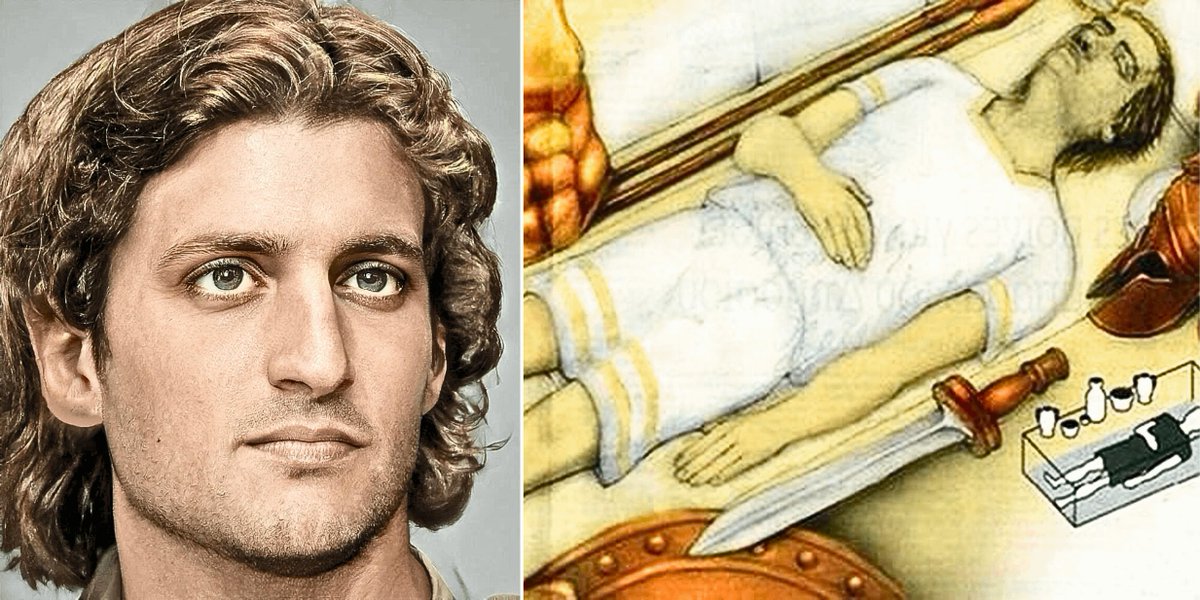
In June 323 BC, Alexander the Great fell ill in Babylon after a night of heavy drinking, suffering from a sudden onset of severe fever, joint pain, and progressive paralysis.
Over eleven days, his condition deteriorated until he lost the ability to speak and was ultimately pronounced dead at age 32. Ancient accounts record that despite hot summer conditions, his body showed no signs of decomposition for six days following his death.
Witnesses and followers interpreted this apparent lack of decay as proof of his divinity, solidifying the myth that Alexander was a living god whose mortal remains were immune to corruption.
Modern medical scholars propose that Alexander suffered from Guillain-Barré Syndrome (GBS), an autoimmune neurological disorder often triggered by a gastrointestinal infection like Campylobacter jejuni. GBS causes ascending paralysis, gradually stripping the body of muscle control while leaving cognitive function intact.
As the paralysis reached his diaphragm, his breathing would have become so shallow and faint that ancient physicians could not detect a heartbeat or pulse.
Because body temperature regulation would have also failed, his metabolic rate plummeted, significantly delaying visible decomposition. Consequently, Alexander was likely declared dead while still conscious, making it probable that he died of suffocation or was prepared for burial while technically still alive.
Beyond his death, the post-mortem fate of Alexander’s remains sparked an extraordinary series of geopolitical clashes and historical mysteries. After his passing, a two-year effort produced a magnificent, gold-laden rolling funerary temple meant to transport his body back to Macedonia; however, his general Ptolemy I hijacked the procession in Syria, stealing the corpse to legitimize his own rule over Egypt. Alexander’s body was initially entombed in Memphis before being moved to a grand mausoleum in Alexandria, known as the Soma, where it became an ancient tourist attraction visited by Roman figures like Julius Caesar and Augustus, the latter of whom accidentally broke off part of the mummy's nose while leaning in to kiss it. Over the centuries, the golden sarcophagus was melted down for currency during dynastic wars and replaced with glass or alabaster. By the late fourth century CE, amidst Christian riots and political upheaval in Alexandria, all historical mentions of the tomb abruptly ceased. Today, despite over 140 official archaeological expeditions, the exact location of Alexander's body remains completely unknown, giving rise to fringe historical theories that his remains were either hidden, destroyed, or misidentified in 828 CE as Saint Mark and smuggled to Venice.
#archaeohistories
Little Karga Tinkle Gongo, it pains me to see that you had to experience this.
But your innocent and powerful appeal has made many Indians reflect on the ignorance and prejudice that have no place in our society.
India is a beautiful mosaic of many cultures, languages and faces, but we share one proud national identity - Indian.
I’m proud of you. Always remember, the nation stands with you. 🇮🇳
#EkBharatShreshthaBharat