I am the Associate Superintendent @forestlakesefca and oversee Church Multiplication Systems @efca. I'm married to @cdsterner7, father of 5, and papa of 3.
British Prime Minister Margret Thatcher famously once said, “Europe was created by history. America was created by philosophy.” Nearly all European nations trace their beginning to a common ethnic kinship or a cultural characteristic, but America was created by exiles united in voluntary assent to shared political beliefs. That’s why British writer G. K. Chesterton visited the United States for the first time and remarked that America was “a nation with the soul of a church,” not because of its religiosity, but because of a common creed enshrined in “sacred texts” of the Declaration of Independence and Constitution.
In 1776, a near-miraculous stew of ideas and leaders came together to form a Declaration of Independence, and 11 years later an equally miraculous gathering formed the Constitution, both centered on a belief in universal human dignity.
Government does not grant you the right to free speech, assembly, religion, press, protest, or redress of grievances. We believe that these rights are inalienable and government’s role is simply to protect those rights and ensure human dignity. Government is just a tool, not a source. That’s really a remarkably profound idea we take for granted and fail to celebrate enough.
Of course, the sad irony is that the very Founders who argued these ideas so frequently fell short of those same principles. Some owned slaves, and nearly all opposed equal rights for women. So it naturally caused upheaval when nineteenth century Americans increasingly adopted a view held that “All men are created equal,” including black Americans, and a few generations later it came to encompass women as well.
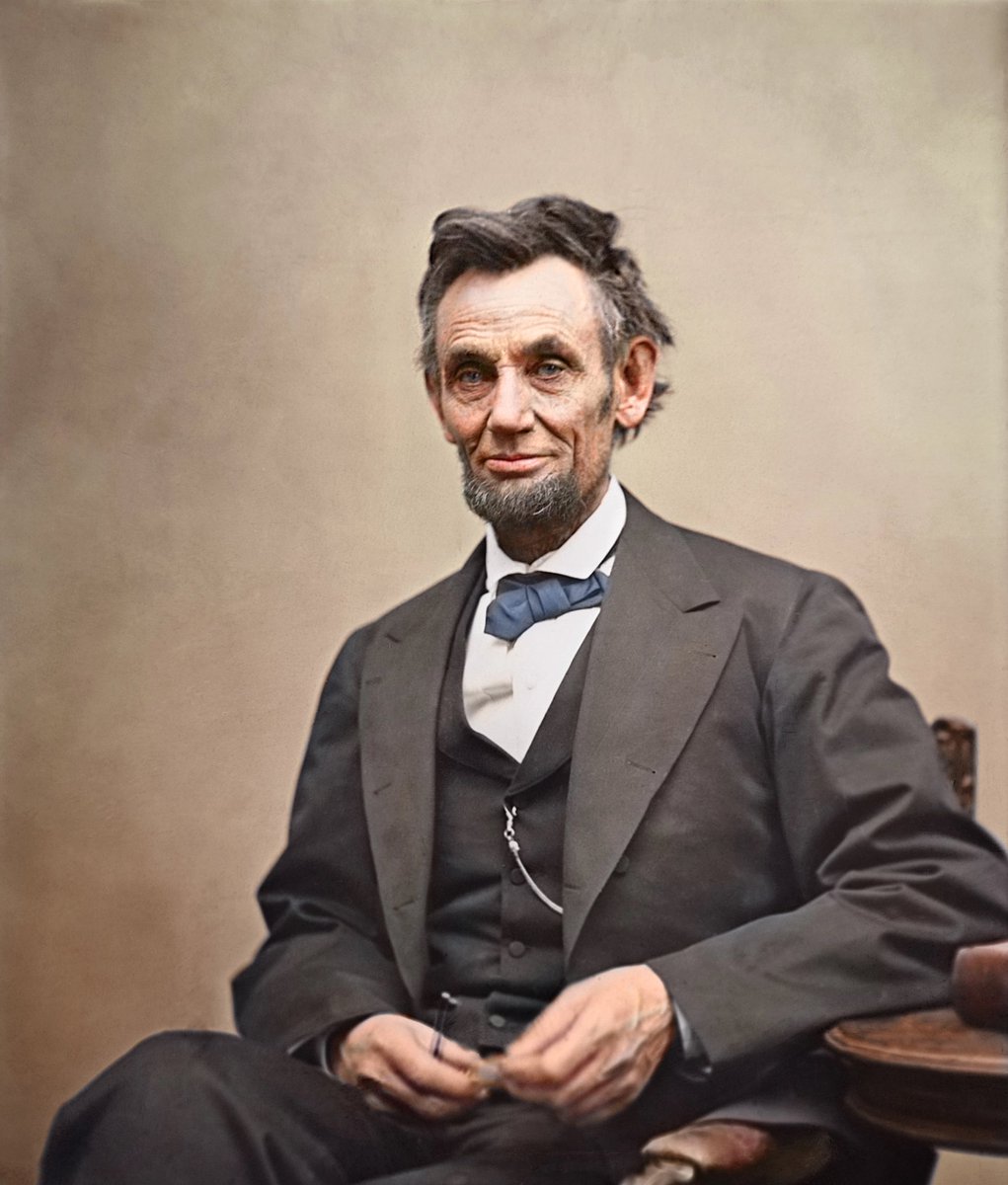
Abraham Lincoln believed that the Declaration of Independence did not necessarily proclaim people equal in all respects. Instead, it meant that all people were created with certain equal, inalienable rights—they are ours by right of simply being human—among which are “life, liberty, and the pursuit of happiness.” A free society should always strive to achieve these equal rights, even if, as in the case of the Founders, it fell short of that goal in the past. The Declaration’s concept of equality is an aspiration, Lincoln said, “constantly looked to, constantly labored for, and even, though never perfectly attained, constantly approximated, and thereby constantly spreading and deepening its influence and augmenting the happiness and value of life to all people, of all colors, everywhere.”
That is the genius of Lincoln’s argument: that the Constitution is concrete (at least until amended), but the Declaration of Independence is aspirational, and the American project is a move toward the aspiration.
Despite its roots in American independence, the 4th of July is incomplete without understanding and celebrating Lincoln too. His unique view of the Declaration as an aspirational goal helped properly frame American independence for what it was and what it was bound to be.
Using a good statement of faith is like bowling with bumpers. Just as the bumpers keep the bowling ball on the lane, the statement of faith keeps us in line with truth so we don’t veer too far in the wrong direction.
@Aaron_Menikoff
https://t.co/ZSiciux2tI
For the first time, the percentage of Americans who never attend church (34%) is higher than those who regularly attend (32%), according to the General Social Survey. https://t.co/6WEdjWrm6r via @LifewayResearch
"If you knew how quickly people would forget about you after your death, you will not seek in your life to please anyone but God."
-Chrysostom (circa 387)
Here are the newly released denials and affirmations from @TheEFCA as they seek to address social movements and cultural trends that create division. https://t.co/bDiCDn6cRi
If you are looking for a denominational home that's neither "progressive evangelical" nor "neo-fundamentalist" (anti-woke, Christian Nationalist, etc.), consider joining us.
@KirkMiller_ My “unofficial” response to this is that your situation may permit the nominating of one of the four credentialed pastors to serve as representative pastor for voting purposes.
A helpful diagram as pastors, conferences, and those in associational leadership positions make decisions on policy related to church leadership roles, responsibilities, and titles.
This is a good thread for co-vocational preaching pastors. The only thing I would add is, if possible, raise up young preachers and form a team so you're preaching no more than 30 Sunday's a year.
For the last three years, I have preached 48 Sundays a year while working 40-50 hours a week for most of the year. Here is what I have learned about sermon preparation when your time is limited. (1)