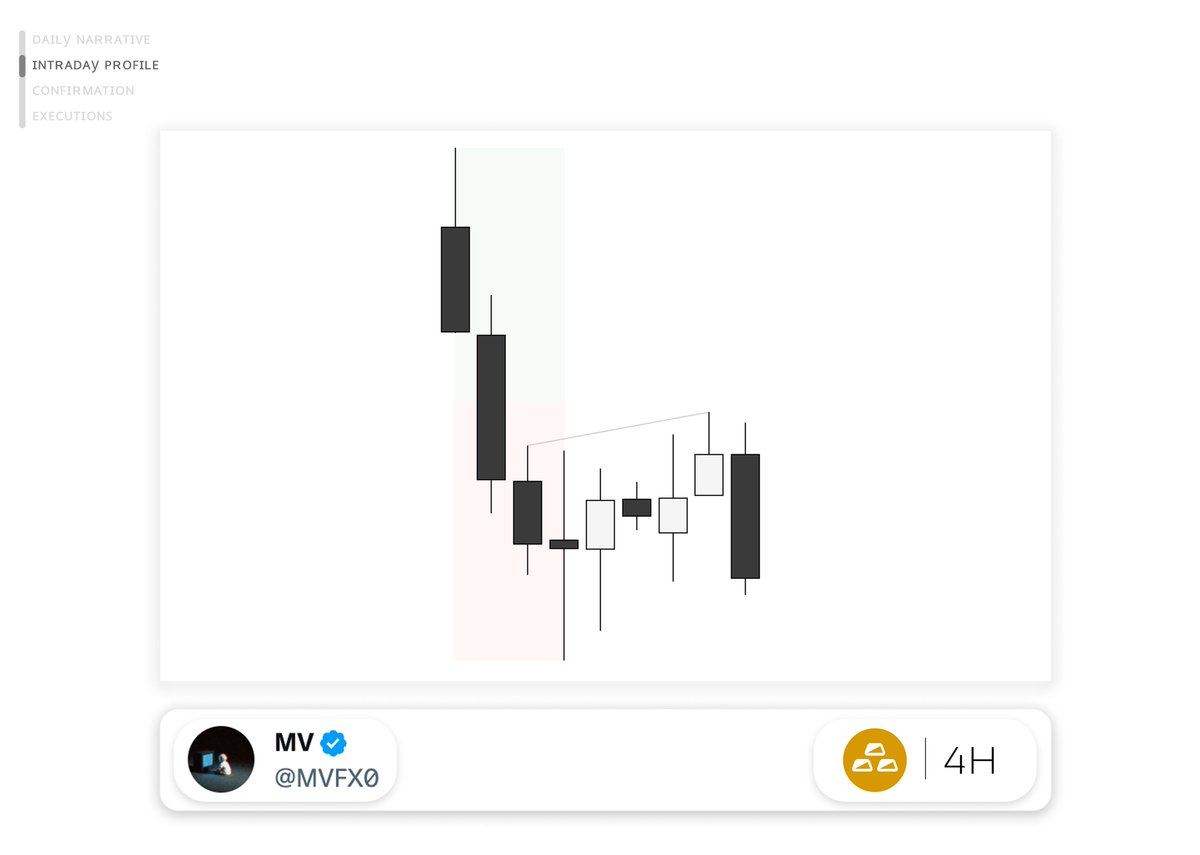
Entry Models // Absorption Continuation
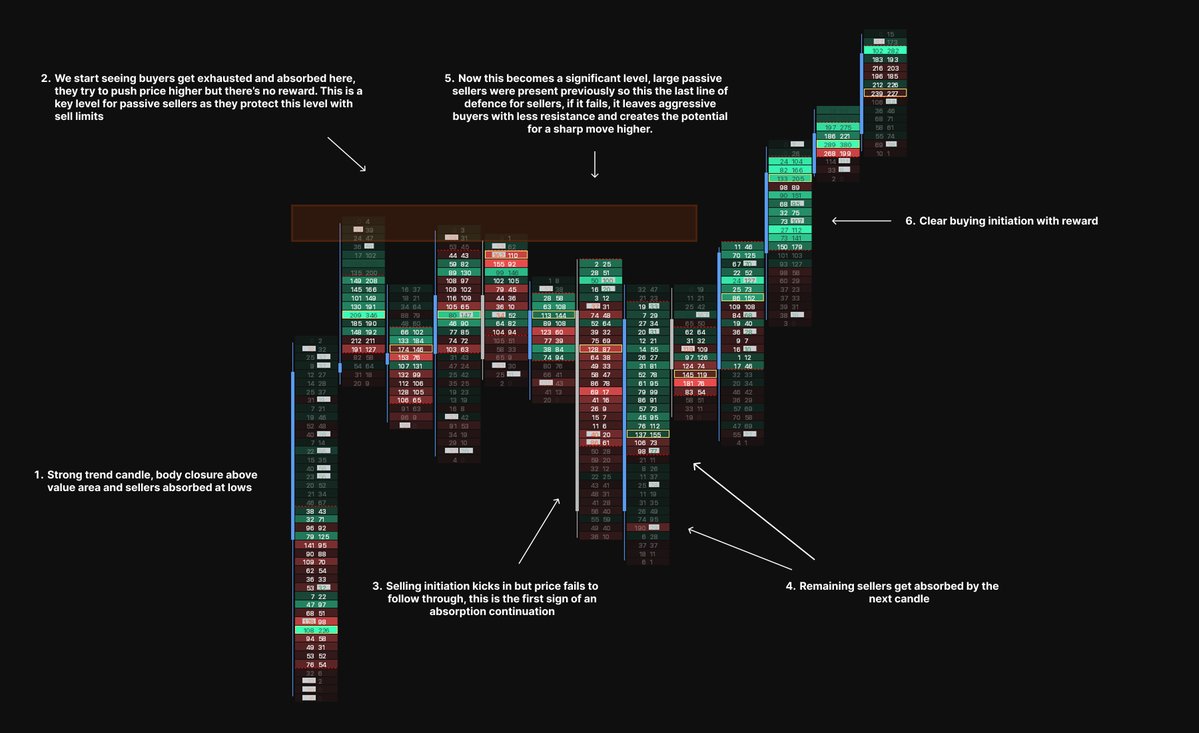
Not all absorption leads to reversals. In a strong trend, a pullback can show countertrend aggression getting absorbed before continuation.
This actually makes price move rapidly if it breaks through the opposing absorption level.
Stacked Imbalance Continuation //
Stacked imbalances show sustained aggression across multiple price levels which are confirmed by supporting candle closures.
Price often retest these levels, if previous participants are able to step in and defend, continuation is likely.
Delta Profiles //
Delta is the difference between aggressive buyers and sellers, the profiles highlight where they were most active across price.
Large delta moves are obvious and signals reversal (absorption) or continuation (initiation).
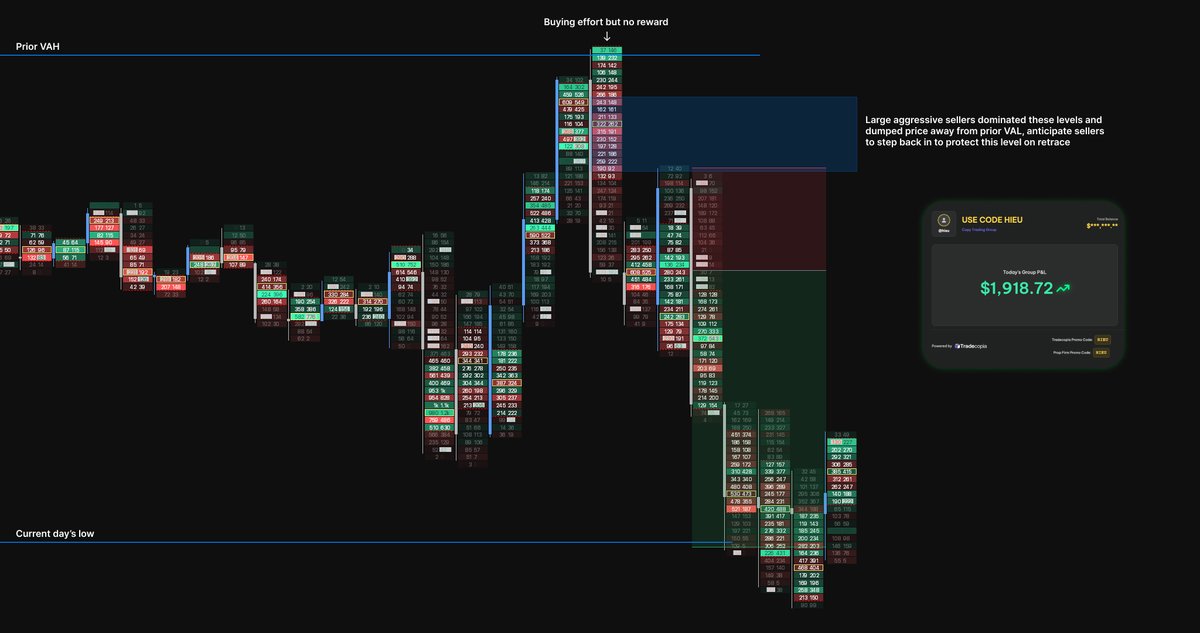
Breakdown of a trade I took this week.
Extremely clean range play, buyers failed to gain acceptance outside of value area and sellers quickly took back control.
Short from range high to range low.
Two Candles Trap //
When looking for highest probability reversals, absorption is usually not enough on its own.
You always want to see the second candle follow through to show clear intention and minimal resistance against the reversal.
This is where I would hold off on continuation plays.
When price starts to stall despite effort from aggressive participants, it signals a level of resistance from passive players.
Until they break through and get rewarded with clean expansion, the continuation idea is weak.
Base hit play here.
Bearish narrative to start the session, buyers failed to lift price past prior value area low and find acceptance.
Entry on sellers stepping back in and regaining control.
Footprint Bar Statistics // Exhaustion
When there's clear evidence of aggressive participants stepping in but price fails to find acceptance at a specific level, you can anticipate exhaustion.
This is when you can look for a potential pull-back or reversal.
Entry Models //
At balanced ranges, both buyers and sellers fail to follow-through at range extremes, leading to a build-up of liquidity.
When one side successfully breaks out, you can capitalise on the explosive move that comes with it.
Entry Models // Continuation
Once you have a clear narrative with price expanding in that direction, you can capitalise on a continuation play.
Anticipate retracements back into areas of high volume as they will act as support / resistance and look for signs of respect.
Narrative Framing // Point of Control
POC is the level where most volume was transacted, this could be considered "fair" prices.
As market participants are most comfortable here, you can assume the trend will continue in the direction POC is heading.
High Volume Nodes vs Low Volume Nodes
High volume nodes are where the market is comfortable, expect slow movement and rotation.
Low volume nodes are imbalanced, price will likely reject or break through quickly as market has no interest here.
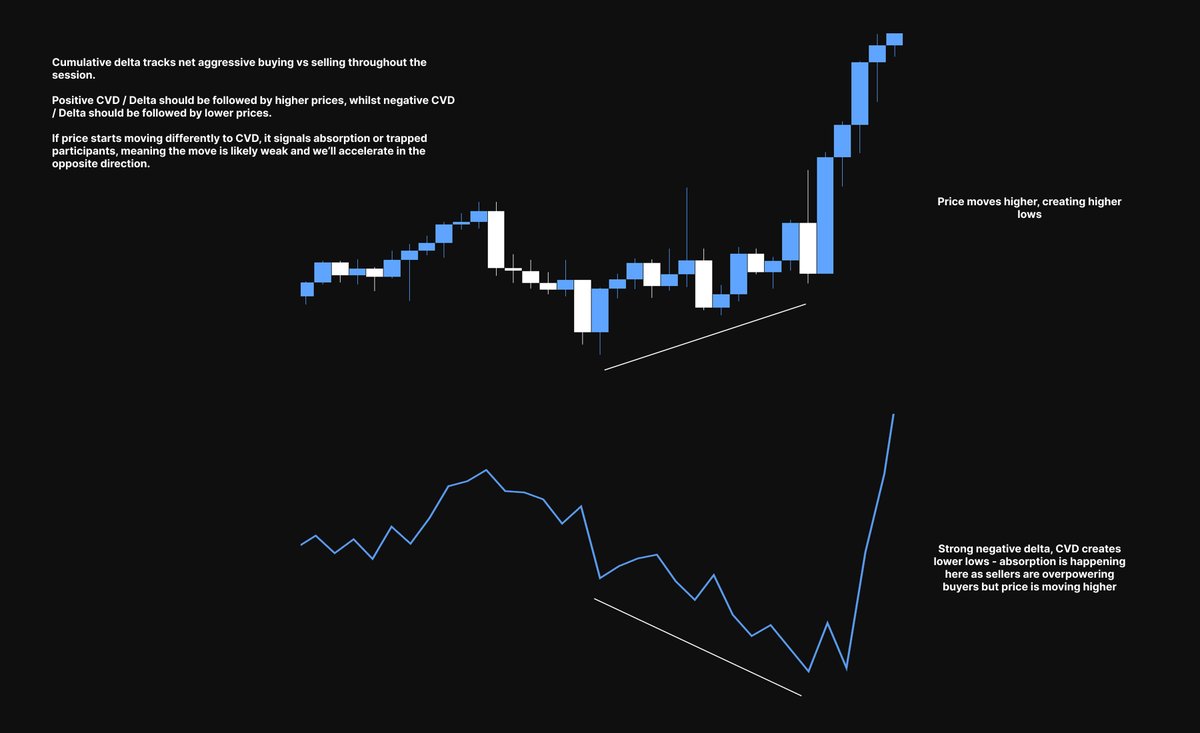
Cumulative Volume Delta //
They tell you the full story behind every move. It tracks the total difference between aggressive buyers and sellers.
When price and CVD diverge, you can anticipate trapped participants and acceleration.
Never ignore Naked Points of Control
When price moves too quickly, they leave behind nPOCs. These are unfinished agreements and markets don't like inefficiencies.
There's a good chance price will revisit these levels to complete the auction and test previous fair value.
Most traders only see surface level candles
BId x Ask shows you what's happening underneath and who is actually in control.
Aggression with results indicate continuation. However, when aggression fails, that is where the real move starts.